Michigan ORV Safety Certificate Course Cost
Michigan ORV safety certificate course cost is not always a single set price. Michigan law sets limits for some course fees, while college and private-provider costs follow different rules. Knowing which fee applies helps you budget without confusing the safety course with the separate ORV license or trail permit.
What a Michigan ORV safety certificate course may cost
Michigan law does not set one universal course price for every provider. According to the Michigan Legislature, an applicant may be charged a fee of not more than $25.00 for a safety education course, or up to the cost of one credit hour if the course is taken through a university or community college. A private business providing the course may charge no more than the cost of conducting it.
That means the amount you pay can depend on who offers the course and how it is delivered. A course through a school may use a different fee basis from a course provided by a private business. Before enrolling, confirm the total directly with the provider and ask whether the quoted amount includes everything required to complete the course.
| Course provider | How the fee is limited |
|---|---|
| Provider offering a standard safety education course | According to the Michigan Legislature, the applicant fee may not be more than $25.00. |
| University or community college | According to the Michigan Legislature, the fee may be up to the cost of one credit hour. |
| Private business enterprise | According to the Michigan Legislature, the charge may not exceed the cost of conducting the course. |
The table describes the fee rules in the supplied law, not a promise that every course will cost the same amount. Ask whether there are separate charges for registration, course materials, testing, or a replacement certificate. The facts above establish limits and fee bases, but they do not set a single current price for every provider.
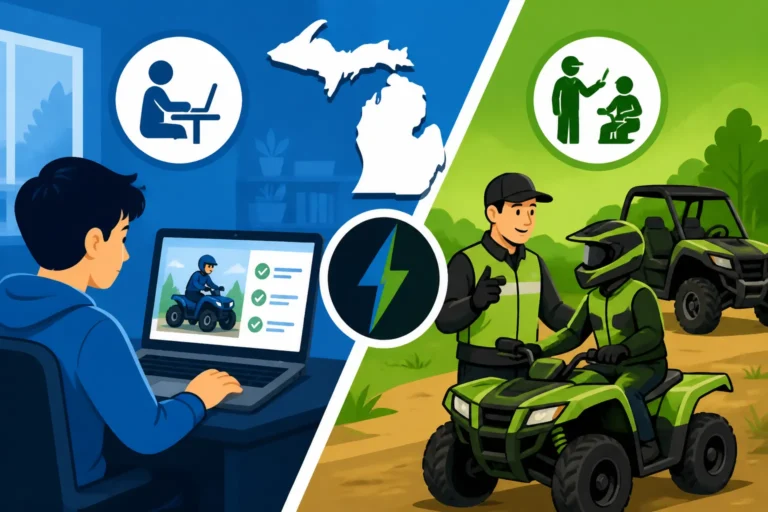
It is also worth checking what the course includes before comparing providers. One course may have online study followed by a separate assessment or in-person component; another may handle the full process in a different way. Confirm that the course is approved for the certificate you need, and ask how you will receive proof of completion. For help comparing formats, see ORV Safety Course Online vs In Person and Online ORV Safety Course Providers.
The certificate course fee is separate from the cost of riding legally. As of October 2026, the Michigan Department of Natural Resources lists the annual ORV license at $26.25 and the additional trail permit at $10.00 for riding state-designated ORV trails, for a combined total of $36.25. Those are riding permit costs, not fees for taking the safety course. For the distinction between the two permits, see Do You Need Both a License and a Trail Permit in Michigan?.
Who needs the course and certificate
The course matters most for young riders using public lands. According to the Department of Natural Resources, anyone under 16 must complete an approved ORV safety course and carry a valid safety certificate to operate an ORV on public lands. The same agency says a rider under 16 must also be under the direct visual supervision of an adult.
A certificate does not remove every age restriction. According to the Department of Natural Resources, children under 10 are prohibited from operating four-wheel ATVs on public lands. That restriction is separate from the course requirement, so completing training does not make a rider eligible to operate a machine where the age rule prohibits it.
The rules distinguish between the certificate, supervision, and the rider’s age. A parent or guardian should check all three before planning a ride: whether the young person may operate that kind of machine, whether the course is required, and what supervision applies to the location. The details can differ when a ride involves a public trail, a road designated for ORV use, or private property.
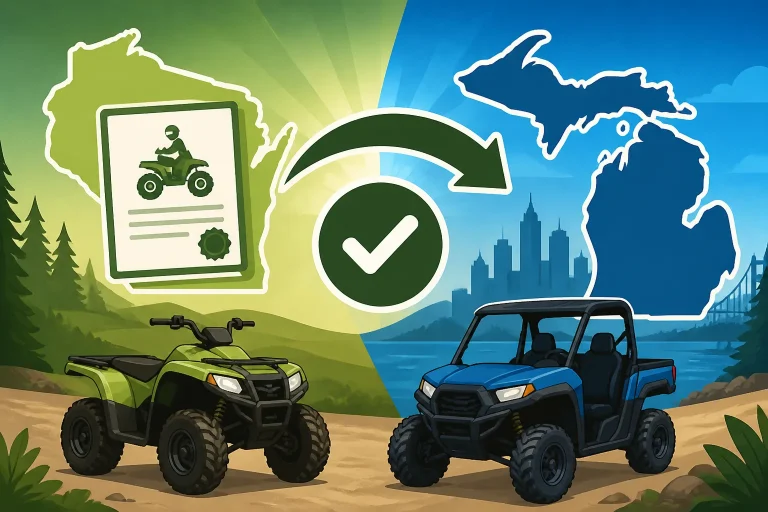
For young riders from another state or Canada, do not assume that a home-state card will automatically answer every Michigan question. According to the Michigan Legislature, non-resident operators aged 12 to 15 must present a Michigan Part 811 ORV safety certificate or a comparable certificate issued under another state’s or a Canadian province’s authority. Confirm that the certificate you have meets the comparable-certificate requirement before traveling. Related details are covered in Safety Certificate Reciprocity for Michigan Riders and Non-Resident ORV Permits in Michigan.
A course certificate is not the same thing as an ORV license or trail permit. A safety certificate documents training; the license and trail permit are separate requirements for riding in places where they apply. Riders should check both the training rules and the permit rules for their planned route, rather than treating one document as a substitute for the other. See Michigan ORV Safety Certificate for Riders Under 16 for more on the youth requirement, and Michigan ORV License Without a Trail Permit: Where You Can Ride for permit distinctions.
How to budget and verify the fee
Start by identifying the kind of course you plan to take. If it is offered through a university or community college, ask how the one-credit-hour fee basis applies. If a private business offers it, ask what costs are included in the amount it charges. If the provider describes the course as a safety education course with a fee cap, confirm how the stated fee fits the Michigan Legislature’s rule.
Before paying, it helps to ask a few practical questions:
- Is this an approved ORV safety course that qualifies for the certificate needed in Michigan?
- What is the total amount due, and are any course materials or assessment charges separate?
- How is the course completed, and is any in-person step required?
- How will proof of completion be issued, and what should the student carry while riding?
- If the rider is from outside Michigan, does the provider or relevant authority confirm the certificate is comparable for Michigan use?
These questions are especially useful when a course is advertised online or through a third party. A low advertised amount may not be the full amount due, while a higher amount may reflect a different provider category or course structure. Compare the total cost and what is included, not just the first price shown.
Keep the documents organized after the course. A young rider who needs a certificate should be able to produce it when required, and a parent or guardian should know where it is kept. If the certificate is lost or the rider’s name is recorded incorrectly, ask the course provider or the appropriate agency how to correct or replace it. For related record-keeping, see [Replacing a Lost Michigan ORV Safety Certificate] and Keeping Your ORV Paperwork With the Machine.
Budget separately for permits. The Michigan Department of Natural Resources says annual ORV licenses and trail permits expire on March 31 of the following year, regardless of when they were purchased. Check the current permit requirements and timing before a trip, because paying for a course does not cover riding permits. A rider planning to use designated trails should also verify whether the additional trail permit applies to the route.
Before taking a young rider out
The course fee is only one part of preparing a young person to ride. Confirm the rider’s eligibility, supervision, certificate, machine fit, and location rules before setting out. The Department of Natural Resources requires direct visual supervision by an adult for an operator under 16 on public lands, and the agency prohibits children under 10 from operating four-wheel ATVs on public lands.
The rules for road use are a separate issue from ordinary trail operation. According to the Michigan Legislature, adults do not need a driver’s license to operate an ATV on public roads designated for ORV use. For operators under 18, the law requires either a valid driver’s license or direct supervision by a parent or guardian while the operator holds an ORV safety certificate. Check the road designation and the rider’s specific circumstances before using a road route.
Do not treat a course certificate as a substitute for basic riding precautions. Michigan law also addresses protective equipment and safe operation. According to the Michigan Legislature, ORV operators and passengers generally must wear a Department of Transportation-approved crash helmet and protective eyewear, subject to stated exceptions, including certain UTV configurations with an approved roof and properly fastened safety belts. A course provider can explain training requirements, but riders should separately confirm the equipment rules that apply to their machine and riding area.
A sensible order is to verify the course, complete it, keep the certificate accessible, and then check the riding location’s permit and operating rules. That avoids paying for training and making travel plans only to discover that the rider, machine, or paperwork does not meet the conditions for the intended ride. For the wider youth rules, see Michigan ORV Age Rules at 10, 12 and 16 and What Direct Visual Supervision Actually Means.
Sources
- Michigan Department of Natural Resources — ORV FAQs – State of Michigan (checked October 28, 2026)
- Michigan Department of Natural Resources — Purchase permit, learn requirements – State of Michigan (checked October 28, 2026)
- Michigan Legislature — MCL – Section 324.81131 (checked October 28, 2026)
- Michigan Legislature — MCL Section 324.81130 (checked October 29, 2026)
Disclaimer
This article is for general informational purposes only and does not constitute professional advice. Laws, prices and regulations vary by location and change over time. Consult a qualified professional for guidance on your specific situation.