Where the Michigan ORV Sticker Goes on Your Machine
A Michigan ORV sticker is easy to misplace when an ATV or side-by-side has several plastic panels, a windshield, and gear mounted up front. Put it somewhere visible and secure, but don’t guess if the decal came with specific placement instructions. Here’s how to choose a practical spot, apply the sticker, and avoid common permit-display problems.
What the Michigan ORV Sticker Is and Why Placement Matters
In Michigan, an ORV license and an ORV trail permit are separate from the machine’s title. They serve different purposes, and having paperwork for one does not necessarily mean you have the other. If your riding plans require both, make sure you have each required decal and display it as directed. Michigan ORV License and Trail Permit Explained
The sticker is intended to show that the machine has the applicable permit. A decal that is missing, damaged, covered in mud, or hidden behind an accessory may be difficult for an officer to check. Even if you have proof of purchase on your phone, a receipt does not make a poorly displayed sticker easier to see.
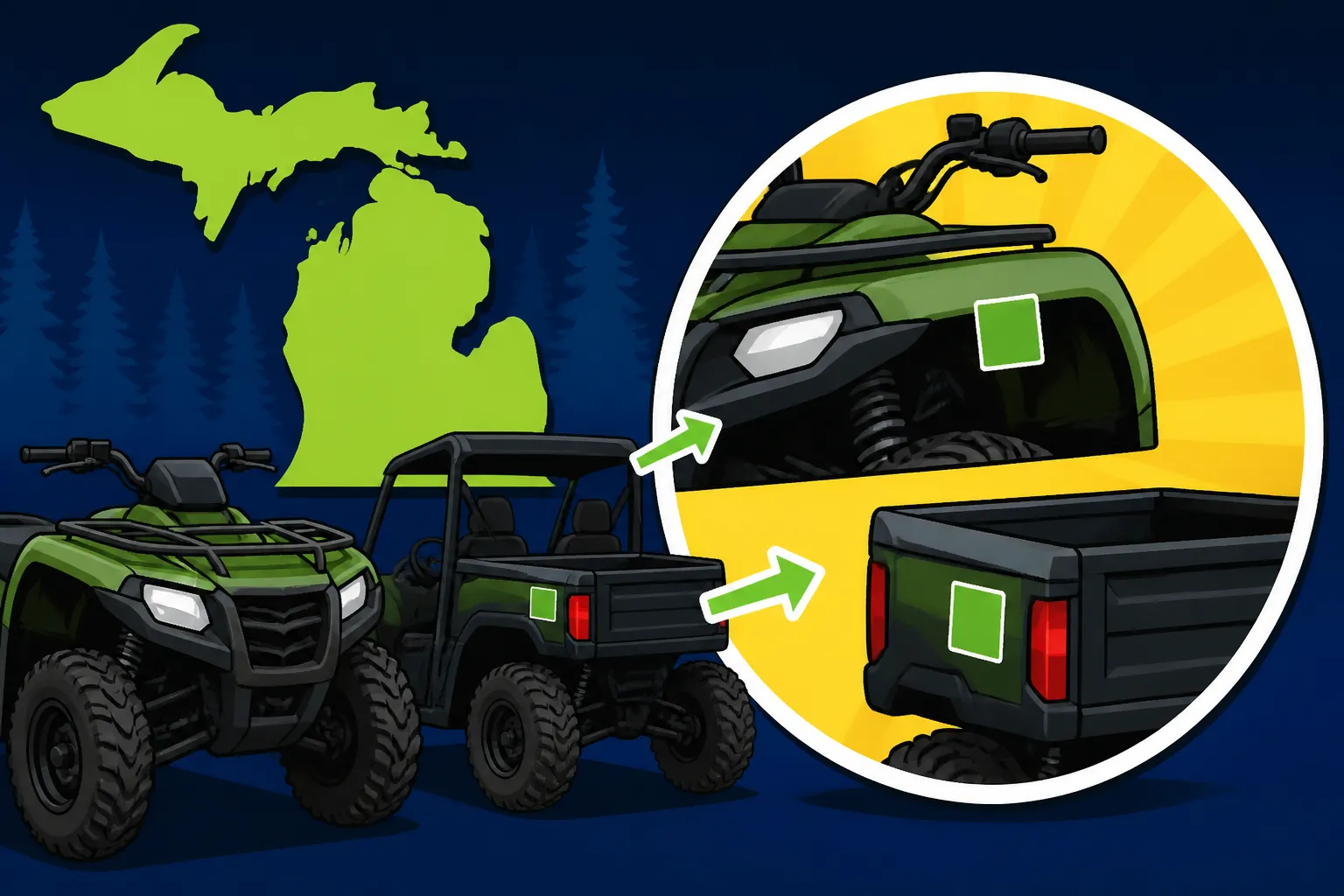
As a practical starting point, Michigan ORV stickers should be attached to a visible forward-facing area of the machine, with the current instructions for the particular decal taking priority. Don’t rely on a location used by another rider or on a placement you remember from a different permit year. Check the decal’s directions and current Michigan guidance before applying it.
The exact requirement can depend on the type of machine and the instructions issued with the sticker. A flat front fender on an ATV offers different options from the hood of a UTV or the front end of an off-road motorcycle. If the placement directions do not clearly fit your machine, confirm the right location before you stick the decal on.
It also helps to separate three related questions:
- Do you need an ORV license? That depends on where and how you ride, and whether an exemption applies.
- Do you need a trail permit? Trail access can have its own permit requirement. The license and trail permit are not interchangeable.
- Where should the sticker go? Follow the instructions for each decal and place it where it can be readily seen on the machine.
For a closer look at which permits may apply to your ride, see Do You Need Both a License and a Trail Permit in Michigan?. For trail permit details, Michigan’s Extra $10 ORV Trail Permit explains why the additional permit may matter.
Choosing a Visible Spot on an ATV, UTV, or Motorcycle
Start by looking at the machine from the front. Choose a fixed part of the vehicle where the sticker can be seen without moving a seat, opening a storage compartment, or removing an accessory. It should be attached to the machine itself, not to riding gear or equipment that might be taken off.
A decal placed low on a panel may become obscured by mud. A decal near a bumper or rack may be hidden by a winch, brush guard, cargo, or a front-mounted accessory. Consider how the machine looks when it is loaded and ready to ride, not only when it is clean in the garage.
The following table offers practical locations to consider. These are starting points for finding a visible area, not a substitute for any placement direction printed with the decal or supplied by Michigan.
| Machine type | Areas to consider | Check before applying |
|---|---|---|
| ATV | A fixed, forward-facing area on the front bodywork or fender | Make sure the sticker is not hidden by a rack, bumper, or mud flap |
| UTV or side-by-side | A fixed panel at the front of the machine | Check that the hood, body panel, or other chosen area is visible with accessories installed |
| Off-road motorcycle | A stable forward area on the motorcycle | Confirm the instructions for that machine type; available flat surfaces can be limited |
| Machine with a windshield | A fixed body panel may be more practical than a removable windshield | Follow the decal directions and avoid a surface that may be replaced or obstructed |
| Machine with a front rack or guard | An unobstructed panel behind or beside the accessory may work | Make sure the accessory does not cover the decal from a typical front view |
ATVs
On an ATV, the front fender or other forward bodywork may provide a convenient flat surface. Before choosing it, check how the panel sits when the machine is being used. A sticker that seems visible in the driveway may be covered by a front rack bag, a cargo load, a brush guard, or mud thrown up during normal riding.
If the front panel is textured or sharply curved, the decal may not adhere well. Look for a smooth section that is large enough for the sticker and does not cross a seam or edge. The linked topic Michigan ORV Sticker Placement on an ATV covers ATV-specific placement considerations.
UTVs and side-by-sides
A UTV often has more room for decals, but it may also have a windshield, roof, front rack, light bar, or aftermarket guard that affects visibility. A fixed forward-facing body panel is generally a more dependable choice than a removable accessory. Don’t assume that a decal placed on the windshield will remain visible if the windshield is folded down, swapped out, or removed.
Check the vehicle from a normal standing position in front of it. If the decal disappears behind a bumper, windshield frame, cargo, or another feature, find a clearer location. For more machine-specific guidance, see Michigan ORV Sticker Placement on a Side-by-Side.
Motorcycles and unusual builds
Motorcycles may have less flat front bodywork than ATVs or UTVs, and custom builds may not have a standard panel. Don’t improvise by putting a sticker on your helmet, luggage, or another item that can be detached. Read the current directions for the decal and confirm the acceptable location if the machine has no obvious surface.
The same caution applies to a modified, homemade, or unusually configured ORV. A location that is easy to see may still not meet the instructions for a specific decal. If you are uncertain, ask the relevant state office or licensing agent before applying it.
How to Apply the Sticker So It Stays Put
A sticker can be correctly positioned and still become a problem if it peels off, tears, or is applied over dirt. Prepare the surface carefully and take a moment to check the result before heading out.
- Read the directions first. Check the information supplied with the decal. If it gives a specific surface or placement instruction, follow it rather than relying on a general rule.
- Choose a fixed, visible panel. Look for a smooth area on the machine that is not covered by accessories and is unlikely to be replaced or moved.
- Clean the surface. Remove dirt, mud, grease, and old adhesive. Use a cleaner suitable for the machine’s material, and let the area dry completely. Avoid solvents or abrasive methods that could damage plastic, paint, or a protective coating.
- Test the position before peeling. Hold the sticker in place and check its visibility from the front. Confirm that it does not cover a light, label, vent, latch, or vehicle identification marking.
- Apply it evenly. Follow the decal’s directions. Press it firmly and smoothly, paying attention to the edges so there are no lifted corners or trapped debris.
- Let the adhesive set. If the instructions call for a waiting period before washing or riding, observe it. Otherwise, give the decal time to bond before exposing it to water, dust, or heavy use.
- Check it again before riding. Make sure it is still attached, readable, and not covered by gear or a recently installed accessory.
Avoid applying a decal over an old sticker unless the instructions specifically allow it. Layers can lift or make the current information harder to read. If a sticker is damaged or no longer adheres, don’t cover it with tape or try to recreate it by hand. Find out how to obtain an official replacement; Replacing a Lost ORV License Sticker covers that issue.
Weather and surface conditions also matter. A dusty panel, wet bodywork, or very cold surface can make a decal harder to apply securely. If the sticker will not lie flat, don’t stretch it around a sharp curve or force it over a seam. Choose a better surface or ask for guidance.
Common Placement Mistakes and How to Avoid Them
Most sticker-display problems are avoidable. Before applying a decal, think about whether it will remain visible after the machine is equipped, ridden, and cleaned.
Putting the sticker on removable equipment
A windshield, storage box, rack bag, or other accessory may seem like a convenient place. But if you remove or replace that item, the sticker may go with it. Use a fixed part of the machine unless the directions say otherwise.
Hiding it behind accessories
A sticker on the front of the machine can still be difficult to see if a bumper, winch, light bar, brush guard, or cargo blocks it. Check the machine from a normal viewing angle after all the accessories are installed. If the decal is partly hidden, move it to a clearer spot before riding.
Choosing a surface that will not hold the decal
Heavily textured plastic, a deeply curved panel, or a surface with old adhesive may keep the sticker from lying flat. Poor adhesion can lead to peeling, dirt collecting under the edges, and eventually a lost decal. Prepare the panel and choose a smoother location.
Placing it where mud quickly covers it
A low area near a tire or the lower edge of a fender may be exposed to spray. If there is a higher, forward-facing surface that follows the decal instructions, it may be easier to keep visible. You do not need to choose a spot just because it is the flattest one; visibility and staying power both matter.
Assuming the receipt replaces the sticker
Keep purchase records, but don’t treat a receipt as a substitute for properly displaying the required decal. A receipt may help document a transaction; it does not change where a sticker is supposed to go. Keep track of permit paperwork separately from the machine’s title and registration documents.
Treating every decal as the same permit
An ORV license sticker and a trail permit sticker can be separate requirements. Check what you bought, what the machine needs for the places you plan to ride, and whether each decal has its own placement directions. For background on where permit funds and requirements fit into the system, see Michigan’s Extra $10 ORV Trail Permit.
If the sticker gets damaged, peels off, or is lost, address it rather than waiting for a stop to find out whether it is readable. ORV Stickers That Peel Off in Winter has more on adhesion issues, and Michigan ORV Permit Checks by Conservation Officers explains why a visible display matters during a check.
Before You Ride: A Quick Sticker Check
Make checking the decal part of your usual pre-ride routine. This takes little time and can catch a problem before you reach a trail or road where permits are checked.
- Confirm that the sticker belongs to the machine you are riding.
- Make sure it is attached to the machine rather than removable gear or a separate accessory.
- Check that the sticker is readable and firmly attached.
- View the machine from the front to confirm that the decal is not hidden.
- Look for anything added since the last ride, such as a rack bag, guard, or cargo, that could block it.
- Confirm that you have the other permits required for your planned riding area.
- Keep supporting paperwork in a safe place, but do not rely on it to replace a decal-display requirement.
If you are buying a used machine, don’t assume that the previous owner’s sticker is valid for your use or that the machine’s existing paperwork answers every permit question. Verify what applies to you and your planned route before riding. A dealer, licensing agent, or the appropriate Michigan office can help clarify current requirements, especially if you have a motorcycle, modified machine, or unusual front-end setup.
The key is simple: use the decal’s current instructions, attach it to a stable and visible part of the machine, and make sure it remains unobstructed. If the right location is unclear, ask before applying it. A little care now is easier than dealing with a missing, obscured, or damaged sticker later.
Frequently Asked Questions
Does the sticker go on the front of the machine?
Choose a visible forward-facing area and follow the directions supplied with the decal. The best panel varies by machine, so don’t assume that the same exact location works for every ATV, UTV, or motorcycle.
Can I put the sticker on my windshield?
A windshield may be removable, replaceable, or positioned so the decal is difficult to see. Check the decal’s instructions and consider a fixed body panel instead if that offers a clear, suitable location.
Can I carry the sticker or receipt instead of attaching it?
Do not assume that carrying paperwork or a receipt replaces a decal that must be displayed on the machine. Follow the applicable display instructions and keep your supporting documents separately.
What should I do if the sticker is peeling or lost?
Avoid covering it with tape or making a substitute. Check how to get an official replacement and correct the placement or surface issue before riding. The article Replacing a Lost ORV License Sticker explains the replacement question in more detail.
Disclaimer
This article is for general informational purposes only and does not constitute professional advice. Laws, prices and regulations vary by location and change over time. Consult a qualified professional for guidance on your specific situation.