Michigan ORV Permit Checks by Conservation Officers
A conservation officer’s stop can turn a routine Michigan trail ride into a paperwork check, especially if you are unsure which permit belongs on your ATV or UTV. Knowing what officers may look for, where each permit is required, and how to respond calmly helps you avoid preventable problems and get back to riding with less uncertainty.
What a Conservation Officer May Check
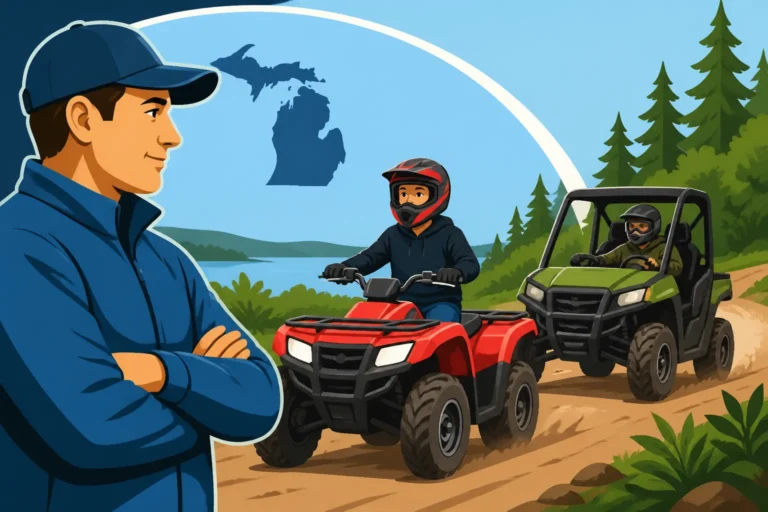
Michigan Department of Natural Resources conservation officers enforce natural-resource and ORV laws. On a ride, a check may focus on whether the machine and its operator are following the rules that apply to that place and situation. There is no single checklist used for every stop: the location, the rider’s age, the vehicle, and what the officer observes can all affect the questions asked.
A permit check may include whether the required ORV license is valid and displayed correctly. If you are riding on a designated ORV trail, route, or scramble area, the officer may also check for the trail permit required for that use. The license and trail permit are separate requirements in situations where both apply. Having one does not automatically satisfy the other.
An officer may also ask about or observe:
- Whether the machine is allowed on that trail or route, including its width where restrictions apply.
- Whether the rider meets age and supervision requirements.
- Whether required safety equipment is being used, such as a helmet or eye protection where applicable.
- Whether a passenger is permitted on that machine.
- Whether the machine is being operated safely and in keeping with posted rules.
- Whether riders are on an open route rather than a closed or restricted area.
The scope of a check depends on the circumstances. A permit stop does not mean every rider will be asked for every kind of document, and a request for one item does not guarantee that other safety or operating rules are irrelevant.
A Michigan ORV permit is generally tied to the machine, not to the person who bought it. If several people in a group are riding separate machines, each machine needs the required license and, where applicable, trail permit. One rider’s valid permit does not cover the rest of the group.
The permit is also not a title or proof of ownership. Officers checking trail compliance are not necessarily asking you to carry the vehicle title. For the distinction between ownership paperwork and ride-day documents, see Do You Carry the Title While Riding? and Keeping Your ORV Paperwork With the Machine.
Which Permits Apply Where You Ride
Michigan’s main ORV permit requirements are easier to understand when separated by purpose. The ORV license applies broadly to operating on public ORV areas covered by the requirement. The additional trail permit applies to designated ORV trails, routes, and scramble areas where it is required. The exact combination depends on where you ride.
| Riding location or situation | What to check before riding |
|---|---|
| Designated ORV trail, route, or scramble area | Check whether both the ORV license and trail permit are required. |
| Public land or a state forest road | Check the ORV license requirement and any local restrictions; do not assume the trail permit applies to every road. |
| Private land | Public-land permit requirements may differ, but permission from the landowner and other applicable rules still matter. |
| Out-of-state visitor | Check Michigan’s nonresident requirements rather than assuming a home-state permit is accepted. |
| Organized ride or commercial use | Check whether event, commercial, or special-use requirements apply in addition to ordinary machine permits. |
The terms “trail,” “route,” and “road” are not interchangeable in every permit context. A designated ORV trail or route may have a different permit requirement from a state forest road. A road that looks like a trail, or a trail that connects to a road, is not enough to determine what permit applies. Confirm the route’s designation before you ride it.
If you are unsure whether you need one permit or both, start with Do You Need Both a License and a Trail Permit in Michigan?. For riders who plan to use state forest roads but not designated trails, Michigan ORV Permit for State Forest Roads Only covers the distinction in more detail. Trail maps, signs, and closure notices can help you confirm where you are, but check current rules before setting out.
The permit requirement may also depend on the machine’s use and the land involved. Some exemptions exist, including in certain private-land situations, but an exemption for one circumstance should not be stretched to cover a different ride. For example, an exemption connected to riding on your own property does not automatically answer whether you need a permit after you leave that property and enter a public route. See Michigan ORV Permit Exemptions on Private Land and Riding on a Friend’s Land Without a Michigan Permit if private property is part of your plan.
Nonresident riders and reciprocity
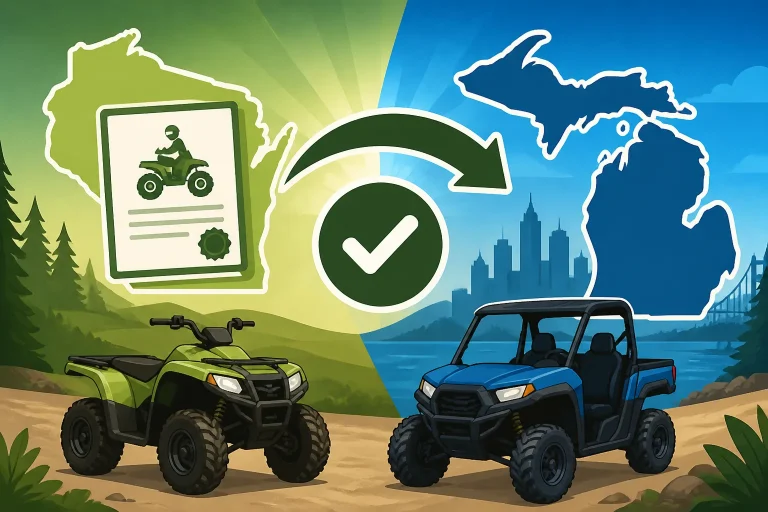
Do not assume that a permit or registration from another state replaces Michigan’s requirements. Reciprocity depends on the rules in force and the particular documents involved. Before bringing an out-of-state machine to Michigan, confirm the current requirements for the state where it is registered and for the Michigan areas you intend to ride.
A visitor can prepare by checking Non-Resident ORV Permits in Michigan and Michigan ORV Reciprocity With Neighboring States. If a group includes riders from more than one state, check each person’s situation rather than relying on what one rider was told at a previous stop or trip.
Permit display and machine-specific coverage
A valid permit that is difficult to see can still create confusion during a roadside check. Follow the current display instructions provided when you buy the permit, and make sure the sticker is attached to the correct machine in the required location. Avoid covering it with accessories, mud guards, luggage, or other equipment.
A sticker that has peeled, cracked, or become unreadable can make it harder to establish that the machine is properly licensed. If a sticker is damaged or lost, check the replacement process before the next ride. Where the Michigan ORV Sticker Goes on Your Machine and Replacing a Lost ORV License Sticker explain the practical display and replacement questions.
How to Handle a Permit Check
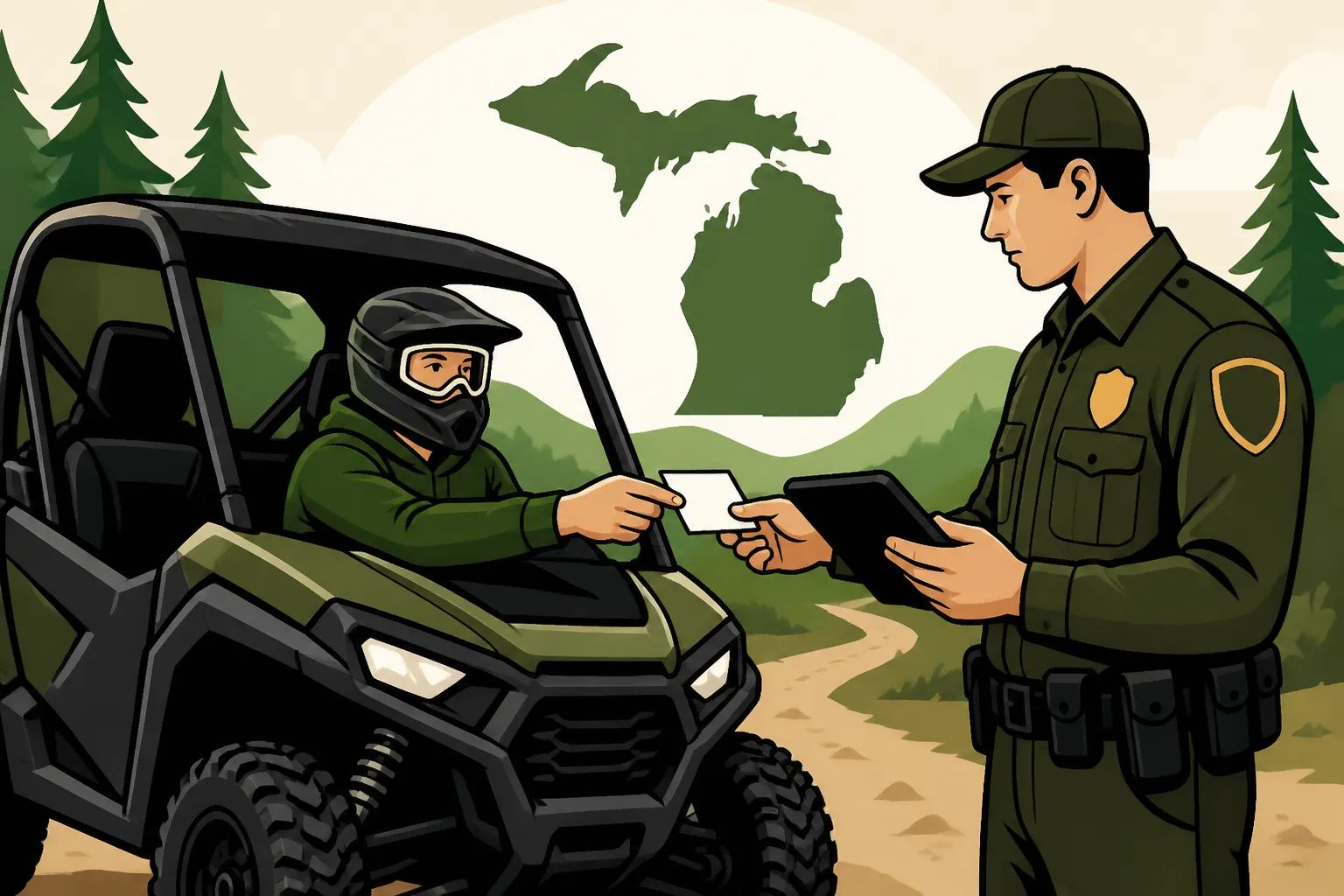
A calm, organized response usually makes a brief check easier. Keep the machine stopped where directed, listen to the officer’s instructions, and avoid reaching into a bag or pocket without saying what you are doing. If you do not understand a request, ask politely for clarification.
Use this simple approach:
- Stop promptly and safely. Move out of the way of other riders if you can do so without creating a hazard. Keep the machine under control and follow directions.
- Pause the machine and stay attentive. Turn it off if instructed or if doing so is safe. Keep your hands visible and avoid sudden movements.
- Answer the question asked. Be clear and truthful. If you do not know an answer, say so rather than guessing.
- Show the permit as directed. The officer may be able to check a sticker on the machine, or may ask you to provide other information. Follow instructions about where to stand or what to retrieve.
- Ask for clarification if needed. If you are unsure which permit or rule the officer means, ask calmly. If language or hearing is a barrier, explain that and ask for a clear way to communicate.
- Take note of any citation or instruction. If you receive a written citation, read it carefully and keep it. The document should explain how to respond and any relevant deadline.
If an officer asks to see a permit, do not treat a phone photo, receipt, or verbal assurance as automatically equivalent to the required display. Those items may help you explain a purchase or replacement issue, but they might not substitute for the permit itself. If your sticker is missing or damaged, explain the situation honestly and ask what the officer needs to see.
You generally do not need to carry the machine’s title for an ordinary ride simply because an officer might check your ORV permit. Keep ownership documents secure at home or in another safe place unless a specific situation calls for them. For more on the documents that matter during a stop, see Michigan ORV Paperwork During a DNR Stop.
If you believe a citation is incorrect, avoid trying to settle the dispute on the trail. Stay respectful, keep the paperwork, and use the response process listed on the citation. A roadside argument is unlikely to resolve a disputed permit requirement, and statements made in frustration can complicate the situation. For more detail, see Fighting a Michigan ORV Ticket.
Common Problems That Lead to Confusion
Many permit issues are simple oversights rather than deliberate attempts to ride without the required authorization. The most common source of confusion is treating the ORV license and trail permit as the same thing. They are distinct, and a rider may need both depending on where the machine is being operated.
Other avoidable problems include:
- Buying a permit for only one machine. Each machine must meet the applicable requirements. A family or group should check every ATV and UTV separately.
- Assuming a prior year’s sticker is still valid. Permit periods and renewal rules can change. Confirm that the permit covers the current riding period and has not expired.
- Relying on a purchase receipt alone. Follow the required display instructions; keep the receipt as supporting information, not as a substitute unless the current rules say it is acceptable.
- Leaving the sticker in a packet or storage compartment. A permit intended to be displayed should be attached as required before riding.
- Assuming an out-of-state document gives automatic reciprocity. Confirm whether Michigan recognizes it for the specific requirement.
- Riding onto a closed route. A valid permit does not give permission to ride in an area that is closed or where the machine is not allowed.
- Confusing ownership paperwork with permit paperwork. A bill of sale, title, or registration document may help establish ownership, but it does not necessarily satisfy an ORV permit requirement.
- Thinking a passenger’s permit covers the driver’s machine. Permit requirements attach to the vehicle and use, not simply to the person in the seat.
If a machine was just purchased, do not assume that the seller’s sticker transfers with the sale or that the sale documents authorize riding. Check the current requirements for a newly acquired machine and make sure the correct permit is in place before using a public trail or route. The related article Michigan ORV License for a Machine Bought Mid-Season can help with that timing question.
A citation or warning may result from different circumstances, and the outcome can depend on the rule involved and the facts of the encounter. There is no reliable way to predict whether an officer will issue a warning or a citation in a particular case. If you receive a citation, rely on the instructions printed on it and seek qualified advice if you need help understanding your options.
Prepare Before You Leave
A quick check at home can prevent a frustrating stop later. Make permit verification part of loading the machine, alongside checking tires, fuel, lights, helmets, and the route plan. If you are riding somewhere new, confirm the route’s designation and current closures instead of relying only on an old map or a friend’s memory.
Before the ride:
- Confirm which permit or permits apply to each machine and the planned riding area.
- Check that each permit is valid for the riding period.
- Make sure stickers are attached where the current instructions require and are visible.
- Verify that a machine’s width and type are allowed on the trail or route.
- Check age, supervision, helmet, eye protection, and passenger rules for everyone riding.
- Review the route for closures, restrictions, and changes in access.
- Keep receipts or purchase confirmations where you can retrieve them, without treating them as a replacement for a required sticker.
- Explain to the group that riders should stop together and follow directions if an officer signals them.
For a deeper explanation of what the different permits cover, see Michigan ORV License and Trail Permit Explained. If you need to buy a permit, Where to Buy a Michigan ORV License explains purchase options, while Michigan ORV Permit Year: April 1 to March 31 addresses the permit period. Check official current instructions before relying on older paperwork or a previous season’s setup.
A prepared rider does not need to memorize every rule. The useful habit is to confirm the requirements for the actual machine and route, display the permit correctly, and respond politely if an officer has questions. That approach helps keep a routine compliance check focused and reduces the chance that a small paperwork mistake disrupts the ride.
Frequently Asked Questions
Can a conservation officer check every ATV or UTV in a group?
An officer may check machines and riders during an enforcement contact. Each machine should have its own required permit, so do not assume one person’s sticker covers a group.
Do I need to carry my ORV title while riding?
A title is ownership paperwork, not the ORV license or trail permit. A routine permit check does not automatically mean you must carry the title. Keep ownership documents secure and carry or display the permits required for your ride.
Is the ORV license the same as the trail permit?
No. They are separate permits with different applications. Depending on where you ride, you may need the ORV license alone or both the license and trail permit.
Does an out-of-state ORV permit automatically count in Michigan?
Do not assume it does. Check Michigan’s current requirements and any applicable reciprocity rules for your machine and planned riding area before crossing the state line.
Disclaimer
This article is for general informational purposes only and does not constitute professional advice. Laws, prices and regulations vary by location and change over time. Consult a qualified professional for guidance on your specific situation.