Do Ohio Riders Need a Michigan ORV License?
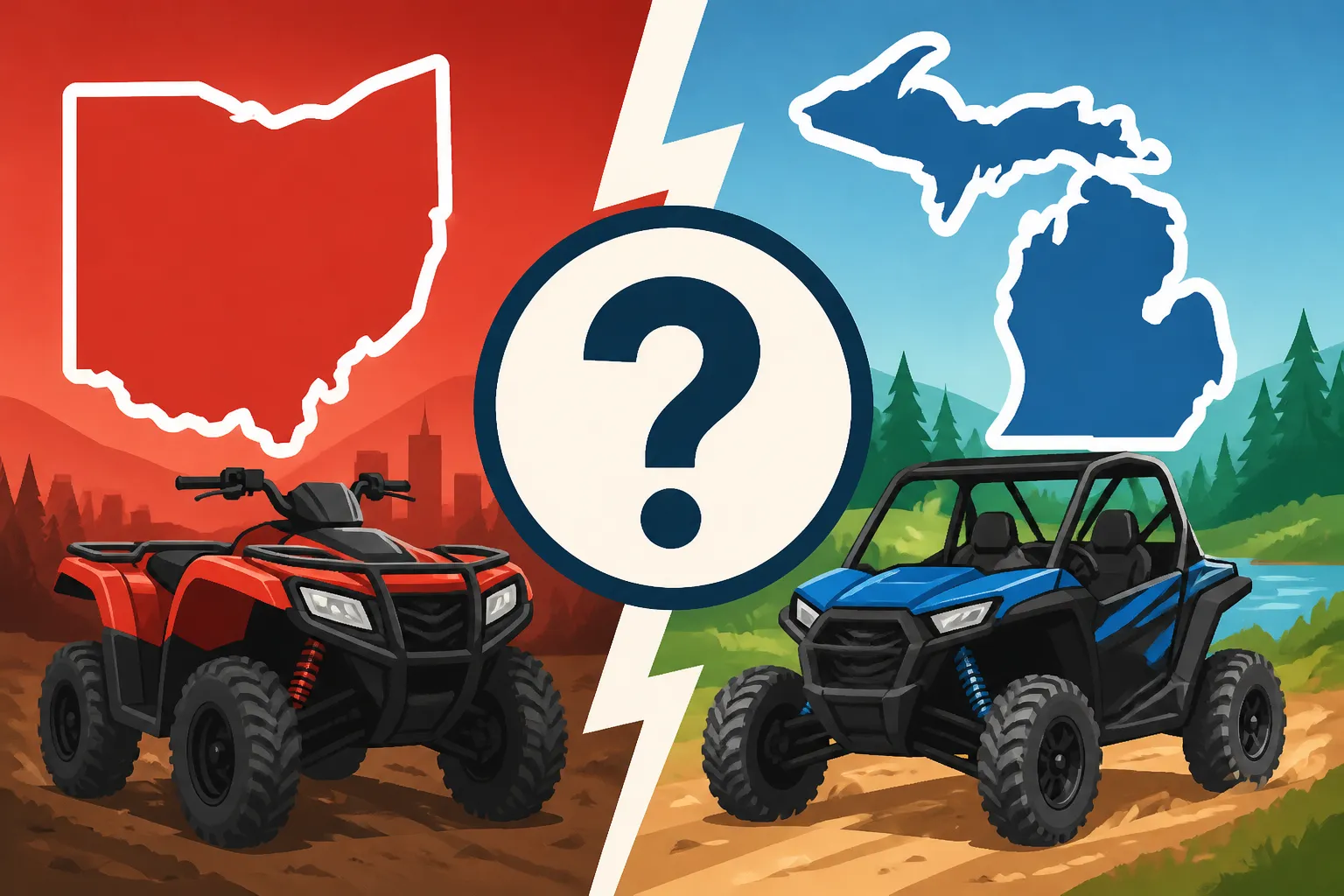
Ohio riders planning to bring an ATV or UTV to Michigan often face two separate permit questions: whether their Ohio registration covers the machine and whether they need a Michigan trail permit. The answer depends on where they ride and whether the machine’s Ohio paperwork qualifies under reciprocity. Sorting that out before leaving home helps avoid buying the wrong permit—or riding without one.
Do Ohio riders need a Michigan ORV license?
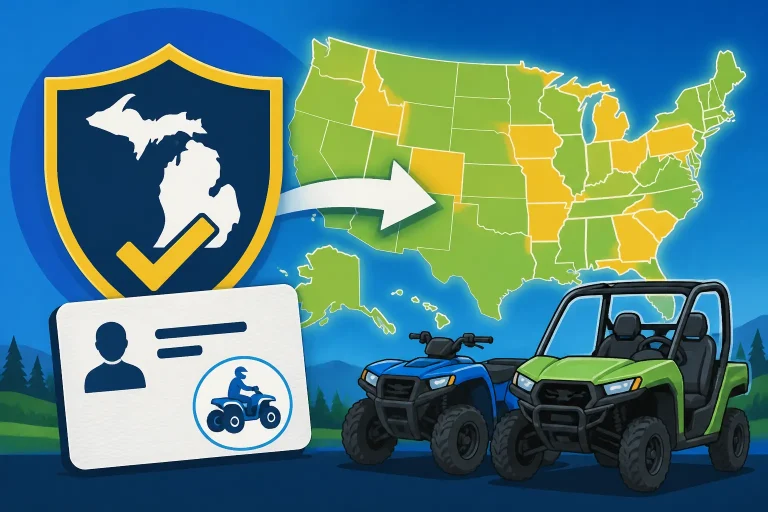
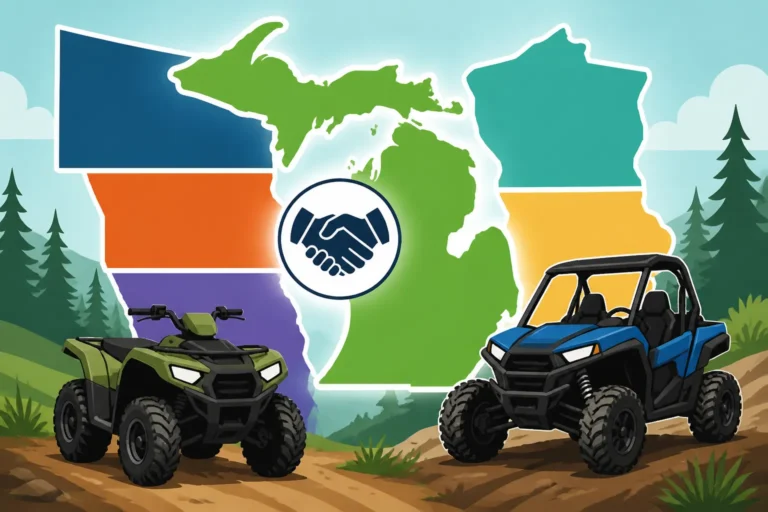
Usually, an Ohio rider with current, valid Ohio ORV registration can rely on Michigan’s reciprocity rules instead of buying a separate Michigan ORV license. That does not mean every Ohio machine automatically qualifies. The registration must be valid for that machine, and the paperwork must meet Michigan’s current reciprocity requirements.
If the machine does not have qualifying Ohio registration, plan to get a Michigan ORV license before riding on Michigan public land where one is required. This can come up when a machine is not registered in Ohio, its registration has expired, or the available paperwork is only a bill of sale or proof of ownership. A title, bill of sale, or insurance card is not the same thing as an active ORV registration.
| Your situation | Michigan ORV license | Michigan ORV trail permit |
|---|---|---|
| Current Ohio ORV registration that qualifies for reciprocity | Generally not required | Required on designated ORV trails and scramble areas |
| No qualifying Ohio registration | Generally required where Michigan requires an ORV license | Required on designated ORV trails and scramble areas |
| Riding only on private land with the landowner’s permission | Generally not required for that private-land riding | Generally not required |
| Riding on a Michigan trail or scramble area | Reciprocity may cover the ORV license | Required unless a specific exemption applies |
The important point is that Michigan’s ORV license and its ORV trail permit are different requirements. Reciprocity may cover the license, but it does not automatically give an Ohio rider access to every Michigan trail without a Michigan permit. For a fuller explanation of the two credentials, see Michigan ORV License and Trail Permit Explained. For the current details that apply to nonresidents, check ORV Permits for Out-of-State Riders in Michigan and confirm the Ohio reciprocity rule with the Michigan DNR before traveling.
Keep the Ohio registration current and bring proof that clearly identifies the machine. If an officer or land manager asks about the machine’s status, being able to show valid registration is more useful than relying on a verbal explanation that the machine is “registered back home.” If the paperwork is expired, incomplete, or not clearly associated with the ATV or UTV, do not assume reciprocity will cover it.
When Ohio riders still need a Michigan trail permit
A Michigan trail permit is generally required for an ORV used on Michigan’s designated ORV trails and scramble areas, even when the rider’s Ohio registration means they do not need a Michigan ORV license. The permit is separate from the vehicle’s state registration. It is also separate from a title, insurance, and any permit required for a different activity or place.
Before your trip, check the rules for the specific trail or riding area. Michigan’s ORV network includes different types of routes, trails, and areas, and the requirements can depend on where you plan to operate. A permit that covers one kind of riding should not be treated as blanket permission to ride anywhere. A map and current riding-area information can help you identify what you will encounter; Michigan ORV Trail Maps and What the Signs Mean explains how to read route and trail information.
The trail permit is associated with the machine, not simply the rider’s group. If several people are bringing separate ATVs or UTVs, check the permit requirement for each machine. A permit on one vehicle does not cover the rest of the group. If you rent a machine in Michigan, ask the rental shop whether the required permit is already handled; do not assume it is included. The same is true when borrowing a friend’s machine: confirm that the machine has the required permit before riding a designated trail.
Don’t confuse a recreation passport with an ORV permit
A Michigan Recreation Passport is not a substitute for an ORV license or ORV trail permit. It may be relevant to access or parking at certain state recreation facilities, but it does not by itself authorize ORV use on designated trails. Check the rules for the facility and the specific riding area, rather than treating a passport, vehicle registration, and ORV permits as interchangeable.
Permit rules and availability can change. If you are unsure whether your route includes a designated trail or scramble area, check the current Michigan DNR information before setting out. The Michigan ORV Permit Year: April 1 to March 31 page can also help with planning around the permit period; confirm the current dates and requirements rather than relying on an old sticker or prior season’s paperwork.
What to bring and check before leaving Ohio
A little preparation can prevent a stop, a delay at the trailhead, or a trip back to buy a permit. Gather documents and verify the route before loading the machine.
- Check the Ohio registration. Make sure it is current and applies to the ATV or UTV you are bringing. Keep the registration document with your travel paperwork.
- Confirm that the machine qualifies for reciprocity. Check the Michigan DNR’s current guidance for Ohio riders. If the registration is expired, missing, or unclear, ask whether you need a Michigan ORV license before relying on reciprocity.
- Identify where you plan to ride. Look at the route and riding-area rules, including whether you will use designated ORV trails or scramble areas.
- Get the Michigan trail permit if your riding requires one. Do this even if your Ohio registration covers the Michigan ORV license requirement.
- Check sticker instructions. If a Michigan permit is required, follow the current instructions for where and how to display it. Keep the machine’s required registration or permit information accessible.
- Review the rules for the rider and machine. Age, supervision, safety equipment, and machine-use requirements still apply to out-of-state visitors.
If you need to buy a Michigan ORV license or trail permit, check Where to Buy a Michigan ORV License for purchasing options and verify that the option you choose sells the credential you actually need. A license and a trail permit are not interchangeable, so make sure you select the right one for your situation.
Ohio riders traveling with children should check Michigan’s age and supervision rules as well. A parent’s Ohio registration or Michigan permit does not waive rider requirements. The Michigan ORV Safety Certificate Requirements page covers the safety-certificate rules to review before a young rider joins the trip.
Where reciprocity stops
Reciprocity concerns the ORV license requirement. It does not cancel other Michigan rules or turn an ORV into a road-legal vehicle. Ohio riders must follow Michigan’s rules for where ORVs can operate, which trails are open to their machine, and what equipment or safety practices apply. If a route uses a public road, check the rules for that road and any local ordinance separately. A trail permit is not permission to ride on a road, and an Ohio registration does not create road access.
The same distinction matters for private property. Riding on private land with the owner’s permission is different from using Michigan’s public ORV trail system. A private-land exemption does not carry over to nearby public trails, roads, or recreation areas. Review Michigan ORV Permit Exemptions on Private Land if your plans include riding on property owned by you, a friend, or a hunting lease.
Do not assume that an Ohio permit or registration grants access to private trails, special-use areas, or facilities with their own rules. Check the land manager’s requirements for the exact place you intend to ride. Some areas may have separate entry, parking, or event requirements in addition to state ORV credentials.
When the paperwork is uncertain, resolve it before the trip. Contact the Michigan DNR or the relevant riding-area manager with the machine type and a clear description of the Ohio registration you hold. Ask two direct questions: whether that registration qualifies for the Michigan ORV license exemption, and whether a Michigan trail permit is needed for your planned route. Keep the answer and the documents together while traveling.
For most Ohio visitors, the practical takeaway is simple: bring valid Ohio ORV registration, verify that it qualifies for reciprocity, and buy a Michigan trail permit when riding designated trails or scramble areas. If the Ohio registration does not qualify, arrange a Michigan ORV license too. Checking those requirements before departure is easier than trying to sort them out at the trailhead.
Disclaimer
This article is for general informational purposes only and does not constitute professional advice. Laws, prices and regulations vary by location and change over time. Consult a qualified professional for guidance on your specific situation.