Where Michigan ORV Licenses Are Sold
Michigan ORV licenses can be easy to confuse with trail permits, especially when you are trying to buy them shortly before a ride. The right place to purchase depends on what is available and convenient, but the bigger step is checking which permits your route requires. Here’s where to look, what to confirm before paying, and how to avoid arriving at a trail without the right authorization.
Where to look for a Michigan ORV license
Start with the Michigan Department of Natural Resources’ current licensing options. Michigan ORV licenses are available through the DNR’s online licensing service and participating license agents. A license agent may be a convenient option when you want help in person or are already near a place that sells outdoor licenses. Online purchase can be useful when you want to arrange your paperwork before travel.
Not every seller will necessarily have the same availability or be open when you need to buy. Check the DNR’s current purchasing information before making a special trip, and contact an agent to confirm that it sells ORV licenses and trail permits. For location-specific planning, Michigan DNR License Agents by County and [Where to Buy a Michigan ORV License Near a Trailhead] can help narrow down the search.
The DNR’s online service is another place to check. If you plan to buy online, make sure you are using the state’s current licensing channel rather than assuming a third-party listing is an official purchase option. For the online process, see Buying a Michigan ORV License Online. If you already have a DNR account, check that you can access it before you are ready to ride.
| Purchase option | When it may suit you | What to confirm |
|---|---|---|
| Michigan DNR online licensing service | You want to arrange the purchase before leaving home | The correct ORV license and any trail permit are selected, and you can access the purchase record |
| Participating license agent | You prefer an in-person purchase or want to ask questions | The agent sells ORV products, has them available, and can process the items you need |
| A seller found near your riding area | You are already traveling or need to check local options | Current hours, availability, and whether the location can sell both the license and trail permit |
Treat the table as a way to compare practical options, not as a guarantee that a particular seller will have a permit ready. Retail availability can change. If you are riding soon, check the DNR’s current information and the seller’s availability before setting out.
What to ask a license agent
When contacting a seller, be specific about what you intend to buy. Ask whether it sells the Michigan ORV license, the ORV trail permit, or both. These are separate items, and an agent’s ability to sell one does not automatically mean it can provide every product or service you need.
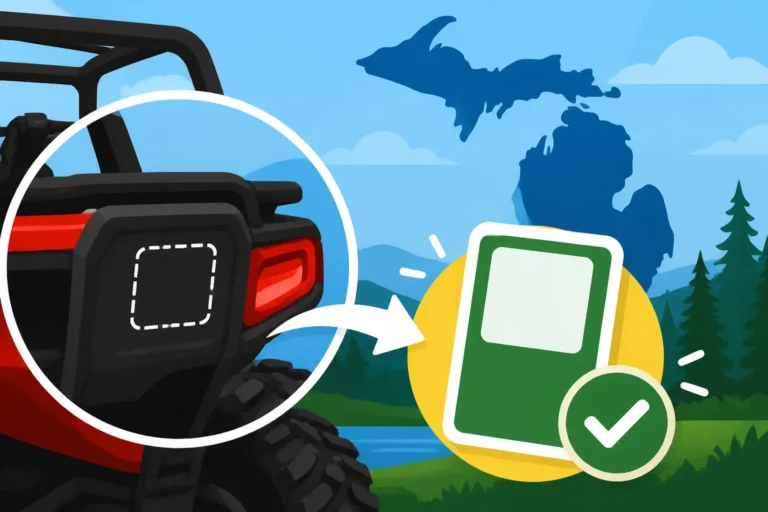
It can also help to ask how you will receive proof of purchase and what you should do if you cannot find it later. Keep the confirmation or receipt accessible, and make sure the required license and permit are properly associated with the machine before riding. If the information is unclear, verify it with the Michigan DNR rather than relying on an informal answer.
The same checks apply to online purchases. Review the selection carefully before you complete the transaction. A purchase confirmation is useful paperwork, but it is not a reason to assume you chose the right permit for every type of riding.
Decide whether you need the trail permit too
The base ORV license and the trail permit are not interchangeable. According to the Michigan Department of Natural Resources, the annual ORV license costs $26.25, and operating on state-designated ORV trails requires an additional $10.00 trail permit, for a combined total of $36.25. Those figures are as of October 2026; check the DNR for current costs before purchasing.
The first question is not simply, “Do I need a license?” It is also, “Where will I ride?” State-designated ORV trails require the trail permit in addition to the base license. If your plan includes those trails, make sure your purchase covers both. If your riding is limited to another permitted setting, check the relevant rule rather than buying based on assumptions.
For a fuller explanation of how the two products differ, read Michigan ORV License and Trail Permit Explained and Do You Need Both a License and a Trail Permit in Michigan?. Those questions matter whether you are buying online or face to face: the seller can process a purchase, but you still need to match it to your intended riding.
Match the permit to the riding area
Before buying, list the places you plan to operate the machine. A ride may involve state-designated trails, state forest roads, frozen public waters, private property, or other locations. Do not assume that a permit requirement for one type of area automatically applies everywhere, or that an exemption for one setting applies to another.
For example, the Michigan Department of Natural Resources says a trail permit is not required for ORV use on the frozen surface of public waters, though an ORV license is required. That specific exception does not mean a trail permit is unnecessary for a separate part of the trip that uses state-designated trails. See Michigan ORV Permit for Frozen Lakes if that is part of your plan.
Private land also needs a separate check. A rule that applies on public land may not apply in the same way on private property, but access permission and other requirements still matter. Review Michigan ORV Permit Exemptions on Private Land before treating private-property riding as an exemption from all permit rules.
If you will be traveling across different types of routes, plan for the most restrictive part of your intended ride. Confirm current rules with the DNR for the particular roads, trails, or facilities you expect to use. A machine that is legal to operate in one location may still need additional authorization to use another.
Keep the expiry date in mind
Michigan ORV licenses and trail permits expire on March 31 of the following year, regardless of the date of purchase, according to the Michigan Department of Natural Resources. Buying near the end of the permit year does not extend the expiry date. Check the dates before buying if you expect to ride across a season change.
For details about the permit-year calendar, see Michigan’s April 1 ORV Permit Year. It is especially helpful when you are purchasing before a trip but expect to use the machine later. Keep a note of the expiry date with your paperwork so you do not mistake an old purchase for a current one.
Buying online or in person
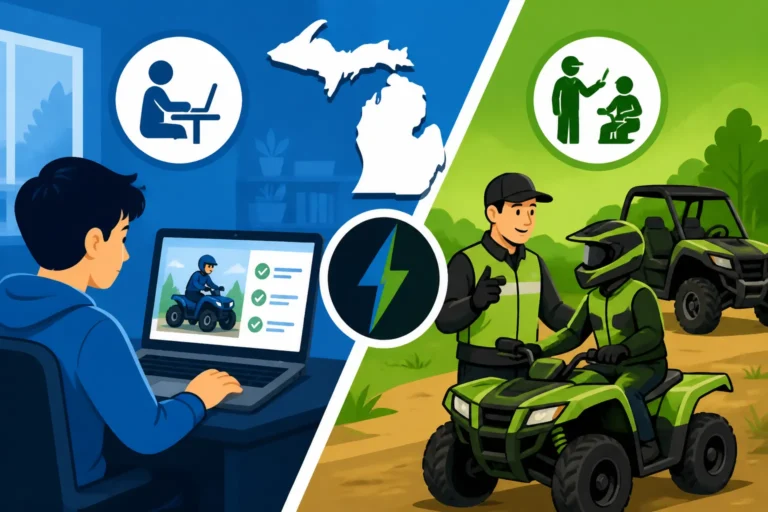
The choice between an online purchase and a license agent is mostly about convenience, timing, and how much assistance you want. Neither option replaces the need to select the correct products. In either case, review your intended riding area, machine, and eligibility before completing the purchase.
If you buy online
Use the Michigan DNR’s current online licensing channel and follow its instructions. Before submitting a purchase, check that you selected the ORV license and, if your route requires it, the trail permit. Confirm that the information on the purchase record is clear and save the confirmation where you can retrieve it.
If you have trouble signing in or the purchase record does not appear as expected, resolve that before riding. Avoid relying on a screenshot or email that does not clearly show what you bought. If you are uncertain whether the order was completed, contact the DNR or the appropriate support channel before purchasing again. That can help prevent confusion over duplicate transactions or missing documentation.
Buying in advance may reduce last-minute uncertainty, but it does not make every route legal by itself. Check for closures and other route-specific requirements close to the ride. The DNR has authority to close state trails and facilities because of weather-related events and wet conditions, so a valid permit does not guarantee that a planned trail will be open.
If you buy from an agent
An in-person purchase can be useful if you want to ask about available products or need help understanding the difference between a license and a trail permit. Tell the agent what kind of riding you plan to do. If your ride includes state-designated ORV trails, say so plainly and confirm that the trail permit is included.
Check the receipt or purchase record before leaving. Make sure it reflects the products you intended to buy, and ask how to correct an error if it does not. Do not assume that paying for one ORV item automatically includes another. If the agent cannot answer a question about where a permit is required, use the Michigan DNR’s current guidance to confirm the rule.
Agent hours can be a practical concern, particularly when travel plans depend on a purchase. Confirm the location’s hours and availability instead of assuming you can buy a permit upon arrival. If the agent is closed or does not sell the item you need, having checked the online option ahead of time may give you another route.
A simple purchase checklist
Before buying, work through these checks:
- Identify the places where you expect to ride, including whether the plan uses state-designated ORV trails.
- Check whether you need the base ORV license, the trail permit, or both for those locations.
- Confirm the current purchase options through the Michigan DNR or a participating license agent.
- Review the selected products and the purchase record before finishing.
- Note the permit expiry date and check that it will cover your planned riding dates.
- Check for closures or changes to access before you leave.
This sequence helps separate the purchase itself from the riding rules. A seller can help with the transaction, but the rider remains responsible for making sure the permit fits the route.
Check rider eligibility and local rules before the trip
Buying a license does not remove age, safety, or operating requirements. If the machine will be used by a young rider, check the rules before purchasing and before riding. The Michigan Department of Natural Resources says anyone under 16 operating an ORV on public lands must have a valid ORV safety certificate and be under an adult’s direct visual supervision. The department also says children under 10 are prohibited from operating four-wheel ATVs on public lands.
The Department of Natural Resources further says youth under 16 must complete an approved ORV safety course and carry their safety certificate when operating an ORV on public lands. Do not treat buying the machine’s permit as proof that a young rider is qualified to operate it. The certificate and supervision requirements are separate responsibilities.
For visitors, check reciprocity before traveling. Michigan law requires non-resident operators aged 12 to 15 to present a Michigan ORV safety certificate or a comparable certificate issued under another state’s or a Canadian province’s authority. See Michigan ORV Permits for Out-of-State Riders for related questions about non-resident requirements. Confirm the current requirements that apply to the rider and the intended riding area.
Other operating rules can affect whether a planned ride is appropriate. Michigan law generally requires ORV operators and passengers to wear a Department of Transportation-approved crash helmet and protective eyewear, with exceptions under certain conditions. For example, a UTV with an approved roof and properly fastened safety belts may qualify for an exception to the helmet requirement. Check the details for the machine and circumstances rather than assuming that every UTV is exempt.
Passenger rules also depend on the vehicle’s design. Michigan law prohibits carrying a passenger on an ORV unless the machine’s manufacturing standards or design provide for transporting passengers. If your machine has seat belts, use them as required; seat belts are also part of the conditions for the helmet exception described above.
A few other requirements matter once the ride begins. Michigan law requires a lighted headlight and taillight during the period from a half-hour after sunset to a half-hour before sunrise. ORVs must also have a United States Forest Service-approved spark arrester and a muffler in good working order and constant operation when operated on public lands. These are operating rules, not items that a license purchase satisfies.
Route access can change with conditions. Michigan state forest roads are generally open year-round unless posted otherwise or seasonally closed, according to the Michigan Department of Natural Resources. The department can also close state trails and facilities because of weather-related events or wet conditions. Check the status of your intended route before loading up, and obey signs or closure notices on arrival.
Common purchasing mistakes to avoid
Buying only the base license for a trail ride
The most common mix-up is assuming the base ORV license includes the trail permit. If your plan includes state-designated ORV trails, the Michigan Department of Natural Resources requires the additional trail permit. Review Michigan ORV License Without a Trail Permit: Where You Can Ride if you are trying to understand what the base license covers without the added permit.
Waiting until the last minute
A last-minute purchase can leave little time to resolve an account issue, find an open agent, or correct a mistaken selection. Check availability before travel. If you are buying through an agent, confirm that the location sells the products you need. If you plan to purchase online, complete the transaction early enough to verify the record.
Assuming a permit is valid for the whole year after purchase
The permit’s expiry is tied to the permit year, not to a full year from the purchase date. The Michigan Department of Natural Resources says annual licenses and trail permits expire on March 31 of the following year. Check the expiry date before relying on a purchase for a later trip.
Treating a permit as proof that the route is open
A license or trail permit does not guarantee access on a particular day. Trails and facilities can close because of weather or wet conditions, and roads may be posted or seasonally closed. Check route conditions and obey closure notices even when your paperwork is current.
Confusing a riding permit with other requirements
A valid ORV license does not replace a safety certificate for a youth who needs one, adult supervision, appropriate protective equipment, or rules about passengers. It also does not authorize riding on a route that is closed or otherwise unavailable. Use the purchase as one part of trip preparation, not as a substitute for checking the rest of the rules.
Assuming every seller is an official source of riding advice
An agent may be able to sell a license or permit without knowing the details of every trail, road, exemption, or closure. Use the seller for transaction questions and verify riding rules with the Michigan DNR. That distinction is useful when there is uncertainty about whether a planned route requires the trail permit.
Frequently Asked Questions
Can I buy a Michigan ORV license online?
The Michigan DNR’s online licensing service is a place to check for online purchase. Confirm the current process through the department, and verify your purchase record before riding.
Can I buy the ORV license and trail permit from a license agent?
Participating license agents may sell ORV products, but availability can vary. Contact the location before visiting and ask whether it sells both the base license and the trail permit.
Do I need a trail permit with the ORV license?
The Michigan Department of Natural Resources requires the additional trail permit for operating on state-designated ORV trails. Check the rules for your specific riding area; some uses have different requirements.
When do Michigan ORV licenses and trail permits expire?
According to the Michigan Department of Natural Resources, annual licenses and trail permits expire on March 31 of the following year, regardless of the purchase date.
Is the purchase receipt enough to ride anywhere?
No. The permit must match the kind of riding you plan to do, and the route must be open. Other rules, including age, safety, and machine requirements, may also apply.
Sources
- Michigan Department of Natural Resources — ORV FAQs – State of Michigan (checked October 28, 2026)
- Michigan Department of Natural Resources — Purchase permit, learn requirements – State of Michigan (checked October 28, 2026)
Disclaimer
This article is for general informational purposes only and does not constitute professional advice. Laws, prices and regulations vary by location and change over time. Consult a qualified professional for guidance on your specific situation.