Michigan’s April 1 ORV Permit Year
Michigan’s April 1 ORV permit-year change can catch riders who assume a sticker lasts 12 months from the day they buy it. It doesn’t work that way: Michigan’s ORV permit year runs from April 1 through March 31. This guide explains how that calendar affects ATVs and UTVs, which permits you may need, and what to check before a ride.
How Michigan’s April 1 ORV permit year works
The permit year follows a fixed calendar
Michigan’s ORV permit year is tied to the calendar, not to your purchase date. The permit period runs from April 1 through March 31. In practical terms, a permit purchased during that period applies to that permit year; it isn’t a rolling 12-month pass that stays valid until the same date the following year.
That distinction matters if you buy a permit late in the season. For example, a rider who purchases an ORV license in March shouldn’t assume it will carry through the following winter and into the next spring. The permit-year boundary still arrives on March 31. If you plan to ride after that date, check whether you need the permit for the new year.
For the same reason, a rider who buys a permit in April shouldn’t expect to need another one simply because a full year has passed since the purchase. The key dates are April 1 and March 31, not the anniversary of the transaction. For a deeper explanation of the calendar, see Michigan ORV Permit Year: April 1 to March 31.
March and April require an extra date check
March can be a confusing month because the current permit year is about to end while riders may already be planning spring trips. A valid sticker on the machine may still be useful for a ride before March 31, but it doesn’t automatically cover a trip on April 1 or later. Check the permit’s validity for the specific ride date rather than relying on how recently you bought it.
April brings the opposite risk. A rider may have purchased an ORV license for the new permit year, but still need to consider the separate trail permit if the planned destination requires one. The date change doesn’t turn one permit into another, and it doesn’t make every trail or route open for riding.
Before a spring ride, confirm three things: that your permit covers the ride date, that you have the right type of permit for the place you intend to ride, and that the route is open. A fresh permit isn’t permission to ignore a seasonal closure, a local restriction, or a trail-width rule.
Which ORV permits riders may need
An ORV license and a trail permit do different jobs
Michigan riders often use “ORV permit” as a catch-all, but the ORV license and ORV trail permit are different. The ORV license is generally required when operating an ORV on public lands, subject to applicable exceptions. The trail permit is an additional requirement for designated ORV trails and scramble areas. The right combination depends on where you ride.
A rider using a public route that doesn’t require the trail permit may still need the ORV license. A rider heading to a designated trail or scramble area may need both. Buying one shouldn’t be treated as proof that the other is covered. If you’re unsure which applies to a particular ride, review Do You Need Both a License and a Trail Permit in Michigan?.
This distinction is easy to miss when you’re focused on a trip, especially if a friend says, “I already bought the permit.” Ask what they bought and where they plan to ride. A trail permit and an ORV license aren’t interchangeable, and neither is a vehicle title.
A permit is not a title, registration, or Recreation Passport
An ORV license is not proof that you own the machine. It doesn’t replace a Michigan ORV title or resolve a title problem. If you’ve recently bought an ATV or UTV, keep the ownership paperwork separate from the riding permit and make sure the title transfer is handled as required.
A Recreation Passport is also a separate matter. It may be relevant when you’re accessing a Michigan state park or other location with its own entry requirements, but it isn’t an ORV license or trail permit. Likewise, having a road-legal plate or paperwork for another purpose shouldn’t be assumed to satisfy ORV permit requirements on public land.
| Item | What it generally addresses | What it does not replace |
|---|---|---|
| ORV license | Operating an ORV on public lands where a license is required | A trail permit, title, or Recreation Passport |
| ORV trail permit | Access to designated ORV trails and scramble areas where required | The ORV license or proof of ownership |
| ORV title | Ownership record for a titled machine | A riding license or trail permit |
| Recreation Passport | Entry requirements at applicable state recreation sites | ORV riding permits |
For a broader explanation of how these requirements fit together, read Michigan ORV License and Trail Permit Explained.
Matching your permit to the place you’ll ride
Public roads, forest roads, trails, and scramble areas aren’t the same
Riders sometimes plan around a destination name rather than the exact surfaces they’ll use. But a day out may include a trail, a forest road, a connecting route, a staging area, or a scramble area, and the rules can differ. Don’t assume the permit that worked for one part of a previous trip automatically covers every part of the next one.
A common example is a rider who wants to travel on a public forest road but doesn’t plan to enter a designated ORV trail. In some situations, the ORV license may be the relevant requirement without the trail permit. For guidance on that distinction, see Michigan ORV License Without a Trail Permit: Where You Can Ride. Confirm the specific route rather than relying on a general description of the area.
If your trip includes a designated trail or scramble area, check the requirements for that location before leaving home. A trailhead sign can help once you arrive, but checking in advance gives you time to buy the correct permit, change your route, or avoid a wasted drive.
Private land has different rules, but boundaries matter
Riding on private land is not the same as riding on public land. Michigan has permit exemptions for some private-land use, but an exemption for a property does not automatically apply once you leave it. A short ride from a private driveway to a public trail can change which requirements apply.
This catches people who ride regularly on their own acreage or a friend’s property and then head out for a weekend trail ride. They may be familiar with their machine and local land but unfamiliar with the public-land permit rules. Before crossing onto a public road, trail, or other public riding area, check whether the ORV license and trail permit are required.
If you’re relying on a private-land exemption, read Michigan ORV Permit Exemptions on Private Land and make sure the planned ride genuinely stays within the exemption. Don’t treat permission from a landowner as a substitute for the rules that apply to public land.
Buying, renewing, and keeping permit records
Buy for the ride date, not just the shopping date
When you purchase an ORV permit, first think about when you’ll ride. If you’re buying near the end of March, determine whether the intended trip falls before or after the March 31 boundary. If you’re buying in April, make sure the permit is for the new permit year and that you’ve selected all the permit types your route requires.
Michigan ORV permits are available through state sales channels, including the DNR’s online licensing system and participating license agents. To find the most practical option for your situation, see Where to Buy a Michigan ORV License. Check the transaction details carefully before completing a purchase, particularly if you’re buying more than one type of permit.
Keep the confirmation or other purchase record until you’ve verified the permit information and sticker. If a purchase is made for several machines or riders, keep the records clear enough that you can tell which permit belongs with which machine. A simple folder or labeled document pouch can help; some riders keep a small waterproof organizer with their maintenance records and permit paperwork, including one picked up through Amazon.
A mid-season machine purchase doesn’t reset the permit year
Buying a used ATV or UTV halfway through the permit year doesn’t create a new 12-month permit period. The machine’s purchase date and the permit-year dates are separate. You may need to arrange the applicable permit for the machine and ride location even if the seller says it was recently used on the same trail system.
Ask the seller what permit, if any, is currently displayed, and don’t rely on that conversation alone. A sticker may not establish that the right permit was purchased for your planned use or that it will remain valid for your ride date. For a machine bought during the season, see Michigan ORV Permits for a Machine Bought Mid-Season.
It’s also wise to keep purchase paperwork and permit information in separate, labeled places. A waterproof pouch from Amazon can be useful for storing a paper receipt in a trailer or gear bag, but don’t assume a receipt replaces the required sticker or other compliance steps. Confirm what must be displayed on the machine and follow the placement instructions.
Out-of-state riders and permit reciprocity
A home-state permit may not cover a Michigan ride
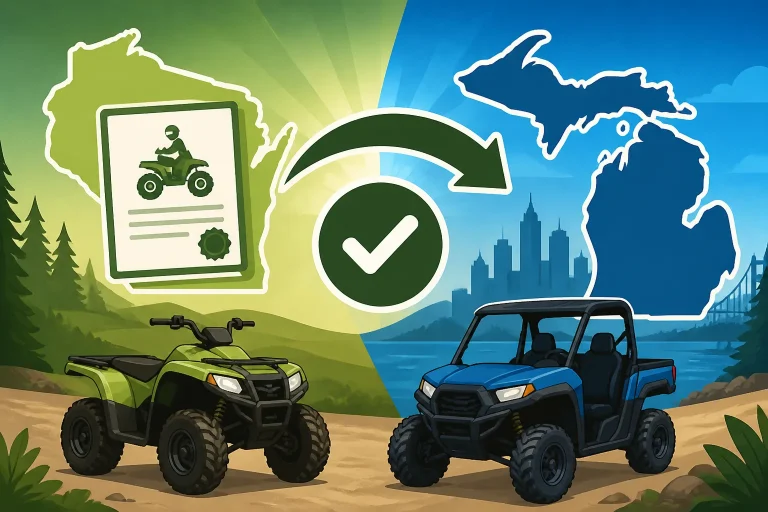
Visitors often assume that a registration, sticker, or trail pass from home will be accepted everywhere. That assumption can lead to a frustrating surprise at a Michigan trailhead. Rules depend on Michigan requirements and any applicable reciprocity arrangement; a permit from another state should not be presumed to replace a Michigan permit.
Before traveling, check whether your home state has a current agreement that applies to your machine and the type of riding you plan to do. Reciprocity can be specific, and an arrangement that applies to one credential or situation may not cover another. Start with Michigan ORV Permit Reciprocity With Other States rather than relying on a forum post or a friend’s experience from a past season.
If you can’t confirm that an exemption applies, plan around Michigan’s requirements and verify the current instructions through the appropriate state channel. It’s much easier to check before loading the ATV than to discover at the trailhead that the paperwork you brought isn’t sufficient.
Nonresidents should check each part of a trip
A visitor’s planned trip may cross different land types and include more than one kind of riding area. Make a list of the actual places you’ll ride, then check the permit requirement for each. A permit that covers one portion of the trip may not cover a designated trail or scramble area elsewhere.
This is especially useful for riders who are coming from Wisconsin, Ohio, Indiana, or elsewhere for a long weekend. Don’t assume that a permit or registration recognized in one neighboring state automatically gives access to every Michigan trail. Use Michigan ORV Permits for Out-of-State Riders and Michigan ORV Permit Reciprocity With Other States to identify the questions to verify before departure.
If your group includes residents and visitors, check each rider’s situation rather than buying based on the assumption that everyone is treated identically. Keep purchase records organized by machine and rider, and make sure the correct sticker is on the correct vehicle.
Stickers, inspections, and the first ride after April 1
Put the sticker where it can be checked
A permit purchase is only one part of being ready to ride. Follow Michigan’s instructions for displaying the ORV sticker on the appropriate machine. A sticker that’s hidden, damaged, placed on the wrong surface, or separated from the machine can create avoidable confusion during a stop.
Before the season starts, inspect the sticker and its placement. Mud, pressure washing, weather, and repeated cleaning can affect how well it remains attached or legible. If you’re replacing a sticker or changing machines, check the applicable instructions instead of improvising a location. For placement details, use Michigan ORV Sticker Placement on an ATV.
Some riders keep a small note with the machine’s permit information and renewal reminders. A waterproof label sleeve or compact organizer found through Amazon may help keep paper records together, but the sticker itself still needs to be displayed as required. Do not rely on a phone photo or receipt as a substitute for the physical display requirement unless the applicable rule explicitly allows it.
Treat April 1 as a checklist date
The April 1 transition is a useful annual prompt to inspect more than the permit. Check that the machine has the correct permit for the new year, that the sticker is readable and placed properly, and that your route is open. If you ride with a group, ask everyone to confirm their own machine rather than assuming the trip organizer has handled every permit.
Next, check practical details: tires, brakes, lights, fuel, recovery gear, and the map for your route. A permit doesn’t tell you whether a trail is passable after rain, whether a route is closed, or whether a particular machine width is allowed. If spring conditions are changing, consult Michigan ORV Trail Closure Notices before heading out.
Finally, build the permit year into your personal calendar. Set a reminder before March 31 and another before your first planned ride after April 1. A calendar alert won’t buy the permit for you, but it can prevent the familiar last-minute scramble at the trailer or trailhead.
Common permit-year mistakes and how to avoid them
Assuming a permit lasts one year from purchase
The most common misunderstanding is treating the permit as a rolling annual pass. A rider may purchase in late winter, see a current sticker, and assume it remains valid for another full year. The fixed permit calendar makes that assumption risky, especially for purchases close to March 31.
Avoid the problem by writing down the permit-year end date and checking it before each trip. If you travel in both March and April, think of those as potentially separate permit-year situations. Confirm the date on the permit information and ask the relevant state authority if anything about the transaction is unclear.
A small paper checklist in your trailer can help: permit year, license, trail permit if needed, sticker placement, route status, and machine condition. Keep it simple enough that you’ll actually use it. That routine is more dependable than trying to remember when you bought a sticker months earlier.
Thinking the permit guarantees trail access
A valid ORV license or trail permit doesn’t guarantee that a route is open or appropriate for your machine. Seasonal closures, weather-related conditions, local rules, width limits, and land-manager decisions can affect access. Riders who purchase early should still check the specific route close to the trip.
The reverse is true as well: a trail being open doesn’t mean you can ride without the required permit. These are separate questions. Confirm both your permit status and the route’s status, particularly when riding in a new area or returning after a long break.
When riding with others, agree on the route and permit requirements before anyone loads up. One person’s machine, permit, or past experience doesn’t automatically cover the rest of the group. If an officer checks your machine, a clear sticker and accurate understanding of the permit year make the conversation much less stressful. For related enforcement information, see Michigan ORV Permit Checks by Conservation Officers.
Leaving permit details until the trailhead
Buying a permit at the last moment can be stressful if you have weak cell service, a dead phone, a crowded staging area, or uncertainty about which permit to select. Riders heading north for a weekend may already be juggling fuel, trailers, lodging, and weather. Permit decisions are easier when handled before the drive.
Build the permit check into trip planning. Confirm the date, machine, type of riding, and any reciprocity question. Save your confirmation information somewhere accessible, and make sure each rider knows where the sticker is displayed. If you’re organizing a group, ask for confirmation before departure rather than at the trail entrance.
For riders who prefer paper backups, keep a receipt or permit record in a sealed organizer alongside the machine’s maintenance documents. An inexpensive folder or waterproof document pouch sourced through Amazon can be a practical option, but use it only as a backup for records—not as a substitute for required permits or sticker display.
A practical permit-year routine for Michigan riders
Before the permit year changes
In the weeks before March 31, look at your riding plans. If you expect to ride before the end of March, check that your existing permit covers those dates. If you expect to ride on or after April 1, identify which permits apply to the places on your itinerary for the new permit year.
Use that moment to check the machine’s sticker, paperwork, and basic condition. If you ride on public routes, make sure you understand whether you need the ORV license alone or both the license and trail permit. Recheck reciprocity if a visitor is joining your group or if you’re traveling across state lines.
It can help to add two reminders to your phone or paper calendar: one before the permit year ends and one before your first ride in the next permit year. Put the reminders somewhere you’ll notice them while planning a trip, not only on the date itself. That way, you have time to confirm requirements and buy through an appropriate channel.
Before every trip
Before loading, confirm that each machine has the correct permit for the ride date and destination. Verify that stickers are visible and in good condition. Review the route for seasonal closures, local restrictions, and machine-width limits, and don’t assume a familiar trail network has the same conditions as the last time you visited.
For a mixed group, make a quick machine-by-machine check. Confirm who is riding each ATV or UTV, whether the intended routes require a trail permit, and whether an out-of-state rider needs to verify an additional requirement. Keep the title and sale paperwork separate from the permit record so there’s no confusion about what each document proves.
If a rule or permit detail is uncertain, pause and confirm it before riding. A short check at home is usually easier than trying to solve the question at a crowded staging area after the trailer is unloaded. The key habit is simple: use April 1 as the annual reset, then check the actual route and ride date every time.
Disclaimer
This article is for general informational purposes only and does not constitute professional advice. Laws, prices and regulations vary by location and change over time. Consult a qualified professional for guidance on your specific situation.