Michigan Conservation Officer ORV Stops
A Michigan ORV stop can be stressful, especially if you are unsure which permits or documents an officer may ask about. Knowing what officers commonly check, how to respond safely, and what to do if you receive a citation can make the encounter clearer. The key is to ride prepared, follow instructions, and verify any disputed requirement afterward.
Why a conservation officer may stop an ORV
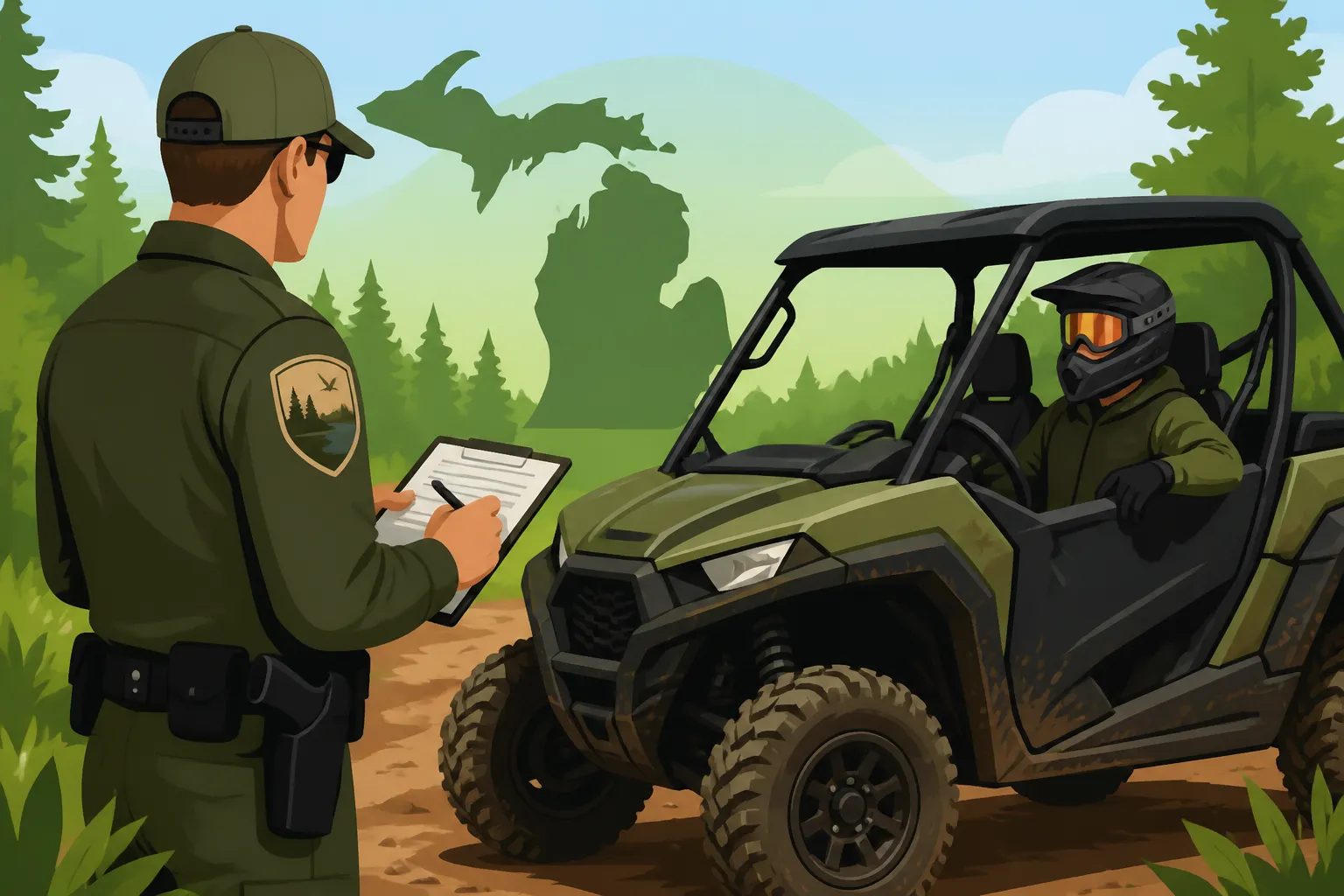
A conservation officer may stop a rider to check compliance with ORV rules or to address a safety concern. Stops can happen on trails, routes, state land, or other places where ORV use is permitted. An officer may also be responding to a complaint or investigating an incident. Other law enforcement officers may enforce applicable rules as well.
A stop does not necessarily mean the officer has already decided that you broke a rule. The officer may be checking that your machine and ride meet the requirements for that location. The questions can concern your permit, your route, the machine’s equipment, or the age and safety requirements that apply to the rider.
Common subjects include:
- Whether the machine has the required ORV license or trail permit for the area
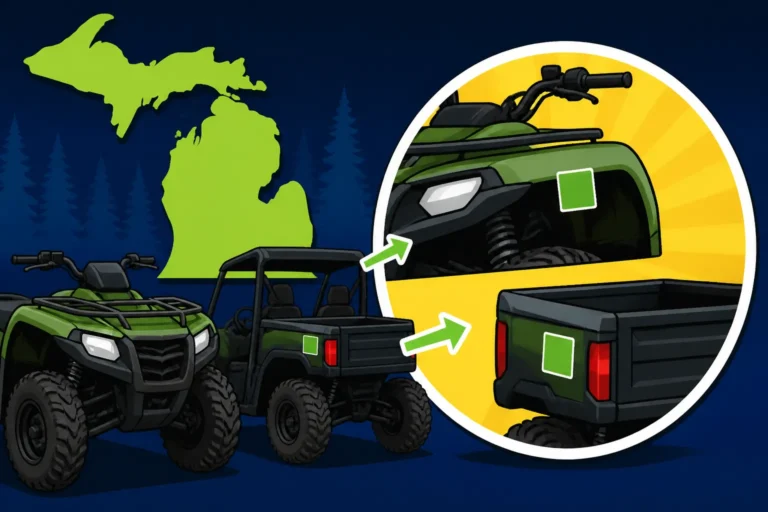
- Whether the permit is displayed as required
- Whether the machine is being operated on an open route or trail
- Whether age, supervision, training, or safety-certificate rules apply to the rider
- Whether required safety equipment is being used
- Whether the machine appears to meet relevant operating or equipment rules
- Whether the rider is following local restrictions, seasonal closures, or posted signs
A title is not the same thing as an ORV license or trail permit. A title is ownership paperwork; permits relate to where and how the machine may be operated. A conservation officer’s question about a permit does not mean you should carry your title while riding. For the distinction between the main permit types, see Michigan ORV License and Trail Permit Explained and Do You Need Both a License and a Trail Permit in Michigan?.
Permit needs can depend on where you ride. A machine that is properly permitted for one type of riding may still need a different permit for another area or activity. Do not assume that having one sticker automatically authorizes every ride. Check the current rules for your destination, including any special requirements for a park, scramble area, or trail system. The overview at Michigan ORV Permit Exemptions on Private Land can help clarify why riding on private property is not the same situation as using public riding areas.
| What an officer may ask about | What to check before riding |
|---|---|
| ORV license or trail permit | Confirm which permits apply to your route and machine |
| Permit display | Check the current placement instructions for the permit you bought |
| Rider age or training | Confirm the rules that apply to the rider’s age and riding location |
| Route or trail access | Check maps, signs, closures, and local restrictions |
| Safety equipment | Review the rules for the machine, rider, and conditions |
| A reported incident or complaint | Be prepared to describe what happened accurately and calmly |
A stop may also lead to questions about where you came from or where you are going. Answer truthfully. If you are uncertain about a route or boundary, say so rather than guessing. Trail maps and signs can help, but they do not replace checking current closures and access rules before setting out.
Prepare before you ride
The easiest stop to manage is one where you can promptly show that you have checked the rules and have any required proof available. Before a ride, confirm the permit requirements for the exact place you plan to use. Requirements can differ between trail systems, state forest roads, private land, and special riding areas. They can also change, so use current official information rather than relying only on an old map, an online discussion, or another rider’s memory.
For a quick overview of permit types, read Michigan ORV License and Trail Permit Explained. If you are riding outside Michigan, check whether an exemption or reciprocity rule applies instead of assuming that a permit from another state will be accepted. ORV Permits for Out-of-State Riders in Michigan explains the issue to verify.
Before leaving, work through these steps:
- Confirm the riding area is open to your machine. Check the route or trail designation, any width restrictions, posted signs, and current closure notices. A legal ORV permit does not make a closed trail open.
- Check which permits are needed. Look at the requirements for the specific area and type of riding. Do not rely on the permit used for a previous trip if you are going somewhere different.
- Verify permit placement. Make sure the sticker is visible and attached as directed. A permit that is in your pocket may not satisfy a display requirement. See Where the Michigan ORV Sticker Goes on Your Machine for placement guidance.
- Check rider-specific requirements. Age, supervision, training, and safety-certificate rules can vary with the rider and circumstances. If a young person is riding, review Michigan ORV Age Rules for Young Riders and Michigan ORV Safety Certificate Requirements.
- Inspect the machine and safety gear. Confirm that required equipment is present and working, and that each rider has the protective equipment required for the ride.
- Keep essential information accessible. Know how to show relevant permit proof or other information if asked. Keep personal documents secure and avoid carrying unnecessary ownership paperwork on the trail.
- Tell your group the plan. Riders should know the route, the meeting point, and how to respond if one machine is stopped or separated from the group.
It can be useful to keep a clear photo of permit purchase information on a phone as a backup, but do not assume that a photo replaces a required physical sticker or other form of proof. Your phone may lose power or signal, and an officer may need to see the machine itself. Check the official instructions for the permit you have.
Take a moment to review the machine before the ride, too. A loose or unreadable permit, malfunctioning lights, or equipment that has been altered can lead to questions even if you intended to follow the rules. The right preparation is not about trying to predict every question; it is about making it easy to show that you have checked the rules that apply.
What to do during the stop
When you see an officer signaling you to stop, slow down and stop as soon as it is safe. Do not accelerate away, continue riding to a different location without permission, or make a sudden turn that could look like an attempt to evade the stop. If you are on a narrow trail or in a place where stopping immediately could create a hazard, move only as far as needed to stop safely and make your actions clear.
Once stopped, turn off the engine if it is safe to do so. Stay seated or remain where the officer can see you, and keep your hands visible. Let passengers know to stay calm and follow instructions too. Avoid reaching into a pack or pocket before telling the officer what you are doing. If you need to retrieve something, ask first and wait for instructions.
A practical sequence is:
- Stop in a safe, visible place and remain with your machine.
- Keep your hands in view and avoid sudden movements.
- Listen to the officer’s instructions before reaching for documents or equipment.
- Answer questions truthfully and briefly.
- If you do not understand a question or instruction, ask for clarification calmly.
- If you believe a rule has been misunderstood, explain your concern without arguing or interfering with the stop.
- Before leaving, make sure you understand any directions, warning, or citation you were given.
The officer may ask about your permit, route, rider information, or what happened before the stop. Respond accurately. If you do not know the answer, say that you do not know. Do not invent a detail to make your explanation sound stronger.
You can ask what the officer needs to see and whether you may retrieve it, but follow instructions about when and how to do so. The exact documents or information required can depend on the situation. A stop focused on permit display may differ from one involving a crash, a complaint, or a suspected equipment issue.
If there are several machines in your group, do not assume that every rider should crowd around the officer. Stay where directed and let the officer manage the interaction. A group leader can help keep the rest of the riders stopped and out of the way, but should not interrupt or speak over the officer. If another rider is separated from the group, tell the officer plainly rather than leaving without permission to search.
For a closer look at the paperwork side of an encounter, see Michigan ORV Paperwork During a DNR Stop. It is also useful to understand that safety certificates, permits, and ownership records are different kinds of records. A certificate may establish that a rider completed applicable training; it does not replace a permit required for a particular riding area.
If the stop follows a crash, injury, or property damage, focus first on immediate safety and reporting requirements. Do not leave an incident scene just because you are worried about receiving a ticket. Preserve relevant information and give accurate answers. Michigan ORV Accident Reporting Requirements covers the reporting questions to check.
If the officer gives you a warning or citation
An officer may give instructions, explain a concern, issue a warning, or issue a citation. If you receive a citation, read it before the encounter ends if circumstances allow. Check that you understand the alleged violation, the next step, and any response deadline stated on the document. Do not assume that a verbal explanation changes the written instructions.
A citation is not the place to settle a disagreement through an argument on the trail. Stay respectful, ask brief questions if something is unclear, and keep your response focused on understanding what happened next. If you think the officer has misunderstood a fact, you can calmly state it. You can also make a more complete response through the process described on the citation or by the relevant authority.
After the stop:
- Keep the citation and any related paperwork together.
- Write down the location, time, route, and relevant details while you remember them.
- Save photographs of signs, permit placement, or the riding area if they are relevant and were taken lawfully and safely.
- Keep receipts or other records that may help show what permit you bought or when you bought it.
- Read the response instructions and deadlines on the citation carefully.
- Contact the authority named on the paperwork if you cannot tell what response is required.
Do not ignore a citation because you believe it was issued in error. If you wish to challenge it, follow the stated process and meet the deadline. The available options and consequences depend on the alleged violation and the issuing authority. Fighting a Michigan ORV Ticket offers more detail on preparing a response, while Michigan ORV Ticket Costs by Violation explains why you should not assume every ticket has the same consequence.
If the issue was a missing or improperly displayed permit, correct the problem before your next ride. If it involved route access, check the specific route and any local ordinance or closure notice. If it involved a young rider, review the rules for that rider’s age and supervision rather than relying on a general rule for adults. A stop can be a useful prompt to check your understanding, but it is not a substitute for confirming the official requirement.
It is also worth checking whether the stop revealed a broader issue in your group’s routine. For example, if several riders are using a shared trail, make sure each machine has the required permit and that each rider knows the trail restrictions. If your group rides in more than one county or uses both trails and roads, review the local access rules for each leg of the trip. A permit does not necessarily answer every question about where an ORV can travel.
Disclaimer
This article is for general informational purposes only and does not constitute professional advice. Laws, prices and regulations vary by location and change over time. Consult a qualified professional for guidance on your specific situation.