Recreation Passport for Non-Residents in Michigan
Planning a Michigan ride can mean sorting out more than one kind of permit. The Recreation Passport is for motorized entry to state parks; it is not an ORV license or trail permit. Here’s what non-resident visitors should budget for, what the passport does and does not cover, and how to check which documents fit the places they plan to visit.
What the Recreation Passport Covers
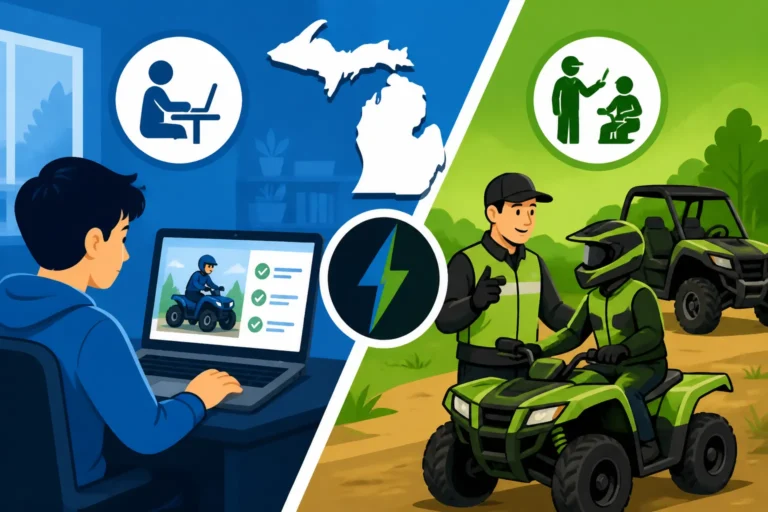
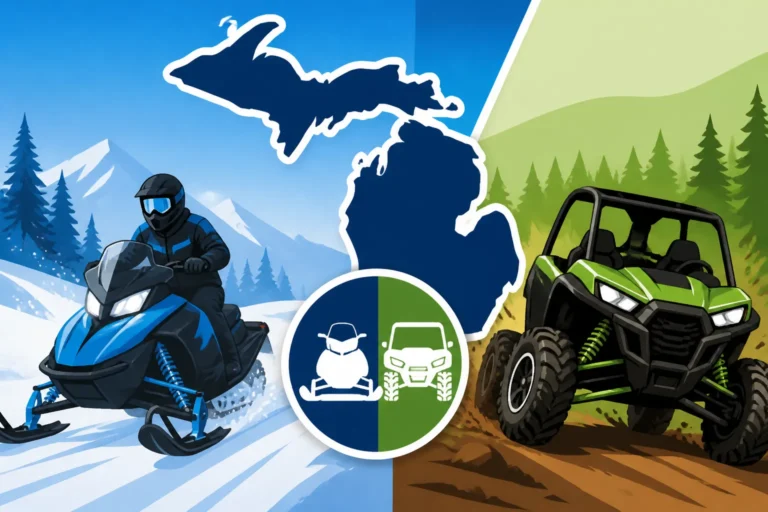
A Recreation Passport and an ORV permit serve different purposes. The Michigan Department of Natural Resources requires a Recreation Passport for motorized vehicle entry to Michigan state parks. An ORV license and, for designated ORV trails, a trail permit are separate requirements for riding.
That distinction matters because a passport does not authorize trail riding, and an ORV permit does not replace a required state park vehicle-entry pass. A trip might involve one, both, or neither, depending on the destination and how you’re using the machine.
| Pass or permit | What it applies to | What to check |
|---|---|---|
| Recreation Passport | Motorized vehicle entry to Michigan state parks | Whether your destination is a state park and whether you’ll enter by motorized vehicle |
| ORV license | ORV use under Michigan’s ORV rules | Which places you’ll ride and what permit rules apply there |
| ORV trail permit | Riding on state-designated ORV trails | Whether your planned route includes a designated ORV trail |
The Michigan Department of Natural Resources sets the Recreation Passport requirement for motorized state park entry. ORV license and trail permit rules are separate. For a closer comparison, see Recreation Passport vs ORV Trail Permit in Michigan and Michigan ORV License and Trail Permit Explained.
Before setting off, list each place you expect to visit: a state park, an ORV trail, a state forest road, or another riding area. A campsite or trailhead near a park can make it easy to assume that one permit covers the whole trip. Instead, check the entry rules for each destination and the riding rules for each route. If a route or parking area is part of a state park, confirm whether a Recreation Passport is needed for the vehicle entry even if the main purpose of your visit is riding elsewhere.
It’s also worth separating the vehicle’s paperwork from the rider’s paperwork. A Recreation Passport is connected to motorized entry to a state park; it does not settle questions about the ORV’s title, registration, safety requirements, or eligibility to ride a particular route. Those checks belong to their own parts of trip planning.
Passport Costs and Validity for Non-Residents
As of October 2026, the Michigan Department of Natural Resources lists the non-resident Recreation Passport at $42 for an annual pass and $12 for a daily pass. The annual pass is valid through December 31 of the year it is purchased.
The practical choice depends on how often you expect to enter Michigan state parks by motorized vehicle during the pass’s validity period. A daily pass may fit a one-off visit, while an annual pass may be more convenient for repeat visits. Compare the options against your actual itinerary, not just the number of days you’ll be in Michigan: what matters is whether you’ll need motorized entry to a state park.
Check the Michigan Department of Natural Resources’ current purchase instructions before traveling. The available purchase method and any details about how to display or associate the pass with a vehicle are things to verify directly with the department. Don’t assume that a pass purchased for one trip automatically carries over to another vehicle or visit; follow the current instructions for the pass you select.
If you’re weighing the annual and daily options, Michigan Recreation Passport Cost and Renewal can help you think through renewal and validity questions. For a visit to a specific destination, Do You Need a Recreation Passport at Silver Lake? is a useful example of why it pays to check the rules for the place you’re visiting rather than relying on a general assumption.
A few practical checks can help avoid a last-minute scramble:
- Confirm whether the destination is a Michigan state park and whether you’ll enter by motorized vehicle.
- Decide whether an annual or daily pass better fits the planned visits.
- Check the current purchase and display instructions with the Michigan Department of Natural Resources.
- Keep the Recreation Passport question separate from ORV trail and riding permits.
- Recheck the rules if your itinerary changes or you switch to a different access point.
For trip planning, it can help to keep a short note of which requirement applies to each stop. That way, you won’t confuse the park-entry pass with the permits needed to ride.
When You Also Need ORV Permits
The Recreation Passport is not the permit that makes an ATV or UTV eligible for ORV use. Michigan’s ORV requirements depend on where you plan to ride. State-designated ORV trails require an ORV license and an additional trail permit, according to the Michigan Department of Natural Resources. A passport does not take the place of either one.
That means an out-of-state visitor should consider two separate questions:
- Do I need a Recreation Passport to enter a Michigan state park by motorized vehicle?
- What ORV license or trail permit do I need for the places where I’ll ride?
The answers may differ across the same trip. You might need a Recreation Passport for a state park entrance and an ORV license plus trail permit for a designated trail. Or your route may not include a state park at all, making the passport question different while ORV rules still apply. Check each location rather than treating “Michigan permit” as one all-purpose pass.
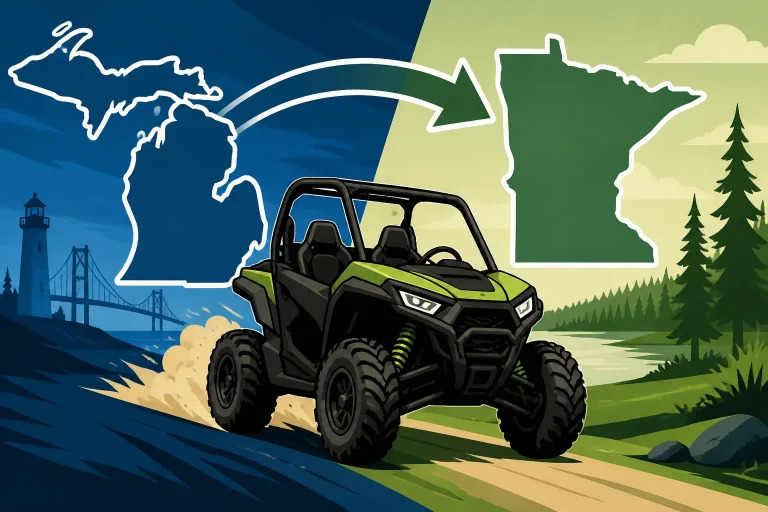
Non-residents should also review the rules that apply to their residency and the type of riding they plan to do. ORV Permits for Out-of-State Riders in Michigan covers that separate issue. If you’re comparing permits and trying to decide which ones apply to a particular trip, Michigan ORV License and Trail Permit Explained is a helpful companion.
A Recreation Passport also does not replace rider safety requirements. The Michigan Department of Natural Resources requires riders under sixteen operating an ORV on public lands to have a valid ORV safety certificate and be under an adult’s direct visual supervision; children under ten may not operate four-wheel ATVs on public lands. For non-resident operators aged twelve to fifteen, the Michigan Legislature recognizes a Michigan ORV safety certificate or a comparable certificate issued under another state’s or a Canadian province’s authority. These requirements are separate from the park-entry pass, so families should check them before taking a young rider out.
If your ride includes a state forest road or a state-designated trail, verify the route’s current access status as well as its permit requirements. The Michigan Department of Natural Resources says state forest roads are generally open year-round to ORV use unless otherwise posted or seasonally closed. The department can also close state trails and facilities due to weather or wet conditions. A valid pass does not guarantee that a particular route or facility will be open on the day you arrive.
A Simple Planning Check Before You Go
Start with the places, not the paperwork. Write down the park entrance, trailhead, route, or other access point you plan to use. Then check the rules attached to each place. A state park vehicle-entry requirement and an ORV trail requirement can overlap, but they are not interchangeable.
Use this checklist to keep the decisions straight:
- State park entry: If you’ll enter a Michigan state park by motorized vehicle, check the Recreation Passport requirement with the Michigan Department of Natural Resources.
- Trail riding: If you plan to ride a state-designated ORV trail, check the ORV license and trail permit requirements with the Michigan Department of Natural Resources.
- Non-resident rules: Check the requirements that apply to out-of-state riders, rather than assuming your home-state documents satisfy Michigan’s rules.
- Young riders: Confirm safety certificate and supervision requirements before bringing a child to public lands.
- Closures and access: Recheck notices for the route or facility shortly before your trip, especially when weather or wet conditions could affect access.
If you’re planning around a particular trailhead or parking area, look up its entry rules directly. The title Recreation Passport at Michigan Trailhead Lots is a useful next stop for questions about access and parking. For broader ORV access questions, ORV Permits for Out-of-State Riders in Michigan can help you keep the visitor permit issue distinct from the Recreation Passport.
The most common mix-up is thinking the Recreation Passport covers the ride itself. It does not. Treat it as the state park motorized-entry pass, then check ORV licensing, trail permits, and rider requirements separately. That approach makes it easier to spot what you need before you reach a park gate or trailhead—and to adjust if your route changes.
Sources
- Michigan Department of Natural Resources — Purchase permit, learn requirements – State of Michigan (checked October 28, 2026)
- Michigan Department of Natural Resources — Your Michigan State Park adventures begin with a Recreation Passport. (checked October 29, 2026)
Disclaimer
This article is for general informational purposes only and does not constitute professional advice. Laws, prices and regulations vary by location and change over time. Consult a qualified professional for guidance on your specific situation.