Paying Michigan Tax on an ATV Bought in Indiana
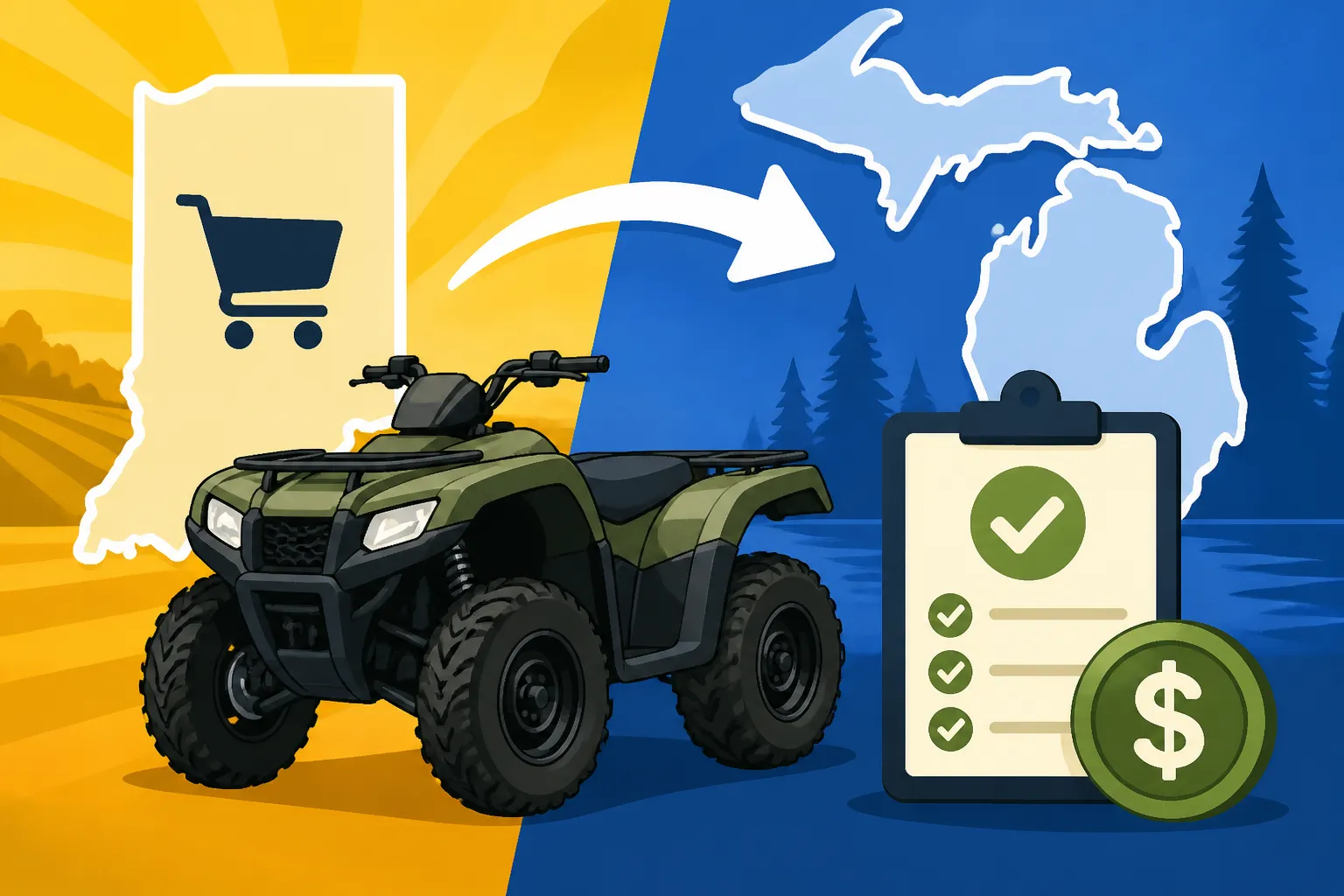
You just found the perfect ATV or UTV in Indiana, maybe it was a better price, a specific model you couldn't find locally, or just a really good deal from a private seller. You loaded it up, drove it home to Michigan, and now you're probably wondering, "Okay, what about the taxes?" It's a super common question, and honestly, the rules around cross-state purchases can feel like a confusing tangle of red tape. But don't you worry, this guide is going to walk you through exactly how to handle paying Michigan's use tax on that awesome new-to-you off-road machine you just bought across the border.
Why Cross-Border Purchases Bring Up Tax Questions
It’s completely understandable why someone would look beyond Michigan’s borders for an ATV or UTV. Maybe you found a fantastic deal in a small town just over the Indiana line, or perhaps a particular model or trim level that’s scarce here popped up for sale there. It makes perfect sense to broaden your search to get the best value or the exact machine you're after. The open market doesn’t stop at state lines, and neither should your hunt for the perfect ride!
However, states get a little particular when you bring a big-ticket item like an ORV back home. Every state wants its fair share of tax revenue, and they’ve designed systems to ensure that buying something out-of-state doesn't become a loophole to avoid paying what would otherwise be considered sales tax. This is where the concept of "use tax" comes into play, and it’s often the source of much head-scratching for folks like us who just want to hit the trails. The bottom line is, even if you bought it in Indiana, Michigan generally expects to collect tax on it once it's brought here for use. It’s not about punishing you for finding a good deal, but rather about ensuring tax equity between in-state and out-of-state purchases.
Understanding Michigan's Use Tax on Out-of-State Purchases
Okay, let’s demystify this "use tax" thing. In Michigan, our standard sales tax applies to items you buy within the state. But when you purchase something from outside Michigan—like that ATV or UTV from Indiana—and bring it here for use, Michigan assesses what’s called a "use tax." Think of use tax as the sales tax you would have paid if you had bought the item from a dealer right here in Michigan. The idea is to level the playing field, so people aren't incentivized to drive to a state with no sales tax, or a lower sales tax, just to avoid paying it back home.
The rate for Michigan's use tax is generally the same as the sales tax rate, which means you'll be looking at that familiar percentage of the purchase price. Now, here's where it gets interesting: if you paid sales tax in Indiana, Michigan will usually give you a credit for the tax you already paid. This doesn't mean you automatically owe nothing. If Indiana's sales tax rate was lower than Michigan's use tax rate, you'd still owe Michigan the difference. For example, if Indiana’s rate was 5% and Michigan’s is 6%, you’d owe that remaining 1% to Michigan. It’s all about ensuring that Michigan ultimately collects its standard tax amount on items used within its borders.
The whole process hinges on transparency and accurate documentation. When you go to title your ORV in Michigan, you’ll need to present a bill of sale or other proof of purchase. This document is crucial for determining the purchase price and any sales tax you might have already paid. Tools like those offered by LawDepot can be incredibly helpful for drafting a clear, legally sound bill of sale if you're selling or buying privately and want to ensure all the necessary details are captured for tax purposes. A well-written [Michigan ATV Bill of Sale: What to Put in It] is your best friend here.
How to Calculate and Pay Your Michigan Use Tax
Calculating and paying your Michigan use tax after buying an ORV in Indiana might seem daunting, but it’s a fairly straightforward process once you know the steps. Most people handle this when they go to title their new-to-them machine at a Michigan Secretary of State branch.
Calculating the Tax You Owe
First, let's talk about the numbers. The use tax is generally calculated on the purchase price of the ATV or UTV. If you traded in another machine as part of the deal in Indiana, you’ll typically only pay tax on the difference between your trade-in value and the new machine's price. However, this relies heavily on your paperwork. Make sure your bill of sale clearly states the purchase price and any trade-in allowance. If you used a generic receipt or just a handshake deal, it might be tougher to prove these figures, potentially leading to you paying tax on the full purchase price.
Here’s a simplified breakdown:
- Determine the Michigan Use Tax Rate: This will be the current state sales tax rate.
- Find Your Purchase Price: Use the full price you paid for the ATV/UTV.
- Subtract Trade-In Value (if applicable): If you traded in another ORV or vehicle, and this is clearly documented on your bill of sale, you would typically calculate tax on the net price after the trade-in.
- Calculate Indiana Sales Tax Paid: Look at your Indiana purchase receipt or bill of sale to see exactly how much sales tax you paid there.
- Calculate Michigan Use Tax Due: Multiply the net purchase price (after any trade-in) by Michigan's use tax rate.
- Apply Credit: Subtract the amount of sales tax you paid in Indiana from the Michigan use tax calculated. If the Indiana tax was less, you owe the difference. If it was more or equal, you typically owe nothing further to Michigan.
Let’s look at a hypothetical scenario to make it clearer:
| Item | Amount | Notes |
|---|---|---|
| ATV Purchase Price | $5,000 | What you paid the seller |
| Indiana Sales Tax Paid | $350 (7%) | Assumed 7% Indiana sales tax for example |
| Michigan Use Tax Rate | 6% | Michigan's current sales/use tax rate |
| Michigan Use Tax Due | $300 (6% of $5,000) | Full Michigan tax if no tax was paid elsewhere |
| Credit for Indiana Tax | -$300 | You get credit for tax paid up to Michigan's rate. (Indiana tax was $350, so you get credit for $300) |
| Total Tax Owed to MI | $0 | In this case, since Indiana's rate was higher, you'd owe $0 to Michigan. |
If Indiana's rate had been 4% ($200 paid), you'd owe Michigan $100 ($300 – $200). The most important thing is having a clear, itemized [Michigan ATV Bill of Sale Template Requirements] document. LawDepot can provide customizable templates that help ensure all critical details, including tax paid and purchase price, are properly recorded.
Making the Payment
The good news is that paying the use tax for an out-of-state ORV purchase is almost always done simultaneously with the titling process. When you visit a Michigan Secretary of State branch to apply for your ORV title, the staff will review your purchase documents – typically your bill of sale and the out-of-state title (if it had one). They will calculate any use tax owed based on the purchase price and the sales tax you may have already paid in Indiana.
You'll need to bring several documents with you. While the primary one for tax calculation is your bill of sale, you'll also need the manufacturer's certificate of origin (MCO) if it's new, or the previous owner's Indiana title if it's used. Make sure you have valid identification. The specific forms you'll fill out, like the Application for Michigan Title, will have sections to declare the purchase price and any tax paid out-of-state. For a full list, check out [Documents to Bring to a Secretary of State ORV Appointment]. You can find more information about the associated costs in [Michigan ORV Title Fee at the Secretary of State].
It’s crucial not to procrastinate on this. Michigan generally gives you a limited window – typically 15 days – to title your ORV after purchase. If you miss this deadline, you could face penalties and late fees. This 15-day rule also applies to when the use tax becomes due. For more on this, see [Michigan Gives You 15 Days to Title an ORV] and [Late Fee for Titling an ORV in Michigan].
Common Pitfalls and What to Watch Out For
Navigating the waters of out-of-state purchases and use tax can feel a bit like crossing a rocky river—there are definitely some spots where you can stumble if you’re not careful. Knowing these common pitfalls ahead of time can save you a lot of headaches, frustration, and even some cash.
Ignoring the Use Tax Requirement Entirely
This is by far the biggest and most common mistake. Many people assume that because they bought the ATV in Indiana, any tax liability stays with Indiana. Or, if they paid some sales tax in Indiana, they think they're completely off the hook. This simply isn't true for Michigan residents. Michigan's use tax system is designed precisely to capture that revenue when items are brought into the state for long-term use.
What goes wrong: If you try to title your ORV without addressing the use tax, the Secretary of State will flag it immediately. They won't issue you a title until the tax is paid. This can lead to delays in getting your machine legally registered, which means you can’t ride it on public trails or land. Worse, if you’re caught operating an untitled ORV, you could face fines and other penalties, as detailed in [Penalty for Operating an Untitled ORV in Michigan]. It’s much easier to just do it right the first time.
Incomplete or Vague Paperwork
The bill of sale is your golden ticket when it comes to proving purchase price and any tax paid. A handwritten scrap of paper with just a name and a dollar amount might not cut it. The Secretary of State needs clear documentation.
What goes wrong: If your bill of sale is missing key information—like the full names and addresses of both buyer and seller, the exact purchase price, the date of sale, and the Vehicle Identification Number (VIN)—you might have trouble. Without a clear purchase price, the state might default to an assessed value, which could be higher than what you actually paid, meaning you pay more tax. If it doesn't clearly show sales tax paid in Indiana, you won't get credit for it. Using a professional template, like those found on LawDepot, can ensure all the necessary fields are covered and prevent misunderstandings. Don't forget, a correct [Where the VIN Is Stamped on an ATV or UTV] is crucial. If there’s a [Fixing a Wrong VIN on a Michigan ORV Title] issue, that will cause even more delays.
Misunderstanding the Credit for Indiana Sales Tax
As we discussed, Michigan usually offers a credit for sales tax paid in another state. However, it's not a blanket exemption.
What goes wrong: Some buyers assume that any tax paid in Indiana means they owe nothing to Michigan. This is only true if Indiana's sales tax rate was equal to or higher than Michigan's use tax rate. If Indiana’s rate was lower, you still owe Michigan the difference. Always be prepared to pay that small remaining percentage. Thinking you're exempt when you're not can lead to unexpected costs at the Secretary of State.
Not Knowing Your Deadlines
Michigan has pretty clear deadlines for titling your ORV. This deadline also implicitly covers when the use tax needs to be paid.
What goes wrong: Missing the 15-day window to title your ORV can result in late fees. These fees might seem small, but they add up, and they're entirely avoidable. Keep track of your purchase date and make an appointment with the Secretary of State as soon as possible. Check out [Michigan Secretary of State Appointments for ORV Title Work] to plan your visit efficiently.
Confusing "Gifting" with "Selling" to Avoid Tax
Some people try to sidestep sales or use tax by claiming the ATV was a gift, even if money exchanged hands.
What goes wrong: While Michigan does have rules for [Gifting an ATV in Michigan and the Title That Follows], attempting to falsely claim a gift when it was a sale can be considered fraud. The Secretary of State can investigate, and if they determine it was a sale, you could face significant penalties, back taxes, and fines. It's simply not worth the risk.
Paying Michigan tax on an ATV bought in Indiana might seem like an extra step, but it’s a standard part of bringing an out-of-state machine into Michigan. By understanding Michigan’s use tax, having clear documentation, and knowing the process, you can get your ORV titled and ready for the trails without any unexpected bumps in the road.
Disclaimer
This article is for general informational purposes only and does not constitute professional advice. Laws, prices and regulations vary by location and change over time. Consult a qualified professional for guidance on your specific situation.