Titling an ATV Bought in Wisconsin and Brought to Michigan
Bringing a new-to-you ATV or UTV home is always exciting, but when you snag a sweet deal across state lines, say, in beautiful Wisconsin, that excitement can quickly turn into a headache when you realize you've got to navigate Michigan's titling bureaucracy. It's easy to feel overwhelmed by different state rules and the fear of missing a crucial step. This guide is here to walk you through exactly what you need to do, step-by-step, to title an ATV or UTV bought in Wisconsin and legally bring it onto Michigan's trails and roads.
Understanding the Michigan Titling Requirement for Out-of-State ORVs
It might seem like a simple process – you bought it, you own it. But Michigan has very specific rules for off-road vehicles (ORVs), and those rules don't suddenly go away because you purchased your machine in another state. In fact, understanding these initial requirements is key to a smooth transfer.
Why Michigan Cares About Where You Bought Your ATV
Michigan's Secretary of State wants to make sure all ORVs operating within its borders are properly titled and that any applicable taxes are collected. This isn't just about revenue; it's about establishing clear ownership, deterring theft, and ensuring compliance with state regulations. When you buy an ATV in Wisconsin and bring it to Michigan, you're essentially importing it, and Michigan needs to officially recognize your ownership. This process also ensures that a Michigan title is created, which is critical for future sales or even just proving it's yours if it's ever stolen. You can learn more about the general process in [How to Title an ATV in Michigan].
One of the biggest differences when buying out-of-state, especially from a private seller, is the "use tax." While Michigan collects sales tax on in-state dealership purchases, it collects use tax on machines brought in from other states without sales tax already paid. This isn't some extra penalty; it's simply Michigan ensuring it gets its fair share, just as if you'd bought it here.
The 15-Day Deadline: Don't Drag Your Feet
This is a critical piece of information that many folks overlook, and it can lead to unnecessary stress and fees. Once you physically bring that ATV or UTV into Michigan, the clock starts ticking. You generally have a limited window – typically 15 days – to apply for your Michigan title. Missing this deadline isn't just an inconvenience; it can result in late fees that tack extra costs onto your titling process. Imagine the frustration of having your new toy ready to ride, only to find yourself paying more because you didn't get to the Secretary of State's office in time.
It's a common scenario: you drive home from Wisconsin, maybe it's a weekend, and you figure you'll get to it "next week." But next week turns into two, and suddenly you're past the limit. Always prioritize getting this paperwork done as quickly as possible. The state is pretty firm on this, and while you might think you have a good excuse, they see it as a missed deadline. Being proactive here saves you money and hassle. This specific timeframe is elaborated on in [Michigan Gives You 15 Days to Title an ORV].
Essential Documents for a Wisconsin-to-Michigan ATV Title Transfer
Gathering the right paperwork is often the most daunting part of this entire process. Without the correct documents, your trip to the Secretary of State will be a wasted one. Let's break down what you absolutely must have in hand.
Proof of Ownership: The Wisconsin Title and Bill of Sale
When you're buying an ATV or UTV in Wisconsin, your primary proof of ownership will be the title issued by the state of Wisconsin. This document is paramount. Ensure that the seller properly signs it over to you in the designated fields. Look for sections where the seller's signature, your signature (as the buyer), the sale date, and the purchase price are to be entered. Any mistakes, erasures, or missing information on the Wisconsin title can cause significant delays at the Michigan Secretary of State.
Beyond the title, a comprehensive bill of sale is your best friend. Even if Wisconsin doesn't always require a detailed bill of sale for titling purposes, Michigan will appreciate having one, especially for calculating use tax. This document should clearly list both the seller's and buyer's full legal names and addresses, the date of sale, the exact purchase price, and all the details about the ATV or UTV, including its make, model, year, and crucially, its Vehicle Identification Number (VIN). A well-drafted bill of sale, perhaps one you prepared beforehand using a service like LawDepot, can smooth over many potential questions or ambiguities. Services like LawDepot offer templates that ensure all necessary fields are covered. For more guidance on this, see [Michigan ATV Bill of Sale: What to Put in It] and [Michigan ATV Bill of Sale Template Requirements].
If the Wisconsin title is missing, this becomes a much more complicated situation. Michigan will want to see clear evidence of ownership. In such cases, you might need to pursue a duplicate title from Wisconsin first, or explore options for a bonded title in Michigan, which is a whole different ballgame and involves more steps. Always ensure the seller has the physical, clear title in hand before completing the purchase.
Your Michigan-Specific Paperwork
Once you have your Wisconsin documents squared away, you'll need to prepare the Michigan-specific forms. The main form you'll be filling out is the "Application for Michigan Vehicle Title" (Form TR-11L). This is where you'll provide all your personal information, details about the ORV, and declare the purchase price. Accuracy here is vital – double-check every name, address, and number before signing.
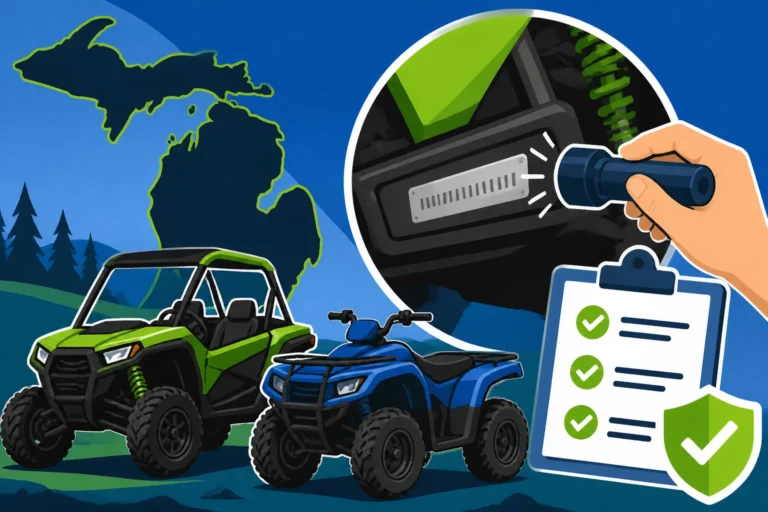
Another critical step for an out-of-state ORV is VIN verification. Michigan often requires a physical inspection of the VIN to ensure it matches the paperwork and hasn't been tampered with. This can be done by a Secretary of State employee, law enforcement, or sometimes even a certified mechanic. Don't skip this step, as your title application will be rejected without it. Make sure the VIN on the machine, the Wisconsin title, and your Michigan application all match perfectly. Any discrepancy, even a single digit, will halt the process immediately. More details on this can be found in [VIN Inspection Requirements for a Michigan ORV Title].
Here's a quick checklist of the documents you'll want to have ready:
| Document Type | From Wisconsin Seller | From You (Michigan) |
|---|---|---|
| Proof of Ownership | Original Wisconsin Title (signed over) | Michigan Application for Vehicle Title (TR-11L) |
| Transaction Detail | Detailed Bill of Sale (recommended, perhaps from LawDepot) | Proof of Identity (Driver's License/ID) |
| Vehicle Info | – | VIN Verification (if required) |
| Payment | – | Funds for Title Fee and Use Tax |
Having all these documents organized in a folder will make your visit to the Secretary of State much smoother.
Calculating and Paying Michigan's Use Tax
One of the areas that often confuses buyers bringing an ATV into Michigan from another state is the tax component. It's not the same as a sales tax receipt you'd get from a Michigan dealer, but it's equally important.
Sales Tax vs. Use Tax: What's the Difference Here?
When you buy an ATV from a licensed dealership here in Michigan, you pay Michigan sales tax right at the dealership. They collect it and forward it to the state. However, when you purchase an ATV from a private seller in Wisconsin, you likely didn't pay any sales tax at that point, as Wisconsin doesn't have a sales tax on private party motor vehicle sales in the same way Michigan does. This is where Michigan's "use tax" comes into play.
Michigan's use tax is essentially a sales tax by another name, applied to goods purchased outside the state for use within Michigan, where no equivalent sales tax was paid. The purpose is to ensure fairness and prevent people from avoiding sales tax by simply purchasing items across state lines. So, while you might not have paid sales tax in Wisconsin, you will almost certainly be responsible for paying Michigan's use tax when you title your ATV here. It's the state's way of leveling the playing field. For more information, you can check out [Michigan Use Tax on a Private-Party ATV Sale].
How the Tax is Determined and Where to Pay It
The amount of use tax you'll owe is typically calculated based on the purchase price you state on your bill of sale and title application. Michigan's use tax rate is the same as its sales tax rate. It's important to be honest about the purchase price, as the Secretary of State has ways to verify vehicle values if they suspect undervaluation. They might consult guides like the NADA book value for ORVs to ensure the declared price is reasonable. If you've got a very detailed bill of sale, perhaps one created using a tool like LawDepot, it clearly states the agreed-upon price, making this step straightforward.
You will pay this use tax directly to the Michigan Secretary of State when you submit your title application. It's usually paid at the same time as your titling fee. Make sure you have the funds available, whether by cash, check, or debit/credit card (check their accepted payment methods beforehand, as some smaller branches might have limits). Remember, this tax is non-negotiable and a mandatory part of getting your ORV titled in Michigan. If you don't pay it, you won't get your title.
The Step-by-Step Process at the Michigan Secretary of State
Now that you've got all your documents in order and understand the tax implications, it's time to visit the Michigan Secretary of State. This final leg of the journey is usually the quickest if you're well-prepared.
Preparing for Your Appointment
Gone are the days of just walking into the Secretary of State's office and hoping for the best. Most branches now strongly encourage, if not require, appointments for complex transactions like titling an out-of-state ORV. Taking a few minutes to schedule an appointment online beforehand can save you hours of waiting in line. Look for an appointment slot specifically for "Titles" or "Vehicle Transactions." This is a crucial first step for efficiency, as detailed in [Michigan Secretary of State Appointments for ORV Title Work].
Before you head out, make sure you have all your original documents: the signed Wisconsin title, your detailed bill of sale (especially if you used a robust template from LawDepot), your Michigan Application for Vehicle Title (TR-11L) completely filled out, your valid Michigan driver's license or state ID, and proof of your Michigan residency. It's also a smart idea to make photocopies of everything. That way, you have a backup in case anything is misplaced, and you can review them one last time. Having all your ducks in a row ensures you're ready for any questions the clerk might have. You can find a comprehensive list of what to bring in [Documents to Bring to a Secretary of State ORV Appointment].
What to Expect at the Counter
When your appointment time arrives, or when you finally reach the counter, you'll present all your prepared documents to the Secretary of State clerk. They will review everything meticulously, checking for accurate signatures, correct VINs, and proper completion of all forms. This is where a clean, clear Wisconsin title and a thorough bill of sale truly shine, as they provide all the information the clerk needs without additional questions.
The clerk will calculate your Michigan use tax based on the purchase price you declared and process the titling fee. These fees vary, but you can usually find current figures on the Secretary of State's website or by calling ahead. It's generally a fairly modest amount, separate from the tax. Be prepared to pay these fees on the spot. Once all the documents are verified and payments are processed, you'll typically receive a temporary registration and receipt right away. This temporary document serves as proof that you've applied for your title and can legally operate your ORV while you wait for the official document. For specifics on fees, refer to [Michigan ORV Title Fee at the Secretary of State].
What Happens Next: Waiting for Your Title
After your successful visit to the Secretary of State, the hard part is over! You've submitted all the necessary paperwork and paid the fees. Now comes the waiting game. The physical, official Michigan title for your ATV or UTV won't be handed to you on the spot. Instead, it will be mailed to the address on your application. The turnaround time can vary, often taking several weeks to arrive in your mailbox.
During this waiting period, keep your temporary registration and receipt handy, especially if you plan on riding your ORV. It's your official proof that the titling process is underway and that you're operating legally. Once your Michigan title arrives, double-check all the information on it – your name, address, the ORV's VIN, make, and model – to ensure everything is correct. If you find any errors, contact the Secretary of State immediately to get them rectified. You can get more information on expected wait times in [How Long a Michigan ORV Title Takes to Arrive]. Now you're all set to hit those Michigan trails with peace of mind!
Disclaimer
This article is for general informational purposes only and does not constitute professional advice. Laws, prices and regulations vary by location and change over time. Consult a qualified professional for guidance on your specific situation.