Scrapping an ORV in Michigan and the Title You Surrender
There comes a time for every off-road vehicle (ORV) owner when that trusty ATV or UTV has simply given all it has to give. Maybe it was a spectacular trail mishap, or perhaps decades of Michigan mud and snow have finally taken their toll, leaving you with a machine that's more paperweight than powerhouse. When your beloved rig reaches this point, you're faced with a big question: what now? This guide will walk you through the realistic, step-by-step process of scrapping an ORV in Michigan and, crucially, how to properly surrender its title so you don't face any lingering headaches.
When Your ORV Reaches the End of the Trail: Deciding to Scrap It
It’s never an easy decision to say goodbye to an ORV that’s given you years of adventure, whether it was conquering the dunes at Silver Lake or navigating the sprawling trail systems of the Upper Peninsula. But sometimes, the machine just tells you it’s done. Knowing when to call it quits and send your ORV to the great beyond is a practical, and often emotional, process.
More Than Just "Broken": Signs It's Time for the Scrap Yard
We’ve all been there: a minor repair turns into a major project, and suddenly your weekend warrior is a garage queen. But there’s a distinct difference between needing a new spark plug and being fundamentally, irrevocably broken. When you're looking at things like a bent or cracked frame, especially around critical stress points, that's often a death knell. A seized engine, particularly if it's an older model where replacements are rare or prohibitively expensive, can also push an ORV into scrap territory. Imagine your faithful side-by-side, which took you on so many hunting trips near Mio, now just a rust-eaten husk because the frame corroded beyond repair, or its transmission finally gave up the ghost after years of heavy hauling. These aren't simple fixes; they often represent the machine's structural or mechanical core giving out.
Furthermore, consider the safety implications. If the suspension mounts are compromised, the steering linkage is permanently damaged, or the brakes are constantly failing despite repairs, continuing to operate or even attempt to repair it can be dangerous. Sometimes, parts for really old or obscure models become impossible to find, making even a "simple" fix a monumental task. When you're spending more time searching for rare carburetor jets or custom-fabricating a new swingarm than you are actually riding, it's a pretty strong hint that the machine has entered its twilight years.
The Financial Reality Check: Repair vs. Replace vs. Scrap
The heart often wants to keep fixing, but the wallet has a way of bringing us back to reality. The financial comparison between repairing, replacing, or scrapping an ORV is a critical step in this decision. Start by getting a few estimates for the major repairs needed. If your old ATV needs a new engine, transmission, and a frame weld, those costs can quickly skyrocket beyond the machine's actual market value, even if it were in perfect running order. You might have bought your utility quad for a steal years ago, but if fixing its current issues costs more than buying a similar used, running machine, then continuing with repairs just doesn't make sense.
Compare those repair estimates to the cost of a similar used ORV in good condition. If the repair bill is, say, $3,000, but you could buy a comparable, functioning machine for $4,000, investing that $3,000 into a dying rig might not be the smartest move. Then, there's the option of buying a brand new one, which opens a whole other set of financial considerations. For many, the "sentimental value" is huge, especially if it was their first machine or has been in the family for years. But at some point, even the most cherished ORV becomes a money pit. Making an objective, financially sound decision means looking past the memories and focusing on the numbers.
Understanding Michigan's Requirements for Scrapping an ORV
So, you've made the tough call. Your ORV is heading to the scrap heap. Now, what do you do about the paperwork? In Michigan, getting rid of a vehicle, even an ORV that won't see pavement, isn't as simple as just rolling it off a cliff (please don't do that). There are specific steps you need to take regarding the title to ensure you've completely divested yourself of responsibility.
The Core Requirement: Surrendering the Title
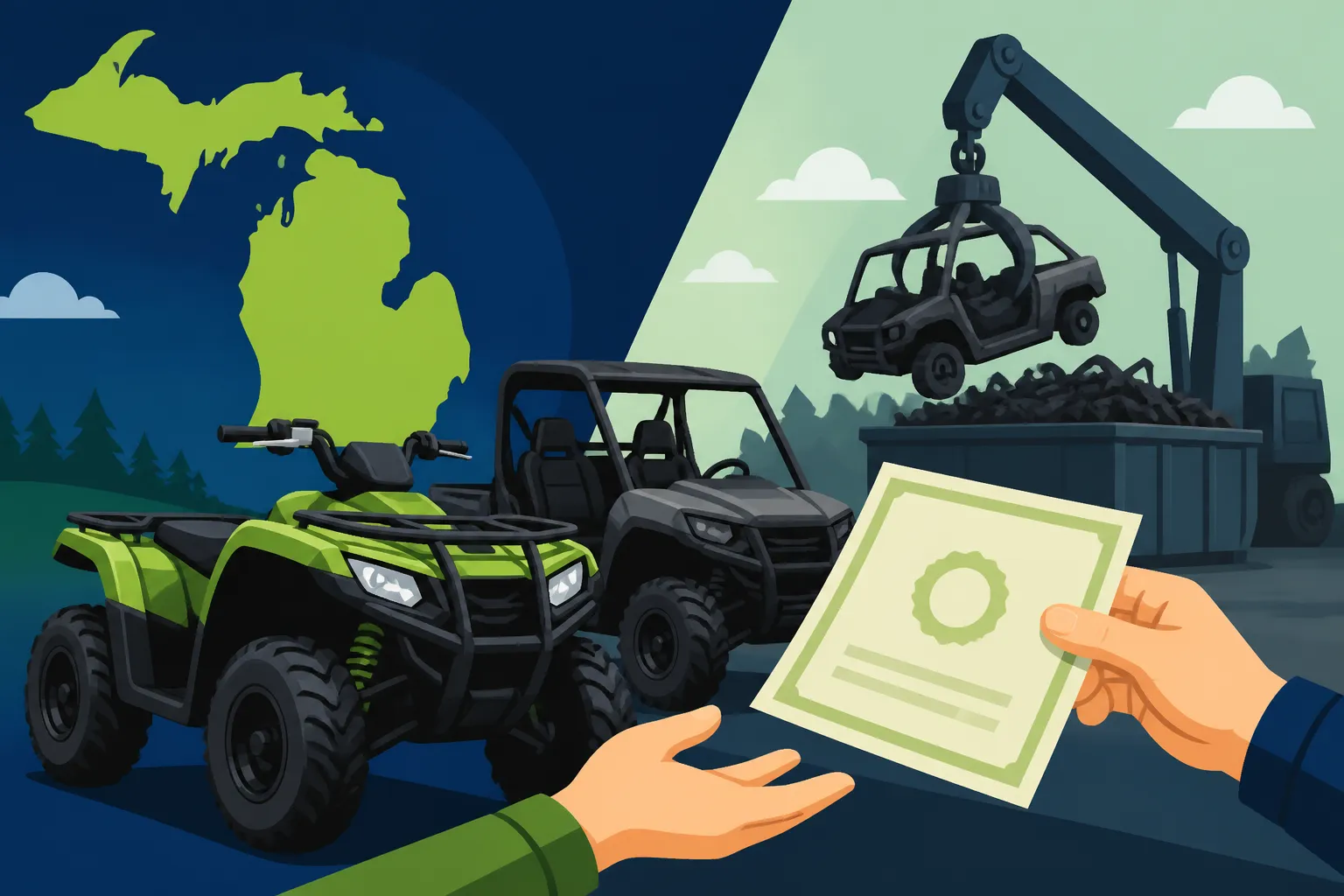
The most critical step when scrapping an ORV in Michigan is properly surrendering its title to the Secretary of State. Why is this such a big deal? Imagine your ORV, even as a pile of rust, is still technically "titled" in your name. If someone were to salvage parts from it, cobble together another machine, and try to title it, or even worse, if its Vehicle Identification Number (VIN) was somehow used fraudulently, that liability could trace back to you. Surrendering the title officially removes that ORV from the state's records as a functional, titled machine. It declares it "junked" or "scrapped," preventing any future attempts to register or title it in its current form.
If you don't surrender the title, that ORV technically still exists in the state's system under your ownership. This can lead to all sorts of future headaches. You might still be listed as the owner of a machine that no longer exists, which could potentially complicate things like property taxes (though ORVs aren't registered annually, the ownership record persists), or even more seriously, if someone else were to get their hands on the VIN plate and try to pull a fast one. It's about protecting yourself from any future, unforeseen liabilities or fraud. Think of it as a clean break, officially severing your connection to a machine that's no longer viable.
Proof of Ownership Without a Title: When It Gets Tricky
What if you've decided to scrap your ORV, but the title has gone missing? This is a surprisingly common scenario. Titles get lost in moves, tucked away in forgotten file folders, or simply disintegrate over time. If you can't find your title, you'll need to apply for a duplicate before you can surrender it. The process for [Replacing a Lost Michigan ORV Title] involves filling out a form, paying a fee, and often waiting a bit for the new title to arrive. It's an extra step, but a necessary one.
The situation gets even more complicated if you acquired the ORV without a title, perhaps inherited it, or bought it informally without proper paperwork. Michigan requires clear proof of ownership to process any title transaction, including surrendering one. If you're in a bind and need to establish legal ownership, resources like [Proof of Ownership When a Michigan ORV Has No Title] can guide you. In some cases, you might need a sworn affidavit or a notarized bill of sale from a previous transaction to demonstrate your legal right to the machine. You could even use online legal document services like LawDepot to help draft a robust affidavit of ownership if you need one, ensuring it covers all the necessary details. Having your ducks in a row with clear ownership documentation is absolutely essential before the Secretary of State will let you surrender that title.
The Step-by-Step Process for Surrendering Your ORV Title
Once you've committed to scrapping your ORV and understand the importance of the title, it's time to take action. The process for surrendering your ORV title in Michigan is fairly straightforward, but it requires attention to detail and usually a trip to a Secretary of State branch.
Gathering Your Documents: What the Secretary of State Needs
Before you head out, make sure you have everything in order. The primary document you'll need is the original Michigan ORV Certificate of Title itself. If you only have a copy or the title is damaged, you might need to apply for a duplicate first. On the title, you'll likely find a section for "junking" or "scrapping" the vehicle. This is where you, as the owner, will sign and indicate the reason for surrender. Make sure you read the instructions carefully on the back of the title or provided by the Secretary of State.
You will also need a valid form of personal identification, such as your Michigan driver's license or state ID. While there isn't a specific "ORV Scrapping Form" you pre-fill, having your title correctly marked and your ID will be key. If you are dealing with a situation where the ORV was inherited, make sure you have all the appropriate documentation, such as death certificates or small estate affidavits, as outlined in guides like [Inheriting an ATV in Michigan Without Probate]. Being prepared with all necessary documents prevents frustrating multiple trips.
Visiting the Secretary of State Branch (or Alternative Methods)
For most title transactions in Michigan, including surrendering an ORV title, visiting a Secretary of State branch in person is the most common and often the easiest method. While some simple transactions can be done online or by mail, a title surrender usually benefits from direct interaction. You'll hand your title and ID to a clerk who will verify everything, process the surrender, and update the state's records. It's a good idea to make an appointment beforehand, especially during peak times, to avoid long waits. Information on how to do this can be found in resources like [Michigan Secretary of State Appointments for ORV Title Work].
Once the title is surrendered, the state officially records that the ORV is no longer a viable, titled vehicle. You might receive a receipt or confirmation of the surrender, which is crucial to keep for your records. This formal act protects you from any future liability associated with the ORV. While mail-in options exist for some title services, for something as definitive as a title surrender, an in-person visit ensures the process is completed correctly and promptly, and you have peace of mind knowing it's done.
What Happens After You Surrender the Title? The Next Steps
Surrendering the title is the official end of your ORV's life as a recognized vehicle. But what does that really mean, and what do you do with the physical remains of your machine once the paperwork is sorted?
The "Junked" Status: What It Means for Your ORV
When the Michigan Secretary of State processes your title surrender, your ORV's status in the state system changes to "junked" or "scrapped." This is a permanent designation. It means that, for all intents and purposes, the machine is no longer considered a vehicle that can be legally operated or re-titled for use on trails or roads. You won't be able to apply for new ORV permits for it, and it effectively ceases to exist in the state's active vehicle registry.
This "junked" status is exactly what you want when you're getting rid of a derelict ORV. It prevents anyone from taking your old frame, slapping a new engine in it, and trying to title it as if it were a clean machine. It protects you from the nightmare scenario where a VIN from your scrapped ORV somehow reappears on a stolen or illegally modified vehicle. Trying to reverse a "junked" title, for example, to get a salvage title for a completely rebuilt ORV, is an extremely difficult and often impossible process in Michigan, requiring extensive inspections and documentation to prove it's roadworthy or trail-worthy again. For insight into what goes into re-titling a severely damaged machine, you could look into guides like [What a Salvage Title Means for an ATV Buyer], but understand that "junked" is usually a point of no return.
Finding a Reputable Scrap Yard or Salvage Dealer
With the title officially surrendered, you're now free to dispose of the physical ORV. Your next step is to find a reputable scrap yard or a salvage dealer who will accept it. Start by searching online for local scrap metal yards or vehicle salvage facilities in your area. Many will specialize in automotive, but ORVs fall under similar categories. When you contact them, be upfront about the ORV's condition – that it's being scrapped, has no active title, and is essentially for parts or metal recycling. They might ask you to bring a copy of the title surrender confirmation, along with your ID, to verify you are the last legal owner before they accept the machine.
Depending on the size, weight, and material composition of your ORV, you might even receive a small payout for the scrap metal. Don't expect a fortune, but every little bit helps. If the ORV is particularly heavy or has valuable metals, they might pay you by the pound. On the other hand, if it's mostly plastic and light aluminum, or if you need them to pick it up, you might even have to pay a small disposal fee. Always inquire about their specific [Scrap Yard Rules for a Dead ORV] and any fees or payments upfront. Be mindful of environmental considerations; a good scrap yard will properly drain fluids like oil, gas, and coolant to prevent contamination, which is crucial for responsible disposal.
Alternative Options to Scrapping (Before You Pull the Trigger)
Before you officially surrender that title and send your ORV to the crusher, it’s worth considering if there are any other viable options. Sometimes, what looks like a total loss still has some life or value left in it, just not in the way you originally intended.
Selling for Parts: Is There Value Left?
Just because an ORV can no longer function as a complete machine doesn't mean every single component is useless. Often, the engine might be seized, or the frame might be bent, but individual parts like the wheels, tires, suspension components, good condition plastics, seats, electrical components, or even light assemblies could be perfectly salvageable. Think about your Polaris Sportsman with a blown engine but perfectly good front differential and A-arms. Someone else with a similar model might be actively looking for those exact components to repair their own machine.
Selling for parts can be more effort than just taking it to a scrap yard, as it involves dismantling the machine and listing individual items, but the financial return can be significantly higher. Online marketplaces like Facebook Marketplace, eBay, or specialized ORV forums are excellent places to list individual parts. When you sell parts, you don't surrender the full vehicle title, as the ORV technically ceases to be a complete, titled unit. However, if you're selling a major component like the engine or frame, you might want to create a bill of sale for that specific part. LawDepot, for example, offers customizable bill of sale templates that can be adapted for individual parts, providing clear documentation for both buyer and seller. This also helps with the question of [Selling an ATV for Parts and the Title] – you're selling components, not a whole titled machine.
Donating or Gifting: Passing on the Problem (Legally)
Another option, particularly if the ORV is marginally repairable but you simply don't have the time, money, or desire to fix it yourself, is to donate or gift it. Perhaps a younger family member is eager for a project, or a local vocational school could use it for parts and mechanical instruction. Gifting an ORV, even one that needs significant work, means transferring the title to the new owner. It's vital that the recipient fully understands the machine's condition and the extent of the repairs needed. You don't want to unknowingly pass along a significant problem or liability.
The process for [Gifting an ATV in Michigan and the Title That Follows] is similar to a standard title transfer, with the key difference being the purchase price (zero). You'll still need to complete the title, sign it over, and potentially have the new owner pay use tax if it's not a direct family transfer with an exemption. Ensure all sections of the title are properly filled out, including odometer readings (if applicable, though less common for ORVs) and the date of transfer. If you want a formal record of the gift, you can again use services like LawDepot to create a gift agreement, clearly stating the terms and the condition of the ORV. This protects both parties and makes the transfer transparent.
Here's a quick comparison of your options when your ORV is truly at the end of its life:
| Option | Title Requirement (Primary) | Effort Level (Approx.) | Potential Return | Finality for ORV | Best For… |
|---|---|---|---|---|---|
| Scrapping | Surrender to Secretary of State | Low | Low (Scrap metal value) | Complete destruction | Beyond repair, no valuable parts, quick disposal. |
| Selling for Parts | Keep (as partial remains) | High (Dismantling/Listing) | Medium to High | Machine ceases to exist as whole | Major components are still good, willing to invest time. |
| Gifting/Donating | Transfer to New Owner | Medium | None (or tax deduction) | New owner takes responsibility | Marginally repairable, family/friend project, charitable giving. |
Remember, the goal is to make sure you're legally and financially free of the ORV once you decide it's done. Whether you scrap, sell for parts, or gift, make sure the paperwork is done correctly to avoid any future headaches. If you have title issues, looking into resources like [Michigan ORV Title Problems and How to Clear Them] can be very helpful.
Disclaimer
This article is for general informational purposes only and does not constitute professional advice. Laws, prices and regulations vary by location and change over time. Consult a qualified professional for guidance on your specific situation.