What the Michigan Secretary of State Needs to Title an ORV
Okay, let's talk about one of those tasks that feels a bit like navigating a maze blindfolded: titling your Off-Road Vehicle (ORV) at the Michigan Secretary of State. It can be incredibly frustrating to gather what you think you need, only to arrive at your appointment and realize you're missing a crucial piece of paper. This comprehensive guide is here to demystify the process, detailing exactly what documents and information the Secretary of State will require to get your ATV or UTV legally titled in Michigan.
Why You Need to Title Your ORV in Michigan (and Why It's Worth the Hassle)
I know, I know. Another piece of government paperwork. It can feel like a chore, especially when all you want to do is hit the trails or get some work done on your property. But when it comes to ORVs in Michigan, a proper title isn't just a suggestion; it's a legal requirement with some significant benefits that make the initial hassle well worth your time. Understanding why it's necessary can sometimes make the process feel a little less daunting.
Understanding Michigan's ORV Titling Law
Michigan law is pretty clear on this: if you own an ORV that will be operated anywhere other than private property, it needs a title. This includes dirt bikes, ATVs, UTVs, and even some custom-built machines. The state views an ORV title as the ultimate proof of ownership, a foundational document that establishes who legally owns the machine. It’s similar to how you would title a car or a boat. Without it, the state doesn't officially recognize your ownership, which can lead to a whole host of problems down the road. The law is designed to protect both buyers and sellers, preventing theft and ensuring a clear chain of ownership for every machine.
This titling requirement applies whether you bought your ORV new from a dealership, picked it up from a private seller, or even if you're bringing it in from out of state. The Secretary of State acts as the central hub for this documentation, creating a formal record for every titled ORV within the state. It's not just about collecting fees; it's about maintaining order and accountability within the bustling world of Michigan off-roading. You might be surprised to learn about some specific situations where a title is required, even if you think your machine might be exempt, like those covered in [ORV Title Exemptions for Farm Machines in Michigan].
The Benefits of a Proper ORV Title
Beyond legal compliance, having your ORV properly titled offers a ton of practical benefits. First and foremost, it’s your ironclad proof of ownership. If your ORV is ever stolen (a heartbreaking thought, I know), that title is what the police will use to verify it's yours if it's recovered. Without it, proving ownership can become a nightmare, potentially leaving you empty-handed even if your machine is found. It also makes selling your ORV significantly easier. Most legitimate buyers, whether private individuals or dealerships, will insist on a clean title to ensure they're purchasing a machine free of liens or ownership disputes.
Think about insurance, too. While not always legally required for trail riding, many riders opt for comprehensive insurance to protect their investment. Insurers often require proof of ownership, and a title is the most straightforward way to provide that. It’s also crucial for securing financing if you ever decide to take out a loan for a new machine; lenders will absolutely demand a title to secure their interest. Ultimately, the title provides peace of mind, knowing that your valuable asset is legally yours and protected. If you're wondering about specific costs, you can find more detail in [Michigan ORV Title Fee at the Secretary of State].
Consequences of Not Titling Your ORV
Ignoring the titling requirement can lead to some pretty significant headaches and legal issues. The most immediate consequence is that you simply won't be able to get an ORV trail permit or license, which means you're restricted to private land only. Attempting to ride on designated trails, state forest roads, or other public lands without a valid permit (which requires a title) can result in fines and even impoundment of your ORV if you're caught by a DNR officer or local law enforcement. It's just not worth the risk of a ticket or having your riding fun cut short.
Beyond fines, not having a title can create massive problems if you ever try to sell your ORV. A buyer will likely be wary, and you'll find it difficult to command a fair price, if you can sell it at all. It might also complicate matters if you need to pass the ORV on to a family member, as detailed in [Michigan ORV Title Transfer Between Family Members]. Furthermore, if there's ever a dispute over ownership – perhaps a previous owner claims it back, or it was part of an estate – having no title means you have very little legal standing to defend your claim. The Secretary of State's role is to prevent these exact kinds of ambiguities, so sidestepping the process only invites trouble.
The Absolute Must-Have Documents for Titling an ORV
Alright, let's get down to brass tacks. When you walk into that Secretary of State branch, there are a few core documents that are absolutely non-negotiable. These are the cornerstones of any ORV title application, regardless of whether your machine is brand new or has seen a decade of Michigan mud. Having these in order before you even step out the door will save you immense frustration.
Your Proof of Ownership: The Old Title or Bill of Sale
This is arguably the most critical document. How you prove ownership depends on where your ORV came from.
- If you bought it new from a Michigan dealer: The dealer will typically handle most of the paperwork, but you'll still need to bring the manufacturer's Certificate of Origin (MCO or MSO). This document is like the birth certificate for your ORV and is specifically issued by the manufacturer to the dealer. The dealer will sign it over to you, indicating you are the first retail owner. Make sure all the details, especially the Vehicle Identification Number (VIN), are correct before you leave the dealership. The dealer will often send copies directly to the SOS, but you still need your signed original.
- If you bought it from a private seller in Michigan: You absolutely need the previous owner's Michigan ORV title, properly signed over to you. Look for the "Assignment of Title" section on the back where the seller fills in your name and address, the sale date, and the purchase price, and most importantly, signs their name. If the title has multiple owners, make sure all listed owners sign it. Without a properly signed-over title, the Secretary of State cannot transfer ownership to you. This is a common hiccup, so double-check those signatures! [Michigan Title Transfer When You Buy From a Private Seller] goes into more depth on this.
- If you bought it from a private seller and there's no title: This is a tricky situation but not impossible. Michigan allows for titling an ORV without a previous title under specific circumstances, usually involving a detailed [Proof of Ownership When a Michigan ORV Has No Title] affidavit, a bill of sale, and possibly a VIN inspection. A comprehensive bill of sale, which clearly lists the buyer, seller, ORV details (make, model, VIN), and purchase price, becomes paramount here. You might even consider using a reliable template from a service like LawDepot to ensure all the necessary information is included. This situation often requires more scrutiny from the SOS.
- If you bought it at an auction: You'll typically receive an auction-specific bill of sale or other documentation from the auction house that proves you were the winning bidder. This, combined with any available previous title, will be your proof. Just be prepared for potential additional steps, as discussed in [Titling a Michigan ORV Bought at Auction].
The Application Form: Michigan's Key to the Process
You'll need to complete the Michigan Vehicle Title Application (Form TR-11L, or a similar form for ORVs). This form is available online on the Michigan Secretary of State website, or you can pick one up at any branch office. Don't worry, it's pretty straightforward. You'll need to fill in your personal information, the details of the ORV (make, model, year, VIN), the purchase price, and the date of sale. It's vital to fill this out accurately and legibly. Any errors or omissions can cause delays and necessitate another trip back to the office, which no one wants.
Take your time filling out the form. If you're unsure about a specific field, it's often better to leave it blank and ask the SOS agent when you get there, rather than guessing incorrectly. They can guide you through it. Make sure the VIN you enter on this form matches exactly what's on your proof of ownership (title, MCO, or bill of sale) and on the ORV itself. A mismatched VIN is a common reason for application rejection. Checking [Michigan ORV Title Application and What It Costs] can give you an idea of what to expect on the form and for the associated fees.
Identification and Proof of Residency
Just like any official government transaction, you'll need to prove who you are. This typically means bringing your valid Michigan driver's license or state ID card. It confirms your identity and establishes your residency in Michigan, which is crucial for titling a vehicle in the state. If you're a new resident, you might need additional documentation to prove your Michigan residency, such as a utility bill or bank statement showing your new address.
If the ORV is being titled in joint names, both individuals should ideally be present with their identification. If one person cannot be there, they might need to provide a limited power of attorney allowing the other person to sign on their behalf, or sign the title application form in advance. Always call ahead if there are special circumstances like this to avoid a wasted trip. For businesses or clubs, different forms of identification and proof of authority will be required, such as articles of incorporation or a resolution authorizing the titling.
Specific Scenarios: What Else the SOS Might Ask For
While the core documents remain consistent, various scenarios can trigger additional requirements. The Michigan Secretary of State needs to ensure every ORV title is legitimate, so they have specific procedures for different acquisition methods. Being prepared for these nuances can make your visit much smoother.
Titling a Brand New ORV from a Dealer
When you buy a brand-new ATV or UTV from a licensed Michigan dealership, they typically handle a good chunk of the initial paperwork. However, you're not completely off the hook. You'll still need to bring your Michigan driver's license or state ID. The dealer will provide you with the Manufacturer's Certificate of Origin (MCO or MSO), which serves as the original birth certificate for your machine. This MCO will be signed over to you by the dealership, clearly indicating your ownership. It's incredibly important to double-check that the VIN on the MCO matches the VIN on your new ORV before you leave the dealership lot.
The dealer will also collect the sales tax and title fees on your behalf and often submit the necessary forms electronically or by mail. However, you are ultimately responsible for ensuring the title transfer happens. Always keep your copy of the MCO and any dealer paperwork until your new title arrives in the mail. Sometimes, if there's a financing company involved, the title will be sent directly to them until the loan is paid off, with you receiving a copy. Make sure you understand the dealer's process fully, and don't hesitate to ask for a clear checklist of what they are submitting and what you need to do.
Titling a Used ORV from a Private Seller
This is where many people encounter issues if they're not prepared. When buying from a private party, the responsibility for securing the title transfer falls squarely on your shoulders. Beyond your ID and the completed title application, you absolutely must have the previous owner's Michigan ORV title. This title needs to be properly signed and dated by the seller in the "Assignment of Title" section. Ensure the purchase price is filled in, and if there are two names on the title, both owners generally need to sign it over to you. A common problem is [ORV Title With a Missing Seller Signature], which can prevent the transfer.
In addition to the signed title, a well-drafted bill of sale is highly recommended, even if not strictly required by the SOS for a title transfer if you have the original title. It serves as an extra layer of protection, detailing the transaction, the condition of the ORV, and clarifying that the sale is "as-is." A template from a service like LawDepot can be invaluable for creating a professional and legally sound [Michigan ATV Bill of Sale: What to Put in It]. Remember, Michigan law generally gives you [Michigan Gives You 15 Days to Title an ORV] after purchase, so don't delay! Delaying past this window can lead to late fees.
Titling an Out-of-State ORV
Bringing an ORV into Michigan from another state comes with its own set of rules. First, you'll need the out-of-state title, properly signed over to you by the previous owner. If the previous state did not issue titles for ORVs (some states don't), you'll need sufficient proof of ownership from that state, which could be a registration certificate, a detailed bill of sale, or other official documentation. You'll also need your Michigan ID and the completed Michigan ORV Title Application.
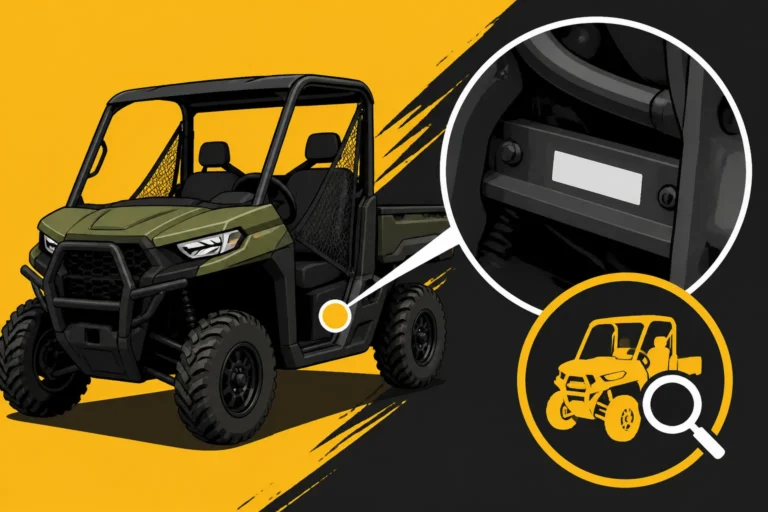
Often, the Secretary of State will require a VIN inspection for out-of-state ORVs to verify that the VIN on the paperwork matches the machine and that it hasn't been stolen. This inspection might be performed by an SOS agent, law enforcement, or a qualified third party, depending on the circumstances. Be prepared to show where the VIN is stamped on the machine; [Where the VIN Is Stamped on an ATV or UTV] can help you locate it. You'll also be responsible for paying Michigan use tax on the purchase price, even if you bought it out of state. This is an important consideration, as discussed in [Paying Michigan Tax on an ATV Bought in Indiana] or [Titling an ATV Bought in Wisconsin and Brought to Michigan].
Titling a Homemade or Rebuilt ORV
This is perhaps the most complex scenario for titling an ORV, but it's entirely possible. If you've built a UTV from scratch or heavily rebuilt one with a new frame, you can apply for a "Special Constructed" or "Assembled Vehicle" title. This process is much more involved. You'll need all the original receipts for the major components used, such as the engine, frame, and transmission, to prove legitimate acquisition. A detailed bill of materials and a statement of construction explaining how the ORV was assembled will also be required.
The Secretary of State will almost certainly require a VIN inspection by an authorized inspector to assign a new VIN to your homemade machine, or verify the existing VIN if it's a rebuilt vehicle. This inspection ensures the vehicle meets basic safety standards and that the components are legitimately sourced. You might also need photographs of the build process. This is a situation where careful record-keeping throughout the construction process is absolutely essential. For more specific guidance, look into [Titling a Rebuilt or Homemade UTV in Michigan] and [Michigan Assembled Vehicle Title Application].
Understanding Fees, Taxes, and Payment Options
Navigating the financial side of titling your ORV can sometimes feel like solving a puzzle, especially with state taxes thrown into the mix. It's not just a single title fee; you'll also be dealing with sales or use tax, and possibly other charges depending on your situation. Being clear on what you owe and how you can pay will prevent any unwelcome surprises at the Secretary of State office.
Michigan ORV Title Fee Explained
The actual fee for the ORV title itself is generally quite modest. This fee is standard across the board, regardless of the ORV's value or how you acquired it. Think of it as the administrative cost for the state to process your ownership change and issue the official document. While the specific amount can change over time, it's designed to be an accessible fee for all ORV owners. It's a one-time fee per title transaction, meaning you pay it each time ownership changes and a new title is issued in a different name.
Keep in mind that this title fee is separate from any ORV trail permits or licenses you'll need to purchase to legally ride on Michigan's extensive trail system. Those are annual fees, whereas the title fee is transactional. While the title fee helps fund the system, it doesn't grant you immediate riding privileges. For a full breakdown of all related costs, checking out [Michigan ORV Title Application and What It Costs] can be very helpful.
Navigating Michigan ORV Sales Tax
This is often where the biggest financial chunk comes in. Michigan requires sales tax on the purchase of all vehicles, including ORVs. The tax rate is a statewide standard percentage of the purchase price.
- Buying from a dealer: If you buy a new or used ORV from a licensed Michigan dealer, they are required to collect this sales tax at the time of purchase. They will then remit it to the state on your behalf. This is generally the smoothest way to handle the tax.
- Buying from a private seller: If you purchase an ORV from a private individual, you are responsible for paying the sales tax directly to the Secretary of State when you apply for the title transfer. This is often referred to as "use tax" when it's paid directly by the buyer. The tax will be calculated based on the purchase price you declare on the title application or bill of sale. Be honest with this declared price, as the state has mechanisms to detect unusually low prices that might indicate tax evasion. This is covered more deeply in [Michigan ORV Sales Tax at a Secretary of State Branch].
- Trade-ins: If you trade in an old ORV when purchasing a new one, the sales tax is typically calculated on the difference between the new ORV's price and the trade-in value, which can save you a good amount of money. Always clarify this with your dealer if you're trading in.
- Out-of-state purchases: Even if you bought your ORV in another state, if you're bringing it to Michigan and titling it here, you'll still owe Michigan's use tax. This prevents people from buying machines in states with lower or no sales tax to avoid Michigan's tax.
It's absolutely critical to be prepared for this sales tax payment. It can be a significant amount, especially for higher-value machines. Failing to pay the sales tax means you won't be able to get your title.
Accepted Payment Methods at the Secretary of State
When you head to the Secretary of State, it's wise to be prepared with various payment options. Typically, Michigan SOS branches accept:
- Cash: Always a reliable option, but make sure you have the exact amount or be prepared for them to make change.
- Personal Checks: Usually accepted, but they might require a Michigan address printed on the check.
- Money Orders or Cashier's Checks: These are a safe bet if you're uncomfortable carrying a lot of cash or if a personal check isn't an option.
- Credit/Debit Cards: Most branches now accept major credit and debit cards, though there might be a small processing fee charged by the card processor. It's always a good idea to confirm this with your specific branch beforehand, just in case their policy differs.
Having multiple payment methods on hand is a smart strategy. Imagine getting all the way to the counter, only to find your card isn't working or they don't accept your specific type of payment. A little preparation here can prevent a lot of frustration and a second trip!
Preparing for Your Secretary of State Appointment
Walking into the Secretary of State without a plan can feel like entering a black hole, especially on a busy day. But with a little preparation, you can make the experience as painless as possible. Think of it as staging your personal pit crew for a smooth race through the bureaucracy.
Making an Appointment and What to Expect
Gone are the days when you could just walk in and expect quick service. Most Michigan Secretary of State branches now operate primarily by appointment. This is actually a huge benefit, as it can drastically cut down on your wait time. You can schedule an appointment online through the Michigan SOS website, usually picking a specific time slot that works for you. I highly recommend doing this, especially if you have a busy schedule. Check out [Michigan Secretary of State Appointments for ORV Title Work] for more specifics on how to book.
When you arrive for your appointment, you'll likely check in at a kiosk or with a greeter. They'll confirm your appointment and direct you to wait for your number to be called. Even with an appointment, there might be a short wait, so bring a book or something to occupy yourself. The agents are generally quite helpful, but they're also busy, so having all your ducks in a row will make their job, and yours, much easier. Be polite, clear, and concise in your requests, and don't hesitate to ask questions if something isn't clear during the process.
Organizing Your Documents for a Smooth Visit
This step is critical for a stress-free visit. Before you even leave your house, gather all the documents we've discussed and organize them neatly. A simple folder or accordion file works wonders.
Here’s a quick checklist to help you organize:
- Your Michigan Driver's License or State ID: Have it readily accessible.
- Proof of Ownership:
- Original Manufacturer's Certificate of Origin (MCO/MSO) if new.
- Properly signed-over previous Michigan ORV title if used private sale.
- Out-of-state title or proof of ownership if from another state.
- Detailed bill of sale (especially if no previous title, or for private sales). Using a reliable form like those from LawDepot can ensure you have all the necessary information.
- Completed Michigan ORV Title Application (Form TR-11L): Fill it out accurately and legibly beforehand.
- Proof of Sales/Use Tax Payment (if applicable): If collected by a dealer, bring your receipt. Otherwise, be ready to pay at the SOS.
- Payment Method(s): Cash, checkbook, credit/debit card.
- Any additional supporting documents: (e.g., VIN inspection forms for homemade/out-of-state, lien release if a previous loan was paid off).
Having these items in a logical order means you won't be fumbling through papers at the counter. It shows you're prepared, which can make the process quicker for everyone involved. For a comprehensive list, consult [Documents to Bring to a Secretary of State ORV Appointment].
Common Pitfalls and How to Avoid Them
Even with careful preparation, it's easy to overlook something. Here are some of the most common issues people face when trying to title an ORV and how you can sidestep them:
- Missing or Incorrect Signatures: This is probably the number one reason for rejection. If buying used, ensure all owners listed on the previous title have signed it over. If it's a new ORV, verify the dealer's signature is present on the MCO. No signature, no transfer.
- Incorrect VIN: Double-check, triple-check the VIN on all documents (MCO, old title, bill of sale, application form) against the actual VIN stamped on your ORV. Even one digit off will cause problems. You can use an [ATV VIN Decoder: Reading the Model Year Digit] to verify some details yourself.
- Expired or Incomplete ID: Make sure your driver's license or state ID is current and matches the name you're using on the application.
- Unpaid Sales/Use Tax: Many people forget they need to pay sales tax on private sales. Be ready for this payment.
- Procrastination: Michigan gives you a limited window to title your ORV after purchase. Don't miss it, or you'll incur late fees, as detailed in [Late Fee for Titling an ORV in Michigan].
- No Appointment: Showing up without an appointment can mean extremely long waits or being turned away, wasting your valuable time.
- Lien Not Released: If the previous owner had a loan on the ORV, ensure they have a lien release from their lender. Without it, the SOS won't transfer the title cleanly to you. If there are [Liens on a Michigan ORV Title], they must be cleared first.
By being aware of these potential traps, you can actively work to avoid them, making your titling experience much more efficient.
After the Visit: What Happens Next?
You’ve done it! You’ve survived the Secretary of State, submitted all your paperwork, and paid your fees. Now what? The process doesn’t end the moment you walk out the door. There’s a short period of waiting, and it’s good to know what to expect and what to do if things don’t go exactly as planned.
How Long Your Michigan ORV Title Takes to Arrive
Once your application is processed and approved at the Secretary of State branch, your new Michigan ORV title won't be handed to you on the spot. Instead, it will be mailed to the address you provided on your application. The typical turnaround time for this can vary, but generally, you can expect it to arrive within a few weeks. Sometimes it's quicker, other times it might take a bit longer, especially during peak seasons or holidays. It's always a good idea to keep the receipt or temporary paperwork given to you by the SOS until your official title arrives.
If you financed your ORV, the original title will usually be sent directly to the lienholder (the bank or lender) as they hold the primary interest in the vehicle until it's paid off. You will typically receive a copy of the title for your records. If you're concerned about the delay, or if it seems to be taking an unusually long time, you can usually check the status of your application online through the Michigan Secretary of State website or by calling their customer service line. [How Long a Michigan ORV Title Takes to Arrive] provides more detailed expectations.
What to Do If There's a Problem with Your New Title
Mistakes happen, even with official documents. When your new ORV title arrives in the mail, the absolute first thing you should do is carefully review every single detail. Check your name, address, the ORV's make, model, year, and, most importantly, the VIN. If you find any discrepancies, such as an incorrect VIN or a misspelled name, don't panic, but don't delay either.
You'll need to contact the Secretary of State immediately to report the error. They will guide you through the process of correcting the title. This might involve filling out an affidavit of correction or returning the incorrect title with a new application. Sometimes, the error might be on their end, and they can correct it without much hassle. If the error originated from your initial paperwork, you might need to resubmit some forms. The sooner you address it, the easier it typically is to rectify. A common issue is a wrong VIN, which is discussed in [Fixing a Wrong VIN on a Michigan ORV Title].
Keeping Your New Title Safe and Accessible
Once you have that crisp, new title in hand, it's a valuable piece of paper – literally. Your ORV title is your ultimate proof of ownership, and you should treat it as such. Don't store it in the glove compartment of your ORV or leave it lying around where it could be damaged, lost, or stolen. That's a big no-no!
The best practice is to store your ORV title in a secure location, such as a fireproof safe, a locked filing cabinet, or a safe deposit box. It should be kept with other important documents like your deed, birth certificates, or car titles. While you should always have access to it, you do not need to carry the original title on your ORV while riding. In fact, it's better not to. If you need proof of ownership on the trail, a photocopy can sometimes suffice, but often your ORV license sticker and permit are what DNR officials are looking for. Knowing [Storing Your ATV Title Somewhere Safe] is key to protecting your investment for the long haul.
Table: Michigan ORV Titling Scenarios & Key Requirements
To help simplify the process, here's a quick overview of the essential documents based on how you acquired your ORV. Remember, a valid Michigan ID is always required, and you'll always complete the Michigan ORV Title Application (Form TR-11L).
| Acquisition Method | Primary Proof of Ownership | Additional Documents Often Required | Tax Collection | Key Consideration |
|---|---|---|---|---|
| New from Michigan Dealer | Manufacturer's Certificate of Origin (MCO/MSO) signed over | Dealer paperwork, lien agreement (if financed) | Collected by dealer | Dealer handles most paperwork; confirm VIN. |
| Used from Private Seller (MI) | Previous Michigan ORV Title (signed over by all owners) | Bill of Sale (recommended, good for records) | Paid by buyer at SOS | Ensure all signatures are correct on title. |
| Used from Private Seller (Out-of-State) | Out-of-State Title or official proof of ownership | VIN Inspection, detailed Bill of Sale | Paid by buyer at SOS (Michigan Use Tax) | VIN inspection common; be prepared for use tax. |
| Homemade / Rebuilt | Receipts for major components, Statement of Construction | VIN Inspection, photographs of build | Paid by owner at SOS (on component value) | Extensive documentation & inspection required. |
| Auction Purchase | Auction Bill of Sale | Any available previous title, possibly VIN Inspection | Paid by buyer at SOS | Confirm auction provides sufficient proof of ownership. |
Disclaimer
This article is for general informational purposes only and does not constitute professional advice. Laws, prices and regulations vary by location and change over time. Consult a qualified professional for guidance on your specific situation.