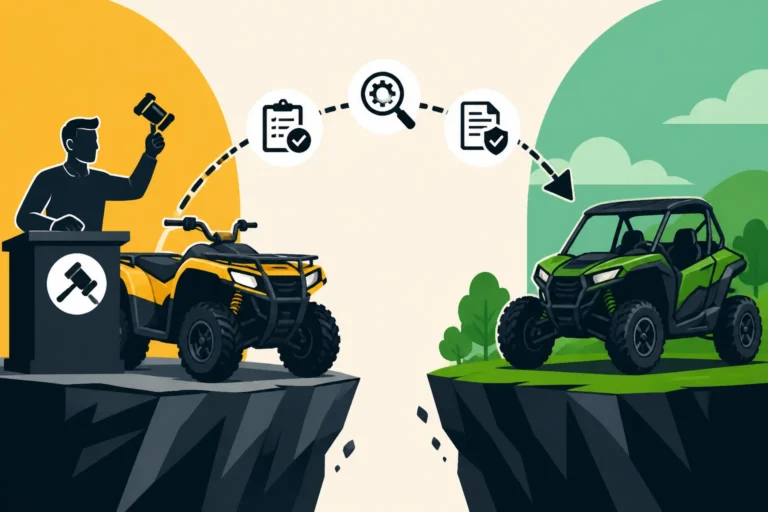
Selling an ATV in Michigan Without a Title: What Goes Wrong
Selling an ATV or UTV in Michigan can feel straightforward, especially if you're just looking to get a machine off your hands. But when that all-important title is missing, what seems like a simple transaction can quickly spiral into a legal headache for both you and the buyer. This guide is here to walk you through the often-frustrating realities and potential pitfalls of trying to sell an off-road vehicle in Michigan without a valid title, and crucially, how to navigate these challenges properly.
The Legal Ramifications of a Missing Title in Michigan
Let's be honest, we've all been there. You have a great ATV or UTV that you're ready to sell, but somewhere along the line, the title got lost, damaged, or maybe it never even had one if it's an older machine or was gifted to you years ago. You might think, "It's just an off-road vehicle, who cares about the title?" But in Michigan, that piece of paper is far more critical than many realize. It's the official record of ownership, and without it, you're not just selling a machine; you're selling a problem.
Why a Title is So Important in Michigan
In Michigan, an ORV title is the legal proof that you own your all-terrain vehicle (ATV) or utility terrain vehicle (UTV). It's not just a fancy piece of paper; it's the official document issued by the Secretary of State that verifies who the legal owner is. Think of it like the deed to your house or the title to your car. Without it, how can you definitively prove that you have the right to sell the machine? You really can't. This document protects both the seller and the buyer by establishing a clear chain of ownership, preventing disputes, and making it nearly impossible for someone to sell a stolen vehicle. The state uses it to track ownership changes and collect sales tax, which is why they take its absence seriously. This title is a fundamental part of the system, whether you bought your machine new from a dealer or used from a private party.
Beyond proving ownership, a title is essential for the buyer to perform their own due diligence. They'll want to check for liens on the machine – essentially, if someone else (like a bank) has a financial claim to it. Imagine buying an ATV only to find out a few months later that a bank can legally repossess it because the previous owner never paid off a loan. That's a nightmare scenario that a clear title helps to prevent. Without a title in hand, any buyer is taking a significant risk, and that often means they'll either walk away or demand a drastically lower price to compensate for their trouble and potential risk.
Potential Fines and Penalties for the Seller
Attempting to sell an ORV without a title can land you, the seller, in a heap of trouble. While there isn't typically a specific fine just for selling without a title, the issues arise when the buyer tries to get the machine titled in their name. If the buyer can't complete the title transfer because you couldn't provide a valid title, they have grounds for recourse. They might demand their money back, or worse, take legal action against you for misrepresentation or breach of contract. Depending on the specifics, this could lead to costly legal fees, court appearances, and even criminal charges if there's any suspicion of fraud, such as selling a stolen ORV or one with an undisclosed lien.
Furthermore, if the machine was subject to Michigan sales tax when you acquired it, and you never properly titled it, you could be on the hook for those unpaid taxes, plus penalties and interest. The state wants its revenue, and a missing title often indicates a gap in their records. Even if you manage to sell it without the buyer realizing the depth of the issue, the lack of a proper title means the transfer of ownership isn't legally complete. This leaves you vulnerable to future claims regarding the machine, such as accidents or violations, because technically, it could still be in your name or untraceable.
The Buyer's Risks When There's No Title
For the buyer, purchasing an ATV or UTV without a title is like buying a pig in a poke. They simply have no legal proof that you are the rightful owner, which means they can't prove they are the rightful owner after the sale. This makes it impossible for them to properly register and title the machine with the Michigan Secretary of State. Without a valid title, they won't be able to get their own [Michigan ORV Title Application and What It Costs] or a [Michigan ORV License and Trail Permit Explained], which are necessary to legally ride on public trails or designated areas. Imagine buying a brand-new-to-you UTV, eager to hit the trails, only to find out you can't even get the necessary permits. That's a serious buzzkill.
Beyond the inability to title and ride legally, the buyer faces other significant risks. What if the ORV turns out to be stolen? Without a title, they have no paper trail to protect themselves, and could lose both the machine and their money if it's recovered by the rightful owner. They also can't easily check for existing liens. If a bank has a claim on the ORV, the buyer could face repossession, even if they paid you fair market value. It's a truly bad situation. The buyer also won't be able to sell the machine easily themselves down the line, perpetuating the problem. This is why many savvy buyers will simply refuse to purchase an ORV without a clean, signed title, or they'll expect a deep discount to compensate for the hassle and risk of obtaining a [Bonded Title for an ATV in Michigan] or [Getting a Court Order to Title an ORV].
Navigating the Sale Without a Title: Solutions and Workarounds
So, you're staring at your ATV, title nowhere in sight, and you really need to sell it. Don't despair immediately, but understand that this situation requires extra diligence and patience. The best approach is always to resolve the title issue before you even list the machine for sale. It makes the transaction smoother, safer, and generally more profitable for you, as buyers won't be turned off by the red flags.
Steps to Obtain a Replacement Title Before Selling
The absolute best thing you can do for yourself and any prospective buyer is to get a replacement title before you even think about putting that "For Sale" sign up. This is a straightforward process, though it does take a little time. You'll need to head to your local Michigan Secretary of State branch or visit their website to download the necessary forms. You'll usually fill out a form requesting a duplicate title. Be prepared to provide your identification, the ORV's Vehicle Identification Number (VIN), and possibly a notarized signature.
There will be a small fee for the duplicate title, but it's a minimal investment compared to the headaches you'll avoid later. Once you submit the application, it typically takes a few weeks for the new title to arrive in the mail. For more details on this, you can check out [Replacing a Lost Michigan ORV Title]. This proactive step immediately removes all the major red flags for potential buyers, making your ORV a much more attractive and trustworthy purchase. It truly is worth the effort to go through this process, as it streamlines everything for the eventual buyer when they try to complete their [Michigan Title Transfer When You Buy From a Private Seller].
The Role of a Bill of Sale (and its Limitations)
Even if you have a title, a bill of sale is always a good idea. But when a title is missing, a bill of sale becomes even more critical – though it still has significant limitations. A well-drafted [Michigan ATV Bill of Sale: What to Put in It] serves as a contractual agreement between you and the buyer, documenting the transaction details like the purchase price, the date of sale, and the identifying information of both parties and the ORV (including the VIN). It also allows you to explicitly state that the ORV is being sold "as-is" and acknowledge the lack of a title, transferring responsibility for obtaining a new title to the buyer. You can find reliable templates for such documents on legal platforms like LawDepot, which help ensure you cover all the necessary clauses.
However, it's crucial to understand that a bill of sale, by itself, is generally not sufficient to title an ORV in Michigan if no previous title exists or if the last title was never properly transferred to your name. The Michigan Secretary of State typically requires a valid, signed title from the previous owner to issue a new one. A bill of sale might provide some evidence of a transaction, but it doesn't prove the seller had the legal right to sell in the first place, nor does it guarantee clear ownership. It's an important supporting document, but not a replacement for the title itself. For instances where a title is lost or was never obtained, the buyer will likely need to pursue further avenues like a bonded title, a court order, or proving previous ownership to the state.
Other Proof of Ownership When a Title is Absent
What if you've owned the ORV for years, have maintenance records, insurance cards, and old registration stickers, but never had an official title in your name? While these aren't substitutes for a title, they can serve as supporting evidence of your ownership if you're trying to get a replacement title or if a buyer is attempting to secure a bonded title. Things like old insurance policies where the ORV is listed, maintenance receipts with the VIN, or even historical registration documents (though ORVs don't register in Michigan in the traditional sense, some older machines or certain circumstances might have led to other paperwork) can help establish a paper trail.
In some specific cases, like for very old machines where titles weren't commonly issued, or if you've done a significant rebuild, the Michigan Secretary of State might have alternative processes to establish ownership, such as requiring a VIN inspection or other documentation. However, these are exceptions, not the rule, and they usually require a visit to the Secretary of State and a detailed explanation. Ultimately, these alternative proofs of ownership are more about helping you get a title in your name so you can then sell it properly, rather than directly enabling a sale without a title in hand. If you're dealing with a situation where a Michigan ORV has never had a title, exploring [Proof of Ownership When a Michigan ORV Has No Title] might offer more specific guidance on getting one issued.
Protecting Yourself and the Buyer During the Transaction
Even with the challenges of a missing title, there are steps you can take to make the transaction as transparent and secure as possible. This isn't about circumventing the rules but rather about being honest and taking proactive measures to prevent future disputes. The goal is to avoid leaving either party feeling blindsided or ripped off, which can only lead to legal troubles down the line.
Transparent Communication and Disclosure
Honesty is truly the best policy when selling an ORV without a title. From the very first conversation, you must be upfront and clear with potential buyers about the fact that you do not have the title in hand. Do not try to hide it or downplay its significance. Explain why it's missing (e.g., lost, never received one, inherited). Discuss the steps they will likely need to take to obtain a title themselves, whether that's applying for a bonded title or going through a [Michigan ORV Title Application Form and Where to Get It]. You might even suggest they contact the Secretary of State themselves to verify the process.
This level of transparency sets realistic expectations for the buyer and demonstrates that you are not trying to mislead them. It allows them to make an informed decision and factor the extra effort and potential risk into their offer. While some buyers might walk away, those who are serious and understand the process might still be interested, especially if the price reflects the added hassle. Trying to gloss over the missing title will only create resentment and legal problems if the buyer discovers the issue after the sale.
Formalizing the Agreement: Legal Documents
When selling an ORV without a title, it's absolutely crucial to have a robust written agreement that goes beyond a simple handshake. A detailed bill of sale is your primary defense. This document should clearly state that the title is missing, explain the circumstances, and explicitly state that the buyer is aware of this fact and accepts the responsibility of obtaining a new title. You should include the full names and addresses of both seller and buyer, the date of the transaction, a detailed description of the ORV (make, model, year, VIN), and the agreed-upon sale price.
Consider adding clauses about the "as-is" condition of the vehicle and a statement that the seller has no further responsibility for obtaining a title after the sale. Many legal document providers, such as LawDepot, offer customizable bill of sale templates that can be adapted for this exact situation, ensuring you include all critical details and legal disclaimers. Both parties should sign and date multiple copies, with each party retaining one. While a notary is not always required for a [Michigan ATV Bill of Sale Template Requirements], it can add an extra layer of legal weight and authenticity, making it harder for either party to dispute the signatures later.
Escrow Services and Transaction Security
For high-value ORVs, or when there are concerns about the transaction's security due to a missing title, considering an escrow service can be a smart move. An escrow service acts as a neutral third party that holds the buyer's payment until all agreed-upon conditions of the sale are met. In the context of a missing title, this could mean holding the funds until the seller provides a replacement title, or until the buyer successfully initiates the process for a bonded title. This protects the buyer by ensuring their money isn't released until they have some assurance of ownership, and it protects the seller by guaranteeing payment once their obligations are fulfilled.
While escrow services add a layer of complexity and usually involve fees, they significantly reduce the risk for both parties. Alternatively, for less formal arrangements, sellers might consider accepting a smaller deposit initially, with the full payment contingent on providing a title or the buyer completing initial steps at the Secretary of State. This creates trust and allows both parties to proceed with less financial exposure. However, always be wary of unusual payment requests or pressure tactics, which are common red flags in private sales. For more general advice on securing a private sale, refer to [Writing a Safe ATV Sale Contract].
What Happens After the Sale if There's Still No Title?
Let's imagine you went ahead and sold the ATV without a title, perhaps with just a bill of sale, and the buyer drove off. What happens next? The reality is, the problems don't just disappear with the ORV. The absence of a clear title can cause significant headaches for the buyer, and those headaches often boomerang back to the seller, sometimes with legal consequences.
The Buyer's Struggle to Title the Machine
The buyer will quickly discover the challenges of owning an ORV without a valid title when they attempt to get it properly titled in Michigan. The Secretary of State's office is strict: they require official proof of ownership, usually in the form of a properly assigned title from the previous owner. Without it, the buyer will likely be turned away, unable to complete the title transfer. This means they cannot legally ride the ORV on designated trails or public lands in Michigan, as they won't be able to get their [Michigan ORV License and Trail Permit Explained]. Operating an untitled ORV on such lands can result in fines and even impoundment, as detailed in [Penalty for Operating an Untitled ORV in Michigan].
To rectify this, the buyer might have to pursue a lengthy and sometimes costly process. This could involve applying for a bonded title, which requires purchasing a surety bond to protect against potential claims by a rightful owner. They might also need to get a court order to establish ownership, a process that can involve legal fees and court appearances. In some cases, if the machine is very old, they might be able to use a combination of a bill of sale and other proof of ownership, but this is often an exception and can still be a bureaucratic maze. Regardless, these are significant hurdles that most buyers want to avoid, and their frustration can quickly turn into anger directed at the seller.
Recourse for the Buyer and Potential Legal Action
If the buyer finds themselves unable to title the ORV, or if they discover that the machine has an undisclosed lien or is stolen, they have legal recourse against you, the seller. They could demand a full refund, citing a failure to deliver clear title or misrepresentation of the vehicle's legal status. If you refuse, they might pursue legal action in small claims court or even civil court, depending on the value of the ORV. The bill of sale, if it was poorly drafted or didn't explicitly address the missing title, could become evidence against you. Even if it did address the missing title, the buyer might argue that you implicitly warranted your right to sell the machine.
Beyond civil claims, if the ORV is found to be stolen or if there's any indication of fraud, law enforcement could become involved. This can lead to criminal charges, which are far more serious than a civil dispute over money. Even without criminal intent, if the buyer is stuck with an untitlable machine, they might report you to consumer protection agencies or simply take to social media to share their negative experience, damaging your reputation. This is why being transparent and ideally getting a replacement title before the sale is always the safest path.
The Seller's Ongoing Liability
Even after you've taken the buyer's cash, and the ORV is out of your driveway, if it wasn't properly titled in the buyer's name, you could still face lingering liabilities. If the machine was technically still registered or last titled in your name (or if it's untraceable but was previously yours), and the new owner gets into an accident, commits a traffic violation, or abandons the ORV, you could potentially be held responsible. Without a proper title transfer, there's no official record that you relinquished ownership.
This is a scenario many sellers overlook, assuming "out of sight, out of mind." But the legal system often looks to the last known legal owner when problems arise. Imagine receiving a ticket for an ORV infraction months after you sold the machine, or being contacted by law enforcement about an accident involving your old ATV. These are all potential consequences of an incomplete or improperly documented sale. Properly transferring the title is not just a formality; it's a critical step to legally sever your ties to the machine and its future activities. This is precisely why platforms like LawDepot offer templates that help clarify the transfer of liability at the point of sale.
Here's a quick look at the contrasting scenarios:
| Factor | Selling with a Title | Selling Without a Title (and no replacement) |
|---|---|---|
| Proof of Ownership | Clear and undisputed. | Ambiguous, relying on secondary documents. |
| Buyer's Confidence | High, smooth process for them. | Low, high risk, often leads to negotiation for lower price. |
| Legal Compliance | Fully compliant with Michigan regulations. | Non-compliant, potential for future legal issues. |
| Ease of Titling | Buyer easily titles ORV at Secretary of State. | Buyer faces significant hurdles (bonded title, court order). |
| Seller's Risk | Minimal once title is signed over. | Ongoing liability, risk of legal action from buyer. |
| Resale Value | Maximized due to clear ownership. | Reduced significantly due to complications. |
| Transaction Time | Typically quick and efficient. | Often prolonged, requiring extensive buyer due diligence. |
| Required Documents | Title, Bill of Sale. | Bill of Sale, extensive supplemental proof, or court order. |
Selling an ORV in Michigan without a title is a situation best avoided by taking the time to secure a replacement title before you list your machine. It might seem like an extra step, but it protects both you and the buyer from a world of potential legal and financial complications. Prioritize getting that title in hand, and you'll ensure a smoother, safer, and ultimately more successful sale.
Disclaimer
This article is for general informational purposes only and does not constitute professional advice. Laws, prices and regulations vary by location and change over time. Consult a qualified professional for guidance on your specific situation.