Penalty for Operating an Untitled ORV in Michigan
It's a frustrating scenario many Michigan ORV enthusiasts face: you've got a great machine, you're itching to hit the trails or cruise the county roads, but you realize your title paperwork isn't quite right, or maybe it's missing altogether. You might wonder, "What's the big deal? Can't I just go for a quick ride?" This guide is here to walk you through the very real and often costly penalties for operating an untitled ORV in Michigan, helping you understand why that piece of paper is so crucial and how to avoid trouble.
Why an ORV Title Matters in Michigan
Before we dive into the nitty-gritty of penalties, let's talk about why the state of Michigan places such importance on off-road vehicle titles. It’s not just red tape for the sake of it; there are fundamental reasons that protect both you and the broader community of ORV owners and enthusiasts. Ignoring these reasons can lead to a lot more than just a minor inconvenience.
Proof of Ownership and Legal Operation
Imagine showing up to a friend's house, and your buddy asks, "Hey, is that your new side-by-side?" You enthusiastically say yes, but then he asks for the proof. Your word is usually good enough for friends, but it's certainly not good enough for law enforcement. The title is the official document that links you, the individual, to that specific ORV. It clearly states that you are the legal owner.
Without a title, proving ownership becomes incredibly difficult, if not impossible, especially if there's ever a dispute or an incident. More importantly, in Michigan, operating an ORV without a valid title in your name (or at least proof of having applied for one within the legal timeframe) can immediately flag you for a violation. It’s the foundational document required before you can even think about getting your [Michigan ORV License and Trail Permit Explained] or riding legally on designated trails and roads. Think of it as the birth certificate for your machine – without it, its legal identity is in question.
Preventing Theft and Fraud
This is where the title really shines as a protective measure. Sadly, ORV theft is a real problem, and it can be devastating to lose a machine you've invested so much time, money, and passion into. A properly titled ORV makes it much harder for thieves to sell your machine once it's stolen. Why? Because legitimate buyers, especially dealers or savvy private sellers, will always demand to see a clear title. If a machine has no title, or a suspicious title, it's a huge red flag that it might be stolen or part of a fraudulent scheme.
When an ORV is reported stolen, the Vehicle Identification Number (VIN) associated with its title is entered into national databases. This allows law enforcement across the country to identify and recover your machine. Without a title, tracking and recovering a stolen ORV becomes a monumental task. Furthermore, when you're buying a used ORV, checking the title is your best defense against inadvertently purchasing a stolen vehicle or one with hidden liens. This is why tools like a [NICB VIN Check for a Used ATV] are so valuable, as they cross-reference the VIN with stolen vehicle databases and past insurance claims, all tied back to that crucial title.
Connecting to Sales Tax and Other Obligations
The title process is also how the state of Michigan ensures that sales tax is properly collected on ORV transactions. When you buy an ORV, whether from a dealer or a private seller, the state expects to collect sales tax. This tax is typically paid at the time of titling your machine at a Michigan Secretary of State office. If you're operating an untitled ORV, it raises questions about whether sales tax was ever paid, which can lead to additional penalties and fees.
Beyond sales tax, the title also plays a role in establishing other legal obligations, such as who is responsible for the machine if it's involved in an accident, or if there are any outstanding liens on the vehicle. [Liens on a Michigan ORV Title] are recorded directly on the title document, giving notice to any potential buyers or insurers that another party has a financial interest in the machine. Without a clear title, all these important financial and legal threads become tangled, creating headaches for everyone involved.
The Specific Penalties for an Untitled ORV in Michigan
So, what happens if you get caught operating your ORV without the proper title in Michigan? It's not just a slap on the wrist. Michigan law is quite clear, and the penalties can range from fines to more severe consequences, disrupting your riding plans and hitting your wallet hard.
The Initial Violation: Explaining the "Operating a Vehicle Without Evidence of Title" Infraction
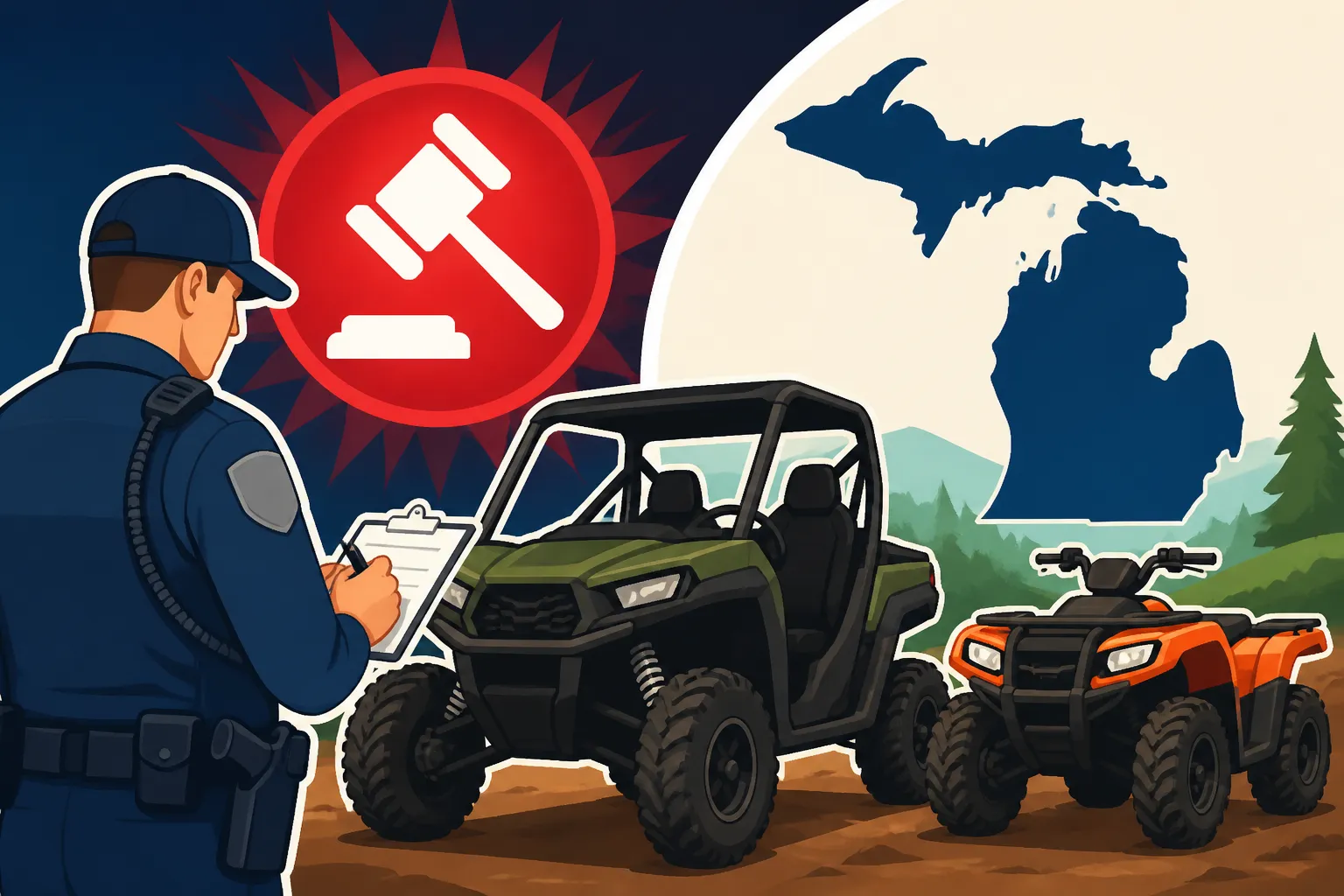
The most immediate consequence you're likely to face is a citation for "Operating a Vehicle Without Evidence of Title." This is typically a civil infraction, similar to a minor traffic ticket, but don't let the "civil" part fool you into thinking it's insignificant. In Michigan, these infractions carry fines. While specific amounts can vary depending on the jurisdiction (county, township, or state land), you can generally expect a fine that is certainly more than the actual [Michigan ORV Title Fee at the Secretary of State].
Beyond the fine, the officer may also require you to cease operation of the ORV immediately. This means your ride is over, and you'll need to figure out how to transport your machine home, which could mean calling a friend with a truck and trailer or arranging for a tow. It's an abrupt and inconvenient end to what you hoped would be a fun day on the trails or roads.
Secondary Issues: What Happens If It's Not Just an Untitled Machine
The problem often doesn't stop at just an untitled machine. An ORV operating without a title is frequently associated with other missing paperwork or compliance issues. For example, if you haven't titled your ORV, there's a good chance you also haven't obtained your required [Michigan ORV License and Trail Permit Explained]. Operating without these permits is a separate violation, stacking another fine on top of the untitled offense.
Furthermore, Michigan requires specific safety equipment for ORVs, and if you're riding on public roads or designated trails, you might also need [Michigan ORV Insurance and When You Actually Need It]. If your untitled machine also lacks proper insurance, required safety gear, or if the operator doesn't have the necessary safety certificate (especially for younger riders), these additional violations can escalate the situation quickly. Each missing piece of compliance adds to the list of fines and potential legal headaches, turning a single infraction into a cascade of penalties.
Impoundment and Recovery Headaches
Perhaps the most dreaded consequence of operating an untitled ORV is the possibility of your machine being impounded. Law enforcement has the authority to impound vehicles that are being operated illegally, especially if there's a question of ownership or safety. This isn't just an inconvenience; it's a major financial and logistical burden.
If your ORV is impounded, you'll face a series of charges to get it back:
- Towing Fees: The cost to tow your ORV from where it was stopped to the impound lot.
- Storage Fees: Daily fees for every day your ORV sits in the impound lot. These can add up quickly, especially on weekends or holidays.
- Impound Release Fees: The impound lot itself may have administrative fees.
- Proof of Ownership: To release your ORV, you will absolutely need to prove legal ownership, which means you'll have to get that title sorted out before they'll let you take your machine. This could mean a trip to the Secretary of State, dealing with a previous owner, or even pursuing a [Bonded Title for an ATV in Michigan] if the ownership chain is truly broken.
- Proof of Compliance: You'll also likely need to show proof that all violations leading to the impoundment have been rectified (e.g., proper title, license, permits, insurance).
All these costs can easily run into hundreds, if not thousands, of dollars, far exceeding the initial fines. It’s a harsh lesson in why getting your paperwork in order from the start is always the smartest move.
Beyond the Ticket: Practical Consequences for Riders and Owners
While the fines and potential impoundment are immediate and tangible, operating an untitled ORV in Michigan can also lead to a host of less obvious, but equally frustrating, practical problems down the road. These can impact your ability to enjoy your machine, sell it, or even protect yourself in unforeseen circumstances.
Insurance Claims and Liability
Imagine you're riding your untitled side-by-side on a designated county road, and you're involved in an accident. Perhaps you swerve to avoid a deer, or you have a minor collision with another ORV. If your machine is untitled, and therefore likely operating without a valid registration or proper identification, your insurance company might deny your claim entirely. Insurance policies are built on the premise that the insured vehicle is legally owned and operated. Without a proper title, proving legal ownership and operation becomes a massive hurdle.
This isn't just about covering damage to your ORV; it's also about liability. If you're deemed at fault in an accident and your machine is untitled, you could be personally on the hook for damages or injuries to others. This could mean medical bills, property damage, and legal fees coming directly out of your pocket, rather than being handled by an insurance policy that might have otherwise covered you. The financial fallout from a single accident involving an untitled ORV can be catastrophic.
Difficulty Selling or Transferring
Eventually, you might decide it's time to upgrade or move on from your current ORV. However, trying to sell an untitled machine in Michigan is an uphill battle, if not an impossible one for many legitimate buyers. Most buyers, especially those who are doing their due diligence, will insist on seeing a clear, transferable title. They understand that without it, they could inherit all the same problems you're trying to avoid.
You might be able to sell it for "parts only" at a significantly reduced price, or to someone who doesn't care about legal ownership – which, let's be honest, is a risky transaction for both parties. Attempting to sell an ORV without a proper title can also lead to suspicions of fraud or theft, making potential buyers wary. This significantly shrinks your pool of prospective buyers and diminishes the resale value of your machine. You essentially corner yourself into a situation where your asset becomes a liability because you can't legally prove it's yours to sell. Knowing the nuances of [Michigan Title Transfer When You Buy From a Private Seller] is essential, and the absence of a title completely derails that process.
Erosion of Trust and Future Complications
Getting caught operating an untitled ORV, or trying to navigate the system without one, can also erode trust. If you've been cited, or if an issue with your ORV arises, future interactions with law enforcement, the Secretary of State, or even insurance providers might be viewed with more scrutiny. It signals a lack of adherence to basic legal requirements.
Furthermore, if you ever need to apply for a specialized title, such as [Titling a Rebuilt or Homemade UTV in Michigan] or resolve a complex ownership issue like [Michigan ORV Title Problems and How to Clear Them], a history of operating untitled machines could make the process even more challenging. The system is designed to protect all parties, and when you operate outside of it, you create a paper trail that can complicate your future dealings and even impact your credibility.
Steps to Avoid Penalties: Getting Your ORV Titled Correctly
The good news is that avoiding these penalties is straightforward: get your ORV titled correctly. While the process can sometimes feel like navigating a maze, it’s a necessary step that protects your investment and ensures your adventures are legal and worry-free.
Understanding Michigan's Titling Requirements
The first step is to know what Michigan expects from you. Generally, most ORVs (Off-Road Vehicles), including ATVs, UTVs, and dirt bikes, that are ridden on public land or for certain purposes, need a title. There are some specific exemptions, such as farm machines used exclusively for agricultural purposes on private land, but for the vast majority of recreational riders, a title is mandatory.
When you purchase an ORV, you're typically given 15 days to title it at a Secretary of State branch. Missing this deadline can result in [Late Fee for Titling an ORV in Michigan]. To apply for a title, you'll usually need:
- The original manufacturer’s certificate of origin (MCO) if it's a new vehicle.
- The previous owner's signed-over title if it's a used vehicle.
- A bill of sale, especially for used private-party sales.
- Proof of identity.
- Payment for the title fee and any applicable sales tax.
Knowing the [Documents to Bring to a Secretary of State ORV Appointment] can save you a lot of hassle. It's always best to call ahead or check the Michigan SOS website to confirm current requirements before you go.
What If You Bought an ORV Without a Title?
This is a common and often stressful situation for buyers. You find a great deal on a used ORV, but the seller either doesn't have the title, or it's improperly filled out. Here's how you might approach it:
- Contact the Seller: Your absolute best first step is to contact the seller and request the proper title. If they lost it, they can apply for a [Replacing a Lost Michigan ORV Title] themselves and then sign it over to you.
- Bill of Sale: While a bill of sale alone isn't a title, it's crucial proof of your transaction. Make sure it includes the VIN, purchase price, date, and signatures of both buyer and seller. If you need a template, services like LawDepot offer customizable legal document forms, which can be invaluable for creating a comprehensive [Michigan ATV Bill of Sale Template Requirements].
- No Title from Previous Owner: If the seller genuinely can't produce a title and isn't willing to get one, you might be looking at more complex solutions. This could involve getting a [Bonded Title for an ATV in Michigan] or, in rare and challenging cases, even [Getting a Court Order to Title an ORV]. These routes are more involved, require more time and money, and often necessitate strong proof of ownership like a detailed bill of sale and evidence of attempted contact with previous owners.
Dealing with an Out-of-State Purchase
Bringing an ORV into Michigan from another state adds another layer to the titling process. The key is to understand that Michigan still requires its own title for ORVs operating within its borders, even if it had a title or registration in another state.
- Out-of-State Title: You'll typically present the out-of-state title to the Michigan Secretary of State. They will use this document to issue a new Michigan title in your name.
- Sales Tax: Be prepared to pay Michigan sales tax if you haven't already paid a comparable sales tax in the state of purchase. For instance, if you're [Paying Michigan Tax on an ATV Bought in Indiana] or [Titling an ATV Bought in Wisconsin and Brought to Michigan], you'll likely pay the difference or the full Michigan rate if no tax was collected.
- VIN Inspection: For some out-of-state purchases, especially if the title history is unclear or the vehicle is older, a [VIN Inspection Requirements for a Michigan ORV Title] might be required to verify the identity of the machine.
Always check with the Michigan Secretary of State for the most current rules regarding [Michigan Title Rules for an ORV Bought Out of State] to ensure a smooth transition.
Proactive Steps and Documentation
The best defense against penalties is proactive preparation.
- Keep Your Paperwork Safe: Once you have your title, keep it in a secure location, separate from your ORV. You generally do not need to [Carry the Title While Riding], but you should have easy access to it.
- Bill of Sale: Always get a clear, detailed bill of sale for any ORV purchase, even if a title is provided. This acts as backup proof. LawDepot can assist with creating robust legal documents like these, ensuring all necessary fields are covered to protect both buyer and seller.
- Understand the Law: Familiarize yourself with Michigan's ORV laws and regulations. This includes understanding when and where you can ride, and what permits and safety certifications are required.
By taking these steps, you're not just avoiding penalties; you're protecting your investment, ensuring your safety, and contributing to the responsible enjoyment of Michigan's fantastic off-road opportunities.
| Violation Type | Common Michigan Consequence | Additional Implications |
|---|---|---|
| Operating Without Evidence of Title | Civil infraction, fine | Risk of impoundment, difficulty proving ownership |
| Operating Without ORV License/Permit | Civil infraction, separate fine | Cannot legally ride on designated trails/roads |
| Operating Without Insurance (if required) | Civil infraction, separate fine | Personal liability for damages/injuries, claim denial |
| Impoundment Due to Violations | Towing, storage, release fees | Significant cost, loss of riding time, stress |
| Selling an Untitled ORV | Difficulty finding buyers, reduced value | Suspicion of fraud/theft, limited legal recourse for buyer |
Disclaimer
This article is for general informational purposes only and does not constitute professional advice. Laws, prices and regulations vary by location and change over time. Consult a qualified professional for guidance on your specific situation.