ORV Title Exemptions for Farm Machines in Michigan
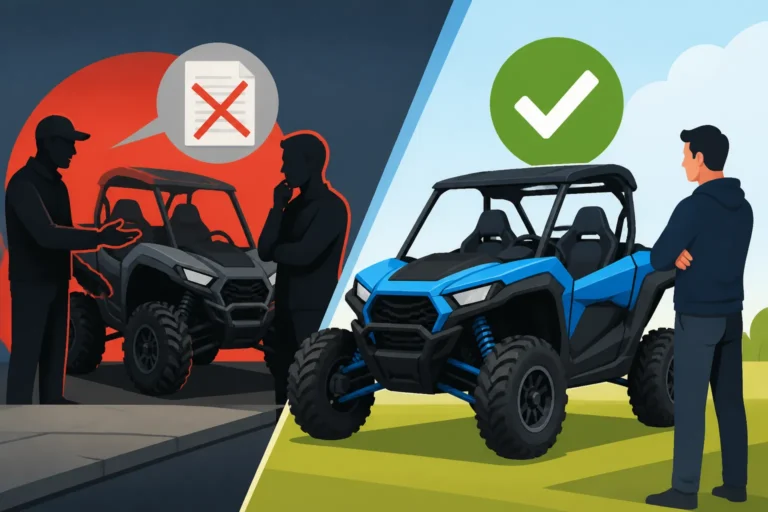
One of the most common headaches for Michigan off-road vehicle (ORV) owners is figuring out the labyrinth of titling and registration rules. This confusion only gets deeper when your ATV or UTV isn't just for trail riding fun, but a vital tool for farm work. Many folks assume that if it's on a farm, it's exempt from everything, but that's not always the case. This guide is here to untangle the specific title exemptions Michigan offers for farm machines, helping you understand when your hardworking ORV can skip the Secretary of State.
Understanding Michigan's General ORV Titling Requirements
Before we dive into the specific exemptions for farm machines, it's really helpful to get a baseline understanding of how Michigan typically handles ORV titling. It can feel like a maze, especially with all the different kinds of vehicles out there, but there's a standard path for most.
The Standard Process for Most ORVs
Generally speaking, when you buy an ATV, UTV, or other off-road vehicle in Michigan, whether it's brand new from a dealer or a used machine from a private seller, you're expected to title it. This means heading to a Secretary of State branch with your proof of ownership, like a bill of sale or the previous owner's signed title, and filling out the necessary paperwork. You'll pay a title fee and, in most cases, sales tax on the purchase price unless an exemption applies (like if it's a gift from a family member). The state then issues you a physical title, which is your official proof of ownership. This process is fairly straightforward for recreational riders, ensuring a clear chain of ownership for every machine. You can find more details on this process in [Michigan ORV Title Application and What It Costs].
Why Titling Matters and What Happens If You Don't
Titling your ORV isn't just a bureaucratic hurdle; it's a critical step that protects you as the owner. A title proves that you legally own the machine. If your ORV is ever stolen, having the title makes it much easier to report it and, more importantly, to get it back if it's recovered. Without a title, proving ownership can become incredibly difficult, turning a frustrating situation into a legal nightmare.
Furthermore, if you ever decide to sell your ORV, the buyer will expect a clear title. Trying to sell a machine without one can significantly reduce its value and raise red flags for potential buyers. It suggests a murky ownership history, which most people want to avoid. While Michigan doesn't have a registration requirement in the same way it does for cars (you don't get license plates for ORVs unless you make them street-legal), the title is your core document. This is distinct from the ORV license sticker you display, which is more akin to a trail permit than a registration. Speaking of which, it's good to remember [Why Michigan Has No ORV Registration] for clarification.
The Heart of the Matter: What Qualifies as a "Farm Machine" in Michigan?
This is where the rubber meets the road, or perhaps, where the mud meets the tire, when it comes to exemptions. Michigan law is quite specific about what constitutes a "farm machine" for the purpose of ORV title exemptions. It's not enough to simply own a farm or have an ORV on farm property; the use of the vehicle is what truly matters.
Defining Agricultural Use for ORV Exemptions
For an ORV to be exempt from titling requirements under Michigan law due to farm use, its primary purpose must be agricultural operations. This isn't just a casual definition; it means the vehicle is primarily used for tasks directly related to the production of agricultural goods, livestock, or crops. Think of things like:
- Tilling fields: While most ATVs/UTVs aren't primary tillage machines, smaller ones might pull cultivators or planters in specific circumstances.
- Hauling feed, supplies, or tools: Moving hay bales, bags of seed, fencing materials, or repair tools around large properties.
- Checking fences or irrigation systems: Traversing fields and property lines to inspect infrastructure crucial for farm operations.
- Livestock management: Herding animals, transporting small medical supplies for veterinary care, or moving animals within pastures.
- Spraying or fertilizing: Applying treatments to crops or fields, especially in areas larger equipment cannot easily access.
The key phrase here is "primarily used." If your side-by-side spends 90% of its time plowing snow, checking fences, and hauling seed, but you take it to the trail a couple of times a year, it might still qualify. However, if it's mainly for recreational riding and only occasionally used to pick up a stray bucket on the back forty, it likely won't. This distinction is crucial, and it's where many people get tripped up.
Specific Machine Types Often Used on Farms
While many different ORVs can be used on a farm, certain types are more commonly associated with these tasks. Utility Terrain Vehicles (UTVs), or side-by-sides, are particularly popular on farms due to their cargo capacity, towing capabilities, and often more stable, car-like ride. Models like the Polaris Ranger or Can-Am Defender are purpose-built for utility work, making them natural fits for agricultural operations. ATVs (quads) also serve farmers well, especially for tasks requiring agility or accessing tighter spaces.
It's important to remember that the type of machine isn't the sole determinant. A shiny new sport UTV, while capable of hauling a small load, would struggle to qualify for a farm exemption if its primary role is joyriding through the fields after chores are done. Conversely, an older, beat-up ATV primarily used to check cattle every morning would very likely qualify. The focus remains on its dedicated purpose.
The "Primary Purpose" Test
This "primary purpose" test is the linchpin of the farm exemption. Michigan law essentially asks: "What is this ORV mostly used for?" If the overwhelming majority of its operational hours are spent directly supporting agricultural activities, then it has a strong case for exemption. If its use is mixed, or if recreational use consistently outweighs farm work, then it's a different story.
Imagine a farmer, let's call her Sarah, who has a 200-acre fruit orchard. Her UTV is essential for moving irrigation equipment, hauling crates of apples, and transporting workers and tools between different sections of the orchard. She rarely takes it off her property, and when she does, it's usually just down the road to her neighbor's farm to borrow a tool. This UTV clearly passes the primary purpose test.
Now consider another individual, Mark, who owns a small hobby farm with a couple of horses. He uses his ATV to ride around his 10-acre property to clear brush and occasionally haul a bag of feed. However, every weekend, he loads that same ATV onto a trailer and takes it to the nearby state trails for long recreational rides with friends. In Mark's case, the recreational use might be considered significant enough that his ATV would not qualify for the farm exemption. It's a nuanced line, and if you're ever in doubt, it's always safer to title the machine.
Navigating the Michigan ORV Title Exemption for Farm Use
So, you think your ORV genuinely qualifies as a farm machine under Michigan's "primary purpose" test? Great! Now let's clarify exactly what that means for titling, and what it doesn't. This exemption can save you a trip to the Secretary of State, but it doesn't mean you're free from all paperwork. [Do Farmers Need an ORV Title in Michigan?] directly addresses this question.
When Your Farm Machine Doesn't Need a Title
According to Michigan law, an ORV used exclusively for agricultural operations and operated only on private property, or crossing a highway incidental to that private property use, is exempt from the titling requirement. "Exclusively" is a strong word, but in practice, it ties back to the "primary purpose" test we discussed earlier. If your machine is solely a workhorse on your farm and doesn't venture onto public trails or roads for recreational purposes, then you likely don't need to title it.
This exemption is designed to reduce the regulatory burden on farmers who are using these machines as legitimate agricultural tools, similar to how tractors are handled. It acknowledges that these vehicles are part of a commercial operation, not primarily for public recreational use, even if they could be. It's a pragmatic approach to support the farming community.
Practical Scenarios for Farm Exemptions
Let's look at a few examples to really drive this home:
- The Dairy Farmer's UTV: Imagine a dairy farmer who owns a large UTV. This machine is used daily to feed cattle, move equipment between barns, and transport supplies to different pastures on their expansive property. It might occasionally cross a low-traffic county road that bisects their farm to access another field. This UTV would almost certainly qualify for the title exemption because its use is undeniably and almost entirely agricultural.
- The Orchardist's ATV: An ATV used by an orchard owner to quickly inspect trees, scout for pests, or carry small pruning tools across their orchard property. The ATV never leaves the orchard property for recreational rides; it's purely a utility vehicle for the business. This ATV would also fit the exemption criteria.
- The Landscaper's ORV (Cautionary Tale): Now, consider a landscaping business owner who uses a UTV to haul mulch and tools to client properties. While it's used for business, it's not "agricultural" in the sense of producing crops or livestock. If this UTV is driven on public roads or trails between job sites, it likely would need a title, and potentially even be made street-legal if operating extensively on roads. The exemption is specific to agricultural use, not just any commercial use.
What If You Sometimes Ride Off the Farm?
This is where things can get tricky. If your farm machine is occasionally used for non-agricultural purposes, such as a quick trip to a neighboring farm for supplies, or a short jaunt down a county road to get to a different section of your property, these "incidental" uses are generally still covered by the exemption, provided the primary purpose remains agricultural.
However, if you start taking your "farm ORV" on Michigan's extensive trail system for recreation, or using it regularly on public roads beyond mere incidental crossing, you've likely stepped outside the bounds of the exemption. At that point, the vehicle's "primary purpose" starts to shift, and you would then be required to title it, and possibly get an ORV trail permit if you're using public trails. This is why understanding the nuances of [Michigan Agricultural ORV Road Exemptions] can be so helpful. It’s all about context and how consistently the machine serves its agricultural role.
Important Distinctions: Title Exemptions vs. Registration/Permit Exemptions
It's easy to conflate "no title needed" with "no paperwork needed at all," but these are distinct concepts in Michigan. A farm machine might be exempt from titling, but that doesn't automatically exempt it from other requirements if its use changes or expands beyond purely agricultural, on-farm operations.
The Difference Between a Title and an ORV Trail Permit
Let's clarify something fundamental: a title proves ownership, while an ORV trail permit (often mistakenly called "registration") grants you legal access to designated public ORV trails and routes.
- Title: This is a document issued by the Michigan Secretary of State that establishes legal ownership of your ORV. As discussed, certain farm machines are exempt from needing one.
- ORV Trail Permit (aka ORV License Sticker): This is the sticker you buy annually and affix to your ORV. It's required for any ORV operating on designated public ORV trails, routes, or areas in Michigan. It costs a fee each year and contributes to trail maintenance and programs.
So, even if your farm UTV doesn't need a title because it's used exclusively for farming, if you decide one sunny Saturday to load it up and take it to the nearby St. Helen ORV Trails for a ride, you would need to purchase and display an ORV trail permit sticker. The exemption only applies to the title, not to the permit required for public trail use. Many people are often surprised by [Michigan ORV Trail Permit Explained] when they first encounter these nuances.
When Farmers Still Need a Recreation Passport
Adding another layer of complexity is the Michigan Recreation Passport. This is an annual fee you pay with your vehicle plate renewal, or purchase separately, that grants you vehicle access to Michigan's state parks, recreation areas, state boat launches, and certain state forest campgrounds.
Here's how it relates to ORVs: If you plan to use your farm-exempt ORV in any state park, recreation area, or designated state forest campground that typically requires a Recreation Passport for vehicle entry, then yes, you would need one. Even if your ORV isn't titled and doesn't need an ORV trail permit (because you're not on designated ORV trails, but perhaps just driving within a campground loop), if you're in a Passport-required area, you'll need it.
For example, if you're camping at a state forest campground that's also adjacent to some ORV trails, and you use your farm UTV to drive between your campsite and the trailhead parking area within the campground, you'd need the Recreation Passport for entry. The easiest way to get the Recreation Passport is usually when you renew your car or truck plates, but it can be purchased at state park entrances or Secretary of State offices. The overall cost can be found in [Michigan ORV License and Trail Permit Total Cost], which breaks down both the ORV permit and the Recreation Passport.
Road Riding and Farm Exemptions
What about riding your farm ORV on public roads? This is another area where the title exemption doesn't grant carte blanche. Michigan law has specific rules for ORV operation on county roads, and these rules generally apply to all ORVs, regardless of whether they have a title or not.
While there are specific [Michigan Agricultural ORV Road Exemptions] that might allow you to operate an ORV on a highway for a short distance between fields or farm properties, this is typically for specific, limited circumstances and not for general travel. If you're going to regularly use your ORV on public roads, even for farm-related activities, you need to be very familiar with local ordinances and state laws. In many cases, if you're extensively operating on roads, your ORV might need to meet specific street-legal equipment requirements (lights, mirrors, etc.) and potentially even be titled as an "assembled vehicle" or "low-speed vehicle" if it's modified to meet those standards, which is a whole different ballgame from a farm title exemption.
Documentation and Best Practices for Farm Machine Owners
So, your ORV is genuinely a farm machine and is exempt from titling. Fantastic! But this doesn't mean you should just forget about all paperwork. In fact, having good documentation is even more crucial when you don't have a state-issued title. It's all about protecting yourself and proving legitimate ownership if questions ever arise.
Why Proof of Ownership Still Matters (Even Without a Title)
Without a title, your paper trail becomes your best friend. If you ever have a dispute, or if the ORV is stolen, or if law enforcement questions its origin, you'll need to demonstrate that you legitimately own it. Here's what constitutes good proof:
- Bill of Sale: This is paramount. A detailed bill of sale, signed by both the buyer and seller, is your primary document for showing you legally acquired the ORV. It should include the VIN, make, model, year, purchase price, date of sale, and contact information for both parties. For tips, look up [Michigan ATV Bill of Sale Template Requirements].
- Original Purchase Receipts: If you bought the ORV new, keep the sales receipt or invoice from the dealer.
- Maintenance Records: Keeping a log of maintenance and repairs, especially if you've had work done by a shop, can help corroborate your ownership and the duration you've had the machine.
- Insurance Policy: If you insure your farm ORV (which is a good idea regardless of titling), your insurance policy documents list you as the owner.
- Photographs: Pictures of your ORV on your farm, particularly with you using it for agricultural tasks, can also be supporting evidence.
The bottom line is: even without a title, you need to be able to clearly demonstrate how the ORV came into your possession and that you are its rightful owner. This can save you a world of hurt. Consider these points when thinking about [Proof of Ownership When a Michigan ORV Has No Title].
Creating Your Own Records with Tools like LawDepot
Since the state isn't issuing you an official title, you take on the responsibility of maintaining clear records. This is where tools like LawDepot can be incredibly useful. While I can't endorse specific brands, services that provide customizable legal templates can help you create robust documents. For example, if you buy a used ORV from a private seller for farm use, you might use LawDepot to generate a professional, comprehensive bill of sale that captures all the necessary details. This ensures you haven't missed any critical information that a simple handwritten note might overlook.
You could also use such platforms to draft agreements if you're lending the ORV to an employee or a family member for farm-related tasks, clearly outlining responsibilities. Having a formal paper trail, even one you create yourself, lends legitimacy to your ownership and operations.
What to Do When Selling a Farm-Exempt ORV
When the time comes to sell your farm-exempt ORV, the lack of a state-issued title requires careful handling. You can't just sign over a piece of paper that doesn't exist. Instead, you'll rely heavily on your bill of sale and other proof of ownership.
Here's the typical process:
- Locate Your Original Bill of Sale: This is critical. You'll need it to transfer ownership.
- Create a New Bill of Sale: Draft a new, detailed bill of sale between yourself and the buyer. This document should clearly state the VIN, make, model, year, sale price, and explicitly mention that the ORV has been used for agricultural purposes and was exempt from titling requirements in Michigan.
- Provide All Supporting Documentation: Give the buyer copies of your original bill of sale, maintenance records, or any other proof of ownership you've maintained. The more documentation, the better.
- Advise the Buyer: Make sure the buyer understands that the ORV currently has no title and that they will be responsible for titling it with the Secretary of State, especially if they plan to use it for non-exempt purposes. This transparency is crucial to avoid issues later.
If you don't follow these steps, you open yourself up to problems, which are detailed in [Selling an ATV in Michigan Without a Title: What Goes Wrong]. A clear, well-documented sale process, even without an official title to sign over, protects both parties. The buyer will then need to present your bill of sale to the Secretary of State to apply for a new title in their name.
Potential Pitfalls and Misunderstandings
While the farm exemption for ORV titles is a helpful provision for agricultural operations, it's not a free pass, and misunderstanding its limits can lead to unwelcome consequences. It's better to be overly cautious than to find yourself in a bind with law enforcement or a future buyer.
When a "Farm Machine" Might Still Need a Title
There are several scenarios where an ORV used on a farm might not qualify for the title exemption, or where its status could change:
- Mixed Use: As discussed, if your ORV's recreational use starts to outweigh its agricultural use, the "primary purpose" test is failed. This is a subjective area, but if you're seen regularly on trails or public roads for leisure, you're at risk.
- Sale to a Non-Farmer: If you sell your farm-exempt ORV to someone who doesn't intend to use it primarily for agriculture, that buyer will almost certainly need to title it. The exemption applies to the use, not permanently to the machine itself.
- Operating on Public Lands/Trails: Any operation on designated public ORV trails, routes, or scramble areas always requires an ORV trail permit (license sticker) and typically implies the expectation of a title, even if the primary farm use exemption might technically exist. It's often safer to title in these situations to avoid any ambiguity.
- Crossing State Lines: If you take your ORV to another state, their titling and registration laws may differ significantly. An ORV that's title-exempt in Michigan for farm use might require titling or registration in a neighboring state.
Always err on the side of caution. If there's any doubt about the primary purpose or if the ORV's use extends beyond strictly on-farm, private property activities, getting a title is the safest bet.
The Risks of Misclassifying Your ORV
Intentionally or unintentionally misclassifying your ORV as a farm machine to avoid titling can lead to serious headaches.
- Legal Trouble: If a conservation officer or law enforcement official determines your ORV doesn't meet the farm exemption criteria, you could face fines for operating an untitled ORV. Beyond fines, repeated or intentional misrepresentation could lead to more severe penalties for what might be considered [Michigan ORV Title Fraud Penalties].
- Difficulty Selling: As mentioned, selling an untitled ORV, even one that should have been titled, is a massive hurdle. Buyers will be wary, and you might struggle to get a fair price.
- Insurance Complications: While having an insurance policy is separate from titling, a misclassified ORV could complicate claims. If you have an accident and your insurance company investigates and finds the vehicle was improperly exempted from titling based on its actual use, they might dispute your claim.
- Recovery Issues: In the unfortunate event of theft, proving ownership without a title and with questionable use can make recovery much more difficult.
It's simply not worth the risk to stretch the definition of "farm machine" beyond its clear intent.
Dealing with Law Enforcement Encounters
If you're stopped by a Michigan Department of Natural Resources (DNR) officer or local law enforcement while operating your ORV, whether on or off your farm, you need to be prepared. Even with a title exemption, you'll still need to provide proof of identity and potentially proof of ownership.
Here's how to handle it:
- Be Courteous and Cooperative: Always be polite and follow the officer's instructions.
- Provide Identification: Have your driver's license or state ID readily available.
- Present Proof of Ownership: Even if it's not a title, have your bill of sale, receipts, or other documentation showing you own the ORV. Explain that it's used exclusively for agricultural operations on your private property, which makes it title-exempt under Michigan law.
- Be Ready to Explain Use: If asked, be prepared to articulate how the ORV is primarily used for farming activities.
- Have ORV Trail Permit (if applicable): If you are on a public trail or route, ensure you have your current ORV trail permit sticker displayed and your Recreation Passport if required for the area.
Understanding [Michigan ORV Paperwork During a DNR Stop] is crucial for all riders, but especially for those operating under exemptions. Carrying physical copies of your essential documents (bill of sale, insurance, etc.) with you or easily accessible is a smart practice, even for a title-exempt machine.
Disclaimer
This article is for general informational purposes only and does not constitute professional advice. Laws, prices and regulations vary by location and change over time. Consult a qualified professional for guidance on your specific situation.