Hauling Rules for an ATV on the Highway
Oh, the open road in Michigan, sun on your face, the promise of trails ahead… but first, you've got to get your ATV or UTV there safely! There's nothing worse than that knot of anxiety in your stomach, wondering if your precious machine is truly secure on the trailer or if you've missed some obscure rule. Michigan's highways can be unpredictable, and the last thing any rider wants is a roadside mishap or, even worse, a preventable accident. This guide is here to untangle all those worries, walking you through the essential hauling rules for your ATV or UTV on Michigan's highways, ensuring you arrive at the trailhead with your rig intact and your mind at ease.
Understanding Michigan's Basic Trailer Laws for ATVs & UTVs
When you're pulling a trailer, even one with a relatively small ATV or UTV, you're operating a combination vehicle, and that brings a whole new set of rules and responsibilities. It’s not just about hooking up and going; Michigan has specific regulations designed to keep everyone on the road safe. Ignoring these isn't just risky; it can lead to fines, points on your license, or even catastrophic failure.
Weight Classes and Licensing for Your Tow Vehicle and Trailer
First things first, let's talk about weight. Your ATV or UTV might not weigh as much as a car, but once you add the trailer itself, gear, and any other cargo, those pounds add up quickly. Every trailer has a Gross Vehicle Weight Rating (GVWR), which is the maximum loaded weight it's designed to carry. Your tow vehicle also has a specific towing capacity. Exceeding either of these is not only dangerous but illegal. It stresses your vehicle, impacts braking, and can lead to sway, especially at highway speeds or in windy conditions on Michigan's open stretches. You might find resources like LawDepot helpful for understanding legal definitions if you're ever looking into buying a used trailer or machine and want to be clear on its specifications.
Beyond the physical limitations, certain weight thresholds might require different licensing. Most standard ATVs or UTVs on a utility trailer can be towed with a regular Michigan driver's license. However, if your trailer's GVWR exceeds a certain limit (typically 10,000 pounds combined with the tow vehicle) or if you're operating a commercial vehicle, you might need a Commercial Driver's License (CDL) with specific endorsements. Always check the Michigan Secretary of State website or consult their offices to ensure your license covers the weight you're hauling. It's an easy check that can save you a world of trouble. Remember, the key is to know your weights: the empty weight of your trailer, the weight of your machine, and the total combined weight, so you can calculate if you're within legal limits.
Essential Trailer Equipment Michigan Requires
Michigan is quite specific about what your trailer needs to have before it can legally hit the highway. These aren't just suggestions; they're mandated safety features that prevent accidents and make your intentions clear to other drivers. You'll want to review your specific trailer's setup before every trip.
Every trailer must have working taillights, brake lights, and turn signals that mirror those of your tow vehicle. These need to be clean, visible, and functional at all times. If your trailer is wider than 80 inches, you'll also need clearance lamps and side marker lamps. Reflective tape on the sides and rear can also significantly increase visibility, especially during dawn, dusk, or nighttime travel on those long drives up north. Beyond lighting, robust safety chains are non-negotiable. Michigan law requires two safety chains, crossed under the coupler, connecting the trailer tongue to the tow vehicle. These chains act as a backup in case your primary hitch connection fails, keeping the trailer attached and preventing it from becoming a runaway projectile. They should be strong enough to hold the trailer's gross weight. For heavier trailers, often those with a GVWR over 3,000 pounds, Michigan law also requires independent trailer brakes and a breakaway system, which applies the trailer brakes automatically if the trailer separates from the tow vehicle. These systems are crucial for preventing serious accidents. Making sure your trailer is properly registered and has [Trailer Plates for Hauling an ATV in Michigan] is also a fundamental step you won't want to skip.
Securing Your ATV or UTV for Highway Travel
This is where many people get complacent, but improper securing is one of the most common causes of trouble when hauling. An ATV or UTV bouncing, shifting, or worse, coming loose on the highway, isn't just dangerous for you; it's a huge hazard to everyone else on the road. Taking the extra five minutes to properly secure your machine can prevent hours of headaches and potentially life-threatening situations.
The Art of Proper Tie-Downs
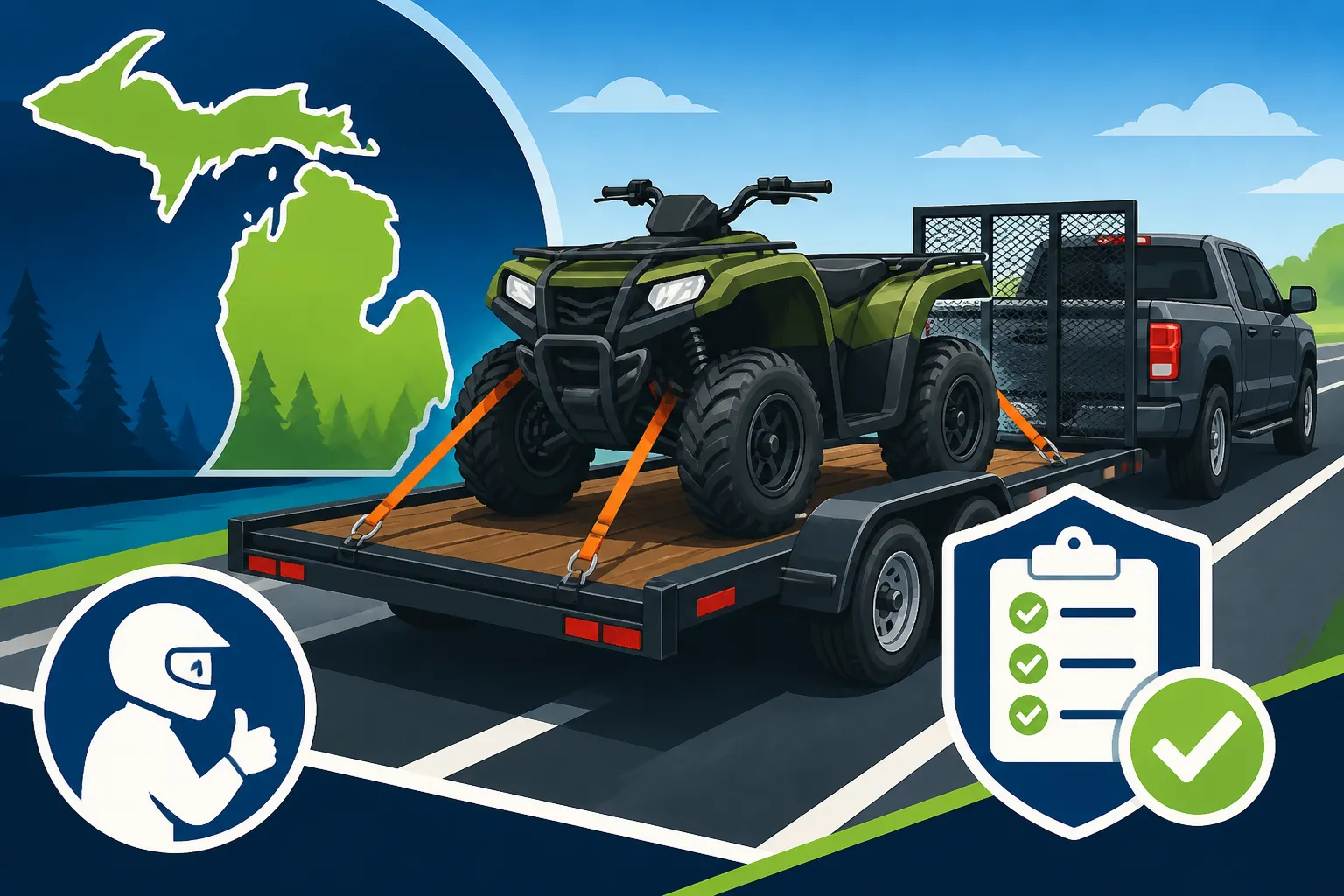
Think of your tie-downs as the seatbelts for your ATV or UTV. You wouldn't drive without your own, so don't let your machine travel without proper restraints. The absolute minimum is four high-quality, heavy-duty ratchet straps, one for each corner of your machine. Position them so they pull down and slightly outwards, creating tension that resists movement in all directions. It's crucial to secure your machine to the frame of the trailer, not just around the tires or wheels, as tires can compress and allow the machine to shift. Find solid points on your ATV or UTV's frame or designated tie-down points, ensuring the straps aren't rubbing against sharp edges that could fray them during transit.
When you're cinching them down, apply enough tension to compress the suspension slightly, but don't absolutely crank it down until the suspension is completely bottomed out. A little bit of suspension travel is still good, as it allows the machine to absorb some of the bumps and vibrations of the road, reducing the stress on the straps and the machine itself. After you've got everything snug, give the ATV or UTV a good shake to ensure it feels solid and doesn't rock. Many experienced haulers will stop after the first 10-15 miles of a trip to re-check all their straps, as things often settle after the initial vibrations of the road. This small step can prevent major issues later on. You can find more detailed instructions in articles like [Securing an ATV on a Trailer Legally].
Preventing Movement and Damage on the Road
Beyond the main tie-downs, there are several other steps you can take to prevent movement and damage. Always make sure your ATV or UTV is in park, with the parking brake engaged if it has one. If you're using an open trailer, consider adding wheel chocks at the front and back of the tires for extra security, especially if your machine is heavy. These help prevent fore-and-aft movement.
Think about any loose items on your machine. Fuel cans, coolers, spare tires, tools, or even extra clothing should be removed from the ATV or UTV itself and secured separately on the trailer or stored safely inside your tow vehicle. A flying gas can on the highway is a serious projectile and could injure someone or cause an accident. If you're worried about road grime, dust, or pebbles damaging your machine, especially on longer trips, a fitted cover can be a great investment. Not only does it protect the finish, but it also helps keep any smaller, less secure items from potentially flying off. Just ensure the cover itself is very securely strapped down so it doesn't become a parachute or tear apart at highway speeds.
Pre-Trip Checklist and On-Road Safety for Hauling
Getting ready to haul isn't just about the machine and trailer; it's about being prepared for the journey. A thorough pre-trip inspection is your best defense against unexpected problems on the highway. Think of it as your personal safety briefing before a big adventure.
Your Go-To Inspection Before Every Haul
Before you even pull out of the driveway, take a few minutes for a walk-around inspection. This isn't just a good idea; it's a habit that can prevent costly breakdowns and dangerous situations. Start with the tires on both your tow vehicle and the trailer. Check their pressure (including the spare!), looking for any bulges, cracks, or excessive wear. Under-inflated trailer tires are a common cause of blowouts, especially under heavy loads. Next, inspect your hitch connection thoroughly. Ensure the hitch ball is the correct size for the coupler and that the coupler is fully seated and latched. Give it a good tug to confirm it's secure. Then, verify your safety chains are properly crossed and attached, and the wiring harness for your trailer lights is securely plugged in and not dragging. A quick test of the brake lights, turn signals, and taillights on the trailer is essential.
Don't forget the wheel bearings on your trailer. After driving a short distance (even just a mile or two), carefully touch the hubs of your trailer wheels. If one feels significantly hotter than the others, it could indicate a failing bearing, which needs immediate attention before you hit highway speeds. Finally, double-check all your tie-downs. Are they tight? Are there any frayed edges? Is anything rubbing that shouldn't be? A small investment in time before you leave can prevent hours of frustration or even a serious accident on Michigan's busy roads. Having all your documentation in order, like a copy of your [Michigan ATV Bill of Sale: What to Put in It] or your [Michigan ORV Insurance and When You Actually Need It], can also streamline things if you ever get pulled over.
Driving Considerations with a Trailer in Michigan
Driving with a trailer is fundamentally different from driving a solo vehicle. You're longer, heavier, and less nimble, and Michigan's highways demand your full attention. The first thing you'll notice is the increased stopping distance. Your vehicle and trailer combination will require significantly more road to come to a complete stop, so you need to increase your following distance dramatically. Give yourself ample space between you and the car in front – much more than you normally would.
You'll also need to make wider turns. The trailer will cut corners more sharply than your tow vehicle, so always anticipate this, especially in urban areas or when turning into rest stops or trailheads. Crosswinds, common on open stretches of highway or across bridges, can cause significant sway, so keep both hands firmly on the wheel and be prepared to correct. Be mindful of speed limits, too. While many Michigan highways have high limits, driving at the maximum with a trailer might not always be safe or legal. Some areas might have lower posted limits for vehicles with trailers. Always drive defensively, anticipate traffic patterns, and be extra cautious when changing lanes or merging. Remember, you're responsible for the entire length of your rig, and that means seeing everything around you. A quick glance at the [Michigan Secretary of State Appointments for ORV Title Work] page might even be a good idea if you anticipate needing to do any paperwork before or after your trip.
Disclaimer
This article is for general informational purposes only and does not constitute professional advice. Laws, prices and regulations vary by location and change over time. Consult a qualified professional for guidance on your specific situation.