Titling a Machine After an Engine Swap
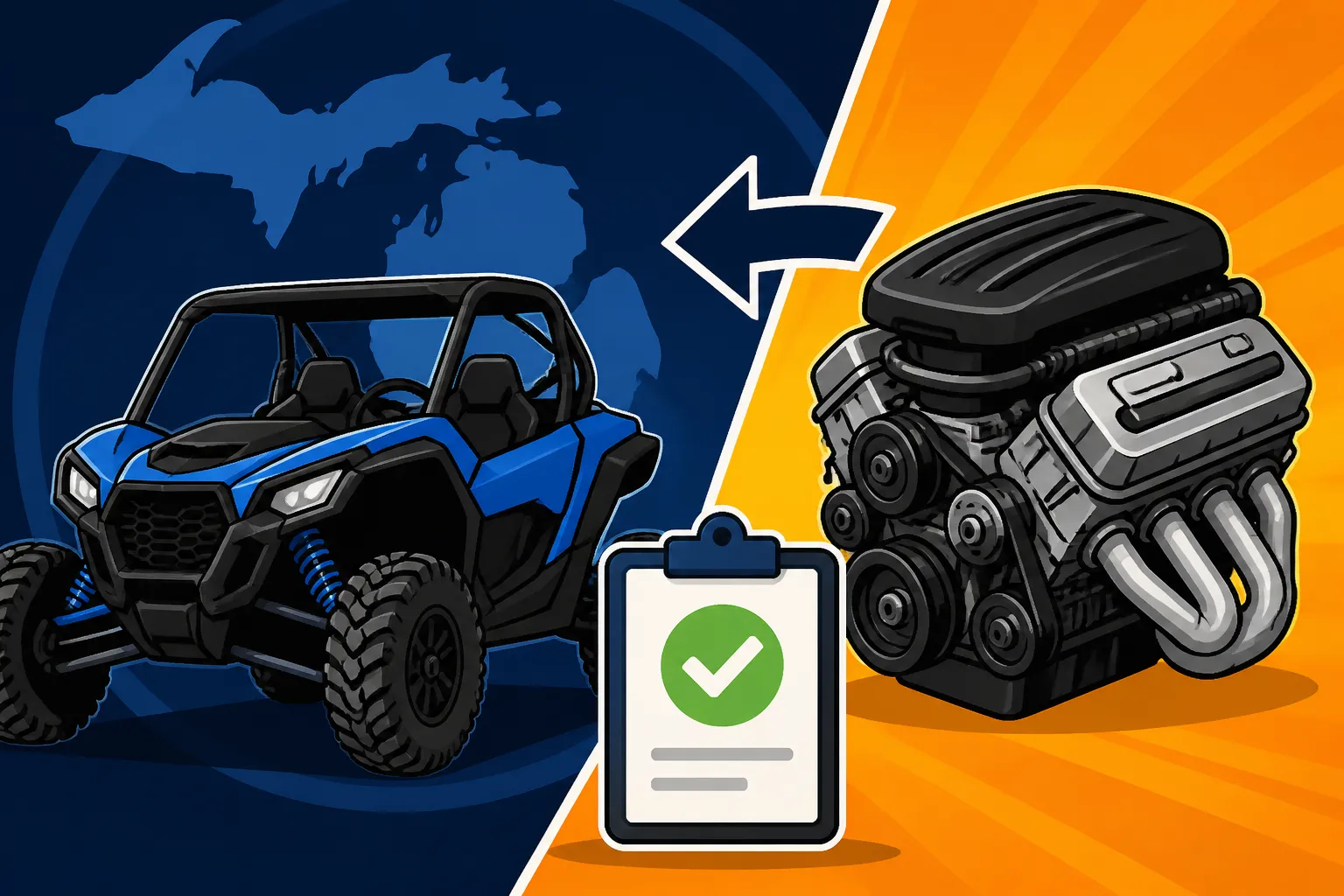
You’ve just put in hours of sweat and probably a few scraped knuckles, swapping out a tired, blown engine in your beloved ATV or UTV for a fresh one. It’s a huge undertaking, a moment of triumph when it fires right up! But then, a nagging thought pops into your head: "Does this engine swap affect my Michigan ORV title?" It's a valid concern, and navigating the nuances of titling can feel like another off-road obstacle course. This guide is here to untangle the process, clarify Michigan's expectations, and ensure your hard work doesn't lead to unexpected paperwork headaches.
Why an Engine Swap Might Affect Your ORV Title in Michigan
Replacing an engine in your off-road vehicle is a common repair or upgrade, but it’s natural to wonder if it complicates the legal ownership aspect. The good news is that for most straightforward engine swaps, the impact on your title is usually minimal, if non-existent. However, there are specific circumstances where Michigan's titling rules might come into play.
The VIN and Your Machine's Identity
At the heart of every vehicle's identity is its Vehicle Identification Number (VIN). For off-road vehicles in Michigan, this VIN is typically stamped directly onto the frame by the manufacturer. Think of it as your machine's unique DNA. This 17-character sequence tells a story: who made it, where, what year, and even details about its original engine type. When it comes to titling an ORV in Michigan, the Secretary of State primarily uses this frame VIN to identify and track the machine.
An engine swap, by its very nature, changes the engine, not the frame. So, even if you put a bigger, faster, or different brand engine in, the core identity of your ORV, as defined by its frame VIN, remains the same. This is a crucial point to remember because the title is tied to that frame VIN, not the engine's serial number. The engine is a component, albeit a very important one, but not the primary identifier for titling purposes. The only time this really becomes an issue is if the new engine has a completely different displacement or design that fundamentally changes the machine's classification or performance in a way that falls outside of safety regulations, such as for youth riders, or if you're building a whole new machine around components.
When the Michigan Secretary of State Cares About Engine Details
Generally, the Michigan Secretary of State (SOS) focuses on the frame VIN when titling ORVs. A simple engine replacement where you swap out a 450cc engine for another 450cc, or even a 500cc, in the same ATV frame usually doesn't trigger any special title update requirements. The vehicle is still considered the original ORV, just with new internals.
However, there are specific situations where engine details, or the effect of an engine swap, might draw the SOS's attention:
- Homemade or Assembled Vehicles: If your "engine swap" is actually part of a larger project where you're combining a frame from one machine with an engine from another, or fabricating significant portions yourself, then you're moving into the realm of [Titling a Rebuilt or Homemade UTV in Michigan]. In these cases, you won't be simply transferring an existing title; you'll be applying for an original title for an assembled vehicle. This process is much more involved and requires extensive documentation of all major components, including the engine.
- Street-Legal Conversions: If you're swapping an engine as part of a grand plan to make your UTV street-legal through [Michigan's Assembled Vehicle Route for a UTV], the inspection process might be more thorough. While the frame VIN is still paramount, the overall specifications of the vehicle, including engine type and displacement, may be scrutinized to ensure it meets safety and emissions standards for road use. This isn't a direct title issue from the swap itself, but rather a consequence of seeking a new classification for the machine.
- Youth Machine Age/Size Restrictions: If the engine swap drastically changes the power or size of an ATV intended for a younger rider, it could become an issue with [Youth Machine Engine Size Limits in Michigan]. While this isn't a title update requirement, it's a safety and legal operating concern that riders and parents need to be aware of.
For the vast majority of Michigan riders performing an engine swap on an existing, titled ORV, as long as the frame VIN remains intact and the vehicle's fundamental classification (e.g., ATV, UTV) doesn't change, a separate title update is generally not needed.
The Steps to Take After Swapping an Engine
While a simple engine swap might not require you to immediately run to the Secretary of State to update your title, there are critical steps you should always take to protect yourself and your investment. Good documentation is your best friend in the off-road world, especially when mechanical changes are involved.
Documenting Your Engine Swap
This is perhaps the single most important step after completing an engine swap. Even if you don't need a title update, having a clear paper trail can save you immense headaches down the line. Imagine trying to sell your ORV only to have a potential buyer question the non-original engine. Or worse, if a law enforcement officer has questions about vehicle modifications.
Here’s what you should document:
- Bill of Sale for the New Engine: Whether you bought a brand-new crate engine or a used one from a private seller, get a detailed bill of sale. This document should include the seller's information, your information, the date of sale, the engine's make, model, displacement, and any serial numbers. It proves legitimate ownership of the engine itself. If you're dealing with a private party, a robust bill of sale can be easily generated using services like LawDepot, ensuring all necessary details are captured and legally sound.
- Receipts for Parts and Labor: Keep all receipts for gaskets, fluids, specialty tools, or professional labor if you had assistance with the swap. These show the effort and investment made in the repair.
- Photographs: Document the process! Take pictures of the old engine, the new engine before installation, and perhaps a few shots during the swap. These visual records can support your claims about the repair.
- Notes and Dates: Keep a log of when the swap occurred, any challenges you faced, and the exact specifications of the new engine. Include any engine serial numbers or codes from the new unit.
Why is this documentation crucial? It serves as undeniable proof that the engine in your ORV was acquired legitimately and installed by you or a professional. It dispels any suspicion of stolen parts and provides transparency for future buyers. When it comes time to sell, being able to present a clear history of the engine swap will significantly boost buyer confidence, and a well-prepared bill of sale, perhaps drafted with the help of LawDepot, can make the sales process smoother.
When to Update Your Title or Contact the SOS
As discussed, for a straightforward engine replacement that doesn't change the fundamental nature of your ORV, a title update directly reflecting the new engine isn't typically required by the Michigan Secretary of State. The title is linked to the frame VIN, which remains unchanged.
However, you must consider contacting the SOS or a local branch if:
- The swap results in a reclassification of the vehicle. For example, if you somehow modified an ATV frame to accept components that effectively turn it into a side-by-side, or if you're literally building a new vehicle from scratch using salvaged parts. These are situations where you might need to apply for a totally new title as an assembled vehicle.
- You are making the vehicle street-legal. If the engine swap is part of a larger project to gain a street-legal designation for your UTV, then the vehicle will undergo an inspection, and detailed documentation, including engine information, may be required for the assembled vehicle title application.
- You are unsure. When in doubt, it's always best to reach out to the Michigan Secretary of State directly. Explain your situation clearly – that you performed an engine swap on an already titled ORV and want to ensure you're compliant. They can provide the most accurate and up-to-date guidance for your specific situation.
Remember, the goal is to ensure your machine's legal status is always clear, especially if you plan to sell it or if you ever face questions from authorities. While a direct title update isn't usually needed for a simple swap, keeping robust records of your work is paramount.
Preparing for a Potential VIN Inspection
In the event that your engine swap is part of a larger project that does require a new title (like an assembled vehicle build) or a specific inspection (like for a street-legal conversion), you'll likely need a VIN inspection. The primary purpose of this inspection is to verify the authenticity of the frame VIN and ensure it matches any existing paperwork, or to assign a new VIN if it's a homemade build.
Here's what to prepare for:
- Clean and Accessible VIN: Make sure the frame VIN is clean, clearly visible, and easily accessible for the inspector. You'll want to know [Where the VIN Is Stamped on an ATV or UTV] for your particular model.
- All Documentation: Gather all your documentation related to the ORV's history, especially the engine swap. This includes the old title (if applicable), bills of sale for the new engine and any major components, and any photographs or repair logs you've kept. For example, if you obtained your original title through a process described in [What the Michigan Secretary of State Needs to Title an ORV], have those documents handy too.
- Proof of Ownership for Components: If you're building an assembled vehicle, you'll need proof of ownership for the frame, engine, and any other major components. This is where those bills of sale for the engine become critical.
- Be Ready to Explain: Be prepared to clearly and concisely explain the work you've done to the inspector. They're looking for legitimate modifications, not suspicious activity.
A VIN inspection is a standard part of verifying a vehicle's identity. By having everything organized and accessible, you'll make the process much smoother. If you need to replace a title you might have lost during this process, ensure you follow the steps outlined in [Replacing a Lost Michigan ORV Title].
Common Scenarios and What Michigan Expects
Let's break down some common engine swap scenarios to give you a clearer picture of what Michigan expects from you as an ORV owner.
Replacing a Blown Engine with a Similar One
This is the most frequent situation. Your original engine dies, and you find a suitable replacement—either new or used—that is of similar type, displacement, and power output. Maybe it’s a direct OEM replacement, or perhaps a slightly larger or different brand engine that still fits and functions as intended in your existing ATV or UTV frame.
In this common scenario, Michigan's titling requirements are pretty straightforward: you do not typically need to update your ORV title. Why? Because the title is inextricably linked to the frame's Vehicle Identification Number (VIN), which remains unchanged. Your ORV is still the same year, make, and model according to its frame, even if the engine inside is different. It’s essentially a major repair, much like replacing a transmission or a differential.
What is expected, however, is that you keep impeccable records. As detailed earlier, a bill of sale for the replacement engine (especially if you bought it used from a private party) is absolutely essential. This proves you legally acquired the engine. If you're ever selling the machine, or if a DNR officer or law enforcement official questions the non-original engine, having that documentation will be your strongest defense. You should always be in the habit of [Keeping Your ORV Paperwork With the Machine], even if it's just the basic registration and permit, but for an engine swap, those extra receipts and bills of sale are priceless.
Upgrading or Changing Engine Type (e.g., bigger displacement, different brand)
What if you're not just replacing like-for-like, but truly upgrading? Perhaps you’re putting a significantly larger engine into your ATV, or a different manufacturer’s engine that requires some custom fabrication to fit. For example, going from a 500cc single-cylinder to a 700cc twin-cylinder, or installing an engine from a different brand (e.g., a Honda engine into a Yamaha frame).
Again, the golden rule applies: as long as the core frame with its VIN remains the same and the vehicle fundamentally retains its classification (e.g., an ATV is still an ATV, a UTV is still a UTV, not morphing into something else entirely), a direct update to your title isn't usually necessary. The title still accurately describes the vehicle based on its original frame.
However, there are important considerations:
- Safety and Operation: A significantly more powerful engine might alter the machine's handling characteristics. Ensure all other components (brakes, suspension, drivetrain) are capable of safely handling the increased power.
- Youth Riders: If a minor operates the machine, be acutely aware of [Youth Machine Engine Size Limits in Michigan]. An engine swap that pushes the ORV beyond these limits for a specific age group could lead to citations if operated by an underage rider.
- Insurance: It's a good idea to inform your ORV insurance provider about significant engine upgrades. While not a title issue, it ensures your policy accurately reflects your machine's value and capabilities.
Even with major upgrades, the focus for the Secretary of State remains on the frame VIN for titling. Keep those detailed records of your engine purchase and installation, including any custom fabrication notes, to maintain a clear history for your ORV.
Engine Swap as Part of a "Homemade" or "Assembled" Build
This is where the engine swap moves beyond a simple repair or upgrade and directly into title-impacting territory. If you're taking an engine from one vehicle and combining it with a frame from another, or using a collection of salvaged parts to create a "new" ORV from the ground up, you are building a "homemade" or "assembled" vehicle.
In these situations, you are no longer dealing with an existing titled machine that just received a new engine. Instead, you are applying for an original title for a vehicle that Michigan considers newly constructed. This is a much more involved process, which is comprehensively covered in guides like [Titling a Rebuilt or Homemade UTV in Michigan] and [Michigan's Assembled Vehicle Route for a UTV].
Here’s what typically happens:
- Proof of Ownership for All Major Components: You will need bills of sale or other legal documents proving ownership of the frame, the engine, transmission, and any other significant components used in the build. Without this, the SOS cannot issue a title. Using a service like LawDepot can help you generate proper bills of sale for private party transactions if you're acquiring used components.
- VIN Inspection: The vehicle will likely require a VIN inspection by a qualified law enforcement officer or state official to verify the components and ensure the frame VIN (if one exists) is legitimate, or to assign a new state-issued VIN if necessary.
- Application for Assembled Vehicle Title: You'll complete specific forms for an assembled vehicle. This process is distinct from a standard title transfer and acknowledges that the vehicle is a unique construction. You'll need the proper [Michigan ORV Title Application Form and Where to Get It].
So, while a typical engine swap on an already titled ORV usually doesn't affect the title, if that swap is part of creating a truly "new" vehicle from various parts, then it absolutely impacts the titling process, shifting it to an entirely different category of application.
Selling a Michigan ORV After an Engine Swap
Eventually, the time may come when you decide to sell your off-road machine, even after you’ve put so much effort into an engine swap. When it comes to selling, transparency and proper documentation are your two biggest allies. Ignoring these can lead to disputes and difficulties down the road.
Transparency with the Buyer
This is non-negotiable. When you sell an ORV that has had an engine swap, you must be upfront and honest with the potential buyer about it. Disclose all modifications, especially something as significant as a swapped engine, before the sale is finalized. Trying to hide it will almost certainly lead to problems later if the buyer discovers the non-original engine.
Here’s why transparency matters and how to achieve it:
- Builds Trust: Being honest from the outset builds trust with the buyer. They'll appreciate your candor and be more confident in the purchase.
- Prevents Disputes: Full disclosure significantly reduces the risk of the buyer returning later, claiming they were misled, or demanding money back for a non-original engine.
- Documentation is Key: Provide all the documentation you diligently collected during the engine swap process. This includes the bill of sale for the new engine, receipts for parts, and any service records. This proves the legitimacy of the swap and the origin of the new engine.
- Include in Bill of Sale: Explicitly state in the [Michigan ATV Bill of Sale: What to Put in It] that an engine swap has been performed, detailing the new engine's specifications (make, model, displacement) and the date of the swap. A platform like LawDepot can provide customizable bill of sale templates that allow for such specific inclusions, protecting both you and the buyer.
- Pre-Purchase Inspection: Encourage the buyer to conduct a [Pre-Purchase Inspection Before Signing an ATV Title]. This allows them to verify the condition of the machine, including the swapped engine, and confirm that everything is as you've described.
While an engine swap might not legally change your title, it is a material fact that a buyer has a right to know. Transparency protects everyone involved.
Handling the Title Transfer
The actual title transfer process for an ORV with an engine swap remains the same as for any other private sale in Michigan. The engine swap itself does not alter the fundamental steps of transferring ownership.
Here's how it works:
- Sign the Title: You, as the seller, will sign over the existing Michigan ORV title to the buyer. Ensure you complete all necessary sections on the title certificate accurately, including the sale price and odometer/hour meter readings if applicable. Pay close attention to [Who Has to Sign a Michigan ORV Title].
- Provide Bill of Sale: Hand over the detailed bill of sale, which includes the engine swap information, to the buyer. This acts as their proof of purchase and substantiates the sale price for tax purposes. Remember, a robust bill of sale from a resource like LawDepot can simplify this for both parties.
- Buyer Takes to SOS: The buyer will then take the signed-over title, along with the bill of sale and proof of identity, to a Michigan Secretary of State branch. They will apply for a new title in their name and pay any applicable transfer fees and sales tax. The detailed process is outlined in [Michigan Title Transfer When You Buy From a Private Seller].
- Sales Tax and Use Tax: Be aware that the buyer will be responsible for paying sales tax on the purchase price. Even if the engine was swapped, the sales tax is based on the agreed-upon price of the entire ORV.
The key takeaway here is that while the engine may be different, the process of transferring the title of the ORV is dictated by the frame's VIN and Michigan's standard title transfer procedures. Your thorough documentation of the engine swap simply adds value, transparency, and peace of mind to the transaction for both parties.
Disclaimer
This article is for general informational purposes only and does not constitute professional advice. Laws, prices and regulations vary by location and change over time. Consult a qualified professional for guidance on your specific situation.