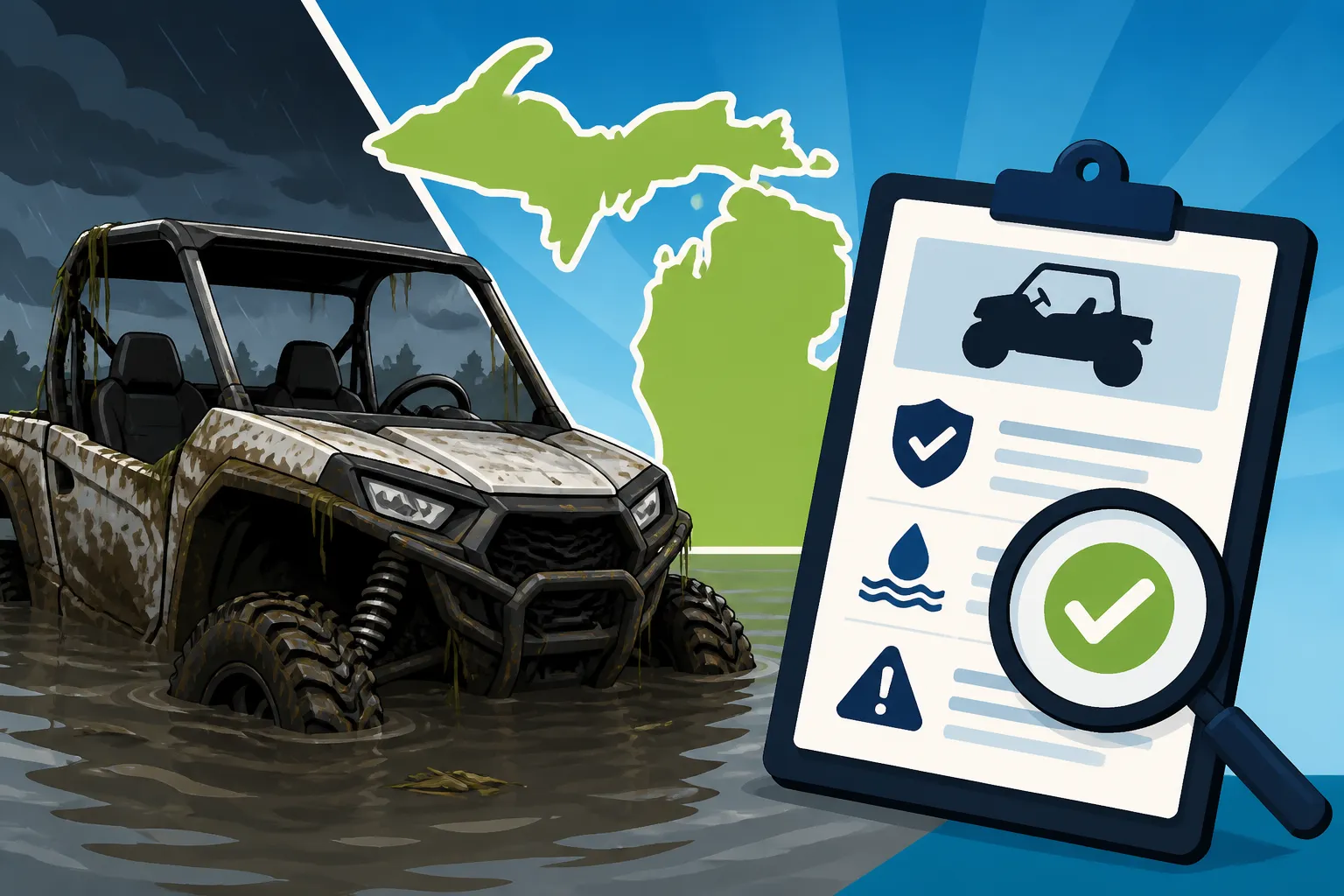
Buying a Flood-Damaged UTV and What the Title Shows
There's nothing quite like the thrill of finding a UTV for a price that seems too good to be true. Maybe you've been scrolling through online marketplaces, dreaming of hitting Michigan's sprawling ORV trails, when a particularly sweet deal catches your eye. But then you dig a little deeper, or the seller volunteers the information, and you learn it was involved in a flood. Suddenly, that "deal" feels less like a dream and more like a potential nightmare. This guide is here to walk you through exactly what "flood damaged" means for a Michigan UTV, what the title will actually show, and the critical questions you need to ask yourself before even considering such a purchase.
Understanding Flood Damage and Michigan ORV Titles
When a UTV has been in a flood, it's not just a little wet. We're talking about a complete submersion or near-submersion in water, often contaminated with mud, silt, chemicals, and sewage. This isn't like splashing through a puddle on the trail; it's a deep, pervasive kind of damage that can sneak into every nook and cranny of the machine.
What "Flood Damaged" Really Means for an ORV
The phrase "flood damaged" can often sound less severe than it actually is, especially when you're looking at a UTV that appears cosmetically fine after a good cleaning. But the reality is far more concerning. Floodwater, particularly after a major event, isn't just clean rain; it's often a murky cocktail of dirt, debris, chemicals, and sometimes even raw sewage. This corrosive mixture can permeate every system in your UTV.
Think about the intricate electrical system: the Electronic Control Unit (ECU), wiring harnesses, sensors, and relays. Water, especially dirty water, is the enemy of electronics. It can cause immediate shorts or, more insidiously, lead to slow corrosion that manifests months down the line as intermittent failures, unexplained warning lights, or even a complete breakdown. You might replace a battery, only to find the starter motor or alternator seized up from internal rust. Then there are the mechanical components. Bearings in the wheels, transmission, and engine can have their grease washed out and be replaced by fine silt, leading to premature wear and catastrophic failure. Water can enter differentials, the engine's crankcase, and the transmission, contaminating fluids and causing rust on internal gears and components. Even the frame can be compromised by hidden rust in boxed sections, weakening the structural integrity of the machine. This is why addressing [Michigan ORV Title Problems and How to Clear Them] is so crucial, as many flood-related issues can become long-term headaches.
How Michigan Titles Reflect Flood Damage
In Michigan, just like with cars and trucks, when an ORV suffers significant damage, such as from a flood, and an insurance company deems it a "total loss," that information isn't just forgotten. It gets branded onto the vehicle's title. This is a permanent mark, a red flag that follows the UTV for its entire operational life.
You won't typically see a title explicitly say "flood damaged" in big letters. More commonly, it will be branded as "salvage" or, if it's been repaired and inspected, "rebuilt" or "reconstructed." A "salvage" title indicates that the cost to repair the vehicle to its pre-damage condition exceeds a certain percentage of its fair market value, as determined by the insurer. If someone buys that salvage UTV, repairs it, and wants to legally operate it again, they'll need to go through a rigorous inspection process with the state, and if it passes, a "rebuilt" title will be issued. This "rebuilt" designation still signals a history of severe damage. It's a critical distinction to understand because [What a Salvage Title Means for an ATV Buyer] can profoundly affect everything from insurance to resale. A clean title suggests an unblemished past, while a branded title signals a history of significant events that you, as a potential buyer, need to thoroughly investigate.
The Risks and Realities of Buying a Flood-Damaged UTV
The allure of a cheaper price tag on a flood-damaged UTV is strong, especially in Michigan where we love our outdoor recreation. However, the initial savings can quickly evaporate, leaving you with a costly headache rather than a fun trail machine. It’s crucial to understand the very real risks involved.
Hidden Problems and Repair Costs
The phrase "out of sight, out of mind" couldn't be more dangerous when it comes to flood-damaged UTVs. Many of the most severe issues are not immediately apparent, even to a trained eye. Water infiltrates everywhere. We're talking about corrosion forming inside wiring harnesses, leading to electrical gremlins that are notoriously difficult and expensive to diagnose and fix. Imagine chasing an intermittent fault through miles of wiring, potentially having to replace the entire loom.
Then there's the insidious effect on mechanical components. Sand, silt, and rust can settle in every bearing, every seal, every internal part of the engine, transmission, and differentials. While the UTV might run fine initially, these contaminants act as abrasives, accelerating wear and leading to catastrophic failure down the road. You might think you're getting a deal, only to find yourself needing to rebuild an engine or replace a transmission just a few months later. Mold and mildew can also take hold in upholstery, under floorboards, and within any enclosed spaces, leading to persistent odors and potential health issues. Without a thorough [Michigan Salvage ATV Title Inspection] that goes beyond surface-level checks, you're essentially buying a lottery ticket, and the odds are not in your favor.
Insurance, Financing, and Resale Value
Beyond the mechanical headaches, a flood-damaged UTV carries significant financial repercussions that can impact your ability to enjoy and eventually sell the machine. One of the biggest hurdles you'll face is insurance. Many insurance providers are reluctant to offer full comprehensive and collision coverage on a salvage or rebuilt titled vehicle, or they may charge significantly higher premiums. Why? Because the unknown variables of previous damage make it a higher risk for them. They might only offer liability, leaving you fully exposed if your "new" UTV suffers another mishap or breaks down due to its flood history. [Insurance Cost for an ATV in Michigan] is already a consideration; adding a branded title complicates it further.
Financing is another major roadblock. Banks and credit unions are in the business of lending money on assets that hold their value and can be repossessed and resold if necessary. A flood-damaged or branded title UTV has a severely diminished market value and a much smaller pool of potential buyers, making it a poor candidate for a loan. You'll likely find that most lenders will simply refuse to finance such a purchase, meaning you'll need to pay cash upfront. And finally, resale value. That branded title is a permanent scar. Even if you meticulously repair every single issue, the market will always see it as a flood-damaged vehicle. When it comes time to sell, you'll be competing with clean-titled machines, and your UTV will fetch a significantly lower price, often leaving you underwater financially. [Financing a UTV at a Dealership] is already a complex process; imagine trying to do it with a branded title.
Your Due Diligence Checklist Before Buying
If, after weighing the risks, you're still considering a flood-damaged UTV, you absolutely must undertake an exhaustive due diligence process. Skipping any of these steps is like playing Russian roulette with your wallet.
Pre-Purchase Inspection: Go Beyond the Surface
This is not a step you can afford to skimp on. You absolutely need a professional, independent mechanic specializing in ORVs to inspect the UTV. And I don't mean just a quick look-over. This needs to be a deep dive. Ask them to look for the tell-tale signs:
- Electrical System: Check for corrosion on battery terminals, wiring connections (especially under the dash and seats), and inside light housings. Ask them to test every electrical component – lights, horn, winch, gauges, 4WD system, and especially the ECU and sensor readings.
- Fluid Contamination: Look at all fluid reservoirs – engine oil, transmission fluid, differential fluid, coolant, and brake fluid. Any milky appearance, unusual color, or strong smell indicates water ingress. Pull the dipsticks; check under the caps.
- Rust in Unlikely Places: Inspect the frame thoroughly, particularly inside boxed sections and under components where water might sit and drain slowly. Look for rust on bolt heads, hinges, and fasteners that aren't typically exposed to regular elements.
- Mold and Mildew: This is a huge red flag. Check under seats, inside storage compartments, and around any fabric or padded areas. A musty smell is a dead giveaway of water damage and potential long-term issues.
- Engine and Drivetrain: Ask for compression tests on the engine cylinders. Check for any signs of water in the air box or exhaust. Examine drive shafts, CV joints, and wheel bearings for signs of grit or rust.
This isn't a friendly once-over; it's a forensic examination. Get a written report from the mechanic detailing their findings. This [Pre-Purchase Inspection Before Signing an ATV Title] is your best defense against future heartbreak.
Title Verification and Paperwork
Never, ever take a seller's word for the title status. You need to see the physical title yourself. Look for any branding like "salvage," "rebuilt," or "reconstructed." These words are critical indicators of its past. Be wary of any seller who pressures you or says they'll "mail the title later." In Michigan, you need that title in hand to transfer ownership.
Beyond the title itself, request all available repair records, especially if the UTV is being sold with a "rebuilt" title. If the seller can't provide documentation of the repairs performed to get that rebuilt status, consider it a huge red flag. It means you have no idea what was actually done or the quality of the work. You'll also need a solid bill of sale, even for a flood-damaged UTV. Make sure the bill of sale clearly states the UTV is being sold "as-is" with a specific branded title. A reputable service like LawDepot can provide customizable bill of sale templates that ensure all the necessary details, including the VIN, sale price, and condition, are accurately captured. This protects both you and the seller. Performing a [NICB VIN Check for a Used ATV] and learning [How to Check If an ATV Is Stolen Before You Buy] are also non-negotiable steps to ensure you're not getting into more trouble than you bargained for.
Legalities and What to Expect at the Secretary of State
If you proceed with buying a UTV with a salvage title that has been repaired, prepare yourself for some extra hoops at the Michigan Secretary of State. You won't just be able to walk in and get a clean title. If it's still a salvage title, it will require a [Michigan Salvage ATV Title Inspection] by a specially trained officer. This inspection isn't just a formality; it's a thorough check to ensure the UTV has been repaired to safe operating standards and, crucially, that no stolen parts were used in the reconstruction.
This process can involve delays, additional inspection fees, and the possibility that the UTV might not pass, leaving you with a machine you can't legally title for road or trail use. Even after passing, the title will likely be branded "rebuilt" or "reconstructed" permanently. Be sure to gather all your paperwork, including the bill of sale and any repair receipts, and consider making a [Michigan Secretary of State Appointments for ORV Title Work] appointment to ensure you have dedicated time to explain the situation and clarify requirements. The state wants to ensure public safety and prevent fraud, so they take these branded titles very seriously.
Understanding UTV Title Types in Michigan
| Title Type | Description | Implications for Buyer | Resale Value |
|---|---|---|---|
| Clean Title | No significant damage reported; standard vehicle history. | Easiest to insure, finance, and resell. Highest peace of mind. | Highest |
| Salvage Title | Declared a total loss by an insurer due to significant damage (e.g., flood, accident). Not road/trail legal until rebuilt. | Cannot be registered/titled for use until repaired and inspected. Requires extensive due diligence. | Very Low (often for parts) |
| Rebuilt Title | Formerly a salvage title, but has been repaired, inspected by the state, and deemed safe for use. | Legal to operate, but history of damage is permanently branded. Harder to insure/finance. | Significantly Reduced |
| Flood Title (Implied) | Not an official Michigan title brand, but falls under 'Salvage' or 'Rebuilt' due to water damage. | Specific concerns about hidden electrical and corrosion issues. Treat as a salvage/rebuilt title. | Very Low |
While the prospect of owning a UTV for a fraction of the cost is undeniably tempting, buying a flood-damaged machine in Michigan is a gamble with potentially severe financial and practical consequences. The hidden electrical issues, persistent corrosion, and the permanent stain of a branded title can turn a supposed bargain into a never-ending money pit. Prioritize safety, reliability, and peace of mind over a cheap upfront price. Always, always proceed with extreme caution and rigorous due diligence if you decide to take on a flood-damaged ORV.
Disclaimer
This article is for general informational purposes only and does not constitute professional advice. Laws, prices and regulations vary by location and change over time. Consult a qualified professional for guidance on your specific situation.