Youth Machine Engine Size Limits in Michigan
Getting your child into the world of off-road vehicles (ORVs) like ATVs and UTVs can be incredibly exciting, filled with visions of shared family adventures and mastering new skills. But let's be honest, the excitement often bumps right up against a wall of questions, especially when it comes to the rules and regulations. Michigan, like many states, has specific laws designed to keep young riders safe, and understanding the engine size limits is often one of the biggest head-scratchers for parents. This guide is here to untangle those rules, explain why they exist, and help you make informed decisions for your budding off-road enthusiast, ensuring they can enjoy the trails legally and, most importantly, safely.
Why Engine Size Limits Exist for Young Riders in Michigan
It’s easy to look at a list of engine size limits and think it’s just another government regulation designed to complicate things. However, these rules are born from years of research, accident data, and the collective experience of safety professionals. The core reason Michigan, and other states, enforce these limits for young riders is straightforward: safety. It's about ensuring that a child is operating a machine that matches their physical capabilities, cognitive development, and skill level, rather than being overpowered or overwhelmed.
The Philosophy Behind Safety Regulations
Think of it like learning to ride a bicycle. You wouldn't start a five-year-old on a professional racing bike, right? You'd begin with training wheels, then a smaller bike, gradually moving up as their coordination and confidence grow. The same philosophy applies to ORVs. Children develop at different rates, but there are general stages of physical strength, reaction time, and decision-making that these regulations try to account for. A smaller engine means less weight, less speed, and less torque, all of which are critical factors in maintaining control. The regulations are a proactive measure, aiming to prevent tragic incidents by setting a reasonable standard for what a child can safely handle.
These aren't arbitrary numbers pulled from a hat; they represent a balance between allowing children to participate in a fun activity and protecting them from undue risk. Parents often grapple with the desire to get their kids a machine they "won't grow out of too fast," but rushing into a machine that's too powerful can negate any cost savings if it leads to injury or, worse, a lifelong aversion to riding. Michigan's limits acknowledge that a ten-year-old, for example, typically lacks the strength to properly maneuver a full-size ATV in an emergency situation, let alone understand the nuanced risks of varied terrain.
Preventing Accidents and Injuries
The unfortunate reality is that ORV riding, while exhilarating, carries risks, and these risks are amplified when a rider is on a machine that exceeds their capabilities. A child on an ATV that's too heavy for them might not be able to react quickly enough to shift their weight when going over a bump or through a turn, leading to a tip-over. An engine that's too powerful can accelerate faster than a young rider can anticipate or control, causing them to lose control of the throttle or veer off course. These scenarios can result in broken bones, concussions, or even more severe injuries.
Beyond the immediate physical dangers, there's also the psychological impact. A frightening accident on an oversized machine can scare a child away from ORV riding altogether, or instill a fear that prevents them from developing proper skills later on. The engine size limits are designed to create a safer learning environment, allowing children to build confidence and refine their skills incrementally, minimizing the likelihood of a terrifying incident. It's about setting them up for success, not for a potential emergency room visit.
Developing Rider Skills Gradually
Learning to operate an ORV involves more than just pushing a throttle and turning a handlebar. It requires developing a spatial awareness, understanding how the machine reacts to different terrains, learning to shift body weight, and making split-second decisions. These are complex motor skills and cognitive functions that take time and practice to master. Starting with a smaller, less powerful machine allows a child to focus on the fundamentals without being overwhelmed by excessive speed or power.
Consider a child starting on a 70cc ATV. They can learn to navigate obstacles, use the brakes effectively, and understand traction without the added challenge of managing a high-powered engine. As they master these basics, they can then gradually move up to machines with larger engines. This progressive learning approach is not only safer but also more effective in building a truly skilled and responsible rider. It teaches respect for the machine and the environment, fostering good habits that will serve them well as they advance to more powerful ORVs in the future.
Michigan's Core Age and Engine Size Rules
Michigan's laws are pretty specific when it comes to who can ride what, and at what age. These aren't just suggestions; they're legal requirements designed to standardize safety across the state's vast network of trails and riding areas. Understanding these categories is the first step in ensuring your child is compliant and protected.
The "Under 12" and "12-15" Categories
Michigan divides its youth ORV operators into two primary age brackets, each with distinct rules. This tiered approach recognizes the significant developmental differences between a young child and a teenager.
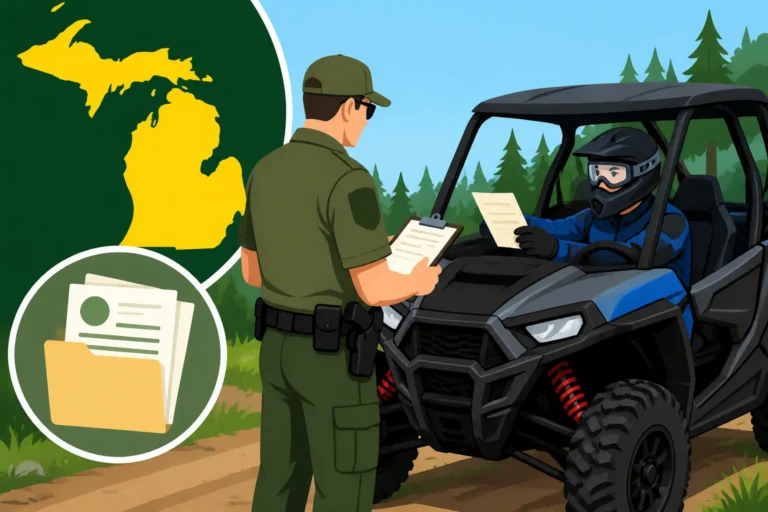
For children under 12 years of age, the rules are the most restrictive. They are generally limited to operating ORVs with smaller engines, typically those that are easier to control and less powerful. This age group requires the most hands-on supervision, often described as "direct visual supervision," meaning an adult must be present, watching, and able to intervene immediately. The idea here is that younger children have less developed motor skills, shorter attention spans, and poorer risk assessment capabilities, necessitating a more controlled environment. They're still learning the very basics of steering, throttle control, and braking.
Once a child reaches the 12-15 age bracket, Michigan recognizes they have developed a greater capacity for judgment, physical strength, and coordination. This means they are allowed to operate ORVs with slightly larger engines and have more independence, though supervision is still a key component. The expectation is that riders in this category have already gained some foundational experience on smaller machines or have received adequate training. It's a progression, not a sudden jump into full-size machines. Without these age-specific limits, a parent might inadvertently put their child on a machine far too advanced, risking their safety and potentially facing legal repercussions. You can find more details on this topic in [Engine Size Limits for Michigan Riders Under 16].
Specific CC Limits for ATVs and ORVs
Now, let's get down to the nitty-gritty: the actual engine size (cubic centimeter, or "cc") limits. These numbers are what dictate which machine your child can legally operate based on their age.
For those under 12 years of age, Michigan law states they cannot operate an ORV that exceeds certain limits. For ATVs, this generally means a machine with an engine displacement of 90 cubic centimeters (cc) or less. For utility-type vehicles (UTVs), sometimes referred to as side-by-sides, there are usually specific design and speed restrictions, but the general principle is machines designed for youth, with limited top speeds and lower power output. These smaller machines are engineered with safety features appropriate for young children, such as parental speed limiters, enclosed footwells, and often lower ride heights for easier control.
For riders aged 12 to 15 years old, the permissible engine sizes increase to allow for progression. An ATV operator in this age group can typically ride a machine with an engine displacement of up to 200 cubic centimeters (cc). For UTVs, they may operate machines with engines up to 300 cubic centimeters (cc). This distinction between ATVs and UTVs accounts for the different handling characteristics and stability of each type of vehicle. UTVs generally offer more stability with their four wheels and roll cages, allowing for a slightly higher engine displacement at this age. However, even within these limits, parents still need to consider the physical size and strength of their individual child. A small 12-year-old might still struggle with a larger 200cc ATV. The goal is always a good fit, both legally and practically.
Here's a handy table to help summarize these core limits:
| Rider Age Category | ATV Engine Size Limit | UTV Engine Size Limit | Additional Requirements |
|---|---|---|---|
| Under 12 years | 90cc or less | Youth-model UTVs (specific speed/design limits) | Direct visual supervision, ORV Safety Certificate |
| 12 to 15 years | Up to 200cc | Up to 300cc | Direct visual supervision, ORV Safety Certificate |
| 16 years and older | No engine size limit | No engine size limit | ORV Safety Certificate for public land/trails |
Remember, these are the maximum limits. It's often wiser to start a child on a machine well within these limits, perhaps even smaller, and allow them to gain experience before considering an upgrade. You can learn more about finding the right fit in [Best First ATV Size for a 12-Year-Old] and [110cc vs 125cc Youth Quad for a Beginner].
The Role of the Safety Certificate
Beyond just the age and engine size, Michigan law mandates another critical component for young ORV riders: an ORV Safety Certificate. This isn't just a piece of paper; it represents that the rider has completed a state-approved safety course, gaining essential knowledge about safe operation, trail etiquette, environmental protection, and Michigan's specific ORV laws. This requirement applies to all riders under 16 years of age when operating an ORV on public lands or trails.
The safety course covers vital topics such as proper turning techniques, understanding different types of terrain, pre-ride inspections, emergency procedures, and the importance of wearing proper safety gear. It instills a sense of responsibility and awareness that simply riding with a parent can't always fully convey. For many young riders, the course is an eye-opener, transforming them from casual users into more informed and conscientious operators. Imagine a scenario where a young rider encounters an unexpected obstacle on a trail; the knowledge gained from a safety course can be the difference between a safe maneuver and a dangerous crash.
Even for adults, the safety course is highly recommended, but for those under 16, it's a non-negotiable legal requirement for public land use. Without it, they are not only breaking the law but also missing out on crucial training that could prevent accidents. Many parents attest that their children emerge from these courses with a newfound respect for the machines and the rules of the trail. The good news is that these courses are widely available, often offered both in-person and online, making them accessible for most families. To understand more about this, check out [Michigan ORV Safety Certificate Requirements].
Understanding "Direct Visual Supervision": More Than Just Watching
The term "direct visual supervision" is often used in Michigan ORV law, especially concerning young riders. It sounds straightforward, but its practical application can sometimes be misunderstood. It's not just about knowing your child is somewhere in the same vicinity; it implies an active, engaged, and immediate oversight to ensure safety.
What Direct Visual Supervision Truly Means
In Michigan, "direct visual supervision" for youth ORV operators means that the supervising adult must be within eyesight and earshot of the rider at all times, and be close enough to immediately provide instruction or intervention if necessary. This isn't just about passive observation from a distance. It means you should be able to see your child's machine, their movements, and hear any calls for help or mechanical issues, and be able to reach them quickly in an emergency.
Imagine trying to supervise a young rider on a twisty trail where they quickly disappear around a bend. Even if you know they're "just ahead," that doesn't count as direct visual supervision. The moment they are out of sight or too far away for you to communicate effectively or physically assist, the supervision requirement is no longer met. This rule is designed to ensure that if a child gets into trouble – say, they stall on a hill, get stuck in mud, or even have a minor tip-over – the supervising adult can react immediately to prevent further injury or damage. It's a proactive approach to prevent small issues from escalating into serious problems. This concept is explored in more detail in [What Direct Visual Supervision Actually Means].
The Importance of Proximity and Intervention
The emphasis on proximity and intervention is key. It's not enough to be able to eventually get to your child; the law implies immediate capability to act. This means riding alongside them, or a short distance behind, on a similar ORV, not watching from a campsite or a distant road. If your child is riding a 90cc ATV, you, as the supervising adult, should be on your own ORV, keeping pace with them. This allows you to guide them through challenging sections, demonstrate proper techniques, and be there in an instant if they need help.
This hands-on approach is crucial for teaching as well. When you're close by, you can point out potential hazards, explain why certain maneuvers are necessary, and correct bad habits before they become ingrained. It fosters a safer learning environment where the child feels supported and can confidently explore their riding skills under watchful eyes. Without this proximity, a child might attempt something beyond their skill level, or encounter an unexpected obstacle without the guidance needed to navigate it safely, leading to a preventable accident.
Scenarios Where Supervision Is Critical
Let's consider a few real-life scenarios where direct visual supervision becomes absolutely critical. Picture a young rider approaching a muddy section of a trail. Without immediate supervision, they might hit it too fast, get stuck, or even lose control. With a supervising adult nearby, you can instruct them to slow down, pick a different line, or even help them if they do get bogged down. Another common scenario is encountering other trail users – hikers, mountain bikers, or other ORVs. A young rider might not instinctively know to slow down, yield, or make eye contact. Your immediate presence allows you to guide them in proper trail etiquette.
Consider a child who is just starting out and might panic if their machine stalls on an incline. If you're right there, you can calm them, explain how to restart, and help them safely get off the machine if needed. Contrast this with a situation where you're a quarter-mile ahead, and your child is struggling alone. By the time you realize there's an issue and double back, the situation could have become much more dangerous or disheartening for the child. This is why Michigan emphasizes that close, continuous watchfulness, combined with the ability to act quickly, is paramount for the safety and development of young ORV riders.
Beyond Engine Size: Other Important Youth ORV Rules
While engine size limits are a major part of Michigan's youth ORV regulations, they are by no means the only rules parents need to know. There's a broader framework of safety requirements and operational guidelines that apply to young riders, ensuring a comprehensive approach to their protection and responsible riding.
Helmet and Eye Protection Requirements
One of the most fundamental safety rules for all ORV riders in Michigan, regardless of age, is the requirement to wear an approved helmet and eye protection when operating on public lands or trails. For young riders, this is even more critical. A properly fitted, Department of Transportation (DOT) approved helmet can significantly reduce the risk of serious head injury in the event of a crash or tip-over. It's not just a recommendation; it's the law.
The helmet must be snug, cover the forehead, and have a chin strap securely fastened. It's a common mistake for parents to buy a helmet for their child "to grow into," but an ill-fitting helmet offers minimal protection. Eye protection, such as goggles or a face shield, is equally important. It shields the eyes from dust, debris, insects, and low-hanging branches, all of which can cause temporary blindness or serious injury, directly impacting a rider's ability to control their machine. Imagine a child being hit in the eye by a bug at speed; their natural reaction could be to close their eyes or let go of the handlebars, leading to a crash. These protective measures are non-negotiable for safe and legal riding.
Passenger Restrictions for Young Riders
Michigan also has strict rules regarding passengers on ORVs, especially when a young person is involved. Generally, ATVs are designed for a single rider unless specifically manufactured for two riders (tandem ATVs). Allowing a child to ride as a passenger on a single-rider ATV, even in front of or behind an adult, is highly dangerous and illegal. It throws off the machine's balance, makes it harder to control, and exposes the passenger to significant risk.
For UTVs, which are designed to carry passengers, Michigan law typically requires that passengers be able to sit with their feet flat on the floorboard and their backs against the seat. Children must use the seatbelts provided. The driver must also be of an appropriate age and have the necessary safety certification. These rules are in place because carrying passengers, particularly young ones, adds weight and changes the dynamics of the vehicle, requiring even more caution from the driver. Never assume an ORV is safe for multiple riders if it's not explicitly designed and rated for it. Violating passenger rules can result in fines and, more importantly, put your child in grave danger.
Where Young Riders Can (and Cannot) Operate
Knowing what your child can ride is only half the battle; knowing where they can ride is just as important. Michigan has specific regulations about where ORVs, particularly those operated by youth, can be used. Generally, young riders are allowed on designated ORV trails and routes within state forests, and on private property with the owner's permission. However, there are crucial restrictions.
Children under 16 are typically not allowed to operate an ORV on a county road or public highway, even if that road is open to ORV use for adults, unless they are directly crossing it. The nuances of [Michigan ORV Road Riding Age Minimum] are complex, but the general rule is to keep young riders off public roads. They lack the experience and judgment to safely interact with other traffic, even on low-speed gravel roads. Furthermore, local ordinances can sometimes restrict ORV use even more, so it's vital to check with the local township or county where you plan to ride. Using an ORV on private land offers more flexibility, but even there, responsible operation and adult supervision are always paramount. Always ensure you understand the specific rules of the area you intend to ride, whether it's a state trail or private land.
Choosing the Right Machine for Your Child: Beyond the Rules
While adhering to Michigan's specific age and engine size limits is a legal necessity, making the best choice for your child goes beyond just checking off boxes on a form. It involves a thoughtful assessment of your child's individual attributes and finding a machine that not only meets legal requirements but also genuinely fits their physical and mental readiness.
Assessing Your Child's Skill and Maturity
Every child is different. A mature, athletic 12-year-old who has years of dirt biking experience might be perfectly capable of handling a 125cc ATV, while a less experienced, more timid 14-year-old might still be best suited for a 90cc machine. The Michigan laws set a baseline, but you, as the parent, are the ultimate judge of your child's capabilities. Consider their:
- Physical Strength: Can they comfortably lift and shift their weight to control the machine in turns or over bumps? Can they easily reach and operate the brakes and throttle? A machine that is too heavy or requires too much strength can quickly lead to fatigue and loss of control.
- Coordination and Balance: How well do they manage other activities that require balance, like riding a bicycle or skateboarding? ORV riding demands a high degree of body coordination.
- Judgment and Decision-Making: Are they generally cautious or prone to impulsivity? Do they understand consequences? An ORV requires quick, sound decisions, especially on varied terrain.
- Attention Span: Can they maintain focus for an extended period, especially during repetitive safety instructions?
It’s often beneficial to start a child on a smaller machine than the law permits if they are new to riding. This allows them to build fundamental skills and confidence in a less intimidating environment. Rushing them onto a machine they aren't ready for can be counterproductive, leading to frustration, fear, or even injury. Remember, the goal is long-term enjoyment and skill development, not just speed or power.
Matching Machine Weight and Power to Rider Size
The physical fit between a child and their ORV is critical for safety and control. It’s not just about engine size; it’s about the overall dimensions and weight of the machine relative to the rider. A child should be able to:
- Comfortably reach the handlebars: Their arms should have a slight bend at the elbows when gripping the bars, allowing for proper steering input and lean.
- Operate the throttle and brakes: Their hands should comfortably reach the levers or thumb throttle without stretching or straining.
- Sit with their feet flat on the footrests: This provides stability and allows them to absorb bumps and shift weight.
- Shift their body weight: They need to be able to easily shift their weight forward, backward, and side-to-side to help steer and maintain balance, especially in turns or on inclines.
Many youth models specify a "rider weight range" or "age range" from the manufacturer. Pay close attention to these guidelines. A child who is too light for a machine might struggle to control it, while one who is too heavy could strain the machine and impact its handling. Take your child to a dealership and have them sit on various models to see how they fit. Don't be swayed solely by engine size; the overall ergonomics are just as, if not more, important for a safe and enjoyable ride.
Used vs. New: Safety Features to Look For
Whether you're buying a brand-new youth ORV or a pre-owned one, certain safety features are non-negotiable, especially for young riders. Modern youth machines often come equipped with features designed specifically for learner riders:
- Parental Speed Limiters: These are crucial. Many youth ATVs and UTVs have adjustable throttle limiters that allow parents to control the top speed, gradually increasing it as the child's skills improve. This is a game-changer for building confidence safely.
- Remote Engine Kill Switches: Some models include remote kill switches, allowing a supervising adult to shut off the engine from a distance if a child loses control or gets into a dangerous situation.
- Enclosed Footwells: For ATVs, enclosed footwells prevent a child's feet from dangling or getting caught under the wheels, a common injury point on older or adult-sized machines.
- Automatic Transmissions: Most youth ORVs feature automatic transmissions, simplifying operation so the child can focus on steering and throttle control rather than shifting gears.
- Low Center of Gravity: Youth models are generally designed with a lower center of gravity to enhance stability and reduce the risk of rollovers.
If you're looking at a used machine, ensure these safety features are present and fully functional. Don't compromise on safety for a lower price. Always check the machine's history for recalls or previous damage. If you're buying from a private seller, a detailed bill of sale, perhaps using a template from a service like LawDepot, can protect both parties and ensure proof of ownership. A pre-purchase inspection by a qualified mechanic is always a good idea, as they can spot potential safety issues you might miss. Prioritizing safety features, whether new or used, is an investment in your child's well-being and their continued enjoyment of ORV riding.
Disclaimer
This article is for general informational purposes only and does not constitute professional advice. Laws, prices and regulations vary by location and change over time. Consult a qualified professional for guidance on your specific situation.