Michigan Trailer Plate Cost for a Small Utility Trailer
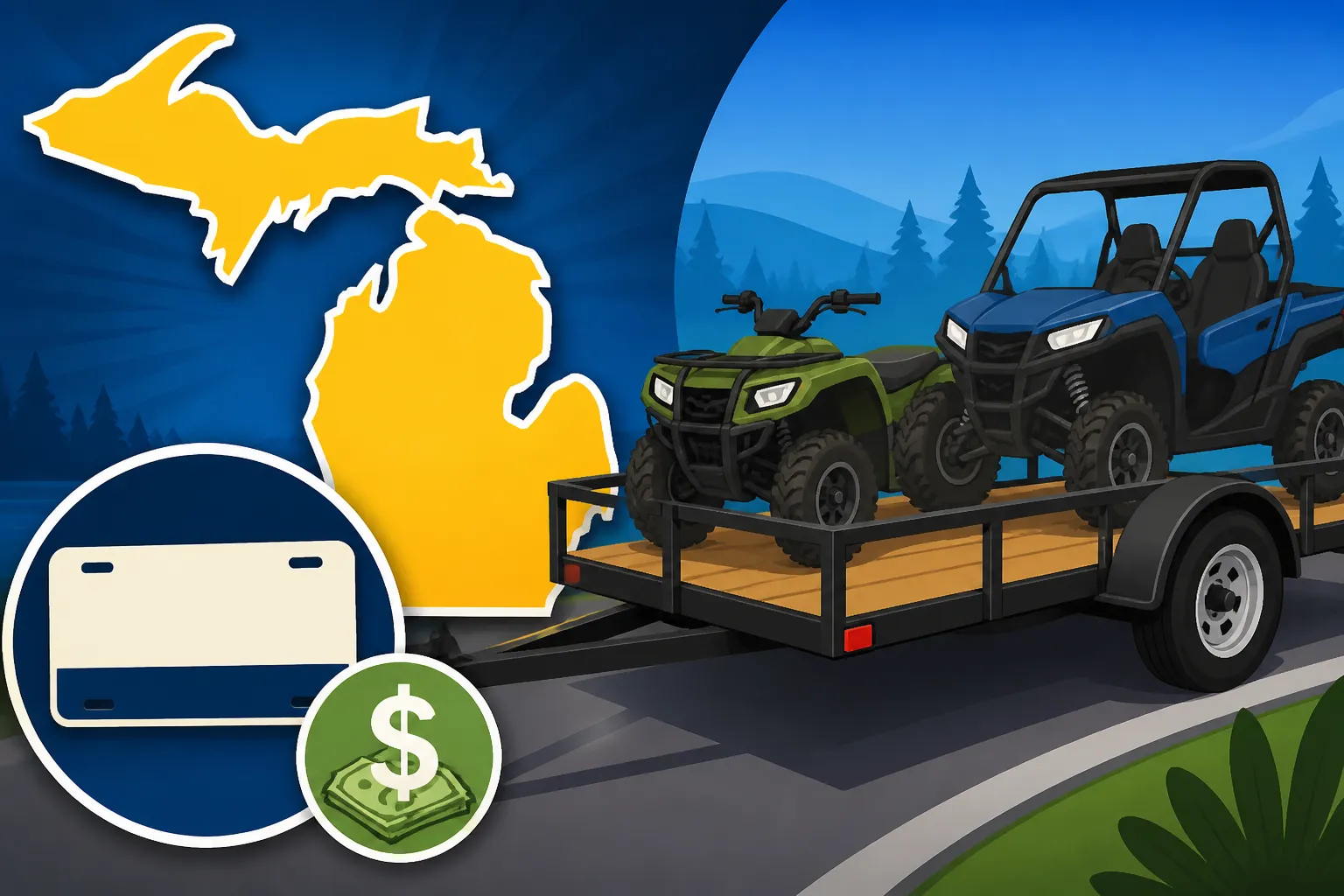
Ah, the humble utility trailer. It might not be the flashiest piece of equipment in your Michigan off-road arsenal, but it's absolutely essential for hauling your beloved ATV, UTV, or even just your camping gear out to the trails. Yet, when it comes to getting that all-important license plate, many folks find themselves scratching their heads, wondering exactly what costs are involved. It’s not always as straightforward as just showing up to the Secretary of State. This guide is here to clear up the confusion and walk you through the real costs of plating a small utility trailer in Michigan, so you can haul your gear legally and without unexpected surprises.
Understanding Michigan's Trailer Plate System for Small Utility Trailers
Michigan has its own way of doing things, and trailer plates are no exception. You can't just slap any old plate on your utility trailer and call it good, especially if you're using it to transport your precious off-road vehicles. Understanding the nuances of the system is key to avoiding headaches and ensuring you're squared away with the state.
Why Your Small Trailer Needs a Plate
Let's be real, it might seem like overkill to register a little utility trailer that you only use a few times a year to haul your quad. But here in Michigan, if your trailer is hitting public roads, it needs to be properly plated, regardless of its size or how often it's used. This isn't just bureaucratic red tape; it’s about public safety and accountability. Imagine if a trailer detached from a vehicle on M-119 or US-2 and there was no way to identify the owner. Proper plating provides that crucial link.
Beyond the "what ifs," there's the very real risk of getting pulled over. A Michigan State Trooper or local sheriff deputy isn't going to care how small your trailer is; if it's on the road and unplated, you're looking at a ticket. That ticket will undoubtedly cost you more than the plate itself ever would. It's a small expense for big peace of mind, knowing that your hauling setup is completely legal whether you're heading to the [Silver Lake Sand Dunes] or a quiet trail in the Upper Peninsula. Think of it as part of the overall cost of enjoying your off-road adventures.
The Difference Between Permanent and Annual Plates
Michigan offers a couple of different paths when it comes to plating your trailer, and the choice largely depends on the trailer's weight and your long-term plans for it. For small utility trailers, you'll generally be looking at either a permanent plate or an annual plate. This distinction is crucial for understanding the initial and ongoing costs.
A permanent plate, as the name suggests, is a one-time registration that lasts for the lifetime of the trailer's ownership. You pay a single fee, get your plate, and you're good to go until you sell the trailer or it's no longer roadworthy. This is often the most cost-effective solution for owners who plan to keep their small utility trailer for many years, perhaps for hauling an ATV up to the [Upper Peninsula ATV Trails Worth the Drive]. However, permanent plates aren't available for all trailers; typically, they are an option for trailers with an empty weight of 2,500 pounds or more, or a gross vehicle weight rating (GVWR) of over 3,000 pounds. So, if your "small" utility trailer for your ATV actually falls into this category, it could be a great option.
On the other hand, annual plates are exactly what they sound like: you renew them every year. These are common for lighter utility trailers, under that 2,500/3,000 lb threshold, or for owners who prefer the flexibility of yearly renewals. The fee is typically lower per year than the one-time permanent plate fee, but it adds up over time. If you're buying a very lightweight trailer for a single ATV, or perhaps even a small cargo trailer, an annual plate might be your only choice. It's important to know which category your trailer falls into before you head to the Secretary of State, as it directly impacts what you'll pay and how often.
What Qualifies as a "Small Utility Trailer" in Michigan?
When we talk about "small utility trailers" for our ATVs and UTVs in Michigan, we're generally referring to non-motorized vehicles designed to be towed by another vehicle, primarily for carrying cargo. These aren't your massive fifth-wheel RVs or commercial flatbeds. Typically, they're single-axle trailers, often open-deck, with a gross vehicle weight rating (GVWR) that allows them to be easily towed by an SUV or pickup truck.
Most folks using these for powersports are looking at trailers designed for one or two ATVs, a single side-by-side, or perhaps a couple of dirt bikes. This usually means a GVWR somewhere between 1,500 pounds and 3,500 pounds. They often have basic leaf spring suspension, a simple hitch, and minimal features beyond a deck and lights. The key is their intended use: general hauling, not living or heavy commercial transport. They might be used for anything from moving household items to hauling kayaks, but for our community, it's all about getting those machines to the trailhead. Knowing your trailer's GVWR (Gross Vehicle Weight Rating), which is usually found on a sticker or plate on the trailer frame, is absolutely essential. This figure, along with the empty weight, is what the Michigan Secretary of State will use to determine your plate fees and whether you qualify for an annual or permanent plate.
Breaking Down the Costs: Fees and Taxes You'll Encounter
Okay, let's get down to the brass tacks: what exactly will you be paying for? It's more than just the plate itself. When you're dealing with the Secretary of State, there are several line items that can add up. Being prepared for each of these costs means no sticker shock when you're standing at the counter.
The Main Plate Fee at the Secretary of State
The core of your expense will be the actual license plate fee itself. This isn't a fixed, universal price like a gallon of milk. Instead, Michigan's fees for utility trailer plates are primarily determined by the trailer's weight. The heavier the trailer, the higher the fee. It's a progressive scale designed to reflect the wear and tear a heavier vehicle might put on the roads, as well as its potential impact in an accident.
For small utility trailers, especially those used for ATVs or UTVs, you'll likely fall into one of the lower weight categories, which means a more modest fee. However, if your "small" trailer is actually a beefy tandem-axle setup for a couple of full-size side-by-sides, you'll be on the higher end of the scale. The specific fee structure can change, so your best bet is always to check the Michigan Secretary of State website for the most current figures before you go. They usually have a clear chart. Remember the distinction we talked about: if your trailer qualifies for a permanent plate (usually over 2,500 lbs empty or 3,000 lbs GVWR), you'll pay a higher, one-time fee. If it's an annual plate, you'll pay a smaller fee each year. This initial plate fee is non-negotiable and fundamental to getting your trailer legally on the road.
Potential Sales or Use Tax on Your Trailer
Here's a cost that often catches people off guard: sales tax or use tax. Many assume they just pay for the plate, but if you've recently acquired the trailer, the state wants its cut. If you bought your trailer from a licensed dealer in Michigan, you would have paid sales tax at the time of purchase. That's typically the state's prevailing sales tax rate on the purchase price. The dealer collects it and remits it to the state. Simple enough, right?
However, if you bought your small utility trailer from a private seller, you're responsible for paying what's called "use tax." This is essentially the same tax rate, but you pay it directly to the Secretary of State when you apply for your title and plate. This applies whether you bought the trailer from a friend down the street or from a stranger you met online. The amount of tax will be based on the purchase price you state on your [Michigan ATV Bill of Sale: What to Put in It]. It's crucial to be honest about this figure, as misrepresenting the price could lead to problems down the road. There are some exceptions, like if the trailer was gifted to you or transferred within certain family relationships, but generally, expect to pay this tax if you're the new owner. It’s part of the comprehensive cost of bringing your new-to-you trailer into legal compliance. For more details on this, you can look up [Michigan Use Tax on a Private-Party ATV Sale], as the principles often apply to trailers as well.
Other Potential Fees: Late Penalties and Title Costs
Beyond the plate fee and sales/use tax, there are a few other costs that might sneak up on you if you're not careful or if your situation is a bit unique. First, let's talk about the title. In Michigan, trailers exceeding a certain empty weight (usually 2,500 pounds, but it's always good to double-check current regulations) or having a GVWR over 3,000 pounds require a title. Just like your ATV or UTV, this title is proof of ownership. The title itself comes with a separate, usually modest, fee. If your small utility trailer is below that threshold, you might not need a title, relying solely on a bill of sale as proof of ownership. This is a point of frequent confusion for many, so it's good to clarify: [Do You Need a Trailer Title in Michigan?]
Then there are late fees. Michigan gives you a specific timeframe to title and register your newly acquired trailer after purchase – typically 15 days. If you miss this deadline, you could be hit with a late penalty fee on top of everything else. Life happens, we get it, but trying to squeeze in that SOS visit sooner rather than later can save you some cash. Finally, if you ever lose your physical plate or your title, you'll need to pay a fee for replacements. It's a good practice to keep all your important documents, like your trailer title and previous registration papers, in a safe and secure place, maybe not in the trailer itself where they could get lost or damaged on the trail! Thinking ahead about these possibilities can help you budget appropriately for the long haul.
Navigating the Process: What You Need and Where to Go
Alright, you understand the costs. Now, how do you actually get this done? The process itself isn't terribly complicated, but it does require you to be prepared. Gathering the right documents and knowing where to go will make your visit to the Secretary of State much smoother.
Documents Required for Plate Application
Walking into the Secretary of State without the proper paperwork is a surefire way to get sent home and have to start over – a frustration nobody needs! To apply for a Michigan trailer plate, you'll need a few key documents. The most critical is proof of ownership.
For a brand-new trailer bought from a dealer, this will typically be the Manufacturer's Certificate of Origin (MCO or MSO). This document proves the trailer's authenticity and that you're its first owner. If you bought a used trailer from a private seller, you'll need a properly executed title (if the trailer requires one) signed over to you, or a detailed bill of sale if a title isn't required. A solid bill of sale should include the trailer's Vehicle Identification Number (VIN), year, make, model, purchase price, and the names, addresses, and signatures of both the buyer and seller. You can find reliable templates for such documents online, for instance, through services like LawDepot, which can help ensure all the necessary information is included.
In addition to proof of ownership, you'll need your valid Michigan driver's license or state ID. If the trailer has a lien on it (meaning you financed it), you'll also need the lien information, as the state will note that on the title. Having all these documents organized and readily accessible before you arrive at the Secretary of State branch will drastically speed up your transaction.
Here’s a quick overview of what you might need:
| Document Type | When You Need It | Where to Get It |
|---|---|---|
| Proof of Ownership | All trailer plate applications | Seller (Title, MCO) or LawDepot (Bill of Sale template) |
| Michigan Driver's License/ID | All personal transactions | Michigan Secretary of State |
| Proof of Sales/Use Tax Payment | If buying from a private seller (use tax) | Will be calculated and paid at SOS branch |
| Lien Holder Information | If you financed the trailer | From your lender |
| Current Registration (if renewal) | For annual plate renewals | Previous registration form |
Where to Apply for Your Trailer Plate
Once you've got all your ducks in a row with the paperwork, your primary destination for getting a new Michigan trailer plate will be a Michigan Secretary of State branch office. This is where you'll present your documents, pay your fees and taxes, and walk out (hopefully) with your new plate in hand.
While the thought of visiting the SOS might conjure images of long lines, Michigan has significantly improved the process with its online appointment system. I highly recommend making an appointment beforehand; it can save you hours of waiting. Simply visit the Secretary of State's website, select your local branch, and pick a time slot. This is much like how you might handle [Michigan Secretary of State Appointments for ORV Title Work]. For subsequent annual renewals of an existing plate, you might have the option to renew online, through the mail, or at a self-service station, but the initial registration always requires an in-person visit. Remember to spread out your internal links, like [Trailer Registration for Hauling ATVs in Michigan], which touches on related aspects of this process.
Choosing Between Annual and Permanent Plates
Making the decision between an annual and a permanent plate for your small utility trailer is important, as it impacts both your initial outlay and your long-term costs and convenience. For many Michigan powersports enthusiasts, a small utility trailer is a long-term investment, hauling machines year after year to trails like the [Silver Lake ORV Area Hours and Season Dates] or even cross-state.
If your trailer’s gross vehicle weight rating (GVWR) qualifies for a permanent plate (generally over 3,000 pounds GVWR or 2,500 pounds empty weight), and you anticipate keeping the trailer for several years, a permanent plate is almost always the more economical choice in the long run. You pay a higher fee upfront, but then you never have to worry about renewals, late fees, or remembering to swap out stickers. It’s a one-and-done deal until you sell the trailer. This simplifies your annual paperwork significantly.
However, if your trailer is very lightweight and only qualifies for an annual plate, or if you're unsure how long you'll keep it, the annual option is your only or best choice. Some people prefer the annual renewal system, perhaps if they only use the trailer seasonally and want to avoid a "permanent" commitment. It’s a matter of looking at your trailer's specs, your budget, and your personal preference for how you want to manage your vehicle registrations. No matter which you choose, ensuring your trailer is properly plated means you're always ready for your next adventure. If you're looking to learn more about registration in general, check out [Michigan ORV Title Application Form and Where to Get It].
Disclaimer
This article is for general informational purposes only and does not constitute professional advice. Laws, prices and regulations vary by location and change over time. Consult a qualified professional for guidance on your specific situation.