Do You Need a Trailer Title in Michigan?
It’s easy to get confused when you're thinking about buying a trailer, whether it's for hauling your ATV, moving yard waste, or hitting the road for a camping trip. Many folks wonder if every single trailer rolling down Michigan's roads needs its own title, just like a car or a UTV. This guide will walk you through the ins and outs of Michigan's trailer titling rules, clarifying when a title is absolutely necessary, when it's not, and what steps you'll need to take to stay on the right side of the law.
Understanding Michigan's Trailer Titling Requirements
The question of whether your trailer needs a title in Michigan isn't always as straightforward as it might seem. Unlike your primary vehicle, which almost universally requires a title, trailers have a few nuances based on their type and weight. This often leads to a lot of head-scratching at the Secretary of State's office, or even worse, a stressful encounter on the side of the road with an officer. Let's break down the rules so you can confidently know where your trailer stands.
When a Trailer Does Need a Title in Michigan
Generally, if your trailer falls into a certain category or exceeds a specific weight, Michigan law mandates that it must be titled. This ensures proper ownership records and makes it easier to track the trailer, especially if it's involved in an accident or theft. One of the biggest factors here is the weight of the trailer itself, specifically its empty weight, often referred to as "unladen weight."
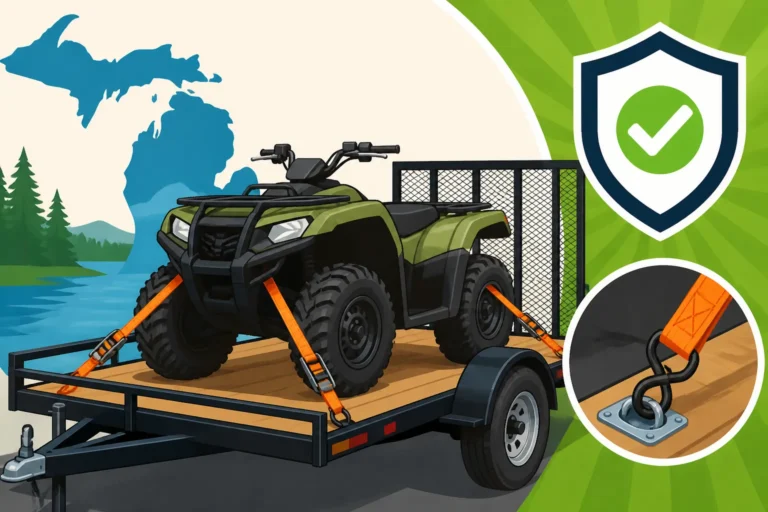
For most trailers, if their empty weight is 2,500 pounds or more, they absolutely require a Michigan title. This typically includes larger utility trailers designed for heavy hauling, most travel trailers (campers), and many larger boat trailers. Imagine you've just invested in a substantial enclosed cargo trailer to take your side-by-side on adventures, or perhaps a fifth-wheel camper for family vacations; these kinds of trailers will undeniably need a title. The state wants a clear record of who owns these more significant assets. Without a title, proving ownership can become a huge headache, making it impossible to sell the trailer or even register it properly. You can find more details on general titling processes in [Michigan Title Transfer When You Buy From a Private Seller].
When a Trailer Does Not Need a Title in Michigan
Now, here's where things get a little less complicated for many of us. Michigan has a common-sense exemption for smaller, lighter trailers. If your utility trailer has an empty weight of less than 2,500 pounds, it is exempt from needing a title. This is fantastic news for anyone who owns those handy small trailers used for hauling a couple of dirt bikes, kayaks, lawn care equipment, or just making trips to the local dump with brush and leaves.
Think about the small 4×8 utility trailer you bought from a hardware store, or the simple open-air trailer you use to tow a jetski down to the lake. These usually fall well under the 2,500-pound threshold. While these trailers don't need a title, they do still require registration and a license plate to be legally operated on public roads. It's a crucial distinction: no title, but still needs a plate! This exemption simplifies things for countless Michigan residents who rely on smaller trailers for their hobbies and chores. However, always be absolutely sure of your trailer's empty weight. Sometimes, a trailer might look small but still nudge over that 2,500 lb mark, especially if it’s a more robust, heavy-duty build.
Distinguishing Between Registration and Titling
It’s completely understandable to mix up "titling" and "registration" because they often go hand-in-hand. However, they are two distinct processes with different purposes in Michigan. Understanding the difference is key to keeping your trailer legal.
-
Titling is all about proving ownership. When you title a trailer, the Secretary of State issues you a document, the Certificate of Title, which legally establishes you as the owner. This document includes crucial information like the Vehicle Identification Number (VIN), make, model, and year. It's the paper trail that says, "This trailer belongs to me." It's an important document for selling your trailer, as it transfers ownership from seller to buyer. For those trailers weighing 2,500 pounds or more, the title is proof of who holds the legal claim to that property.
-
Registration, on the other hand, is about getting permission to operate your trailer on public roads. When you register a trailer, you receive a license plate and a registration certificate. This demonstrates that you've paid the necessary fees and that the state allows your specific trailer to be used on its roadways. All trailers, regardless of whether they need a title or not (as long as they are used on public roads), must be registered and display a valid license plate. Even that small utility trailer under 2,500 pounds that doesn't need a title will need a plate. Think of it this way: the title proves you own it, while registration proves you can drive it. You can learn more about this in [Trailer Registration for Hauling ATVs in Michigan].
Here’s a quick overview of how they often interact:
| Trailer Empty Weight | Titling Required? | Registration Required? | Proof of Ownership |
|---|---|---|---|
| Less than 2,500 lbs | No | Yes (for road use) | Bill of Sale |
| 2,500 lbs or more | Yes | Yes (for road use) | Title |
The Titling Process for Trailers in Michigan
So, you've figured out your trailer needs a title. What now? The good news is that the process for titling a trailer in Michigan is very similar to titling a car or an ORV, albeit with a few specific considerations for trailers. It mainly involves gathering the right paperwork and making a trip to your local Secretary of State office. It's not the most thrilling afternoon, but getting it done correctly upfront saves a lot of hassle down the road.
Gathering Your Documents for a Trailer Title
Before you head out, make sure you have all your ducks in a row. Missing even one piece of paper can mean a wasted trip and a lot of frustration.
- Previous Title (if applicable): If you bought a used trailer that was previously titled, the original title, properly assigned to you by the seller, is your most crucial document. Make sure the seller's signature is present and legible, and that the odometer (if applicable, though rare for trailers) and purchase price are filled in. If the trailer was subject to a lien, ensure there's a [Lien Release on a Paid-Off UTV] document or the lienholder’s signature indicating the lien has been satisfied.
- Bill of Sale: Even if you have a title, a solid bill of sale is always a good idea, especially for private party transactions. This document should detail the trailer's VIN, year, make, model, purchase price, date of sale, and the names and signatures of both the buyer and seller. A well-drafted bill of sale, perhaps using a template from a resource like LawDepot, can serve as additional proof of purchase and can be invaluable if there are any discrepancies or questions later on.
- Proof of Michigan No-Fault Insurance (if required): While trailers themselves don't typically need their own no-fault insurance, the towing vehicle must have it. You won't be asked for insurance for the trailer itself, but it's always good to have your towing vehicle's proof of insurance on hand.
- Identification: You'll need your valid Michigan driver's license or state ID.
- Payment for Fees and Sales Tax: Be prepared to pay the titling fee, registration fee, and Michigan sales tax. Remember, the sales tax is generally 6% of the purchase price, or the fair market value if the purchase price seems unusually low or it's a gift. For gifting scenarios, see [Gifting an ATV in Michigan and the Title That Follows].
Having all these documents organized in a folder before you leave will make the process much smoother.
Applying for Your Michigan Trailer Title
Once your documents are in order, it's time to visit the Secretary of State.
- Make an Appointment: To save yourself from potentially long waits, it's highly recommended to schedule an appointment online with your local Secretary of State office. They often have specific appointment slots dedicated to vehicle and trailer services.
- Present Your Documents: At your scheduled appointment, present all the documents you've gathered to the counter clerk. They will review everything, ensure the title transfer is properly executed, and verify all details match.
- Pay Fees and Taxes: You'll pay the required titling fee, any applicable registration fees, and the 6% Michigan sales tax on the purchase price of the trailer. The exact [Michigan Trailer Plate Cost for a Small Utility Trailer] and other fees will be calculated at the counter.
- Receive Your Plate and Temporary Registration: For most trailers, you'll walk out with your new license plate and a temporary registration sticker. Your official Certificate of Title will then be mailed to you, usually within a few weeks. It's important to keep that temporary registration in your vehicle or with your trailer until the permanent title arrives.
It’s a relatively straightforward process once you have the paperwork. Just be patient and ensure all forms are filled out accurately.
Dealing with Trailers Bought Without a Title
This is a common sticky situation, especially when buying older, smaller trailers from private sellers. Sometimes, a trailer that should be titled might be sold without one. This often happens with older utility trailers where the original owner never bothered with a title because it wasn't strictly enforced decades ago, or they simply lost it.
If you purchase a trailer that requires a title but the seller doesn't have one, you're in for a bit more of a challenge. You generally have a few options:
- Get a Duplicate Title: The best-case scenario is if the seller is the legal owner and can apply for a duplicate title. They would need to go to the Secretary of State, pay a small fee, and get a new title issued in their name, which they can then properly assign to you. Never accept a simple bill of sale if the trailer requires a title and the seller can get a duplicate.
- Bonded Title: For trailers that require a title but the seller genuinely cannot provide one (e.g., they lost it, the previous owner never titled it, etc.), you might be able to apply for a bonded title. This involves purchasing a surety bond, which acts as insurance against any claims of prior ownership. The process for a bonded title is more complex and typically requires a VIN inspection and sometimes even a court order. You'll want to ensure you have a robust [Michigan ATV Bill of Sale Template Requirements] in place, even if you’re pursuing a bonded title.
- Court Order: In some rare and challenging cases, especially with very old trailers or those with murky ownership history, you might need to obtain a court order to establish ownership and get a title issued. This is usually a last resort and can be costly and time-consuming.
Before buying any trailer, especially one without a title, always do your due diligence. Verify the VIN (where to find the VIN on a trailer can vary, but it's usually stamped on the frame), check for liens, and be wary of deals that seem too good to be true. A tool like LawDepot can help you draft a thorough bill of sale even in these uncertain situations, providing some written agreement, but it doesn't replace an official title where one is required.
Important Considerations for Michigan Trailer Owners
Beyond the initial titling process, there are a few other aspects of trailer ownership in Michigan that are worth keeping in mind. These range from financial obligations to what to do if you're building a trailer yourself. Being prepared for these scenarios will ensure your experience as a trailer owner is as smooth as your tires on the asphalt.
Sales Tax and Fees for Trailer Titling
When you title a trailer in Michigan, just like with any vehicle, you'll be responsible for paying sales tax and various fees. It's important to budget for these costs so you're not caught off guard.
- Michigan Sales Tax: The state assesses a 6% sales tax on the purchase price of the trailer. If you buy a trailer for $2,000, you'll pay $120 in sales tax. This tax is collected at the Secretary of State office when you apply for the title and/or registration. If the purchase price seems unusually low, or if it's a gift (and not between immediate family members where some exemptions may apply), the Secretary of State might assess the tax based on the trailer's fair market value, so be prepared for that possibility. [Michigan ORV Sales Tax at a Secretary of State Branch] explains how this tax is handled for other recreational vehicles, and trailers follow similar principles.
- Titling Fee: There is a specific fee for processing your Certificate of Title. This is a flat rate regardless of the trailer's value.
- Registration Fee/Plate Fee: All trailers that operate on public roads need to be registered and display a license plate. The registration fee depends on the type and weight of the trailer, and whether it's a permanent trailer plate or a yearly renewal. For smaller utility trailers, a permanent plate is often available, which means you pay a one-time fee and never have to renew it again, which is a great cost-saver!
It’s always a good idea to check the Michigan Secretary of State website for the most current fee schedule before your visit, as these amounts can change.
Homemade and Rebuilt Trailers
Michigan has specific rules for trailers that you build yourself or significantly rebuild. This makes sense, as there's no manufacturer's title or VIN to work with. If you've poured your sweat and tears into crafting a custom utility trailer to haul your quad, you'll need to go through a special process to get it legal for the road.
For homemade trailers, you'll typically need to:
- Complete a Certification: Provide a detailed description of the materials used, the construction process, and potentially a bill of sale for major components (like the axle or coupler).
- Affix a VIN: Because your trailer won't have a factory VIN, the Secretary of State or a designated authority will often issue you a state-assigned VIN. This VIN will then need to be permanently affixed to the trailer's frame.
- Undergo an Inspection: Your homemade trailer will likely require an inspection by a law enforcement officer or a special agent to verify its components, safety features (like lights and brakes, if applicable), and the proper attachment of the state-assigned VIN. This ensures it's roadworthy and meets basic safety standards.
- Apply for Title and Registration: Once all these steps are completed, you can then apply for a title and registration for your unique, custom-built trailer. The process is similar to [Titling a Rebuilt or Homemade UTV in Michigan], adapted for trailers.
This might sound like a lot, but it’s a necessary step to ensure your pride and joy is legal and safe for everyone on the road.
Consequences of Not Titling a Required Trailer
Ignoring Michigan's titling and registration laws for trailers can lead to some unpleasant consequences. It's not just about avoiding a fine; it's about avoiding much bigger headaches down the line.
- Fines and Tickets: The most immediate consequence is typically a traffic ticket if you're caught operating an untitled or unregistered trailer (if one is required) on public roads. These fines can add up quickly, especially if you get stopped multiple times.
- Impoundment: In more serious cases, particularly if the trailer is involved in an accident or if there are questions about its legality or ownership, it could be impounded by law enforcement. Getting an impounded trailer back without proper documentation can be a lengthy and expensive ordeal.
- Difficulty Selling: If your trailer needs a title and you don't have one, selling it legally becomes incredibly difficult. Most buyers will (and should) insist on a clear, properly assigned title. Without it, you severely limit your market and may even run into accusations of selling stolen property.
- No Proof of Ownership: In the unfortunate event that your trailer is stolen, having a title is crucial for filing a police report, proving ownership to your insurance company, and ultimately for its recovery. Without a title, proving it's yours can be nearly impossible, making recovery a slim prospect.
- Insurance Issues: While your towing vehicle's insurance generally extends liability coverage to the trailer, comprehensive and collision coverage for the trailer itself often requires it to be properly titled and valued. An untitled trailer might complicate claims or even lead to denials.
Taking the time to understand and adhere to Michigan's trailer titling and registration rules is a small investment that pays off in peace of mind and avoids potential legal and financial troubles. For any legal questions or to draft documents like a strong bill of sale for a private sale, consider consulting resources like LawDepot for templates that ensure all necessary information is included.
Disclaimer
This article is for general informational purposes only and does not constitute professional advice. Laws, prices and regulations vary by location and change over time. Consult a qualified professional for guidance on your specific situation.