Canadian ATV Brought Into Michigan: Title Steps
Bringing an ATV or UTV across the border from Canada into Michigan can feel like navigating a maze of paperwork, especially when you're trying to figure out how to make it officially yours on this side. Many riders get frustrated, thinking their Canadian ownership documents will be enough, only to find Michigan has its own specific requirements. This guide is here to help you understand the essential steps, documents, and procedures involved in titling your Canadian-bought ORV in Michigan, so you can hit the trails legally and without a hitch.
The Initial Hurdles of Importing a Canadian ORV
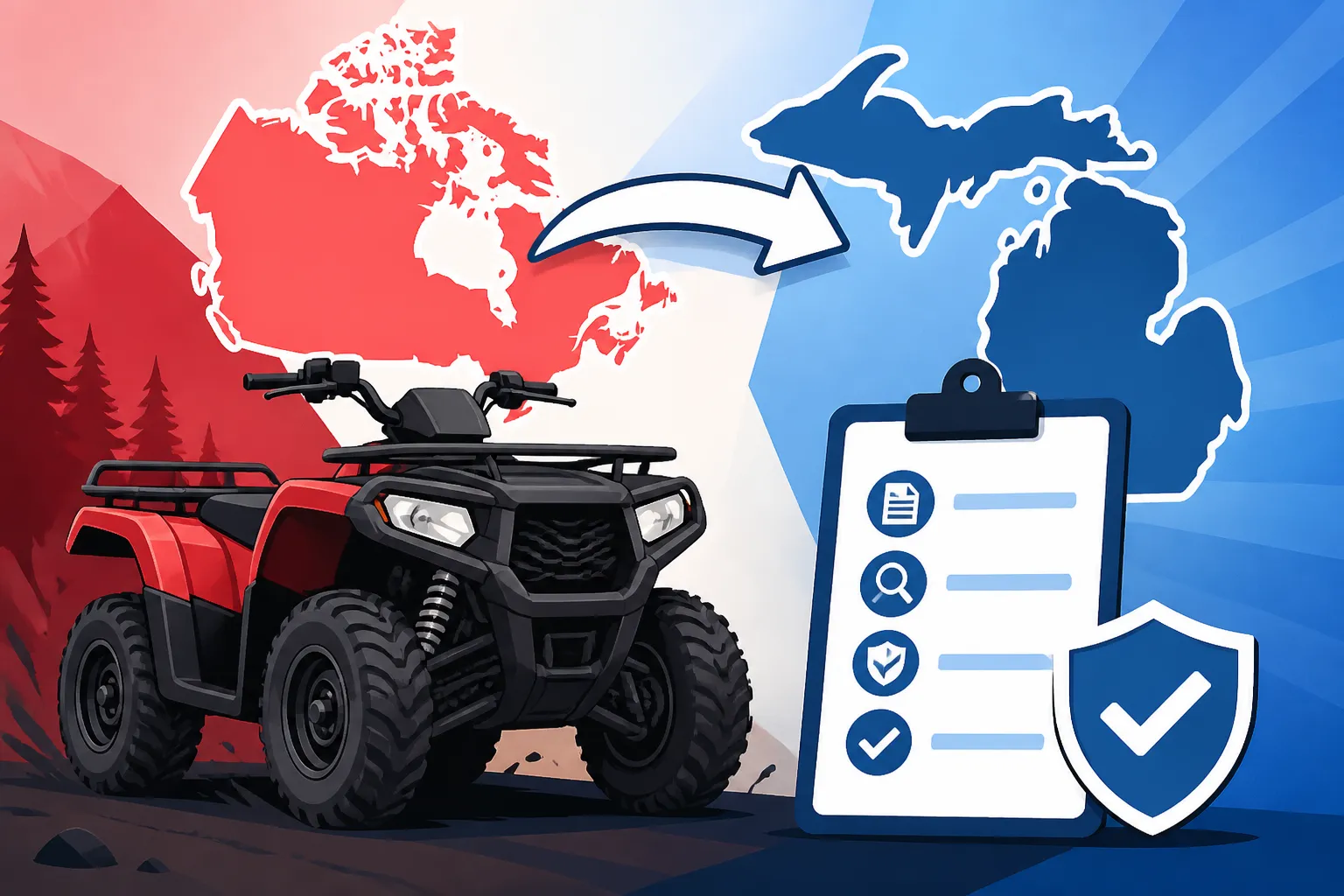
When you fall in love with an ORV in Canada and decide to bring it home to Michigan, the process isn't just a simple swap of keys and a handshake. There are distinct steps involved in legally importing the machine into the United States, followed by the specific requirements Michigan has for titling any vehicle, especially one that hasn't been through the typical Michigan dealership process. It's a two-stage process that can feel daunting, but breaking it down helps.
Customs, Duties, and Import Paperwork
Before Michigan's Secretary of State will even look at your paperwork, your ATV or UTV needs to be legally imported into the United States. This means dealing with U.S. Customs and Border Protection (CBP) at the point of entry. You'll need to declare the vehicle and pay any applicable duties. For most ATVs and UTVs, the duty rates can vary, but it's crucial to have this handled properly to avoid issues down the road.
When you cross the border, you should have all the original ownership documents from Canada, such as the Certificate of Origin, Certificate of Title (if Canada has one for that specific type of ORV), or the provincial registration. The CBP officer will provide you with a stamped Form 7501 (Entry Summary) or a similar document, which is your proof that the vehicle has been legally imported and any duties have been paid. This piece of paper is absolutely vital; without it, Michigan won't consider titling your ORV. Think of it as the green light from the federal government allowing your machine into the country before the state even gets involved.
Why Canadian Titles Aren't Michigan Titles
One of the biggest misunderstandings for new Michigan ORV owners who bought their machines north of the border is the difference in documentation. In Canada, many provinces have a Certificate of Ownership or a Vehicle Registration that serves a similar purpose to a title, proving who the legal owner is. However, these Canadian documents are not directly transferable or equivalent to a Michigan title. Michigan has its own specific format and requirements for titles, and it doesn't simply "recognize" a foreign ownership document as a valid title.
Your Canadian paperwork is crucial as proof of ownership, but it's the starting point, not the finish line. The Michigan Secretary of State needs to verify the authenticity of the vehicle, ensure all import duties were handled, and then issue a brand-new Michigan title in your name. This is why you can't just drive across the border and expect to ride your Canadian machine on Michigan trails immediately. You're essentially applying for a first-time Michigan title for a vehicle that has never been titled in this state before, even if it's been legally owned for years in Canada. This process is similar to what you'd go through for [Michigan Title Rules for an ORV Bought Out of State].
Essential Documents for a Michigan Title Transfer
Successfully titling your Canadian ORV in Michigan hinges on presenting a complete and accurate set of documents to the Secretary of State. Missing even one piece of information can send you back to the drawing board, causing delays and frustration. It’s always best to arrive over-prepared than under-prepared.
Proof of Ownership from Canada
The foundation of your Michigan title application will be the official documents proving you legitimately owned the ATV or UTV in Canada. This typically means the original Certificate of Ownership or Registration document issued by the Canadian province where the ORV was last registered. This document should clearly list you as the owner or, if you just purchased it, the previous owner from whom you acquired it.
If the Canadian ownership document is still in the name of the previous owner, make sure it's properly signed off and released to you, just as you would expect a Michigan title to be. If the Canadian province doesn't issue a traditional title for ORVs, you'll need the equivalent document that legally designates ownership. Don't forget any lien releases if there was a loan on the machine; that Canadian bank will need to clear its interest before Michigan will issue a clean title.
The Importance of a Bill of Sale
Even if you have the Canadian ownership document, a detailed bill of sale is still a critical piece of the puzzle, especially if you recently purchased the ORV from a private seller in Canada. A robust bill of sale serves several purposes: it confirms the transaction, states the purchase price (which Michigan needs for sales tax calculations), and provides details about both the buyer and seller.
The bill of sale should include:
- Buyer's Information: Your full legal name and address.
- Seller's Information: The full legal name and address of the Canadian seller.
- Vehicle Description: Make, model, year, and crucially, the full Vehicle Identification Number (VIN).
- Purchase Price: The exact amount you paid for the ORV, preferably in U.S. dollars or with the Canadian dollar equivalent and the exchange rate used on the date of sale.
- Date of Sale: The day the transaction occurred.
- Signatures: Both your signature and the seller's signature.
Having a professionally drafted bill of sale can prevent headaches. Websites like LawDepot offer templates that can be customized to ensure all necessary information is included, making your life a lot easier when you present it to the Secretary of State. For more details on what to include, you might want to review [Michigan ATV Bill of Sale: What to Put in It].
Customs Declarations and Receipts
As mentioned earlier, the U.S. Customs and Border Protection (CBP) paperwork is non-negotiable. When you presented your Canadian ORV at the border, you should have received documentation confirming its legal import into the U.S. This typically involves a stamped CBP Form 7501 (Entry Summary) or another official form indicating that the vehicle has cleared customs and any applicable duties have been paid.
Keep this document safe and bring the original with you to the Secretary of State. It serves as your official proof that the ORV is now legally in the country and subject to state titling. Without this, Michigan can't complete the titling process, as they need to ensure the machine isn't illegally imported. If you somehow lost this critical document, you would need to contact CBP to inquire about obtaining a copy, which can add significant delays to your process.
The Michigan Secretary of State Process
Once you have all your Canadian ownership paperwork, a solid bill of sale, and your U.S. Customs documentation in hand, it's time to visit the Michigan Secretary of State. This is where your Canadian ATV or UTV truly becomes a Michigan-titled machine. Be prepared for a thorough review of your documents, as they are dealing with an out-of-country vehicle, which always requires extra scrutiny.
VIN Verification Requirements
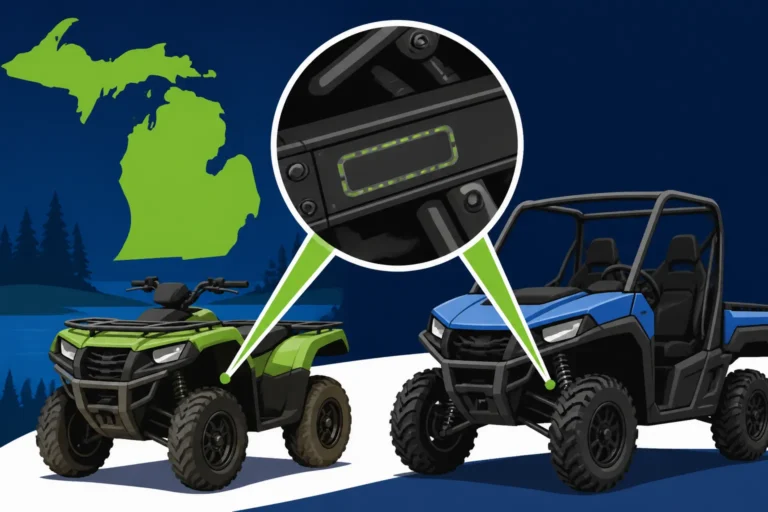
For any vehicle coming into Michigan from outside the state, especially from another country, a Vehicle Identification Number (VIN) verification is often a mandatory step. This is to ensure the VIN on your paperwork matches the VIN physically stamped on the ORV, and that the vehicle hasn't been reported stolen or has any other flags. The Secretary of State wants to be absolutely sure they are titling the correct, legitimate machine.
Who can perform this verification? Typically, it can be done by a Michigan law enforcement officer (such as a sheriff's deputy or state police officer) or, in some cases, by an authorized Secretary of State staff member or licensed dealer. You'll usually need to bring the ORV to the verification site, or arrange for an officer to inspect it where it's stored. Make sure the VIN is clean, visible, and easily accessible on the machine. Keep the signed and completed VIN verification form with the rest of your documents. This step is particularly important for unique situations like [Titling an ORV With a Foreign VIN] or even [Titling a Rebuilt or Homemade UTV in Michigan].
Sales Tax and Use Tax Considerations
Michigan law requires sales tax to be paid on the purchase of any vehicle, including ORVs, unless a specific exemption applies. When you bring an ATV or UTV from Canada into Michigan, you will typically owe Michigan use tax on the purchase price. This is essentially the same as sales tax but applies when you buy an item out-of-state or out-of-country and bring it into Michigan for use.
The amount of tax will be calculated based on the purchase price listed on your bill of sale. If the purchase price was in Canadian dollars, you'll need to provide proof of the exchange rate used on the date of sale, or the Secretary of State will use their own prevailing rate. Be prepared to pay this tax at the time you apply for your title. This is separate from any duties you paid to U.S. Customs. Understanding [Michigan ORV Sales Tax at a Secretary of State Branch] and [Michigan Use Tax on a Private-Party ATV Sale] can help you prepare for this cost.
Completing the Michigan ORV Title Application
The final step in the paperwork process is to complete the Michigan ORV Title Application, usually Form TR-534. You can often get this form online or directly at a Secretary of State branch. Fill it out completely and accurately, providing all the requested information about yourself and the ORV.
You'll need to present all your accumulated documents:
- Your Canadian proof of ownership (original).
- The original bill of sale.
- Your U.S. Customs and Border Protection import documents (Form 7501, etc.).
- The completed VIN verification form (if required).
- Your Michigan ORV Title Application (Form TR-534).
- Your Michigan driver's license or state ID.
The Secretary of State staff will review everything, process your payment for the title fee and any applicable use tax, and then issue you a temporary registration if needed. Your official Michigan title will typically be mailed to you within a few weeks. It's helpful to review [Michigan ORV Title Application Form and Where to Get It] for specifics on the form itself. This guide on [What the Michigan Secretary of State Needs to Title an ORV] also provides a comprehensive checklist.
Here's a quick reference table for the key documents you'll need:
| Document Category | Specifics for Canadian ORV Import | Where to Get It / What it Proves |
|---|---|---|
| Canadian Proof of Ownership | Original Provincial Certificate of Ownership/Registration. Must be signed off if recently purchased. | Issued by Canadian province; proves legal ownership in Canada. |
| Bill of Sale | Detailed document with buyer/seller info, ORV description, VIN, purchase price, date, and signatures. | Created by buyer/seller; establishes purchase details and price for tax. LawDepot can provide templates. |
| U.S. Customs Declaration | Stamped CBP Form 7501 (Entry Summary) or similar official import document. | Issued by U.S. Customs & Border Protection; proves legal import into the U.S. |
| VIN Verification Form | Completed form by Michigan law enforcement or authorized personnel. | Performed in Michigan; verifies VIN accuracy and legitimacy. |
| Michigan ORV Title Application (TR-534) | Fully completed application with all required information. | Obtain from Michigan Secretary of State or their website. |
| Personal ID | Valid Michigan driver's license or state ID. | Proves your identity. |
| Lien Release (if applicable) | Official document from Canadian lender stating loan is paid in full. | Issued by the lienholder; clears any outstanding financial interest. |
Potential Roadblocks and Solutions
Even with careful preparation, bringing a Canadian ORV into Michigan for titling can sometimes hit snags. Understanding common challenges and how to address them can save you a lot of time and stress. The key is to be persistent and proactive in gathering all the necessary information.
Missing or Incomplete Canadian Paperwork
One of the most frequent issues arises when the Canadian ownership documents are missing, lost, or incomplete. Perhaps the previous owner didn't properly sign off the title, or you simply don't have the original Certificate of Ownership. Without solid proof of ownership from Canada, the Michigan Secretary of State has no basis to issue you a new title.
If you find yourself in this situation, your first step should be to contact the provincial authority in Canada that originally issued the ownership document. They may have a process for requesting a duplicate or a certified copy of the ownership record. If the seller is still reachable, they might be able to help you secure the correct paperwork or sign an affidavit of ownership. In extreme cases, if the paperwork is truly impossible to obtain, Michigan does have processes for [Proof of Ownership When a Michigan ORV Has No Title], which can include obtaining a court order or a bonded title, but these are significantly more complex and time-consuming paths.
Dealing with Different VIN Formats
While VINs are largely standardized globally, sometimes older Canadian ORVs or specialized models might present VINs that are not immediately recognized by Michigan's system. This can lead to delays during the VIN verification process or when the Secretary of State attempts to enter the information into their database.
If the VIN on your Canadian ORV seems unusual or doesn't conform to the typical 17-character format, don't panic. The VIN verification step becomes even more critical in these situations. The law enforcement officer or authorized verifier will thoroughly inspect the physical VIN on the machine and note any discrepancies or unique characteristics. They can sometimes flag these for special handling by the Secretary of State. You may need to provide additional documentation, such as manufacturer's specifications or historical records, to help confirm the legitimacy of the VIN. Sometimes, a specific unit at the Secretary of State is equipped to handle [Titling an ORV With a Foreign VIN], so be prepared for a referral if needed. The goal is to prove that the VIN on the machine is authentic and belongs to that specific ORV.
Getting your Canadian ATV or UTV titled in Michigan is definitely doable, but it requires patience and diligence. By understanding the steps and having all your ducks in a row, you'll be enjoying Michigan's beautiful trails in no time.
Disclaimer
This article is for general informational purposes only and does not constitute professional advice. Laws, prices and regulations vary by location and change over time. Consult a qualified professional for guidance on your specific situation.