Securing an ATV on a Trailer Legally
There's nothing quite like the open road, especially when you're headed to your favorite Michigan ORV trail, but that feeling can quickly turn to dread if you're constantly worried about your ATV or UTV bouncing off the trailer. We've all seen or heard stories of machines coming loose, and it's a terrifying thought. This guide is all about giving you peace of mind, covering the ins and outs of legally and securely transporting your off-road machine across our beautiful state.
The Non-Negotiable Necessity of Proper Securement
Hauling an ATV or UTV isn't just about loading it up and hitting the highway; it's a serious responsibility that impacts your safety, the safety of other motorists, and the longevity of your cherished machine. Michigan's roads, from the smooth stretches of I-75 to the gravel paths leading to your secret riding spot, can be unpredictable. Potholes, sudden stops, and even strong winds can put tremendous stress on your tie-downs.
First and foremost, proper securement is about safety. An unsecured or improperly secured ORV becomes a dangerous projectile in the event of an accident or even an abrupt stop. Imagine the damage and potential injury if your quad breaks free on the expressway. It's a scenario no one wants to face, but it’s a very real risk if you cut corners. Secondly, there are legal ramifications. Law enforcement officers, particularly those focused on commercial vehicle enforcement, are well-versed in cargo securement regulations, and those rules apply to recreational vehicles, too. Getting pulled over for an unsecured load can mean hefty fines and even a delay in your trip until the issue is resolved. Lastly, consider your investment. These machines aren't cheap! Skimping on proper securement can lead to scratches, dents, or even structural damage to your ATV or UTV as it shifts and rubs against the trailer, or worse, if it falls off entirely. Protecting your machine means securing it correctly every single time.
Understanding Michigan's Cargo Securement Laws
When you're pulling a trailer, whether it's for your ORV or anything else, you're essentially operating a commercial vehicle in the eyes of many regulations, even if you're just heading out for fun. While Michigan doesn't have a specific law titled "ATV Trailer Securement Act," your off-road vehicle falls under general cargo securement rules. These laws are designed to ensure that anything you transport on a trailer is stable and won't shift, fall, or roll. The core principle is straightforward: your cargo must be secured against movement in any direction – forward, backward, side-to-side, and even vertically. This means the machine should be snug against the trailer deck and unable to budge.
One critical concept to grasp is the "aggregate working load limit" of your tie-downs. This isn't about the individual strength of one strap, but the combined strength of all the straps you're using. Generally, the combined working load limit of your tie-downs must be at least half of the weight of the cargo you're securing. So, if your UTV weighs 1,500 pounds, your straps should collectively be able to hold at least 750 pounds. Most standard ratchet straps will list their working load limit, not just their breaking strength, so make sure to check. It's also important that the tie-down points on your trailer and your machine are strong enough to handle these forces. Law enforcement officers are often looking for visible movement, frayed straps, straps that appear too thin for the load, or insufficient numbers of tie-downs. They want to see that your machine is firmly planted and not swaying or bouncing excessively. Always remember, the goal is to prevent any movement, not just large movements.
The Right Tools for the Job: Straps, Chains, and Chocks
Having the right equipment is paramount to ensuring your ATV or UTV stays put on the trailer. Not all tie-downs are created equal, and understanding their strengths and weaknesses can save you a lot of headache and potential heartache.
Choosing the Right Tie-Downs
Let's break down the most common types of tie-downs you'll encounter for hauling ORVs:
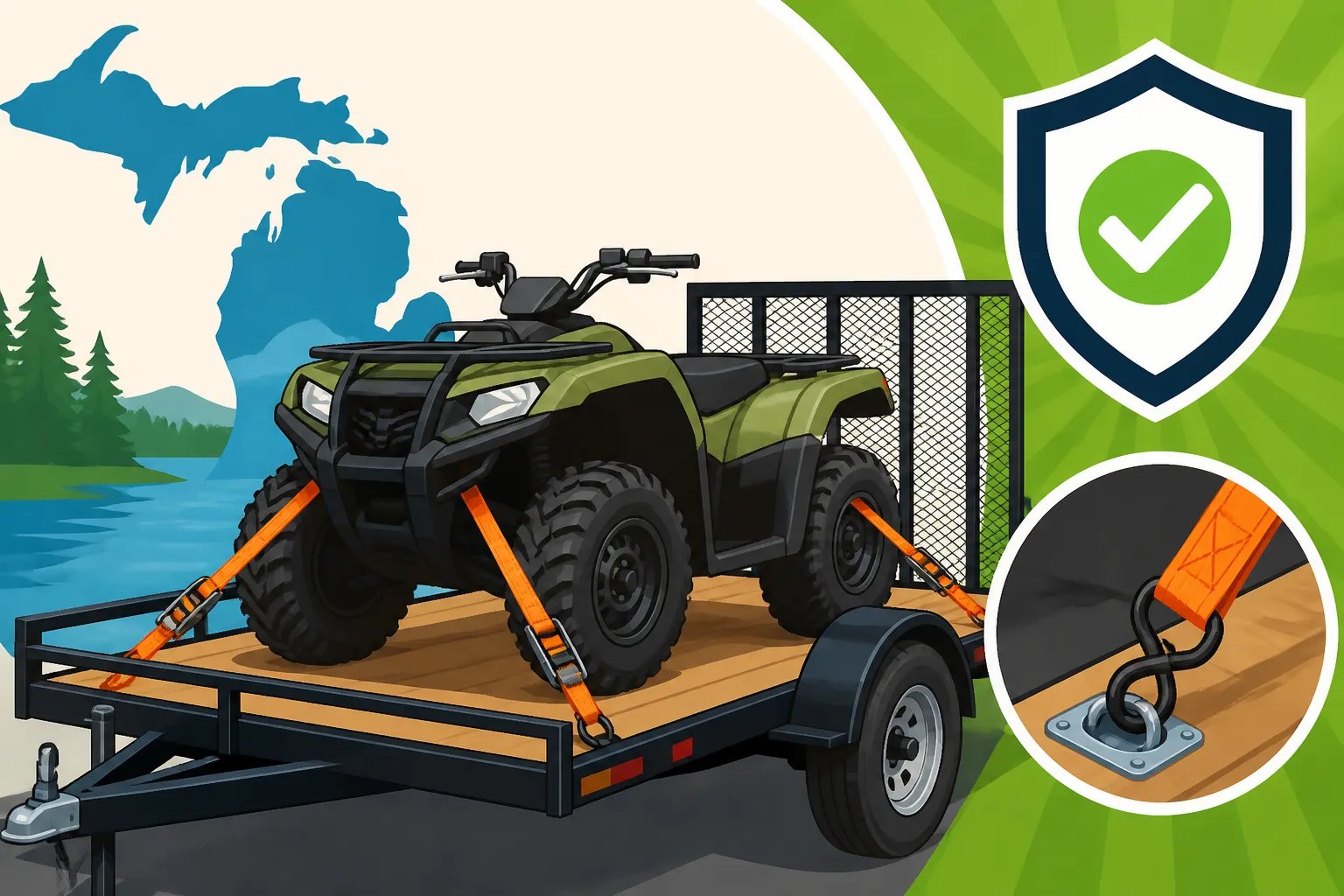
- Ratchet Straps: These are perhaps the most popular choice for ATV and UTV owners, and for good reason. Ratchet straps allow you to achieve a very high level of tension, cinching your machine down tightly to the trailer deck. This compression of the suspension is key to preventing movement. They are relatively easy to use once you get the hang of threading them, and they offer excellent security. However, it's crucial not to overtighten them, as excessive force can potentially damage your machine's suspension components over long hauls, or even the strap itself. You also need to keep an eye on them for wear and tear – sun exposure, dirt, and friction can degrade the webbing over time.
- Cam Buckle Straps: While less common for heavy ORVs, cam buckle straps are a good option for lighter ATVs or for securing accessories. They are very quick and easy to use, simply feeding the strap through the buckle and pulling tight. They don't offer the same high tension as ratchet straps, which can be a pro for delicate items, but a con for heavy machines that need to be firmly compressed. They're generally better suited for securing smaller items or as secondary tie-downs rather than the primary means of holding your main machine.
- Chains: For the vast majority of recreational ATV and UTV hauling, chains are usually overkill. They are incredibly strong and durable, often used for heavy equipment, but they are also much heavier, more cumbersome, and have a higher potential to scratch or damage your ORV's frame or components if not used with extreme care. If you're hauling a massive, custom-built rock crawler that weighs thousands of pounds, chains might be necessary, but for standard ATVs and UTVs, properly rated straps are usually sufficient and safer for your machine's finish.
- Soft Ties: These are absolute game-changers and something every ORV hauler should have. Soft ties are loops of durable webbing, often without metal hooks, that you can loop around suspension arms, axles, or other strong frame points on your ATV or UTV. They then provide a soft, non-abrasive attachment point for your ratchet strap hooks. This prevents the metal hooks of your main straps from scratching paint, marring powder coating, or causing wear on sensitive areas of your machine. Using soft ties is a simple, inexpensive way to protect your investment during transit. You might also find them useful when detailing a [Michigan ATV Bill of Sale: What to Put in It], ensuring both parties agree on the condition of the machine being transferred.
Essential Accessories for Ultimate Security
Beyond the main tie-downs, a few accessories can elevate your securement game, providing an extra layer of safety and peace of mind.
- Wheel Chocks: These are triangular blocks, often rubber or heavy-duty plastic, placed snugly against your ORV's tires to prevent any forward or backward rolling. Even with excellent tie-downs, chocks provide an essential backup, especially during sudden stops or accelerations. They mechanically block movement, adding a vital layer of security.
- Wheel Nets: These ingenious devices are designed to go over the top of your ORV's tires, essentially cradling them. They then connect to tie-down points on your trailer. Wheel nets secure the machine by securing the tires directly, distributing force evenly and minimizing the compression on your suspension. They are particularly effective for side-by-sides and larger ATVs, offering a very professional and stable securement method.
- E-Track or L-Track Systems: If you frequently haul ORVs or other cargo, investing in an E-track or L-track system for your trailer can be a game-changer. These are metal rails installed on the trailer floor or walls, featuring numerous slots that allow you to quickly and securely attach specialized tie-down straps, D-rings, and other accessories. They offer immense versatility in tie-down placement, letting you customize your securement points precisely for different machines or loads. They transform a basic trailer into a highly adaptable cargo hauler. These systems offer superior flexibility compared to fixed D-rings.
Step-by-Step Securement: A Practical Guide for Michigan Riders
Getting your ATV or UTV onto the trailer is only half the battle. The real work, and the real art, is in securing it properly. This isn't a task to rush, especially with the unique challenges Michigan roads can present.
Pre-Trip Inspection and Trailer Prep
Before you even think about loading your machine, take a few minutes to inspect your trailer. Check the tire pressure on both the trailer and your tow vehicle. Make sure all trailer lights are working correctly – running lights, brake lights, and turn signals. Confirm your hitch connection is solid, the safety chains are crossed and attached, and the breakaway cable is hooked up. Don't forget to check the condition of your ramps; they should be clean, free of debris, and securely in place before you drive anything onto them. It's also a good practice to clean any mud or excessive dirt off your ORV's tires and underside, especially if you're pulling into a paved area. When it comes to loading, always aim for proper weight distribution. Generally, you want about 10-15% of the total loaded weight to be on the hitch. For most ATVs and UTVs, this means positioning the machine slightly forward of the trailer's axle. Centering the machine side-to-side is also crucial for stable towing. Once loaded, secure your ramps so they don't bounce out or become hazards themselves.
The Securement Process: Points and Pressure
Now for the main event: strapping down your machine. The key here is to use enough tie-downs, connect them to strong points, and apply adequate tension to compress the suspension.
- Placement is Key: Start by positioning your ATV or UTV on the trailer, slightly forward of the axle. Engage the parking brake if your machine has one, and put it in gear (park for automatics, first gear for manuals).
- Four Points, Minimum: Always use at least four tie-downs – one at each corner of your machine. Many experienced haulers prefer to use a cross-pattern if their trailer and ORV allow, meaning the strap from the front left goes to the rear right tie-down point, and vice-versa. This method provides excellent lateral stability.
- Choose Strong Anchor Points: On your ATV or UTV, look for robust frame members, suspension A-arms, or dedicated tie-down loops if equipped. Never strap across plastic bodywork, handlebars, brake lines, electrical wires, or anything that could be damaged or could fail under tension. This is where soft ties truly shine; loop them around strong suspension components or axles, then attach your main straps to the soft ties.
- Compress the Suspension: This is crucial. Use your ratchet straps to pull down on the machine, compressing its suspension a bit. You'll want to see the suspension "squish" slightly. This compression prevents the ORV from bouncing and shifting independently of the trailer. If the suspension isn't compressed, the machine can "walk" around on the trailer over bumps, which is exactly what we want to avoid. Give the machine a good push and wiggle test. If it moves, tighten your straps more, or add more securement.
- Secure All Loose Items: Don't forget about any gear on your machine or loose items in the bed of your UTV. Fuel cans, coolers, toolboxes, and spare tires should all be secured independently or removed from the machine and secured directly to the trailer.
- Double-Check Everything: Before you pull out of your driveway, walk around the trailer one last time. Tug on each strap. Check your hitch, chains, and lights again. It's a small investment of time that can prevent a huge problem down the road. For long trips, make a habit of checking your straps at your first fuel stop and every few hours thereafter, as bumps and vibrations can sometimes loosen them slightly. If you're involved in any transaction, remember resources like LawDepot can provide customizable [Michigan ATV Bill of Sale Template Requirements] for peace of mind.
| Tie-Down Type | Pros | Cons | Best Use |
|---|---|---|---|
| Ratchet Straps | High tension, secure hold, widely available | Can over-tighten, wear and tear on webbing | Primary securement for ATVs/UTVs, heavy loads |
| Cam Buckle Straps | Quick to use, gentle on cargo, easy adjustment | Lower tension, not ideal for heavy machines | Lighter ATVs, secondary securement, accessories, delicate items |
| Chains | Extremely strong, durable, suitable for very heavy loads | Heavy, cumbersome, can damage finish, typically overkill for ORVs | Heavy equipment, commercial hauling, larger than typical ORVs |
| Soft Ties | Protects machine's finish, creates safe attachment points | Not a primary securement, requires main straps | Protecting paint/powder coat, sensitive attachment points on ORV frame |
| Wheel Nets | Evenly distributes force, excellent stability | Specific to wheel size, can be more costly initial investment | Larger UTVs, professional hauling, maximizing stability and protection |
Common Mistakes and How to Avoid Them
Even with the best intentions, it's easy to make mistakes when securing your ORV. Being aware of these common pitfalls can help you avoid them and ensure a safer, smoother journey to the trails.
One of the most frequent errors is under-strapping. This means either using straps that are not strong enough for the weight of your machine or, more commonly, not using enough straps. Remember, a minimum of four points is recommended for any ATV or UTV. Two straps across the middle might look sufficient, but they won't prevent the machine from twisting or lifting at the ends. Another mistake is over-tightening. While it's important to compress the suspension, cranking down on ratchet straps with all your might can put undue stress on your ORV's suspension components, bushings, or even the frame. This can lead to premature wear or even damage, turning your securement efforts into a potential repair bill. Aim for firm and compressed, not brutally crushed.
Using worn-out or damaged straps is another critical mistake. Straps are consumable items, and they don't last forever. Sunlight, dirt, oil, and sharp edges can all degrade the webbing over time, making them weaker and prone to sudden failure. Before each trip, quickly inspect your straps for cuts, fraying, pulled threads, or damaged hardware like bent hooks or sticky ratchets. If a strap shows signs of significant wear, retire it and invest in new ones. They're far cheaper than a damaged ORV or a traffic ticket.
Many riders also neglect the "wiggle test." After you've loaded and strapped your machine, try to push and pull on it from different angles. It should feel absolutely solid, with no noticeable movement. If you can still get it to shift, you need more tension or additional tie-downs. Furthermore, leaving loose items unsecured on your ORV or trailer is a recipe for disaster. Anything that isn't tied down can fly off during transit, becoming a hazard to others and potentially getting lost or damaged itself. Even a seemingly innocuous jacket or tool can cause problems if it comes loose. Finally, not re-checking straps during long trips is a common oversight. Vibrations, bumps, and even changes in temperature can cause straps to loosen over time. Make it a habit to check all your tie-downs after the first 15-20 minutes of driving, and then at every major stop, like for fuel. This quick check can save you a lot of trouble. Make sure you're also staying current with your machine's documentation; you can find information on [Michigan ORV Title Application and What It Costs] or [How Long a Michigan ORV Title Takes to Arrive] to ensure your paperwork is always in order, which is just as important as your physical securement. If you ever need to replace a lost title, you'll appreciate having a system for your important documents. For any changes, it might be worth making a [Michigan Secretary of State Appointments for ORV Title Work] in advance.
Disclaimer
This article is for general informational purposes only and does not constitute professional advice. Laws, prices and regulations vary by location and change over time. Consult a qualified professional for guidance on your specific situation.