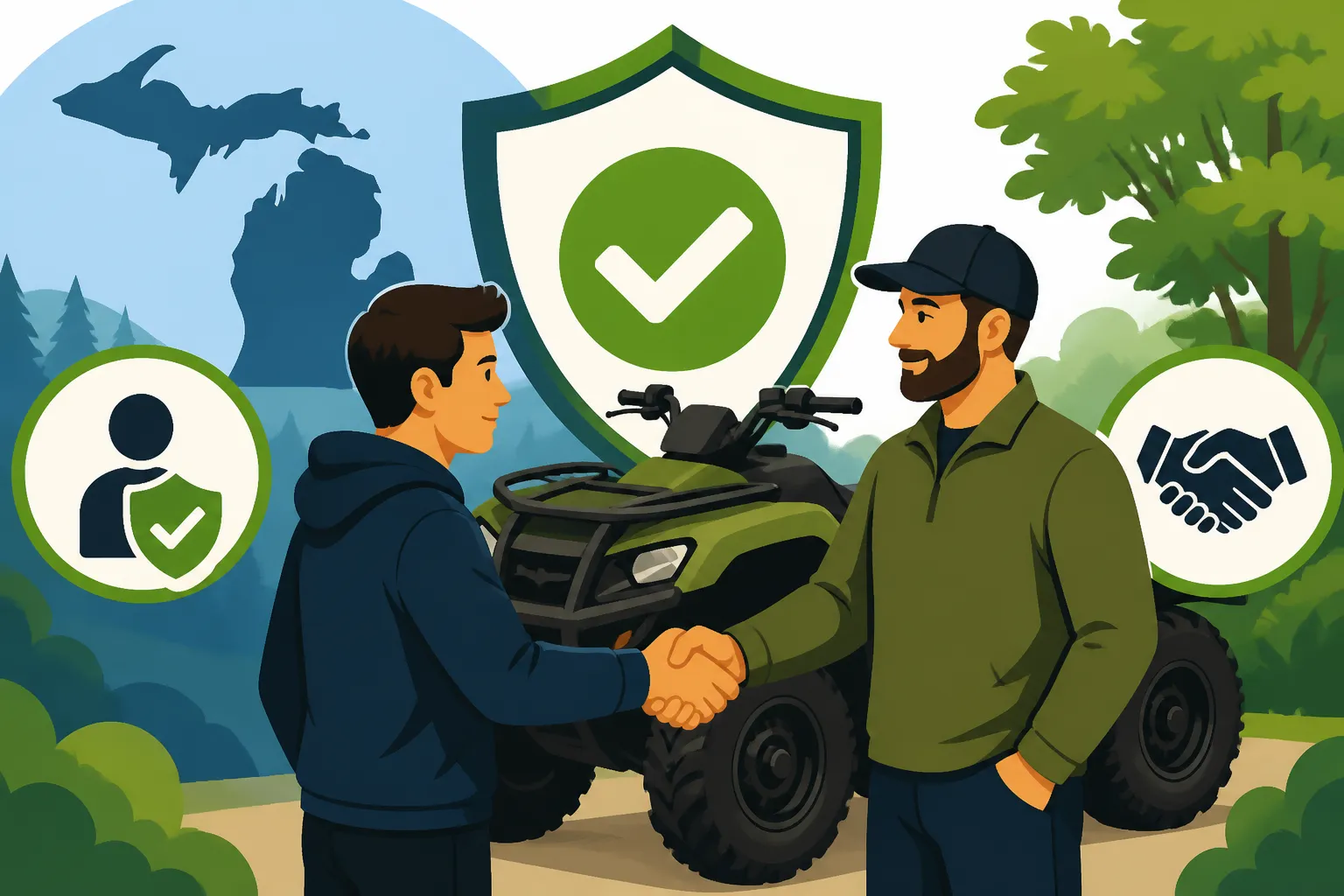
Meeting a Stranger to Buy an ATV Safely
Buying a used ATV or UTV from a private seller in Michigan is often the best way to get a great deal on the machine you've been dreaming of. But let's be honest, the thought of meeting a complete stranger, potentially with a large sum of cash or making a big financial commitment, can be incredibly daunting and even a little scary. This guide is all about giving you the practical steps and peace of mind you need to navigate these private party transactions safely and confidently, ensuring your focus stays on the thrill of the ride, not the stress of the sale.
Prioritizing Your Personal Safety During the Initial Meeting
When you're looking to buy an ATV or UTV, the excitement of finding "the one" can sometimes overshadow common-sense safety precautions. But remember, your personal safety is non-negotiable, especially when dealing with someone you don't know. Whether it's a quad for hitting the [Silver Lake Sand Dunes] or a side-by-side for exploring the [Upper Peninsula ATV Trail Mileage Total], taking a few simple steps can make all the difference in having a secure and positive experience.
Choosing a Safe Location for Inspection and Transaction
This is probably the single most important rule when meeting a stranger for any kind of transaction. Never, ever agree to meet at an isolated location, especially not at their home if you're feeling uneasy, or worse, somewhere completely unfamiliar to you and with no witnesses. Think public, well-lit places with plenty of people around. A busy shopping center parking lot during daylight hours is a far better choice than a deserted dirt road on the outskirts of town. Consider a public park, a gas station with good lighting, or even the parking lot of a police station (some departments actually welcome this for online transactions). If the seller insists on their property because the ATV is there and can't be moved, ask a lot of questions about the area, tell someone exactly where you're going, and bring someone with you. If they seem hesitant about meeting in a public space, that's a significant red flag right there.
It's crucial to ensure there's enough space and light to properly inspect the machine without feeling rushed or exposed. You need to be able to walk around it, check the tires, look under the hood, and generally kick the tires (metaphorically, or literally!). A tight, dimly lit garage at someone's house simply isn't conducive to a thorough inspection, nor is it ideal for your safety. Always prioritize visibility and accessibility.
Bringing a Buddy or Informing Someone of Your Plans
Going it alone is a big risk. Always bring a friend, family member, or trusted companion with you to the meeting. There's safety in numbers. Not only does having another person present act as a deterrent to any potential trouble, but they can also offer a second pair of eyes to help inspect the ATV and ask questions you might overlook. They can also be your designated driver, allowing you to focus on the machine. If you absolutely cannot bring someone with you, make sure at least two other people know exactly where you are going, who you are meeting, what time you expect to be back, and what vehicle you'll be driving. Share the seller's contact information and the listing details with them. A quick text or call when you arrive and when you leave also adds another layer of security. This simple step can significantly reduce your vulnerability.
Even if you're just going to look, treat it as if you're going to buy, meaning be prepared and cautious. Let your friend know what to do if you don't check in by a certain time. This isn't about being paranoid; it's about being prepared and responsible for your own well-being. A seller who is legitimate will have absolutely no problem with you bringing a friend or taking these precautions.
Trusting Your Gut and Setting Boundaries
Your intuition is a powerful tool; don't ignore it. If something feels off – the seller is overly pushy, evasive, or rushes you – it's okay to walk away. There will always be another ATV for sale. No deal is worth compromising your safety or peace of mind. Be firm in your boundaries. If the seller tries to change the meeting location last minute to somewhere more secluded, or if they bring additional people you weren't expecting, it's perfectly fine to decline and reschedule, or simply call off the meeting altogether.
Furthermore, be clear about your intentions from the outset. You are there to inspect the ATV and, if satisfied, complete a transaction. You are not there to socialize or engage in unrelated discussions. Keep the conversation focused on the machine and the sale. If the seller starts asking overly personal questions or veers off topic in a way that makes you uncomfortable, politely steer the conversation back, or consider cutting the meeting short. Your comfort and safety are paramount.
Verifying the ATV and Seller Before You Commit
Once your personal safety is secured, the next major hurdle is making sure the ATV itself is legitimate and that the seller actually has the right to sell it to you. Michigan has specific rules for titling ORVs, and getting this wrong can lead to a lot of headaches down the road. You don't want to end up with a stolen machine or one with a lien you didn't know about.
Essential Pre-Meeting Checks and Communication
Before you even agree to meet, do your homework. Ask the seller for the full 17-digit Vehicle Identification Number (VIN) of the ATV or UTV. With the VIN, you can perform a quick [NICB VIN Check for a Used ATV] online to see if it has been reported stolen or has any other major red flags in its history. If the seller is hesitant to provide the VIN, that’s a major warning sign. Also, ask for photos of the title, ensuring the seller's name matches the name on the title (or they have proper proof of ownership if they're selling for someone else). Ask about the machine's history: why they're selling it, how long they've owned it, its maintenance record, and any known issues.
Good communication upfront can save you a wasted trip and expose potential problems. Don't be shy about asking detailed questions via text or phone calls before you drive out. For example, clarify the exact model year, engine size, mileage (or hour meter reading, see [Odometer and Hour Meter Claims on a Used ATV]), and any modifications. If their answers are vague or inconsistent with the listing, it might be a sign to proceed with caution or look elsewhere. Getting a [Michigan ATV Bill of Sale Template Requirements] in advance and asking them to review it can also show you if they are prepared for a legitimate sale.
What to Inspect on the ATV for Red Flags
When you're finally face-to-face with the ATV, perform a thorough inspection. Don't let the seller rush you. Check the frame for cracks, welds, or bends – especially near suspension points and the VIN plate itself. Look for signs of significant rust or corrosion. Inspect the tires for excessive wear or dry rot. Check the suspension for leaks and ensure it compresses and rebounds evenly. Test the brakes, lights, and any other electrical components. Start the engine cold to listen for any unusual noises – ticking, knocking, or excessive smoke. A seller who has the machine warmed up before you arrive might be trying to hide a cold-start issue.
Pay close attention to the VIN plate on the frame. Compare it to the VIN on the title and ensure it hasn't been tampered with or poorly reattached. This is critical for preventing issues like [Fixing a Wrong VIN on a Michigan ORV Title] later on. Also, check for fluid leaks (oil, coolant, brake fluid) and ensure all controls (throttle, steering, gear shifter) operate smoothly. Don't be afraid to get a little dirty; a thorough inspection now can prevent costly repairs or legal issues down the line.
The Importance of a Thorough Title and VIN Check
In Michigan, almost all ORVs require a title. The title is your ultimate proof of ownership. Before any money changes hands, you must inspect the physical title. Verify that the VIN on the title matches the VIN stamped on the ATV's frame exactly. Check the seller's name on the title against their driver's license to ensure they are the legal owner. Look for any signs of alteration, white-out, or suspicious markings on the title document itself. A clean, properly filled-out title is non-negotiable for a legitimate sale. You'll need it when you [Michigan ORV Sales Tax at a Secretary of State Branch] and register the machine.
You can also request the seller accompany you to a Secretary of State branch to verify the title's authenticity, though this might be a big ask. However, at the very least, make sure there are no liens listed on the title. If there is a lien, that means a bank or lender still owns part of the machine. The seller must provide a [Lien Release on a Paid-Off UTV] from the lender before you complete the sale. Without it, you could buy a machine that legally still belongs to someone else. Never take possession without a properly signed-over, lien-free title in hand. If you encounter [Michigan ORV Title Problems and How to Clear Them], it's best to avoid the purchase altogether unless you're prepared for a complex legal battle.
Handling the Financial Exchange Securely
You've found the perfect ATV, verified its history, and checked out the seller. Now comes the moment of truth: the money exchange. This part of the transaction is ripe for scams if you're not careful, so securing your funds and getting the right paperwork is paramount.
Safe Payment Methods and Avoiding Scams
When buying from a private seller, cash is king, but it's also risky to carry large sums around. If you do pay with cash, conduct the transaction at a bank. You can withdraw the money there, and the seller can deposit it immediately, eliminating the risk of carrying cash for both parties. Alternatively, consider a cashier's check or a wire transfer from your bank directly to theirs, especially for larger sums. However, be cautious with cashier's checks – make sure it's a legitimate one issued directly from a bank, not a personal check disguised as a cashier's check. Never accept a personal check for an ATV purchase. Avoid payment apps like Zelle or Venmo for very large transactions as they offer little buyer protection.
Beware of common scams. If the seller demands payment before you've even seen the ATV, or asks for a non-refundable deposit to "hold" it without a formal agreement, walk away. Be suspicious if they push for unusual payment methods, or if the price seems too good to be true, indicating a potential stolen vehicle or other significant issues. A legitimate seller wants a smooth transaction as much as you do and will be agreeable to secure payment methods.
The Role of a Solid Bill of Sale
A bill of sale isn't just a formality; it's a crucial legal document that protects both the buyer and the seller. It serves as a record of the transaction, detailing the buyer, seller, date, purchase price, and the specific ATV being sold (including its VIN, make, model, and year). It also typically includes a statement that the vehicle is being sold "as-is," which limits the seller's liability for any issues discovered after the sale. Make sure both parties sign and date it, and each keeps a copy.
You can find templates for a comprehensive bill of sale online, and resources like LawDepot offer customizable legal forms that can be tailored to your specific needs in Michigan. Using a professional template from LawDepot ensures all necessary legal language is included, covering aspects like the "as-is" clause and confirmation of a clear title. This document will be essential for your records, for registering the ATV, and especially if any disputes arise later. A properly executed bill of sale provides clear evidence of the transfer of ownership, complementing the signed-over title.
Final Steps and Paperwork for a Smooth Transfer
Once you've inspected the ATV, agreed on a price, and secured your payment method, it's time to finalize the paperwork. The seller must sign and date the vehicle title in the appropriate section, transferring ownership to you. Ensure their signature matches the name printed on the title. If there's more than one owner listed on the title, make sure [Who Has to Sign a Michigan ORV Title] is clear. If they purchased it from a previous owner but never titled it in their name, that's a problem you'll want to avoid, as it complicates your ability to title it yourself. Make sure to get a signed bill of sale.
Before you leave, verify you have the signed-over title and the signed bill of sale in your possession. You'll need these documents to transfer the title into your name at a Michigan Secretary of State office. Remember, Michigan gives you [Michigan Gives You 15 Days to Title an ORV] from the date of purchase to get this done to avoid late fees. Also, be aware of [Michigan Use Tax on a Private-Party ATV Sale] which you'll pay at the Secretary of State. Having all your ducks in a row ensures a smooth transition to legal ownership, allowing you to hit the trails with confidence and peace of mind, knowing your new Michigan ATV is truly yours.
| Safety Precaution | Before Meeting | During Meeting | After Meeting (Initial) |
|---|---|---|---|
| Location | Suggest a public, well-lit place or police station. | Stick to the agreed-upon public location. | Confirm departure with your contact person. |
| Companionship | Arrange for a friend/family member to join you. | Have your companion present and actively involved. | Alert your contact when you're safely home. |
| Communication | Get VIN, photos of title, ask detailed questions. | Observe seller's demeanor; trust your gut. | Keep seller's contact info (if needed for follow-up). |
| Vehicle Inspection | Request VIN for pre-check (stolen status, liens). | Thoroughly inspect machine, verify VIN on frame/title. | Prepare for [Michigan ORV Title Application and What It Costs]. |
| Paperwork | Discuss title status, lien release, bill of sale. | Ensure seller signs title, provide a formal bill of sale. | Secure original title and bill of sale. |
| Payment | Decide on a safe method (bank transfer, cashier's check). | Execute payment at a bank or secure location. | Keep receipts and records of payment. |
Disclaimer
This article is for general informational purposes only and does not constitute professional advice. Laws, prices and regulations vary by location and change over time. Consult a qualified professional for guidance on your specific situation.