Writing a Safe ATV Sale Contract
Buying or selling an ATV or UTV privately can feel like navigating a minefield. You're dealing with a significant investment, often with someone you don't know well, and there's a lot of paperwork to get right. This guide will walk you through exactly what you need to know to create a secure, comprehensive ATV or UTV sale contract in Michigan, protecting both you as the buyer and the seller from common headaches and disputes down the road.
Why Bother with a Sale Contract for Your ATV or UTV?
When you’re standing in someone’s driveway, admiring that gleaming quad or side-by-side, it’s easy to get caught up in the excitement. You shake hands, exchange money for keys, and off you go. But what happens if the engine blows a week later? Or if the seller misrepresented its condition? What if the title never arrives, or worse, turns out to be fraudulent? This is where a robust sale contract isn't just a good idea; it's absolutely essential for peace of mind and legal protection in a private sale.
Protecting Your Investment as a Buyer
As a buyer, you're putting down hard-earned money, and you deserve to know exactly what you're getting. A well-written contract acts as your safeguard, documenting the machine's condition, agreed-upon price, and any promises or disclosures made by the seller. Without it, if something goes wrong, you could find yourself with little recourse, facing costly repairs or even a legal battle with no written proof of your agreement. It helps confirm that the seller is the rightful owner and that the machine isn't stolen or encumbered by a lien.
Imagine you drive home with your "new" UTV, only to discover a major transmission issue the next day that the seller swore wasn't there. Without a contract detailing the vehicle's condition at the time of sale, or at least an "as-is" clause that both parties acknowledge, it becomes a he-said-she-said situation. A strong contract allows you to outline what recourse, if any, you might have, or at least clarifies that you understood the risks associated with an "as-is" purchase. This clarity from the start saves a lot of potential heartache.
Limiting Your Liability as a Seller
For sellers, a contract is just as vital. It clearly establishes the terms of the sale, including the "as-is" condition of the vehicle, which helps shield you from liability once the machine leaves your property. Once the buyer drives away, you want to be confident that you won't get a call weeks later about an unexpected mechanical failure, demanding a refund or compensation. A comprehensive contract also documents the transfer of ownership, ensuring you're no longer responsible for any incidents or tickets related to the ATV or UTV after the sale is complete.
Consider a scenario where you sell your old ATV, making it clear that it has a few quirks. If the buyer signs a contract acknowledging they bought it "as-is" with all known defects, you're much better protected. Without that, a buyer might claim you concealed a major issue, leading to a dispute. The contract formalizes the hand-off of responsibility, outlining that the buyer accepts the machine in its current state. This allows you to sleep easy, knowing you've done your due diligence in transparently transferring ownership and risk.
What Happens Without One The Risky Scenarios
Skipping a formal written contract, even for what seems like a simple private ATV sale, is a gamble. Without documented terms, you're relying entirely on verbal agreements, which are notoriously difficult to prove in court if a disagreement arises. You could face situations like a buyer claiming the ATV was sold with a warranty you never offered, or a seller demanding more money after the fact. It can lead to disputes over payment, ownership, or the vehicle's condition, potentially costing you far more in legal fees and stress than the effort of writing a contract would have.
One common issue is the missing title. If you buy an ATV without a clear contract outlining the seller's responsibility to provide a properly signed title, you could be left with a machine you can't legally register or transfer. Imagine going to the Secretary of State only to find out the seller never actually owned the ATV free and clear, or that there's a lien against it. Without a contract, proving your case against the seller becomes incredibly challenging. This is why having all the pieces of the puzzle, including clear proof of ownership and a signed [Michigan Title Transfer When You Buy From a Private Seller] document, is paramount.
Essential Elements of a Rock-Solid Michigan ATV Sale Contract
A good ATV sale contract doesn't need to be complex legal jargon, but it does need to be thorough. Think of it as a checklist of all the important details surrounding the transaction. It's about clarity, not complexity. Having these key components ironed out in writing will prevent most common disputes. For sellers, it's about minimizing future liability. For buyers, it's about confirming exactly what you're paying for.
Identifying the Parties and the Machine
First things first, the contract needs to clearly identify who is buying and who is selling. Include the full legal names, addresses, and contact information (phone numbers, email addresses) for both the buyer(s) and seller(s). This leaves no ambiguity about who is entering into the agreement. On the machine side, you need to be just as specific. Include the year, make, model, and, most importantly, the Vehicle Identification Number (VIN). The VIN is the unique identifier for the ATV or UTV, like a social security number for the vehicle. Double-check that the VIN on the contract matches the VIN physically stamped on the machine, usually on the frame.
Also, be sure to note the odometer or hour meter reading at the time of sale. While not every ORV has an odometer, many modern UTVs and some ATVs do. This detail helps to prevent future disputes about how many hours or miles were on the machine at the point of transfer. If the machine does not have an odometer or hour meter, simply state that. For Michigan, having accurate identifying information is crucial for the [Michigan ATV Bill of Sale: What to Put in It] and for ensuring a smooth title transfer.
The Purchase Price and Payment Terms
This section is pretty straightforward but incredibly important. Clearly state the total agreed-upon purchase price in both numerical and written form (e.g., "$5,000.00 – Five Thousand Dollars and Zero Cents"). Outline the method of payment (cash, cashier's check, certified bank check, electronic transfer). If a deposit was made, detail the amount, the date it was received, and how it will be applied to the total price. Specify the exact date and time the full payment is due, and when the transfer of the ATV or UTV will occur.
For example, if the buyer is putting down a deposit, the contract should clearly state, "Buyer agrees to a non-refundable deposit of $500.00 (Five Hundred Dollars and Zero Cents) paid on [Date] via cash, with the remaining balance of $4,500.00 (Four Thousand Five Hundred Dollars and Zero Cents) due at the time of title transfer on or before [Date]." This kind of clear wording prevents any misunderstandings about money. It's also wise to specify that the sale is only final upon receipt of full, cleared funds. You'll also want to make sure you understand the [Michigan Use Tax on a Private-Party ATV Sale] implications for the buyer.
Disclosures and "As-Is" Clauses
This is often the most contentious part of any private sale, so getting it right in the contract is key. Most private ATV and UTV sales in Michigan are done "as-is," meaning the buyer accepts the vehicle in its current condition with all faults, visible or otherwise, at the time of sale, without any warranties from the seller. This is incredibly important for sellers to protect themselves from post-sale claims. The contract should contain clear language stating this.
However, an "as-is" clause doesn't absolve a seller of fraud if they intentionally conceal known defects. If there are known issues with the ATV or UTV – perhaps a minor oil leak, a finicky starter, or a recently replaced part – it’s a good idea to disclose these in the contract itself, or as an addendum. Transparency builds trust and further protects the seller. A good contract might include a section where the seller explicitly states they are disclosing all known defects, and the buyer acknowledges receipt of this information. This section should also confirm that the buyer has had the opportunity to inspect the vehicle (or has waived that right). Many buyers find a [Pre-Purchase Inspection Before Signing an ATV Title] an invaluable step.
Crafting Your Contract: Tools and Tips
You don't need to be a lawyer to create a strong ATV sale contract, but you do need to be methodical. The goal is to cover all your bases and leave no room for misunderstanding. Whether you're a seasoned rider or new to the off-road world, a formal agreement will make the transaction smoother and more secure.
Using a Template and Why Customization Matters
The easiest way to start drafting a contract is by using a reliable template. Resources like LawDepot offer excellent, customizable bill of sale and purchase agreement templates specifically designed for vehicle sales. These templates provide a solid framework, ensuring you don't miss any critical sections. However, simply filling in the blanks isn't always enough. Every private sale has unique aspects, and you might need to add specific clauses.
For example, if you're selling an ATV with custom modifications, you might want to list those modifications to avoid later confusion. If you've agreed to include specific accessories (like a helmet or a winch), detail them in the contract. While templates like those from LawDepot are a fantastic starting point and cover the general requirements for a [Michigan ATV Bill of Sale Template Requirements], always read through the entire document and ensure it accurately reflects your specific agreement. Don't hesitate to add extra lines or paragraphs for anything unique to your sale.
Reviewing Before You Sign
Before anyone puts pen to paper, both the buyer and seller should thoroughly review the entire contract. Read it carefully, line by line, to ensure all details are accurate, all terms are understood, and nothing is missing. This is your last chance to catch errors or clarify ambiguities. If anything is unclear, ask questions! It's far easier to make changes before signing than to try and amend a legally binding document later.
It's also a good idea for both parties to initial each page of the contract, in addition to signing the final page. This confirms that every page was reviewed and agreed upon. While a notary isn't strictly required for an ATV bill of sale in Michigan, having one witness the signatures can add an extra layer of authenticity and prevent disputes over signature validity. Consider whether [Does a Michigan ATV Bill of Sale Need a Notary?] is worth the extra step for your specific transaction, especially if the value of the machine is high.
What to Do After the Sale is Finalized
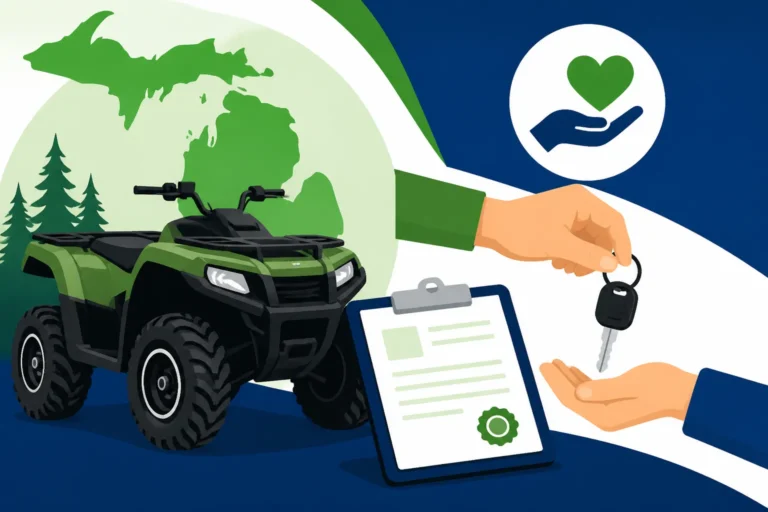
Once the contract is signed and the money has changed hands, your work isn't quite done. Both the buyer and seller should receive a signed copy of the contract for their records. For the buyer, this document is critical for proving ownership, especially when it comes time to transfer the title at the Michigan Secretary of State. Keep it in a safe place, ideally with the ATV's title and any maintenance records.
For the seller, holding onto a copy of the contract proves that you relinquished ownership on a specific date, which is vital if the buyer gets a ticket or is involved in an accident before they've completed the title transfer. It serves as your official record that the transaction occurred and you are no longer the owner. Don't forget that the buyer will need to properly complete the [Michigan ORV Title Application and What It Costs] at the Secretary of State.
Common Pitfalls to Avoid in Your ATV Sale Contract
Even with the best intentions, it's easy to overlook crucial details in the excitement of a sale. Being aware of these common pitfalls can help ensure your ATV sale contract is as watertight as possible, protecting both parties and smoothing the path for a successful transfer of ownership. A little extra attention now can prevent major headaches later.
Incomplete Information
One of the most frequent issues with private sale contracts is simply missing information. This can range from an incomplete address for one of the parties to a missing digit in the VIN. Even small omissions can cause big problems. If the VIN on the contract doesn't exactly match the VIN on the physical ATV and the title, you might run into issues at the Secretary of State when trying to complete the [Michigan ORV Title Application Form and Where to Get It]. Likewise, if payment terms are vague, it can lead to disputes about when and how money was exchanged.
Always take the time to double-check every piece of data. Verify names, addresses, and especially the vehicle's identifying details like make, model, year, and VIN. Have both parties initial any corrections or additions made to the contract before signing the final document. A meticulously completed contract leaves no room for doubt or misinterpretation, making the entire process much more secure for everyone involved.
Skipping a Pre-Purchase Inspection
While the contract outlines the terms of the sale, the actual condition of the ATV or UTV is paramount. A buyer skipping a thorough [Pre-Purchase Inspection Before Signing an ATV Title] is a significant risk. Even if the contract states "as-is," discovering a major hidden defect after the sale can lead to buyer's remorse and potential attempts to unwind the deal, even if the contract protects the seller. While the contract protects the seller legally, it won't prevent a frustrated buyer from making trouble.
As a seller, encouraging a buyer to inspect the vehicle (or even have a mechanic look at it) before signing the contract is a good practice. Documenting in the contract that the buyer had the opportunity for inspection (and either did so or waived the right) further solidifies the "as-is" clause. This transparency manages expectations and greatly reduces the likelihood of post-sale disputes, fostering a smoother transaction for both parties involved.
Bonded Title for an ATV in Michigan
Sometimes, you might encounter a situation where an ATV or UTV doesn't have a clear title, or the existing title has issues. While a proper sale contract is always necessary, in these specific scenarios, understanding options like a [Bonded Title for an ATV in Michigan] becomes crucial for the buyer. A bonded title is a way to obtain a title for a vehicle when the normal process isn't possible due to lost or missing ownership documents, or if there's an ownership dispute.
If you're a buyer considering an ATV without a clear title, the sale contract should explicitly detail this situation and outline what steps the seller will take, if any, to help the buyer obtain a bonded title, or acknowledge that the buyer is taking on this responsibility. As a seller, if you're selling a machine that requires a bonded title, it is imperative to disclose this upfront and clearly state in the contract that the sale is contingent upon the buyer accepting the terms associated with obtaining such a title. This ensures both parties are fully aware of the unique circumstances and the extra steps involved beyond a standard title transfer.
Disclaimer
This article is for general informational purposes only and does not constitute professional advice. Laws, prices and regulations vary by location and change over time. Consult a qualified professional for guidance on your specific situation.