Donating an ATV and the Title Paperwork
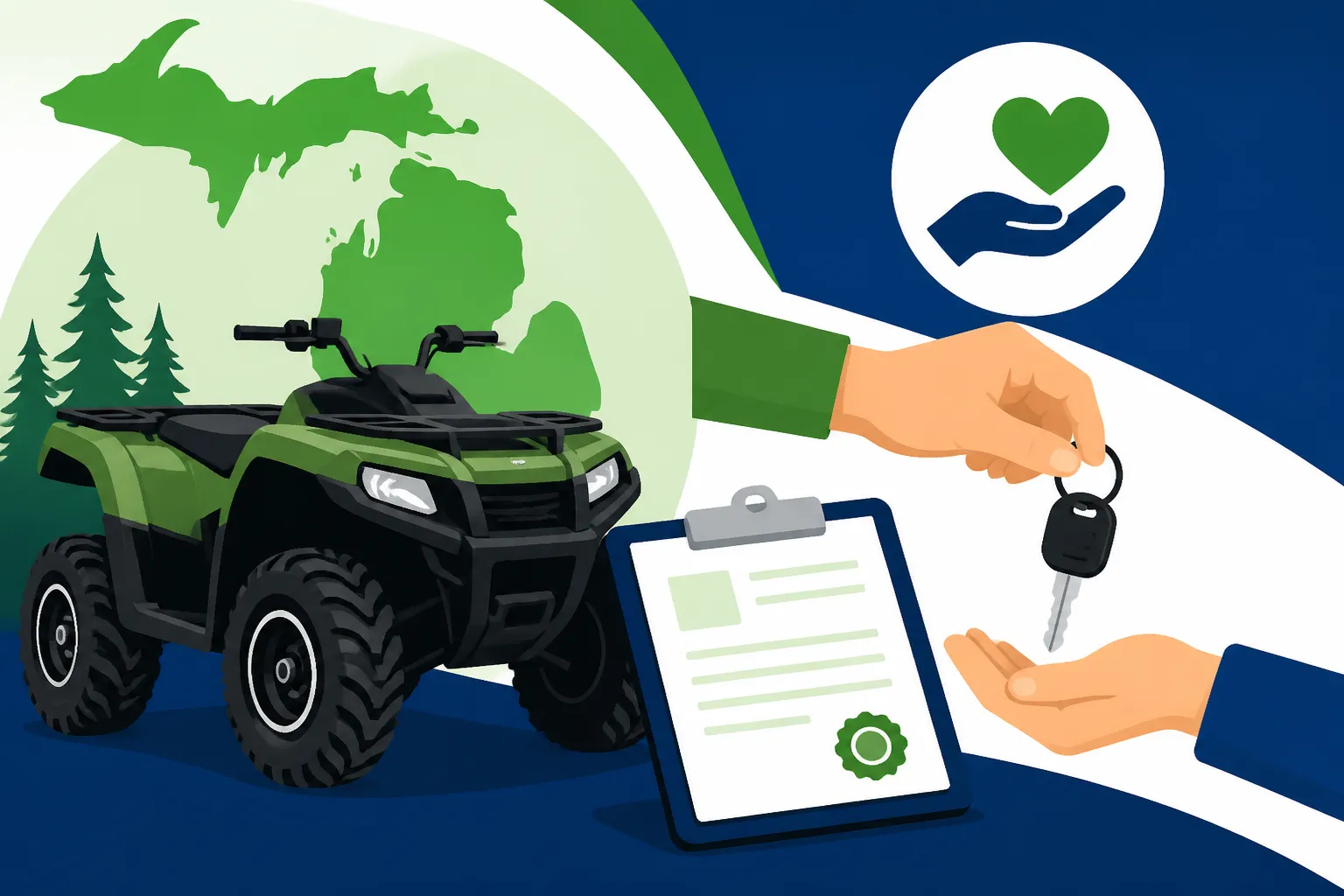
It’s a wonderful feeling to pass on an off-road vehicle you no longer use, especially when you know it's going to a good cause or someone who will truly appreciate it. But when it comes to donating an ATV or UTV in Michigan, many folks get tangled up in the title paperwork. This guide is here to untangle that process for you, walking you through everything you need to know to ensure your generous gift is transferred legally and smoothly.
The Heart Behind Donating Your ATV in Michigan
Donating an all-terrain vehicle (ATV) or utility terrain vehicle (UTV) isn't just about clearing space in your garage; it's a generous act that can truly make a difference. Maybe your riding days are behind you, or you’ve upgraded to a new machine, and that old quad is just gathering dust. Instead of letting it sit, donating it can provide invaluable support to a charity, a community program, or even just help a friend or family member get started in the great sport of off-roading.
Why Consider Donating Your Off-Road Vehicle?
There are so many heartfelt reasons why someone might decide to donate their ATV or UTV. For many, it's about giving back. Charities often use these vehicles for various purposes, from maintaining large properties and transporting equipment to supporting outdoor education programs or even helping in search and rescue efforts. Imagine your old side-by-side being the cornerstone of a local youth outdoor club, providing safe and supervised riding experiences. That's a legacy you can be proud of. Beyond charitable giving, sometimes it’s simply about helping someone you care about. Gifting a dependable ATV to a family member who's always wanted one, but couldn't afford it, can spark joy and create new outdoor memories. It’s a fantastic way to pay it forward and ensure a machine you’ve loved continues to bring utility and adventure to others.
Finding the Right Organization or Individual
Once you've decided to donate, the next step is finding the right recipient. If you’re leaning towards a charitable donation, look for reputable non-profit organizations that specifically mention accepting vehicle donations, or whose mission aligns with the use of such equipment. Many organizations, from environmental conservation groups to youth camps, could benefit greatly. It's always a good idea to contact them directly to understand their process and ensure they can properly use and title the vehicle. If your donation is to an individual, perhaps a friend, a younger relative, or a community group, the process can feel a bit more personal. Transparency is key here, making sure both parties understand the steps involved in the transfer and any potential responsibilities like taxes. Don't be afraid to ask questions; a good charity or a grateful individual will be happy to walk you through their needs and expectations.
Navigating the Michigan ATV Title Transfer for Donations
The title is the linchpin of any vehicle transfer, and donating an ATV in Michigan is no different. You might be giving it away for free, but the state still needs a clear record of who legally owns that machine. This is where many generous donors find themselves a bit stressed, wondering if they're doing it right. Let's make sure you get it right the first time.
The Essential Steps for a Smooth Title Handover
When you're ready to hand over that ATV, the original Michigan ORV title document is your most important piece of paper. You, as the donor, will need to locate the section for transfer of ownership. Typically, this involves signing your name as the seller (even though it's a gift), filling in the recipient's name and address, and usually noting the date of the transfer. Crucially, you'll want to enter "GIFT" or "$0" in the purchase price section. This indicates that no money changed hands, which is important for sales tax calculations later. Before you even sign, double-check that your name on the title matches your legal name, and that the VIN (Vehicle Identification Number) on the title matches the VIN stamped on your ATV’s frame. A mismatch here will cause headaches at the Secretary of State. If there's a lien on the title from a previous loan, you'll need to ensure that lien is officially released and cleared before you can transfer ownership. No one wants to inadvertently donate a vehicle that still has a debt attached! [Who Has to Sign a Michigan ORV Title] offers more details on the signature process.
What Happens If the Title Is Missing or Flawed?
Life happens, and sometimes that little piece of paper disappears. If your Michigan ORV title is lost, stolen, or damaged beyond recognition, you absolutely cannot transfer ownership until you get a replacement. Don’t panic; it’s a common issue. You’ll need to apply for a duplicate title at a Michigan Secretary of State branch. This usually involves filling out a form, paying a small fee, and proving your identity and ownership. It’s a necessary step, so budget a little time for it. Similarly, if there’s an error on your current title – maybe a misspelled name, an incorrect VIN, or a past lien that wasn’t properly released – these issues need to be corrected before you can proceed with the donation. The Secretary of State can guide you on the specific forms and proofs needed to rectify these flaws. Trying to transfer a title with errors can lead to delays for the recipient and may even raise red flags. Be proactive, get it fixed, and ensure a clean slate for the new owner. For more information on dealing with such issues, check out [Replacing a Lost Michigan ORV Title] or [Michigan ORV Title Problems and How to Clear Them].
Understanding the Tax Implications of Your ATV Donation
This is where things can get a little complex, but don't let it deter you from your generosity. While you might be freely giving your ATV away, both you, the donor, and the recipient need to understand the potential tax implications, both federal and state. It’s rarely as simple as zero dollars meaning zero taxes.
Donor's Perspective: Charitable Deductions
If you’re donating your ATV or UTV to a qualified charitable organization, you might be eligible for a federal income tax deduction. This can be a significant benefit, especially for higher-value machines. However, the rules around vehicle donation deductions can be quite specific. Generally, the deduction amount depends on how the charity uses the vehicle. If the charity sells the vehicle without any significant intervening use or material improvement, your deduction is typically limited to the gross proceeds from the sale. If, however, the charity keeps and uses the vehicle for its charitable purpose, you may be able to deduct the fair market value. It's crucial to get a written acknowledgment from the charity detailing the donation and its intended use. You'll also likely need to itemize your deductions on your tax return. Since tax laws can be complex and change, it's always a good idea to consult with a tax professional to understand your specific situation and maximize your eligible deduction. They can provide tailored advice on valuation and IRS requirements.
Recipient's Perspective: Sales/Use Tax
Now, what about the person receiving your generous gift? In Michigan, a sales or use tax is typically applied when a vehicle changes ownership, even in private-party sales. When an ATV is genuinely given as a gift, without any money exchanged, the situation can be a bit different. Michigan's use tax provisions generally apply to transfers where no sales tax was collected. However, there are typically exemptions for true gifts between family members or specific types of donations to qualified non-profits. If the recipient has to pay tax, it’s usually based on the retail value of the vehicle, even if they didn't pay anything for it. The Michigan Secretary of State will assess this when the recipient goes to title the vehicle in their name. To avoid any surprises for your recipient, make sure the "gift" nature of the transaction is clearly documented on the title and any accompanying bill of sale or gift letter. This clear documentation can help them navigate the use tax rules at the Secretary of State. For more on this, you might find [Michigan Use Tax on a Private-Party ATV Sale] helpful, even though it focuses on sales.
Beyond the Title: Other Crucial Paperwork and Considerations
While the signed title is undoubtedly the most important document, relying solely on it can sometimes lead to misunderstandings or future complications. Just like any significant transfer of property, having additional documentation provides a layer of protection and clarity for both the donor and the recipient. Think of it as crossing all your T's and dotting all your I's.
Crafting a Comprehensive Bill of Sale or Gift Letter
Even when no money changes hands, creating a bill of sale or, more accurately, a gift letter is a smart move. This document serves as a formal record of the transaction and can be incredibly valuable for everyone involved. A robust gift letter should clearly state that the ATV is being given as a gift, with no monetary compensation. It should include:
- The full names and addresses of both the donor and the recipient.
- The date of the transfer.
- A detailed description of the ATV, including the make, model, year, and crucially, the Vehicle Identification Number (VIN).
- A statement that the vehicle is being transferred "as is," without any warranties.
- Signatures of both the donor and the recipient.
This letter provides indisputable proof of the transaction for the Michigan Secretary of State, helping to affirm the "gift" status and potentially streamlining the recipient's titling process. It also gives the recipient a clear document to show how they acquired the vehicle, especially if questions arise about sales or use tax. Tools like LawDepot can provide excellent templates for drafting a clear and legally sound bill of sale or gift agreement, ensuring you don't miss any critical details. For a deeper dive into what to include, check out [Michigan ATV Bill of Sale: What to Put in It].
Notarization and Other Legal Safeguards
While Michigan doesn’t always require notarization for a simple title transfer, especially for an ORV, it can add an extra layer of legal legitimacy to your gift letter or bill of sale. A notary public verifies the identities of the signers and witnesses their signatures, which makes it much harder for anyone to later dispute the authenticity of the document. This can be particularly reassuring for both parties, especially if the ATV is of significant value or if the donor and recipient aren't close family members. Visiting a bank, credit union, or even some shipping centers can get you access to a notary. Furthermore, it's good practice for the donor to provide any available maintenance records, owner's manuals, or accessory receipts to the recipient. This helps the new owner understand the machine's history and care, making for a safer and more enjoyable experience. Don't forget that if the ORV has an hour meter, making a note of the hours on the gift letter is a good idea for transparency, even if it's not a legal requirement like an odometer on a car. A little extra documentation goes a long way in preventing future headaches.
Required Documents Checklist for Donating an ATV in Michigan
To make things easy, here’s a quick checklist of the documents you’ll generally need or should prepare when donating an ATV or UTV in Michigan:
| Document | Donor Responsibility | Recipient Responsibility | Notes |
|---|---|---|---|
| Original Michigan ORV Title | Sign over, fill in recipient info | Present for new title | Ensure no liens, note "GIFT" or "$0" as price. |
| Gift Letter / Bill of Sale | Create, sign, provide VIN | Keep for records, tax purposes | Highly recommended, especially if no money changes hands. |
| Photo ID (Donor & Recipient) | For verification at SOS | For titling at SOS | Both parties should have valid identification. |
| Proof of Lien Release (if applicable) | Obtain from lender | Verify it's cleared before transfer | Essential if the ATV was financed. |
| IRS Form 8283 (Donor) | If deducting over $500 | Not applicable | For charitable deductions; consult a tax professional. |
| Secretary of State Form TR-11L | Not directly needed | Complete for new title application | Recipient will fill this out at the SOS. |
Remember, making a charitable donation or a thoughtful gift should be a rewarding experience, not a bureaucratic nightmare. By taking the time to understand the Michigan title transfer process and preparing the necessary paperwork, you can ensure your generosity goes smoothly. It helps to check out [Michigan ORV Title Application and What It Costs] to get a full picture of what the recipient will face. Good luck, and enjoy the feeling of giving!
Disclaimer
This article is for general informational purposes only and does not constitute professional advice. Laws, prices and regulations vary by location and change over time. Consult a qualified professional for guidance on your specific situation.