Selling an ATV for Parts and the Title
Having a non-running ATV or UTV taking up space in your garage or yard can be a real headache. You know it's probably not worth fixing, but you wonder about just getting rid of it for parts. What do you do with the title in that situation? Do you even need it? It's a common dilemma that can feel confusing and leave you worried about legal loose ends. This guide will walk you through the ins and outs of selling an ATV or UTV for parts in Michigan, focusing on how the title plays a crucial role and how to protect yourself in the process.
Understanding the Title's Role When Parting Out an ORV
When you're dealing with a Michigan Off-Road Vehicle (ORV) that's seen better days – maybe it's got a blown engine, a bent frame, or it's just a collection of rusty parts – it can be tempting to think the title no longer matters. After all, it's not a complete, running machine, right? But that couldn't be further from the truth. The title remains a critically important document, even for a machine destined for the parts pile.
What a Michigan ORV Title Represents
A Michigan ORV title is more than just a piece of paper; it's the legal document that proves who owns the machine. It links a specific Vehicle Identification Number (VIN) to a specific person or entity. This proof of ownership doesn't magically disappear just because the ORV stops running. Even if your ATV is nothing but a frame and a few major components, if that frame still carries the original VIN, the title is fundamentally connected to it.
Imagine a scenario where you picked up a project ATV years ago, maybe from a friend of a friend, and never quite got around to transferring the title into your name. Now it's a non-runner, and you want to sell off the usable components. If you try to sell the frame, or even the whole "parts machine," without that proper chain of title, you (and the buyer) could run into a heap of trouble. It can create issues down the line if the buyer tries to use a major component that has a VIN on it, or if questions arise about the machine's origin. The state of Michigan wants a clear record of who owns what, and the title is that record.
Why You Might Still Need to Transfer the Title
The primary reason to consider the title, even when selling for parts, is because of the VIN. The VIN is like the ORV's DNA, and it's stamped on the frame. If you're selling the entire non-running machine, or even just the frame with the VIN still intact, you are essentially transferring ownership of the vehicle's identity. Without a proper title transfer, that VIN can still be legally linked back to you, the seller.
Think about it this way: someone buys your old frame, which still has the VIN. They manage to rebuild an ORV around it, and then try to title it themselves. If you never formally transferred the title, there's no official record of you releasing ownership. This could cause delays for the new owner at the Secretary of State, and potentially lead to you being contacted years later if there are any questions about the machine's past. Taking the time to handle the title correctly ensures a clean break for you. It's about protecting your interests and making sure you don't unknowingly retain liability for a machine you no longer possess.
Different Scenarios for Selling an ATV for Parts
Selling an ORV for parts isn't always a straightforward process, mainly because there are a few different ways you might go about it. Each method has slightly different implications for your title and your responsibilities as the seller. Understanding these distinctions is key to making the right choice for your situation.
Selling the Entire Machine "As-Is" for Parts
This is perhaps the simplest scenario for handling the title. If your ATV or UTV is completely non-functional, but you're selling it as one whole unit to another person who intends to strip it down for parts (or maybe even try to rebuild it), you treat it much like a regular sale of a running vehicle. The key difference is the explicit understanding between you and the buyer that the machine is "for parts only" and "as-is."
In this case, you will typically sign over the existing Michigan title to the new owner, just as you would for a functional ORV. The buyer will then be responsible for going to the Secretary of State to transfer the title into their name and pay any applicable [Michigan ORV Sales Tax at a Secretary of State Branch]. Even though it's a parts machine, the transfer process is the same. It's incredibly important to use a clear and comprehensive bill of sale that explicitly states the condition of the ORV – "sold as-is, for parts only, non-running, no warranty expressed or implied." This document protects both you and the buyer by setting expectations. Tools like LawDepot can provide a robust template for such a bill of sale, ensuring all the necessary legal language is included. Keeping a copy of this signed bill of sale is crucial for your records.
Stripping for Parts and Selling Components Individually
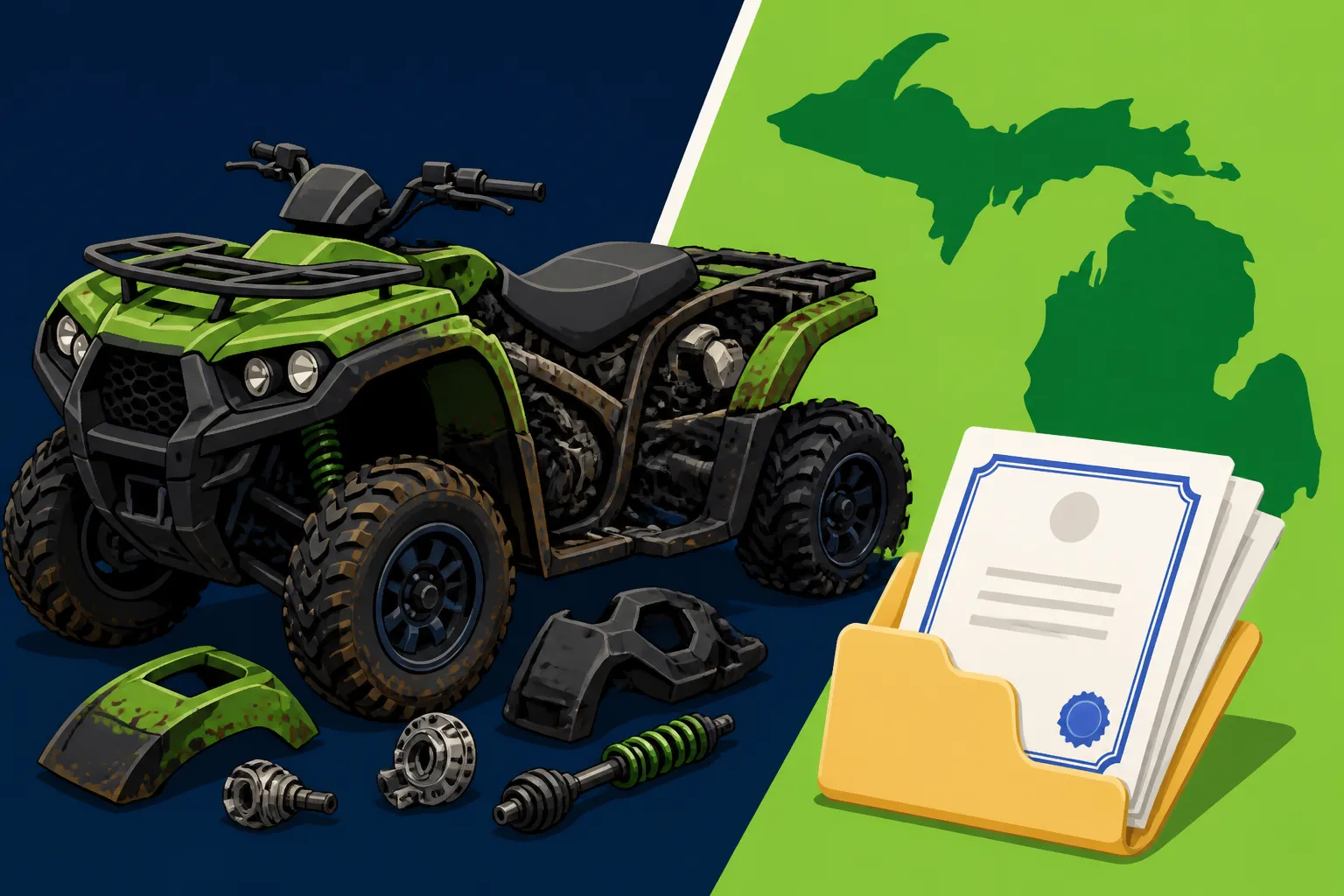
What if you're the one doing the stripping? You've got the tools and the know-how, and you'd rather maximize your return by selling off individual components like fenders, wheels, seats, suspension parts, or even the engine. In this common scenario, most of these smaller components don't have a VIN and therefore don't require a title transfer when sold. You're just selling spare parts.
However, the frame is the big exception. The frame is the foundation of the ORV and is where the official VIN is stamped. If you completely strip the ORV down and destroy the frame (for instance, by cutting it up and taking it to a scrap metal yard), then the "vehicle" itself, as recognized by the title, essentially ceases to exist. In this specific case, you would typically follow the process for [Scrapping an ORV in Michigan and the Title You Surrender]. This involves surrendering your title to the Michigan Secretary of State, indicating that the ORV is no longer a functional vehicle. Once the title is surrendered, the remaining components are truly just parts, with no direct title implications. This is often the cleanest break if the machine is truly beyond repair.
Selling the Frame with the VIN Attached
This is arguably the most complicated scenario when dealing with a parts machine. Let's say you've stripped everything off your ORV except the bare frame, and now you want to sell just that frame because it's still usable, perhaps for someone wanting to build a custom machine or replace a damaged frame. Since the VIN is permanently attached to the frame, you are still dealing with the core identity of the vehicle.
In Michigan, the title follows the VIN. If you sell the frame with the VIN intact, the buyer would ideally need the original title to eventually register or rebuild a vehicle around that frame. Selling a VIN-bearing frame without its corresponding title can lead to significant headaches for the buyer, who might find it very difficult, if not impossible, to legally title a new machine built on that frame. While you could create a bill of sale for "parts only" for the frame, the underlying issue of the missing title for that VIN remains. It's always best to have the title, even if you are only selling the frame. If you're in this situation, it's highly advisable to reach out to the Michigan Secretary of State for specific guidance, as procedures for these niche situations can sometimes require special attention. They might advise you to obtain a replacement title first if yours is lost, or to follow the scrap process if the intent is truly to prevent it from ever being a titled vehicle again.
Navigating the Title Transfer Process (or Lack Thereof)
Understanding when and how to handle the title is crucial when selling an ORV for parts in Michigan. It's not always about a full transfer; sometimes, it's about making sure you officially divest yourself of responsibility for the machine's VIN.
When a Full Title Transfer Is Necessary
A full title transfer is necessary whenever you are selling the entire ORV, even if it's currently a non-running parts machine. The buyer is acquiring the complete unit, including its identity (the VIN on the frame), and therefore needs to have legal ownership documented. This is the cleanest and most common way to handle it if the machine is going to another individual in one piece.
Here’s how it usually goes:
- Sign Over the Title: You, as the seller, will fill out the seller's portion on the back of the Michigan ORV title. This includes signing it, printing your name, and typically noting the sale date and odometer/hour meter reading (even if it's "unknown" or "inoperable" for a parts machine). The buyer then takes this signed title to the Secretary of State. You can find more details on this process in [Michigan Title Transfer When You Buy From a Private Seller].
- Bill of Sale is Key: Alongside the title, a comprehensive bill of sale is non-negotiable. This document should clearly state that the ORV is "sold as-is, for parts only, non-running, with no warranty expressed or implied." This protects you from any future claims about its functionality. Services like LawDepot offer excellent templates for creating a robust bill of sale that covers all your bases.
- Buyer’s Responsibilities: The buyer will need to present the signed title and bill of sale to the Michigan Secretary of State. They will then pay the title transfer fee and any applicable sales tax. While they may not intend to ride it immediately, getting the title into their name is essential for legal ownership.
Dealing with a Lost or Missing Title
What if you're ready to sell your non-running ORV for parts, but you can't find the title anywhere? This definitely complicates things. You can't transfer a title you don't possess. Trying to sell a complete ORV (even for parts) without a title can be a major red flag for potential buyers and can lead to significant legal headaches for both parties. [Selling an ATV in Michigan Without a Title: What Goes Wrong] outlines some of these pitfalls.
If your title is lost, your first step should be to apply for a replacement title with the Michigan Secretary of State. You'll likely need your ORV's VIN and proof of your ownership (like an old registration, a bill of sale from when you bought it, or even payment records). There will be a fee for a replacement title. You can read more about this process in [Replacing a Lost Michigan ORV Title]. Once you have the replacement title in hand, you can proceed with the sale as if you had never lost it.
If obtaining a replacement title isn't possible, or if the ORV never had a title in your name, then you're venturing into more complex territory. [Proof of Ownership When a Michigan ORV Has No Title] discusses alternative ways to establish ownership, which might be necessary before you can even consider selling for parts, especially if the frame with the VIN is included. In some rare cases, for very old machines, or those with significant ownership gaps, you might even need to explore options like a [Bonded Title for an ATV in Michigan] or getting a court order, but these are extreme measures usually only pursued if the machine is intended for rebuilding and full use.
The "Scrap" or "Junk" Title Option
If your ORV is truly beyond repair and you intend to dismantle it completely, or simply dispose of the frame, the "scrap" option might be the cleanest solution. Michigan has a process for surrendering a vehicle's title when it is being permanently taken out of service and scrapped. This officially removes the ORV's VIN from the state's active records.
Here's how it generally works: You would visit a Michigan Secretary of State branch, inform them you are scrapping the ORV, and surrender your title. They may issue you a "certificate of junk" or similar document, indicating that the vehicle is no longer considered a roadworthy or registerable ORV. Once this is done, the VIN is effectively retired, and any remaining components are unequivocally "parts" without any title implications. This is an excellent way to completely wash your hands of the machine and ensure you have no future liability associated with that VIN.
Consider the implications of each approach:
| Feature/Action | Selling As-Is with Title (for parts) | Surrendering Title for Scrap, then Parting Out |
|---|---|---|
| Title Status | Signed over to buyer. Buyer titles in their name. | Title surrendered to state; VIN retired. No further title exists. |
| VIN on Frame | Transferred to new owner. Buyer could rebuild and re-title. | VIN removed from active records. Rebuilding becomes very difficult. |
| Liability for Seller | Minimal once title and bill of sale are complete. | None, as the vehicle no longer officially exists. |
| Buyer’s Ability to Rebuild | Possible, though machine sold "as-is for parts." | Extremely difficult, often requiring special processes. |
| Paperwork Needed | Original title, detailed bill of sale (e.g., from LawDepot). | Original title (to surrender), Secretary of State form. |
| Best For | Selling a complete non-runner to someone who wants to tinker or part out. | Dismantling and scrapping the frame; clear, permanent disposal. |
Protecting Yourself Legally
Selling an ATV or UTV for parts, even a non-running one, involves legal responsibilities. It’s crucial to take the right steps to protect yourself from future issues. The last thing you want is to be held accountable for a machine you no longer own, or to face complications because of inadequate paperwork.
The Importance of a Detailed Bill of Sale
Even if you're only selling a heap of metal that barely resembles an ORV, a detailed bill of sale is your absolute best friend. Think of it as your legal shield. It clearly documents the transaction and the agreed-upon condition of the item being sold. Without it, you leave yourself vulnerable to misunderstandings or even false claims down the line.
Here’s what your bill of sale, like one you could generate with LawDepot, should explicitly include:
- Seller and Buyer Information: Full legal names, addresses, and contact details for both parties.
- ORV Description: Make, model, year, and crucially, the Vehicle Identification Number (VIN).
- Condition of Sale: This is where you are absolutely explicit. State unequivocally: "Sold AS-IS, FOR PARTS ONLY, NON-RUNNING. No warranty, expressed or implied, is made regarding the condition, performance, or suitability of this vehicle for any purpose." This language is critical.
- Sale Price: The agreed-upon amount.
- Date of Sale: The exact date the transaction occurred.
- Signatures: Signatures from both the seller and the buyer.
- Disclosure of Known Defects: While selling "as-is" covers you broadly, it's always good practice to mention any obvious major defects, even if you think the buyer sees them (e.g., "blown engine," "bent frame"). Transparency builds trust and further reinforces the "for parts" nature of the sale.
Creating two copies, one for you and one for the buyer, is a smart move. Keep your copy of the signed bill of sale indefinitely. It’s proof that you transferred ownership and released the vehicle in its described condition. You can find more comprehensive details in [Michigan ATV Bill of Sale Template Requirements].
Avoiding Future Liability
Once you've sold your ORV for parts, your goal is a clean break. You don't want to worry about what the next owner does with it or be held responsible for something that happens after the sale. This is where proper documentation really pays off.
- Proper Title Transfer or Surrender: As discussed, either signing over the title to the buyer (for a complete parts machine) or surrendering the title to the Secretary of State (if you're scrapping the frame) is paramount. This legally removes your name from the vehicle's ownership record.
- Keep Your Records: Always keep copies of the signed title (before you give it to the buyer), the detailed bill of sale, and any receipts or forms from the Secretary of State if you surrendered the title. These documents are your evidence that you legally divested yourself of the ORV.
- Notify Your Insurance: If the ORV was insured, make sure to cancel the policy once the sale is complete. This prevents any ambiguity about coverage.
By meticulously following these steps, you create a clear paper trail that demonstrates you are no longer the owner and are not responsible for the ORV's future.
What if the Buyer Tries to Rebuild and Title It?
Let's say you sold your non-running ATV "as-is, for parts" with a properly signed-over title. What if the buyer, despite the "for parts" designation, manages to work some mechanical magic and rebuilds the machine? Can they then legally title it and ride it?
Yes, they absolutely could. If you properly transferred the title to them, they are the legal owner of that VIN. If they then invest the time and money to make it a functional ORV, they would go through the process of titling and registering it for use. As long as you were honest about its condition at the time of sale and have a solid bill of sale stating it was sold "for parts," you've fulfilled your obligation. Their decision to rebuild and their ability to get it titled as a rebuilt vehicle (perhaps even a [Titling a Rebuilt or Homemade UTV in Michigan]) is on them, not you.
However, if you opted to surrender the title for scrap, the situation is much different. With the VIN officially retired and the title voided, it becomes significantly more challenging for anyone to legally rebuild and re-title that particular machine. They might face substantial hurdles at the Secretary of State, potentially requiring a [Bonded Title for an ATV in Michigan] or other extensive processes to prove legitimate ownership and overcome the "scrapped" status. This is why surrendering the title for scrap is often considered the most permanent and liability-free way to dispose of a truly defunct ORV.
Disclaimer
This article is for general informational purposes only and does not constitute professional advice. Laws, prices and regulations vary by location and change over time. Consult a qualified professional for guidance on your specific situation.