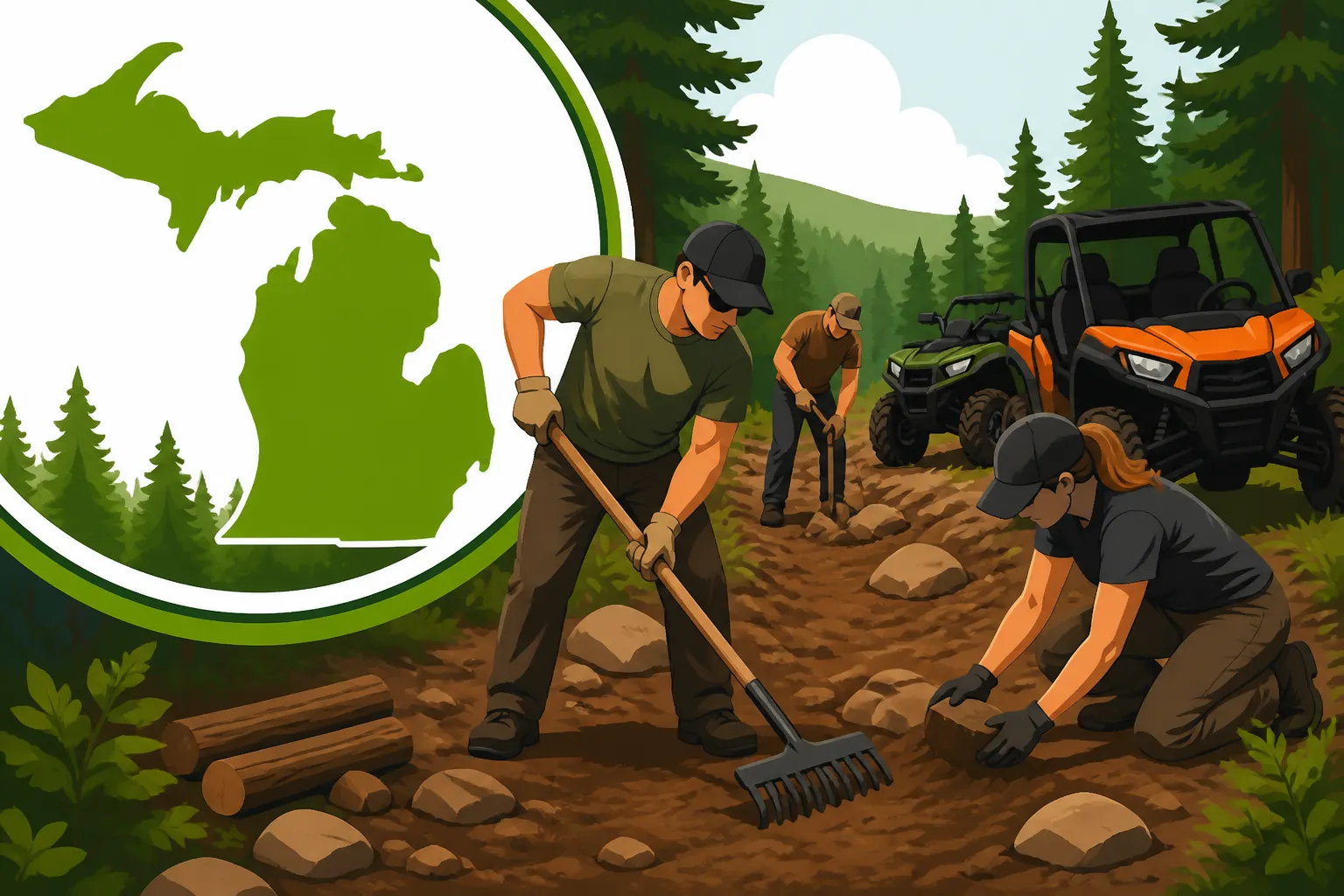
Volunteer Trail Work on Michigan ORV Trails
A fallen branch, washed-out rut, or missing trail marker can turn a favorite Michigan ORV ride into a frustrating detour—or a safety problem. Volunteering helps keep trails usable, but good intentions aren’t enough: work needs coordination, permission, and the right tools. This guide explains how to find a project, what volunteers typically do, and how to help without damaging trails or putting riders at risk.
What Michigan ORV trail volunteers do
Trail work can mean much more than clearing a tree. Depending on the site and project, volunteers may help with routine maintenance, repairs after storms, sign checks, litter pickup, or improvements to a staging area. The right job depends on the trail, current conditions, and what the land manager or project organizer has approved.
Trail systems such as St. Helen, Tin Cup Spring, and the Little O are useful examples of how varied Michigan riding areas can be. A task that makes sense on one route may not be suitable on another. Before planning a workday, understand Who Maintains Michigan ORV Trails and how maintenance fits into the broader Michigan ORV Trail Maintenance and Who Pays for It picture.
Common types of volunteer work
Some projects are light and practical: picking up litter, checking whether signs are visible, or noting a damaged marker for the organizer. Other work may involve removing small debris, repairing a feature, or helping prepare a staging area. These jobs still need clear instructions. A volunteer should not assume that a shovel, chainsaw, or ATV gives them permission to alter a trail.
Trail drainage is another concern. Water can gather in low spots, widen ruts, or create muddy sections that riders try to avoid by driving around the problem. That can make a trail wider and more vulnerable to further damage. Drainage work should be planned and approved by the people responsible for the route, not improvised by riders during a visit.
Some volunteer contributions happen without heavy tools. You can help by reporting a downed tree, a washed-out section, a blocked sign, or a safety concern to the appropriate contact. A useful report includes the trail or area, a clear description, and a nearby landmark or location pin. If conditions are unsafe, don’t put yourself or other riders in danger to gather extra details.
Why you should not do trail work on your own
It’s tempting to move a branch out of the way or cut around a muddy spot so the ride can continue. But even a small change can affect trail width, drainage, habitat, or access for maintenance crews. A route may cross public land with specific management requirements, private property, or an area where work has been restricted. Riders may not know which applies just by looking at the trail.
The safest rule is simple: report a problem and ask before fixing it. That applies especially to cutting trees, moving large obstacles, digging, rerouting a trail, or changing signs. If a club or land manager has organized an approved workday, follow that project’s scope. A task briefing is not red tape; it helps keep everyone working on the same plan.
| Volunteer task | What it may involve | Best approach |
|---|---|---|
| Litter pickup | Collecting debris in an approved area | Ask about disposal and any restricted zones |
| Trail observation | Noting hazards, erosion, or damaged signs | Record the location and report it |
| Light cleanup | Removing small debris when authorized | Confirm what can be moved and where it goes |
| Repair work | Addressing drainage, erosion, or trail features | Join an organized project with clear direction |
| Staging-area help | Tidying or assisting with an approved improvement | Check the project plan and safety guidance |
How to find a volunteer opportunity
A good starting point is the group or land manager connected with the trail you ride. Ask whether there are scheduled workdays, what kinds of help are needed, and whether volunteers need to bring tools or protective gear. A local ORV club may know about upcoming projects, but confirm that the work is authorized and that you have the correct meeting location and instructions.
If you ride a particular area often, your local knowledge can be valuable. You may recognize a washed-out corner or notice that a marker is hard to see. Still, regular familiarity does not replace project approval. The person coordinating the work can tell you whether the issue is already known, whether a repair is planned, and whether a section is temporarily closed.
Contact clubs and project organizers
Start with a club that organizes rides or trail-related activities in the region you visit. You can ask whether it coordinates volunteer work directly or can point you toward the responsible contact. Michigan ORV Club Trail Rides can be a useful way to get acquainted with local riding communities, but a group ride and a trail-work project are different activities. Ask specifically about volunteer maintenance rather than assuming that ride leaders are organizing it.
When you reach out, be specific about what you can offer. For example, you might say you can help for a morning, have experience with hand tools, or are willing to do non-tool tasks such as carrying supplies or picking up litter. If you don’t have trail-work experience, say so. Organizers can assign a suitable job and explain what to bring.
It also helps to ask a few practical questions before heading out: Is the workday open to new volunteers? Is there a designated meeting point? What clothing and protective equipment are expected? Will tools be provided? Is the project still happening if the weather changes? A quick confirmation prevents the unpleasant experience of arriving at the wrong place with the wrong equipment—or discovering that the workday was postponed.
Check maps and current trail conditions
A map can help you understand the riding area, but it does not tell you whether a work project is approved or underway. Use Michigan ORV Trail Maps and What the Signs Mean to get familiar with route markers and trail layout, then confirm work details with the organizer. A navigation app such as onX Offroad can help you orient yourself and identify a location to describe when reporting an issue, but it should support—not replace—official information and project instructions.
Trail status can change after storms, maintenance, or seasonal restrictions. Check Michigan ORV Trail Closures and Seasonal Dates before planning a ride or volunteer visit. A closed section is not an invitation to bypass a barrier, even if the route looks passable. Work crews may need the area clear, or the closure may protect a damaged trail while it recovers.
If you use onX Offroad to save a map or drop a pin, treat that information as a navigation aid. Confirm that you are in the correct area, and share the pin with the organizer in the format they request. A GPS location can make a report much more useful than “the muddy spot near the woods,” but it does not establish permission to enter a closed or restricted area.
Prepare for a safe, useful workday
Trail work can be physically demanding, and conditions may be different from what you experience during a ride. A shaded path can be wet and slippery; a sunny staging area can become hot; insects and uneven ground can make a short task more tiring than expected. Plan for the work, not just the drive to the trailhead.
Before leaving, confirm the meeting time, location, and task. Pack water, suitable clothing, sturdy footwear, gloves, and any protective equipment the organizer requests. If the project involves tools, don’t bring or use equipment unless the coordinator has approved it. A tool that is useful in a yard may be inappropriate or unsafe in a trail environment.
Bring the right supplies and expectations
A practical workday bag might include drinking water, snacks, weather-appropriate layers, gloves, eye protection if requested, and a charged phone. If the organizer asks you to bring a particular tool, check that you know how to use it safely. Don’t bring hazardous materials, fuel, or powered equipment unless the project lead has specifically asked for them and explained how they’ll be managed.
Your role may be less dramatic than you imagined. You might carry materials, help sort supplies, pick up trash, or observe and report conditions while experienced volunteers handle technical work. That is still meaningful help. A careful report or a few hours of support can be more useful than an enthusiastic but unauthorized repair.
If you are riding to or from a volunteer day, keep the work activity separate from recreational riding. Follow the route and site instructions, leave room for vehicles and equipment, and do not assume that a trail is open just because volunteers are present. When riding on shared routes, review Trail Etiquette on Shared Routes so your arrival and departure don’t create extra problems for other users.
Work safely around riders and equipment
An active trail can have machines approaching from a bend, a staging area, or an adjoining route. Stay where the coordinator directs you and follow the group’s signals. Don’t stand in a blind corner, step into a machine’s path, or leave tools where riders could strike them. If the work area needs to be separated from traffic, follow the organizer’s process for keeping riders clear.
Use tools only for the assigned task and stop if you are uncertain. Ask for help rather than guessing how to move a heavy limb or handle a powered tool. Lifting with a partner, keeping hands clear of pinch points, and taking breaks are basic precautions, but the project lead’s instructions take priority. If someone is injured or the site becomes unsafe, stop work and alert the coordinator.
Weather matters, too. Rain can make slopes and roots slick, while high heat can make outdoor work exhausting. Don’t feel pressured to continue if you’re becoming unwell or uncomfortable. Tell the organizer, take a break, and follow the group’s plan. A volunteer who knows their limits is safer and more dependable than one who pushes through a risky situation.
Make your help count beyond one workday
Not every useful contribution happens with a tool in hand. Responsible riding reduces the wear and conflict that create additional maintenance challenges. Stay on the marked route, avoid widening muddy sections, and respect closures and private property. If you encounter a problem, report it rather than making an unapproved detour.
You can also help by sharing accurate information with other riders. If someone asks about a blocked section, don’t repeat a guess as fact. Direct them to the trail manager’s updates or the relevant official map. During busy periods, courteous behavior matters; Michigan ORV Trail Crowding on Holiday Weekends is a reminder that considerate riding helps protect both the trail experience and the people working to maintain it.
Report problems clearly and promptly
A useful report is specific, calm, and easy to act on. Include the area or route name, what you observed, when you noticed it, and a nearby landmark. If you can share a location pin safely, do so. A photo may help explain a damaged sign or obstacle, but only take one if you can do it without entering a closed area or putting yourself in traffic.
Use the appropriate contact for the property or trail system. A local club may be able to direct your message, while a land manager may handle official maintenance concerns. For issues involving trail damage or hazards, Reporting Trail Damage to the Michigan DNR can help you think through what information to provide and where to direct a report. Avoid posting unconfirmed claims that a route is closed or unsafe; inaccurate updates can send riders the wrong way.
After reporting, give the organizer time to respond. Some issues need assessment, equipment, or coordination before anyone can address them. If you later see that the condition has changed, send a brief update through the same channel. That helps the people responsible understand whether the issue is still present without creating duplicate, conflicting reports.
Stay involved without overcommitting
You don’t need to promise every weekend to be a helpful volunteer. Start with one workday, learn how the group operates, and decide whether the schedule and tasks suit you. Some people are comfortable with physical work; others are better at organizing, communicating, documenting trail conditions, or helping with supplies. Consistent, realistic support is more valuable than an ambitious commitment that becomes hard to keep.
If you ride with friends or family, invite them to learn about the next project, but let the organizer know how many people may attend. A workday has limited space, tools, or supervision in some cases. Children and inexperienced helpers need clear direction and close supervision, and they should only take part if the organizer confirms that the activity is appropriate for them.
Finally, treat volunteer work as part of responsible trail use, not a way to earn special access or ignore rules. Helping maintain a trail does not give anyone permission to ride through a closure, alter a route, or use equipment outside the approved task. The best volunteer is someone who leaves the site safer, respects the plan, and helps other riders understand why careful stewardship matters.
Disclaimer
This article is for general informational purposes only and does not constitute professional advice. Laws, prices and regulations vary by location and change over time. Consult a qualified professional for guidance on your specific situation.