Michigan State Park Roads and ORV Access
Many Michigan off-road vehicle (ORV) enthusiasts dream of taking their ATVs and UTVs through the stunning landscapes found within our state parks. It's a natural thought – these parks boast incredible scenery, diverse terrain, and often feel like the perfect backdrop for an adventure. However, the reality of navigating ORV access within Michigan State Parks can be a frustrating maze of rules and restrictions, often leaving riders scratching their heads about what's actually allowed. This guide aims to clear up that confusion, explaining where your ORV can and cannot go, and what you need to know before you ever load up your machine and head for a state park.
The General Rules for ORV Use in Michigan State Parks
It’s easy to assume that if you have a valid ORV license and a trail permit, you can ride just about anywhere public land exists. Unfortunately, when it comes to Michigan State Parks, that assumption often leads to disappointment – and sometimes, a hefty fine. The Department of Natural Resources (DNR) manages these precious lands with specific goals in mind: conservation, recreation, and visitor safety. This means that while some areas are definitely open to ORVs, others are strictly off-limits, even if they look like tempting trails.
Understanding Michigan's ORV Regulations
Michigan has a comprehensive set of regulations for ORVs, but these are generally applied to state forests, designated ORV trail systems, and specific county roads that have adopted ordinances to allow ORV use. State parks, while also DNR-managed, fall under a slightly different umbrella of rules, usually with more stringent restrictions on motorized vehicles. The core idea behind state parks is often passive recreation – hiking, picnicking, camping, fishing, and non-motorized boating. The peace and quiet these activities require are often incompatible with the sounds and impacts of ORVs. It's not about being anti-ORV; it's about managing different types of recreation in appropriate zones.
You might have heard about Michigan's efforts to open more roads to ORVs, and indeed, many counties now allow ORVs on their maintained shoulders or even the full width of certain roads. This is fantastic news for riders looking to connect trails or access local services. However, it's critical to understand that these county road allowances usually do not extend into the heart of a state park. The park boundaries often act as a hard stop for these broader ORV road allowances. If you’re coming from a county road, you'll likely need to load your machine back on a trailer once you hit the park entrance.
The "No ORVs on Maintained Roads" Principle
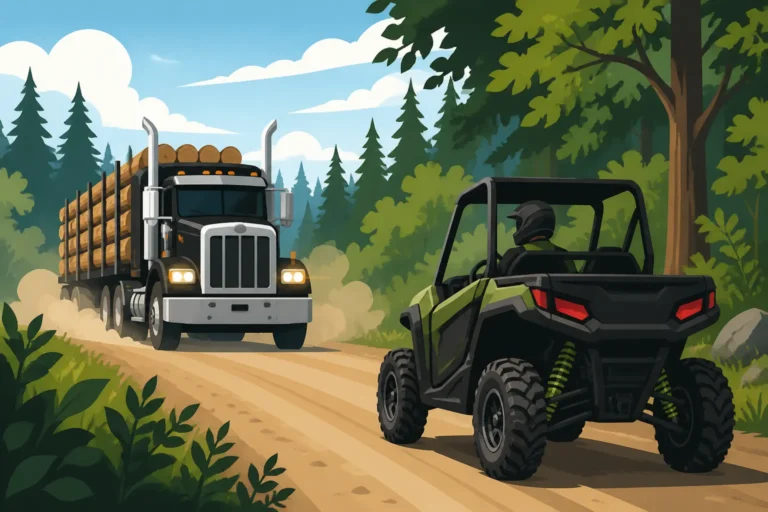
Here's the golden rule for most Michigan State Parks: ORVs are generally NOT allowed on maintained park roads. This means the paved or gravel roads you use to drive to campgrounds, boat launches, visitor centers, or trailheads are typically off-limits for your ATV or UTV. Think of these roads just like any other public road that isn't specifically designated for ORV use. You wouldn't drive your side-by-side down a city street unless it was made street legal and permitted by local ordinance, and the same principle largely applies within state parks.
This rule is in place for several reasons. First, safety. Park roads are shared by cars, pedestrians, cyclists, and families with young children. Introducing ORVs can create significant safety hazards due to speed differentials, noise, and the potential for collisions. Second, wear and tear. While ORVs are designed for rugged terrain, park roads often aren't built to handle the unique stress and wear pattern that ORV tires can inflict, leading to quicker degradation of surfaces. Third, the visitor experience. Many people visit state parks seeking tranquility and immersion in nature. The sound of engines, even well-muffled ones, can detract from that experience for others. While you might be allowed to cross a state highway on an ORV in some areas, simply riding down a park road is a different matter.
Where ORVs Are Allowed (and Where They Aren't)
Now that we’ve covered the general "no-go" zones, let's talk about where you can potentially enjoy your ORV within the broader state park system or adjacent lands. It's not all doom and gloom, but it requires careful planning and understanding of specific designations.
Designated ORV Trails and Routes
The primary place you'll find legal ORV access within or directly connected to Michigan State Parks are on designated ORV trails and routes. Michigan has an extensive network of thousands of miles of ORV trails, many of which pass through or are very close to state forest land, and occasionally, directly adjacent to state parks. These trails are clearly marked with ORV trail signs and are specifically managed for off-road use.
For instance, while you might not be able to ride through the main campground of a state park, a designated ORV trail might run along the park's perimeter or pass through a section of state forest land that abuts the park. The key here is "designated." You absolutely cannot create your own path or assume that any unpaved two-track is fair game. Always check official Michigan DNR ORV trail maps before heading out. These maps will clearly show which trails are open to ORVs, their difficulty ratings, and any specific width restrictions for machines.
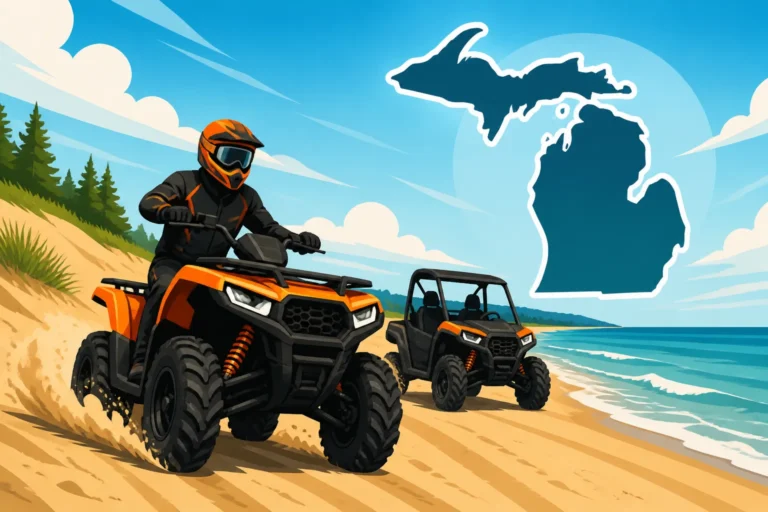
One excellent example of a state-managed recreational area where ORVs are the main attraction is the [Silver Lake Sand Dunes]. While not a typical "state park" in the sense of quiet hiking trails, Silver Lake State Park is home to Michigan's only area where privately owned ORVs can operate on the sand dunes. This is a very specific, highly managed environment with its own set of rules and permits, clearly designed for motorized recreation. Other designated ORV scramble areas or routes might be managed in a similar fashion, but these are the exceptions, not the rule, for the typical Michigan State Park.
Park Roads vs. Trail Access Points
It’s crucial to distinguish between driving on a park road and using a park road to access a designated ORV trail. Sometimes, a state park may have a specific parking area or staging ground that is intended for ORV users to unload their machines and directly access a nearby designated trail. In these instances, you might drive your truck and trailer on a park road to reach that staging area. However, once your ORV is off the trailer, it should only be ridden on the marked trail, not on the park's internal roads.
Always look for clear signage indicating ORV staging areas or trailheads. If there's no specific sign or designated area, assume ORV operation is prohibited on park roads and general recreation areas. Don't try to "make do" with a regular parking lot unless it explicitly says ORVs are permitted to stage there. The DNR has specific rules about [Michigan ORV Staging Areas and Parking]. If you're unsure, it's always best to contact the park office directly or check the official DNR website for the specific park you plan to visit.
Exceptions and Special Use Areas
While the general rule is restrictive, there can be very limited, specific exceptions or special use areas. These are rare and will always be heavily signed and clearly communicated by the DNR. For example, some remote administrative roads within larger state park boundaries that lead to utility access points or maintenance facilities might occasionally be used by ORVs under special permit for specific purposes (like staff accessing remote areas for repairs). However, this is not for general public recreational use.
Another area where some confusion can arise is regarding state forest campgrounds that are sometimes within or very close to state parks. While ORVs might be allowed to travel from your campsite directly to a designated ORV trail within a state forest campground, this privilege rarely extends to traversing the main roads of a full-fledged state park. Again, the distinction between "state forest" and "state park" is critical, even though both are managed by the DNR. It's a nuance that many riders miss.
Preparing Your ORV for Park Access
If you've identified a state park or adjacent land with legitimate ORV access, you'll need to ensure both you and your machine are ready to ride responsibly and legally. This isn't just about throwing on your helmet; it's about having the right paperwork and understanding your vehicle's limitations.
Essential Permits and Safety Gear
First and foremost, your ORV needs to be properly licensed and permitted for Michigan's trails. This means you'll need a current Michigan ORV License and an ORV Trail Permit. These stickers must be displayed on your machine. You'll also need a Recreation Passport for your towing vehicle, which grants access to Michigan's state parks and recreation areas. If you try to enter a state park without a Recreation Passport on your vehicle, you'll be charged a daily entry fee. Having these permits helps fund the very trails and facilities you use, so it's a critical part of being a responsible rider. You can find information on [Michigan ORV License and Trail Permit Explained].
Safety gear is non-negotiable. Always wear a DOT-approved helmet when riding your ORV, even if you’re just moving it a short distance. Eye protection, gloves, long pants, and sturdy over-the-ankle boots are also essential. Remember, even on designated trails, conditions can change quickly, and accidents can happen. Having a [Michigan ORV Safety Certificate Requirements] is mandatory for youth riders and highly recommended for everyone else, regardless of age.
Vehicle Requirements and Modifications
Beyond permits, your ORV itself needs to meet Michigan's requirements. This includes having a working spark arrestor on your exhaust system to prevent wildfires, and a muffler that keeps noise levels within legal limits. You might also consider useful accessories for trail riding. Companies like SuperATV offer a wide range of aftermarket parts, from durable skid plates to improved suspension components, that can enhance your machine's capability and comfort on rugged trails. While these modifications aren't typically required for basic legal access, they can make your riding experience safer and more enjoyable, especially on challenging terrain.
Another crucial item is proper lighting. If you plan to ride anywhere near dusk or dawn, or if you ever find yourself on a trail that crosses a road (even briefly), having working headlights, taillights, and brake lights is a must. Many state forest trails are tight, and visibility can be limited, so making sure your lights are in top shape is a wise move.
Navigating the Rules: Tips for Responsible Riding
Understanding the letter of the law is one thing, but practicing good trail etiquette and doing your due diligence before you ride is equally important. Being a responsible ORV enthusiast helps ensure that access remains open for everyone.
Checking Park-Specific Ordinances
Never assume that the rules for one state park are the same for another. While the DNR sets general guidelines, individual parks or recreation areas might have specific local ordinances or temporary restrictions in place due to weather, maintenance, or special events. Always check the Michigan DNR website for the specific state park you intend to visit. Look for sections on "ORV Use," "Recreation," or "Rules and Regulations."
A quick phone call to the park office before you leave home can save you a lot of time and frustration. Ask direct questions: "Are there any designated ORV trails accessible directly from this park?" "Are ORVs allowed on any of the internal park roads, even for short distances?" "Where is the designated ORV staging area for trail access?" Getting clear answers upfront is the best way to avoid misunderstandings. Keep your [Michigan ORV Paperwork During a DNR Stop] handy in case you encounter a conservation officer.
Respecting the Environment and Other Users
Even on designated ORV trails, remember that you are sharing the outdoors with many other users and are responsible for protecting the natural environment.
- Stay on Marked Trails: This is paramount. Going off-trail damages vegetation, disturbs wildlife, and can lead to trail closures.
- Yield to Others: Hikers, cyclists, and equestrians often share multi-use trails or have priority on certain routes. Be courteous, slow down, and give them plenty of space.
- Pack It In, Pack It Out: Don't leave any trash behind.
- Control Noise: While ORVs make noise, try to keep it to a minimum, especially near campgrounds or sensitive wildlife areas. No excessive revving or illegal exhaust systems.
- Respect Wildlife: Give animals space and never harass them.
- Follow Speed Limits: Even on trails, there are often posted speed limits, and exceeding them is unsafe and illegal. [Michigan ORV Speed Limit on Gravel Roads] provides context for what might be acceptable.
By adhering to these principles, you contribute to a positive image for ORV riders and help preserve access for future generations.
Michigan State Park ORV Access: Do's and Don'ts
| Category | Do's | Don'ts |
|---|---|---|
| Location | Ride only on clearly designated ORV trails and routes. | Do NOT ride on maintained park roads, campgrounds, or undesignated areas. |
| Use designated ORV staging areas to unload and access trails. | Do NOT create new trails or go off-road unless it's a scramble area. | |
| Check official DNR ORV trail maps for specific park connections. | Do NOT assume any two-track or unpaved road is open to ORVs. | |
| Permits & Gear | Have a current Michigan ORV License, Trail Permit, and Rec Passport. | Do NOT forget your DOT-approved helmet and other essential safety gear. |
| Ensure your ORV has a working spark arrestor and legal muffler. | Do NOT operate an ORV without proper identification and permits. | |
| Etiquette | Stay on marked trails to protect the environment. | Do NOT litter or leave any trash behind. |
| Yield to hikers, cyclists, and equestrians. | Do NOT harass wildlife or disturb other park users with excessive noise. | |
| Check park-specific rules and conditions before you go. | Do NOT ignore posted signs or assume rules from one park apply to all. |
Conclusion
Navigating the rules for ORV access in Michigan State Parks might seem complicated, but it truly boils down to understanding the distinct roles of different public lands. While the vast majority of state park roads are off-limits to recreational ORV use, the good news is that Michigan offers an incredible network of designated ORV trails and routes, many of which are in close proximity to or pass through state forest lands.
Your best approach is always to be informed: check official DNR maps, call the park office directly, and ensure all your permits are current. By riding responsibly, staying on marked trails, and respecting the environment and other visitors, you can enjoy the thrill of off-roading while preserving the natural beauty of Michigan for everyone. Happy trails!
Disclaimer
This article is for general informational purposes only and does not constitute professional advice. Laws, prices and regulations vary by location and change over time. Consult a qualified professional for guidance on your specific situation.