Riding an ORV Inside a Campground Loop
It's a common dilemma, isn't it? You've loaded up the side-by-side, packed the camper, and are heading to your favorite Michigan campground, only to wonder, "Can I actually ride this thing once I get there?" Many of us arrive eager to explore, but the rules for operating an ORV within the confines of a campground loop can feel confusing, frustrating, and sometimes downright contradictory depending on where you pitch your tent. This guide will cut through the noise, clarifying exactly what Michigan law and campground policies typically allow when it comes to riding your ATV or UTV around your campsite.
Understanding the Landscape: DNR vs. Private Campgrounds
The biggest hurdle for many Michigan ORV enthusiasts when it comes to campground riding is the sheer variety of rules. It’s not a one-size-fits-all situation, and understanding the core distinction between state-managed lands and privately owned campgrounds is your first, most crucial step. Think of it like this: the rules for driving your car on a public road are different from the rules for driving it on private property, and the same often applies to your ORV within a recreational setting.
Michigan DNR Campgrounds: State-Specific Regulations
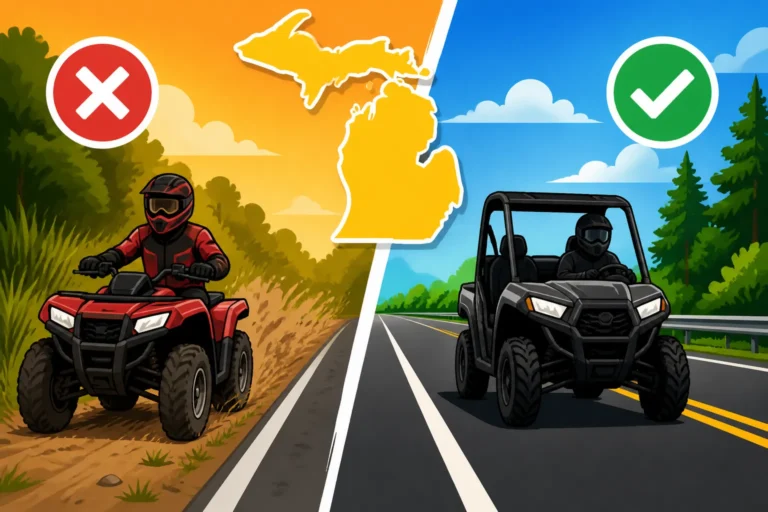
When you're staying in a Michigan Department of Natural Resources (DNR) campground – be it within a state park, state forest, or recreation area – you're essentially on state land. This means DNR rules and state statutes are the governing authority. Generally, ORVs are not permitted for casual riding within the campground loops themselves. The main reason for this strict approach is safety, noise, and preserving the tranquil experience for all campers. These areas are designed for low-speed vehicle traffic like cars and bicycles, not the louder, more robust nature of ORVs. The expectation is that you trailer your machine to an approved ORV trail or route, and then ride from there.
Now, there are some very specific exceptions. If the campground is directly adjacent to an approved ORV trail or route, you might be allowed to travel directly from your campsite to that trail and back again. This is usually for the sole purpose of ingress and egress, not for joyriding around the picnic tables. You'd need to go at a very slow, idle speed, often with specific time restrictions, and be ready to produce your [Michigan ORV License and Trail Permit Explained] if a conservation officer asks. The key here is "direct access" and "purpose of travel." You won't find yourself permitted to use your UTV to run down to the shower house or cruise the loop to visit friends at another site. Always check the specific campground's rules or call the park office ahead of time, because interpretations and local ordinances can sometimes add another layer of complexity.
Private Campgrounds: Owner's Discretion and Local Ordinances
Private campgrounds are a different beast entirely. Since they are private property, the owner or management sets the rules. This means you’ll find a much wider spectrum of policies. Some private campgrounds are incredibly ORV-friendly, even catering to riders with direct trail access, wash stations, and designated parking for trailers. In these places, you might find that riding your ORV on the internal roads is perfectly acceptable, albeit often with strict speed limits (think 5 mph), quiet hours, and perhaps even specific routes for ORV traffic. They might welcome your [Renting an ATV in Michigan] or bringing your own.
On the flip side, many private campgrounds, especially those not specifically geared toward ORV enthusiasts, might have a blanket "no ORV riding" policy within the campground itself. This could be due to insurance liabilities, noise concerns from other campers, or simply not having the infrastructure to safely accommodate them. They might allow you to transport your ORV on a trailer to your site for storage, but strictly forbid operating it until you're off their property and on an approved trail. When considering a private campground, it’s absolutely essential to consult their website, read their policies, or, better yet, call them directly to confirm their stance on ORV use before you book. Don't just assume because it's private land, anything goes – that's a quick way to get yourself in hot water and potentially ruin your trip.
The Fine Print: What to Expect and How to Be a Good Neighbor
Even in campgrounds where ORV use is permitted, either partially or fully, there are always rules and unwritten codes of conduct. Remember, a campground is a shared space where people come to relax, often with families and young children. Your enjoyment shouldn't come at the expense of someone else's peace.
Speed Limits and Safe Operation
This is probably the most universally enforced rule in any campground. Whether you're in a Michigan State Park or a private resort, the speed limit for all vehicles, including ORVs, is going to be extremely low – often 5 to 10 miles per hour, or even just an idle speed. Imagine a child on a bicycle, a family walking their dog, or someone pulling their garbage to the dumpster; you need to be able to stop on a dime. Exceeding these limits is not only dangerous but a sure way to draw unwanted attention from campground staff and fellow campers. It's not the place for showing off your machine's capabilities; it's about safe, respectful navigation.
Beyond speed, operate your ORV responsibly. Keep all wheels on the ground, avoid sudden acceleration or braking, and never do anything that could be perceived as reckless or disruptive. Campground roads are usually gravel or dirt, and dusty conditions are a reality. Drive slowly enough to minimize dust kick-up, especially around other campers' sites. For accessories that help with visibility and safety at lower speeds, brands like SuperATV offer mirrors and additional lighting kits that can be very useful for navigating crowded areas, allowing you to clearly see children or pets that might dart out unexpectedly.
Noise, Quiet Hours, and Respect for Others
ORVs, by their very nature, can be noisy. Even stock machines produce more engine and exhaust sound than a typical passenger car. This is where being a good neighbor truly comes into play. Most campgrounds have strict quiet hours, typically from 10 PM to 7 AM, during which excessive noise is absolutely forbidden. Even outside of these hours, consider the impact of your ORV's noise. Frequent, loud trips around the loop can quickly become annoying to others trying to enjoy nature or simply relax by their campfire.
If your ORV has an aftermarket exhaust system that makes it louder than stock, you might want to reconsider using it extensively within the campground, or at least be extra mindful of when and how you operate it. Some campgrounds may even have specific rules against excessively loud machines. The goal is to blend in, not to stand out for all the wrong reasons. Remember that many people are camping to escape the everyday hustle and bustle, and the rumble of an ORV can be a significant disturbance.
Designated Parking and Trail Access
In campgrounds that do allow some ORV activity, there will often be designated parking areas for trailers and ORVs. You might not be allowed to park your ORV directly on your campsite, especially if it's a smaller site or if it takes up space meant for your camping unit or other vehicles. Always adhere to these parking rules.
For DNR campgrounds, as mentioned, the primary allowance for ORVs is typically direct access to an approved ORV trail or route. This means you might be allowed to start your engine, drive at idle speed directly from your site to the trail, and then hit the trails. Upon return, you'd go directly back to your site. This isn't permission to cruise the campground. Look for signs indicating "ORV Route" or "Trail Access" and ensure your machine has the necessary [Michigan ORV License and Trail Permit Explained]. Don't assume. If you're unsure if a particular path leads to an approved trail, ask a park ranger or camp host.
Table of Campground ORV Rules (General Guidelines)
Here's a quick, general overview of what you might encounter regarding ORV rules in different Michigan campground types. Always verify with the specific campground you plan to visit!
| Feature/Rule | Michigan DNR Campground (State Parks, Forests) | Private Campground (Independent, Franchised) |
|---|---|---|
| Riding in Loops | Generally NOT Permitted. Exceptions for direct ingress/egress to adjacent ORV trails at idle speed. | Varies Widely. Some allow, some restrict to specific times/routes, many prohibit entirely. Must check specific policies. |
| Speed Limit | 5-10 mph or idle speed for all vehicles if allowed for ingress/egress. | Typically 5-10 mph or idle speed for all vehicles if allowed. Strict enforcement common. |
| Quiet Hours | Strictly enforced (e.g., 10 PM – 7 AM). ORV operation during these hours is almost always forbidden. | Strictly enforced, hours vary. ORV operation usually prohibited or heavily restricted. |
| Noise Levels | Stock exhaust levels expected. Excessively loud machines may attract attention even if allowed for access. | Owner's discretion. Some may have specific policies against excessively loud aftermarket exhausts. |
| Trail Access | Allowed for direct travel from site to approved ORV trails/routes only, not for general campground riding. | Many cater to riders with direct trail access. Always verify specific routes and rules. |
| ORV Storage at Site | Usually permitted, provided it fits and does not interfere with other campers. | Generally permitted for storage, but operational rules vary. |
| Required Permits/Licenses | [Michigan ORV License and Trail Permit Explained], [Michigan ORV Safety Certificate Requirements] for youth. | Typically requires valid state ORV registration/permits if operating, even if on private property that allows access to public trails. |
Avoiding Pitfalls: Penalties, Respect, and Legalities
Ignoring campground rules or state regulations regarding ORV operation can quickly turn a fun camping trip into a headache. Penalties can range from a polite warning to a hefty fine, eviction from the campground, or even legal consequences, especially if there's damage to property or injury to a person.
Consequences of Non-Compliance
If you're caught riding your ORV where it's not allowed, or operating it recklessly, expect intervention. In DNR campgrounds, a conservation officer or park ranger might issue a ticket for illegal operation of an ORV, trespassing, or disturbing the peace. Fines can vary, and repeated offenses could lead to being banned from state parks. For example, operating an untitled ORV in Michigan can lead to a penalty, as can operating an ORV without the proper permits. [Penalty for Operating an Untitled ORV in Michigan].
In private campgrounds, the management has the right to ask you to leave immediately, without a refund. This is their private property, and they can enforce their rules as they see fit. Word of mouth and online reviews can also spread quickly within the ORV community, and a reputation for being disrespectful won't do anyone any favors.
Educating Yourself and Your Family
Before you even leave home, make sure everyone in your riding party understands the rules. If you're bringing children who ride youth ATVs, review the [Youth ATV Size Rules Michigan Parents Should Know] and ensure they meet the [Michigan ORV Safety Certificate Requirements] if applicable. Explain why speed limits are so low and why noise needs to be controlled. This teaches them responsibility and respect for shared spaces.
It's also a good idea to keep copies of your ORV registration, title, and permits with your machine, or at least easily accessible. While you don't typically need to carry the original title on your person while riding, having proof of ownership and valid permits is crucial. [Michigan ORV Paperwork During a DNR Stop].
The Golden Rule: Be a Good Neighbor
Ultimately, riding your ORV in a campground loop boils down to respect and common sense. If a campground allows ORV use, fantastic! Enjoy it responsibly. If it doesn't, respect their policy and find approved trails nearby. There are thousands of miles of incredible [Where to Ride an ATV in Michigan] waiting for you.
Using your ORV in a campground isn't about covering ground quickly; it's about convenience for legitimate tasks or direct access to the trails. Whether it's to move gear from the truck to the campsite (if permitted) or just a short, slow ride to reach an approved trail, always prioritize safety, quiet, and courtesy. A little consideration goes a long way in ensuring everyone, including you, has a fantastic time outdoors.
Disclaimer
This article is for general informational purposes only and does not constitute professional advice. Laws, prices and regulations vary by location and change over time. Consult a qualified professional for guidance on your specific situation.