Michigan ORV Speed Limit on Gravel Roads
There's nothing quite like the feeling of heading out on your ATV or UTV, hitting those Michigan trails, and exploring the beauty our state has to offer. But let's be real, a lot of that adventure involves transitioning between designated trails and those sprawling gravel roads that connect them or lead you to your favorite gas station. This is where things can get a little murky, and the question often pops up: just how fast can you really go on a gravel road in Michigan with your ORV? It's a question that trips up a lot of riders, and this guide is here to clear the dust, explaining the rules, the reasons behind them, and how to navigate Michigan's diverse road system responsibly.
The General Rule for Michigan ORV Speed on Gravel Roads
When you're out there, enjoying the Michigan scenery, it's easy to get caught up in the moment. You've just come off a winding trail, the road opens up, and you might think you can really open up your machine. However, the state of Michigan has pretty clear guidelines, and sticking to them isn't just about avoiding a ticket—it's about everyone's safety and keeping these roads open for ORV use.
Understanding the 25 mph Default
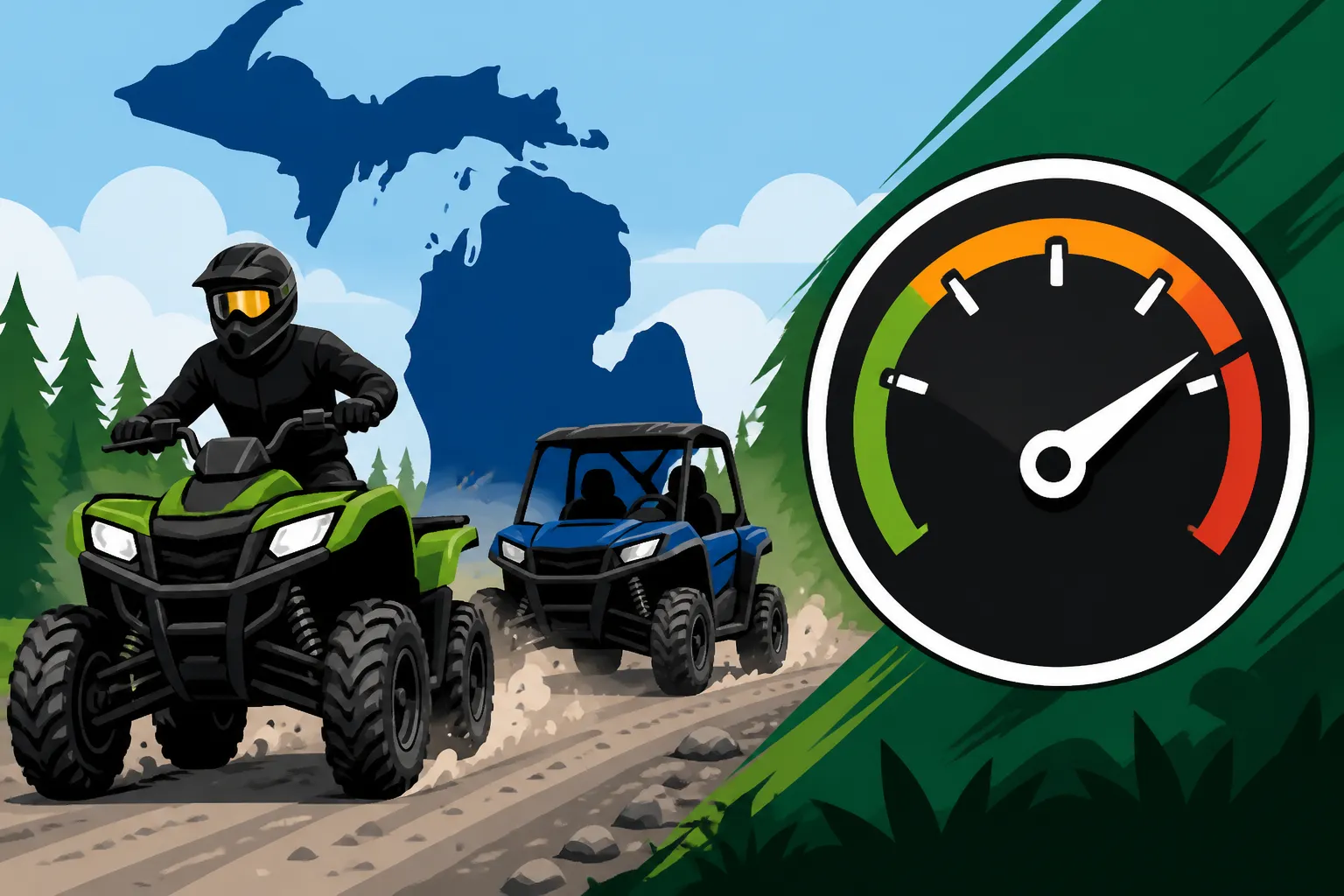
Let's get straight to it: the overarching rule, unless otherwise posted, for ORVs operating on designated county roads in Michigan is 25 miles per hour. This isn't some arbitrary number; it's a speed limit set with several factors in mind. Think about it: ORVs aren't designed for highway speeds, and gravel roads present unique challenges that paved roads don't. The loose surface can make braking and steering less predictable, especially at higher speeds. Kicking up excessive dust not only impairs visibility for you and others but can also be a major nuisance to residents living along these routes. Imagine living on a quiet gravel road and having ORVs flying by, coating your house and yard in a fine layer of dust every hour. That's a quick way to get local communities pushing for stricter regulations or even outright bans on ORV road access.
This 25 mph limit serves as a statewide baseline, a universal expectation for how ORVs should operate on shared public roadways. It's a common point of frustration for riders who feel their machines are capable of more, or who are used to higher speeds on private land or specific trails. But on public gravel roads, where you're sharing space with cars, delivery trucks, cyclists, and even pedestrians, this slower speed is a critical component of safe and respectful operation. It ensures that you have adequate time to react to unexpected hazards, like a deer darting out, a car backing out of a driveway, or even just a particularly nasty pothole that could throw your machine off balance.
When Posted Limits Override the Default
While 25 mph is the general rule, it's absolutely crucial to understand that posted speed limits always take precedence. This means that if you're on a gravel road that a county has opened to ORVs, and there's a sign that says "SPEED LIMIT 15" or "SPEED LIMIT 20," that is the speed you must obey. These lower limits are often put in place by local townships or counties based on specific concerns like residential density, road conditions, or proximity to schools or parks. They are not there to simply annoy riders; they are a direct response to local safety or quality-of-life issues.
It's rare, almost unheard of, for a posted ORV speed limit on a gravel road to be higher than 25 mph. So, while you might see a sign for cars saying "SPEED LIMIT 45," remember that this typically applies to licensed motor vehicles, not ORVs, unless explicitly stated otherwise for ORVs. Always assume the 25 mph ORV limit applies unless you see a sign specifically for ORVs indicating a lower speed. Keeping an eye out for these signs is part of responsible riding. You can't just assume every gravel road is 25 mph; diligence is key. A simple way to think about it is that 25 mph is your ceiling, but local authorities can always bring that ceiling down for specific stretches of road.
Why Speed Limits Matter for ORV Riders (Beyond the Law)
It's easy to view speed limits as just another rule to follow, but when it comes to ORVs on gravel roads, they are deeply rooted in practical concerns for safety, community relations, and even the longevity of your machine. Riding responsibly is about more than just avoiding a ticket; it's about being a good ambassador for the sport and preserving access for everyone.
Safety for Riders, Other Drivers, and Property Owners
High speeds on gravel roads are inherently risky for several reasons. Firstly, for you, the rider: gravel provides less traction than pavement. This means your stopping distances are longer, and your ability to steer out of trouble is reduced. Hitting a patch of loose gravel, a washboard section, or an unexpected pothole at 35 or 40 mph on an ORV can quickly lead to a loss of control, a rollover, or worse. The faster you go, the less time you have to react to anything—a sudden curve, an oncoming vehicle, or even a child playing near the road.
Secondly, you're sharing these roads. Michigan's gravel roads are often used by residents in passenger cars, delivery vehicles, farm equipment, and sometimes even cyclists or people walking their dogs. An ORV approaching at high speed, kicking up a huge dust cloud, creates a dangerous situation for everyone. The dust severely limits visibility, making it hard for other drivers to see you, and vice-versa. Moreover, gravel can be thrown by spinning tires, potentially damaging other vehicles or even injuring pedestrians. Ignoring these factors can lead to serious accidents and property damage, which then leads to calls from concerned citizens to restrict or ban ORV access altogether. Respecting the speed limit is a direct way to ensure the safety of your fellow citizens and maintain a positive image for the ORV community.
Protecting Your Machine and Avoiding Tickets
Pushing your ORV hard on gravel roads, especially at speeds above the legal limit, isn't just dangerous; it's also hard on your machine. The constant vibration, the impact from bumps and potholes, and the stress on your suspension components, tires, and steering system all add up. Aggressive riding on loose surfaces can accelerate wear and tear, leading to costly repairs down the road. Tires designed for off-road grip will wear down much faster on hard-packed gravel, and repeated harsh braking or acceleration can strain your drivetrain. Even the toughest machines, perhaps outfitted with heavy-duty control arms or upgraded axles from a brand like SuperATV, will still experience increased wear and tear if consistently pushed beyond their practical limits on these surfaces. Responsible speed helps prolong the life of your investment.
Beyond the physical toll on your ORV, there's the very real financial toll of a ticket. Law enforcement, including county sheriffs and DNR conservation officers, are well aware of the ORV road rules, and they do patrol these areas. Getting caught exceeding the speed limit can result in a significant fine. Furthermore, if you're operating an ORV on a county road, these violations can sometimes carry consequences similar to traffic infractions in a car, potentially impacting your driving record. It's simply not worth the risk. Always adhere to the posted limits, and if none are posted, stick to that 25 mph default. Remember, deputies are out there, and they're looking for riders who are disregarding the rules. Don't give them a reason to pull you over. For more details on this, check out [Fines for Speeding on an ORV] and [Tickets Deputies Write for Road Riding].
Navigating Michigan's Diverse Road Rules
Michigan's system for ORV access on roads isn't a one-size-fits-all approach. Understanding the nuances between different types of roads and local ordinances is crucial for a lawful and enjoyable ride. It's about being aware of your surroundings and recognizing where you are in the grand scheme of things.
Differentiating County Roads from State Highways and Trail Connectors
The 25 mph ORV speed limit on gravel roads primarily applies to county and local roads that have been specifically opened for ORV use by a county or township ordinance. These are your everyday rural roads, often unpaved, that crisscross Michigan's landscapes. It’s important to remember that not all county roads are open to ORVs; each county or township must pass a specific ordinance to allow it. If a road isn't explicitly opened, it's generally off-limits for ORV riding. For a deeper dive into this, see [Which Michigan Roads Allow ORVs].
State highways (those marked as M-, US-, or I- routes) are a different beast entirely. You absolutely cannot ride an ORV on a state highway. The rules are extremely strict: you can only cross them at designated intersections and only when it's safe to do so. This is typically a quick, perpendicular crossing, not an opportunity to ride alongside the highway. The speed limits on these crossings are dictated by the intersection's safety and the need for a swift, safe transit, not the 25 mph county road rule. Then there are those short "connector" roads—sometimes paved, sometimes gravel—that link trails or allow access to services like gas stations. While these might seem like extensions of the trail, they are still public roads, and the same rules (including the 25 mph limit or any lower posted limits) apply. Always be mindful of the "maintained portion of the road" as well, which typically refers to the part of the road designed for vehicular travel, not the shoulder. Understanding the difference is key, as explored in [Michigan Road Shoulder vs Maintained Portion].
How to Find Your Local County Ordinances
Given that ORV road access and specific speed limits can vary from county to county, knowing how to find the local ordinances is invaluable. Just because your buddy says "all gravel roads are 25 mph" doesn't mean it's true for every single stretch of dirt you encounter. Some counties might have specific restrictions, hours of operation, or even different speed limits on certain roads, especially through populated areas.
Your best bet is to check the specific county's website or the local sheriff department's page. Many counties that have opened their roads to ORVs will have a dedicated section outlining their ordinances. The Michigan Department of Natural Resources (DNR) website can also be a good resource, often linking to county-specific information or providing a general overview of the rules. Don't rely on hearsay; take a few minutes to do your homework, especially if you're riding in an unfamiliar area. This is also where you might learn about additional requirements, such as carrying your [Michigan ORV Paperwork During a DNR Stop]. Knowing these details ensures you're a responsible rider and helps you avoid unnecessary fines or confrontations. For comprehensive information on how these local rules are structured, check out [Michigan County ORV Ordinances Explained].
| Road Type | Default ORV Speed Limit | Common Scenarios/Notes |
|---|---|---|
| Opened County/Gravel Roads | 25 mph | Unless a lower speed is specifically posted by local ordinance. |
| State Trunkline (M, US, I) | N/A (Crossing Only) | Strictly for crossing at designated intersections; no riding on them. |
| Private Roads | Varies by Owner/HOA | Respect property rights; speed set by landowner. |
| Designated ORV Trails | Varies by Trail/DNR | Often lower than road limits; always obey trail markers and signs. |
| Road Shoulders | N/A (Generally Prohibited) | Most ORV road ordinances specify riding on the far right of the maintained portion of the road, not the shoulder. |
Practical Tips for Responsible Gravel Road Riding
Riding an ORV on Michigan's gravel roads is a privilege, and we want to keep it that way. Being a responsible rider means not just knowing the rules, but actively practicing safe habits that demonstrate respect for the law, other road users, and the environment.
Maintaining Control and Visibility
The mantra for gravel road riding should always be "ride within your limits and the conditions." Even at 25 mph, a gravel road can be unpredictable. When approaching corners, slow down before entering the turn, especially if it's blind. Avoid sudden braking or sharp steering inputs, as these can easily cause your tires to lose traction on the loose surface. Practice smooth, controlled movements with your throttle, brakes, and steering. Your machine's suspension, whether it's stock or an aftermarket upgrade, can only do so much to compensate for aggressive riding.
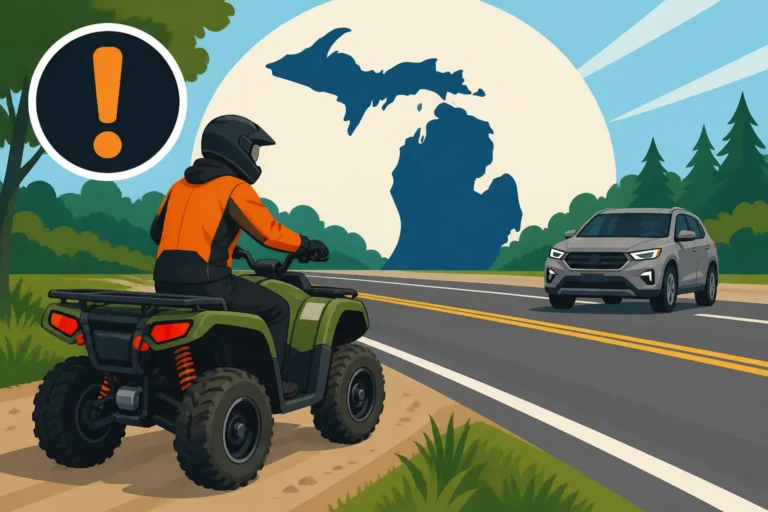
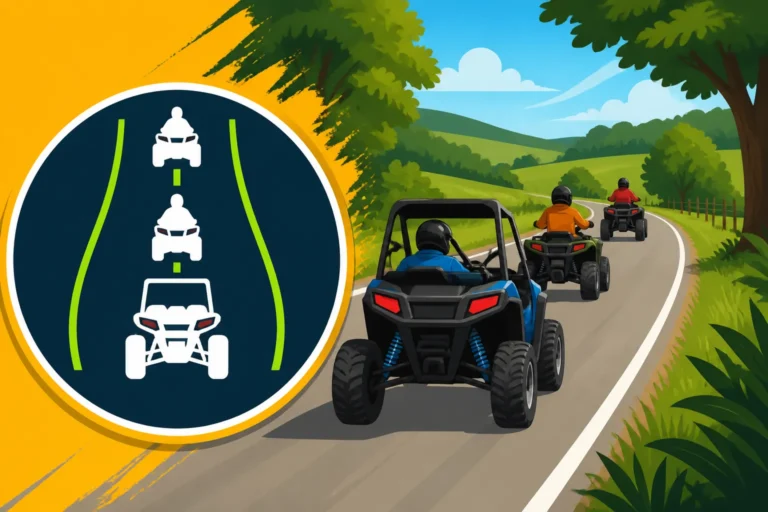
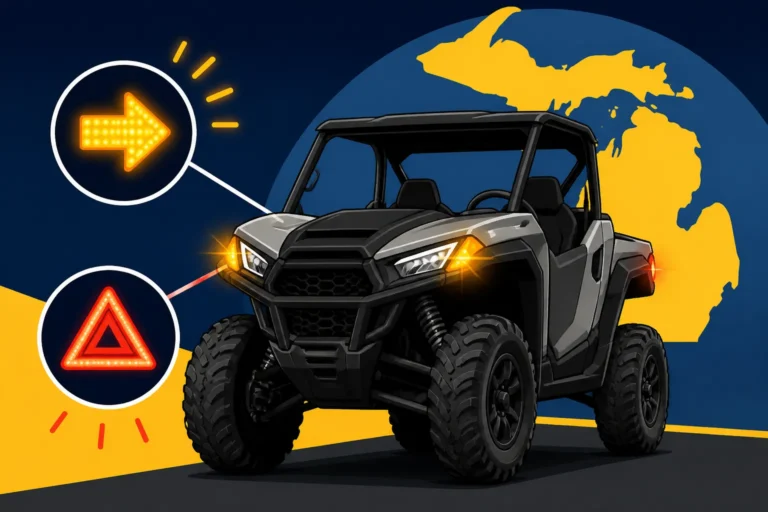
Visibility is another massive concern. On gravel roads, dust is your enemy. If you're riding in a group, maintain a safe following distance to avoid riding blind in someone else's dust cloud. If you encounter an oncoming vehicle, slow down, move to the far right of the lane, and be prepared to stop. Ensure your ORV's lights are always on during daylight hours, as this significantly improves your visibility to other drivers, especially given the dust. Even a simple headlight can make a huge difference in how quickly an oncoming car spots you. For specific requirements, refer to [Michigan ORV Lighting Rules During Daylight]. If you've invested in a quality windshield for your side-by-side, perhaps from SuperATV, it will certainly help keep dust and debris out of your face, but it's no substitute for reducing your speed and maintaining a clear line of sight.
Adjusting to Conditions
The 25 mph speed limit is a maximum, not a target. There will be many times when even 25 mph is too fast for the conditions. Factors like heavy dust, recent rain (which can make gravel slick), washboard sections, deep potholes, or blind hills and curves all demand a reduction in speed. Imagine coming over a blind crest at 25 mph only to find a farm tractor slowly turning out of a driveway. If you were going slower, you'd have more time to react.
Always ride defensively. Assume there's something around the next bend or over the next hill. Be especially cautious when passing homes or approaching intersections. A quick glance at [Michigan's 25 mph Rule and Lower Posted Limits] will reinforce that the default is a maximum, and common sense often dictates going slower. If you're riding in an area with particularly loose gravel, or if the road has become heavily corrugated (washboard effect), significantly reduce your speed to maintain control and prevent your machine from bouncing violently, which can be both dangerous and uncomfortable. The goal is to get from point A to point B safely, without incident, and without causing a disturbance. By doing so, you contribute to a positive relationship between the ORV community and Michigan's rural residents, helping ensure continued access to these scenic routes for all of us who love to ride. Consider other aspects of road legality, like proper licensing by checking [Driver's License Rules for Michigan ORV Road Riding]. And remember, many ORV riders use these routes for activities like hunting, so understanding the full scope of local rules, including for [Michigan ORV Permits for Hunting Access], is always a good idea.
Disclaimer
This article is for general informational purposes only and does not constitute professional advice. Laws, prices and regulations vary by location and change over time. Consult a qualified professional for guidance on your specific situation.