Crossing a State Highway on an ORV in Michigan
It's a familiar scenario for many Michigan ORV riders: you're enjoying a fantastic day on the trails, maybe out exploring the vast state forest lands up north or connecting smaller routes in the Lower Peninsula, when suddenly you hit a roadblock – literally. A major state highway, a busy two-lane or even a four-lane divided road, cuts right through your planned path, leaving you wondering if you're allowed to cross it and, more importantly, how to do it safely and legally. The confusion and frustration are real, as navigating these essential connections without breaking the law or endangering yourself can feel like a high-stakes puzzle. This guide is here to break down Michigan's rules for ORV state highway crossings, ensuring you can connect your rides with confidence and clarity.
The Frustration of Fragmented Trails: Why Crossing is Necessary
Michigan boasts an incredible network of ORV trails and routes, a true paradise for off-road enthusiasts. However, this expansive system often isn't a continuous, uninterrupted ribbon of dirt and mud. Instead, it weaves through a complex tapestry of public and private lands, often intersecting with paved roads, including the very state highways that connect our towns and cities. This fragmented nature means that crossing these busier roads isn't just a minor inconvenience; it's frequently a crucial part of completing a planned route, accessing different trail sections, or even getting from a staging area to your desired riding destination.
The Michigan Trail Network's Design
Think about Michigan's diverse landscapes: dense forests, sprawling farmlands, charming small towns, and miles of picturesque shoreline. The ORV trail system has been developed over decades to take advantage of these features, creating routes that offer everything from challenging technical sections to wide-open cruising. But because these trails often follow old logging roads, utility easements, or designated pathways through state and federal land, they inevitably encounter established infrastructure – and that includes state highways like M-37, US-131, or M-72.
Imagine you're deep in the Huron-Manistee National Forest, following a designated ORV route that's been a blast all morning. Your map shows the route continuing on the other side of a major state road, leading to a scenic overlook or another section of trails you're eager to explore. Without the ability to legally cross that highway, your ride would be cut short, forcing you to backtrack or find an entirely different, perhaps less enjoyable, route. This is where the practical need for understanding highway crossing rules truly comes into play. It’s about more than just convenience; it’s about making the most of Michigan’s incredible riding opportunities.
Safety Concerns and Legal Ambiguity
For many riders, the sight of an approaching state highway junction brings a knot of anxiety. There's the obvious safety concern: these are high-speed roads where cars and trucks travel much faster than typical ORV trail speeds. The thought of pulling out onto a busy highway in your UTV or ATV can be intimidating, especially if you're unsure of the exact legal procedures. What if a semi-truck is coming? How fast do you need to be? How much room do you really have?
Beyond the immediate safety worries, there's also a significant amount of legal ambiguity that can plague riders. Many folks have heard rumors or half-truths about what's allowed. "You can ride the shoulder for a bit if you're crossing," some might say, while others might insist "you can't touch pavement at all." This conflicting information leads to either overly cautious riders who avoid perfectly legal crossings, or, more dangerously, riders who make illegal movements out of ignorance, risking fines, accidents, or confrontations with law enforcement. Understanding the precise rules isn't just about avoiding a ticket; it's about giving yourself the confidence to make the right, safe decisions every time you encounter one of these crucial intersections.
Understanding Michigan's ORV Law for State Highway Crossings
Michigan law is quite specific about where and how ORVs can operate on public roads, and state highways have their own distinct set of rules compared to county roads. It’s important to understand that generally, you cannot ride an ORV on a state highway. The law makes a clear distinction for crossing purposes only. This isn't an open invitation to cruise down M-66; it's a narrowly defined exception to connect legitimate off-road routes.
The "Quickest and Most Direct Route" Rule
The cornerstone of legal state highway crossings for ORVs in Michigan is the "quickest and most direct route" rule. This isn't a suggestion; it's a strict legal mandate. It means that when you approach a state highway where a designated ORV trail or route continues on the other side, your ORV's movement across the highway must be as straight and swift as possible, at a right angle to the road, without deviating, riding along the shoulder, or lingering on the pavement.
What does this mean in practice? Imagine a clear line from where your ORV trail ends on one side of the highway to where it picks up on the other. Your goal is to follow that imaginary line, making your ORV's presence on the highway as brief and predictable as possible. You cannot turn onto the highway and drive even a short distance down the shoulder or in a lane of traffic before turning off. You cannot use the median strip as a temporary resting point if there's a divided highway, unless it's specifically designated as part of the ORV route. The intent is to minimize interaction with high-speed road traffic. Failure to adhere to this rule can quickly turn a legal crossing into an illegal operation, which can lead to tickets and other penalties. It’s about being deliberate, quick, and absolutely direct.
Essential Equipment for Road-Legal ORV Crossings
While you don't need a fully street-legal conversion kit to simply cross a state highway, your ORV must still be equipped with certain basic safety features to be legal on any public land or for crossing roads. Michigan law requires that all ORVs operated on designated trails, routes, or for permissible road crossings have:
- Working Headlights and Taillights: These are absolutely critical for visibility, especially if lighting conditions are anything less than perfect, or if you're crossing a road at dusk or dawn. Make sure they are bright and fully functional.
- A Functional Brake Light: This signals your intentions to any traffic that might be behind you, whether on the trail approaching the road or on the road itself.
- An Adequate Muffler: While your ORV might sound great on the trail, excessive noise can be a nuisance and is regulated. The muffler needs to be in good working order to keep sound levels within legal limits.
- A Spark Arrestor: This is a crucial safety device designed to prevent sparks from your exhaust from igniting dry vegetation, a common cause of wildfires. It's a non-negotiable requirement for any ORV operating on public lands in Michigan.
It's also a smart idea to regularly check your tires, brakes, and steering to ensure they are in top condition. While the law mandates the above, having reliable components will contribute significantly to a safe crossing. For riders looking to upgrade their lighting or ensure their machine is visible from all angles, especially with the increased risk of road interactions, aftermarket solutions can be a great option. Companies like SuperATV offer a range of robust LED light bars, upgraded taillights, and other accessories that can significantly enhance your ORV's visibility and safety features, going above and beyond the minimum legal requirements for basic crossings. Investing in better visibility can literally be a lifesaver when you're momentarily sharing asphalt with much larger, faster vehicles.
Step-by-Step Protocol for a Safe Highway Crossing
Crossing a state highway isn't something to take lightly. It requires careful planning and precise execution to ensure your safety and remain within the bounds of the law. Rushing or being unprepared can have serious consequences. Think of it less as an inconvenience and more as a critical maneuver that demands your full attention, just like navigating a challenging section of trail.
Situational Awareness Before Approaching
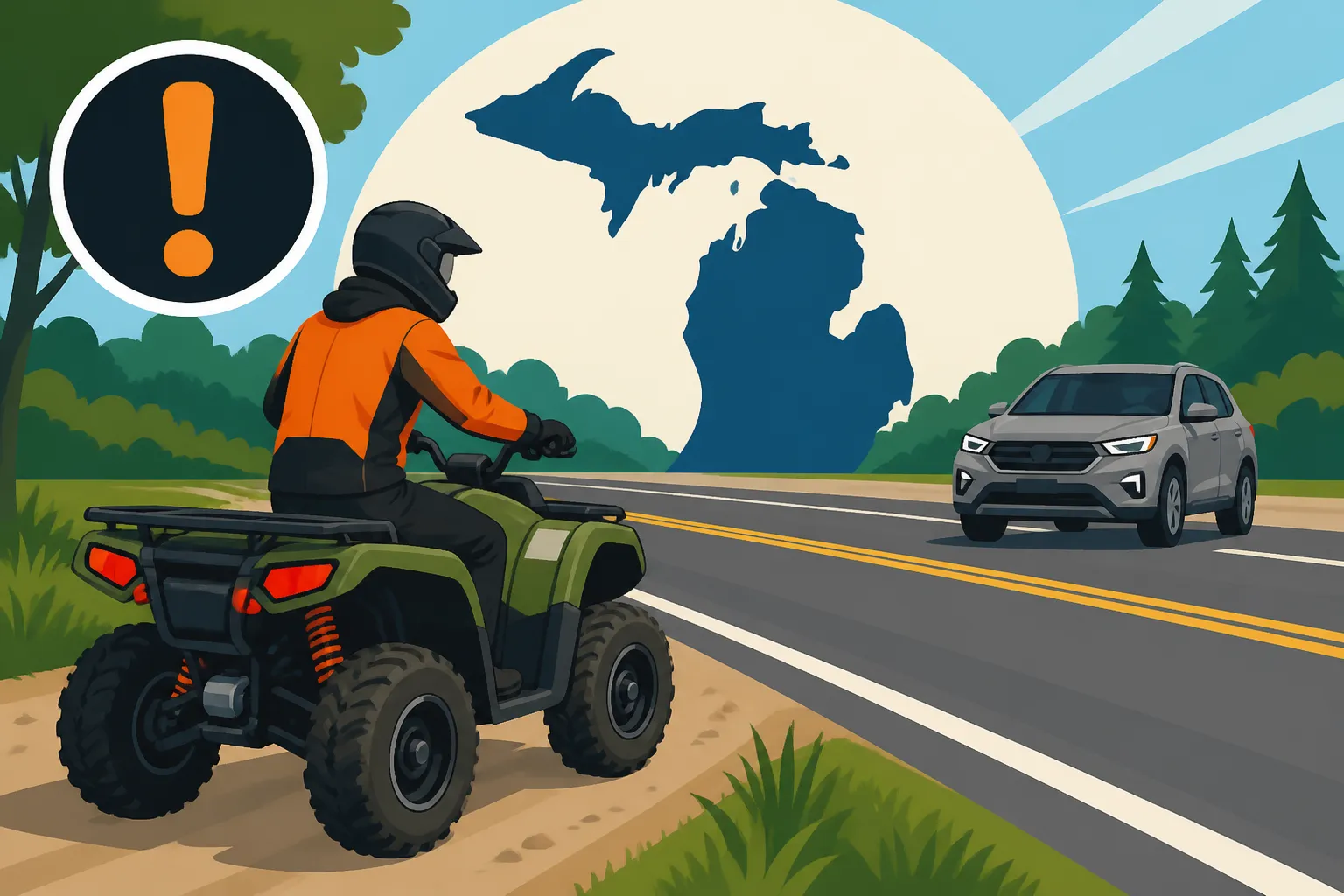
Before your tires even touch the edge of the highway, you need to engage in a thorough assessment of your surroundings. This pre-crossing ritual is paramount for safety. First, slow your ORV down significantly as you approach the intersection with the state highway. Don't barrel out from the trail right onto the pavement. Bring your machine to a complete stop at the very edge of the road, giving yourself the best possible vantage point without obstructing traffic.
Next, assess the highway traffic. Look both ways, multiple times, just as you would in a car. Consider the speed of oncoming vehicles; state highways are often posted at 55 mph or higher, meaning approaching cars cover ground very quickly. Estimate gaps in traffic: is there enough time for your ORV, which accelerates slower than a car, to cross both lanes safely? Pay attention to visibility, too. Are there hills, curves, or dense foliage that limit your view of oncoming traffic? If so, you need to be even more cautious, waiting for larger, more obvious gaps. Also, consider the specific highway configuration. Is it a simple two-lane road, or a divided highway with multiple lanes and a median? Each type presents its own challenges. Your goal is to identify a clear, unobstructed path across, with ample time to complete the maneuver without forcing highway traffic to brake or swerve. If you have passengers, especially younger riders, remind them to also be vigilant and quiet so you can focus.
Executing the Crossing Safely and Legally
Once you've determined that there's a safe and sufficient gap in traffic, it's time to execute the crossing. This is where the "quickest and most direct route" rule really comes into play. Your ORV should move across the highway at a 90-degree angle to the flow of traffic. Do not angle your machine and attempt to drive diagonally; this increases your time on the road and makes your intentions less clear to motorists. Pull out decisively but smoothly, accelerating through the crossing.
You must yield to all highway traffic. This means if there’s any doubt, you wait. Highway traffic has the right-of-way, always. Do not assume drivers see you or will slow down for you. As you cross, maintain a straight line. Do not weave, swerve, or stop in the middle of the road. If it's a divided highway with a median, you generally cannot stop in the median unless it's specifically marked as part of an ORV route for that purpose. In most cases, you would treat it as two separate crossings if you had to stop safely in the median before tackling the second set of lanes. While some UTVs might have turn signals if they're partially street-legal (you can learn more about this by checking out [Turn Signals and Hazard Lights on a Street-Legal Build]), if your ATV or UTV doesn't, use clear hand signals to indicate your intention to cross, if practical and safe to do so. Remember that this isn't the place for [Michigan's 25 mph Limit on County Roads]; you are not riding on the highway, you are crossing it as quickly and directly as possible. The objective is to be on and off the pavement as swiftly and predictably as possible.
Common Misconceptions and Risky Behaviors to Avoid
Even with clear laws, some misunderstandings and dangerous habits persist among ORV riders when it comes to road interactions. It's crucial to distinguish between what's legal and safe, and what might seem like a shortcut but actually puts you and others at significant risk. These missteps can range from a minor infraction to a life-threatening incident.
The "Quick Dash" Mentality and Its Dangers
One of the most dangerous misconceptions is the "quick dash" mentality, where a rider sees a tiny gap in traffic and thinks, "I can make it." This impulse, born of impatience or a misjudgment of speed and distance, is incredibly risky. ORVs, especially ATVs, have a lower profile than cars and are often less visible to drivers, particularly at highway speeds. They also accelerate differently, and their top speeds are generally much lower than highway traffic. What might seem like enough time for a car to cross often isn't enough for an ORV.
The consequences of misjudging a gap can be catastrophic. An ORV-vehicle collision on a high-speed highway often results in severe injuries or fatalities for the ORV operator and passengers, and significant damage to both vehicles. Beyond the immediate physical danger, there are legal and financial repercussions. An accident caused by improper crossing can lead to expensive medical bills, vehicle repairs, and potential lawsuits. It’s simply not worth the gamble. It's far better to wait for a clear, undeniable window of opportunity, even if it means waiting for several minutes. Patience is not just a virtue; it's a survival strategy when crossing state highways.
Riding the Shoulder or Median Strip
Another common and equally dangerous misconception is that it's permissible to ride your ORV along the shoulder of a state highway, or even briefly on a median strip, to find a better crossing point or to connect to a trail a short distance away. Let me be absolutely clear: this is illegal and incredibly dangerous in Michigan. Shoulders are designated for emergency stops, broken-down vehicles, or sometimes for specific, legally permitted bicyclist or pedestrian use – not for ORV travel.
Riding the shoulder puts you in direct conflict with fast-moving highway traffic. Vehicles may drift onto the shoulder, use it to pass, or pull off for emergencies, and they will not be expecting an ORV traveling there. Your ORV is not designed for sustained high-speed travel on pavement, and the tires meant for dirt and mud perform poorly on asphalt at speed, increasing the risk of losing control. Similarly, median strips on divided highways are typically not designated ORV routes or waiting areas. Treating them as such puts you in a highly vulnerable position between two lanes of high-speed traffic. Even a short ride on the shoulder, just a few yards, is a violation of the law. You can and likely will be ticketed for illegal operation on a highway. This is particularly important for younger riders; adults supervising them must ensure they understand and strictly adhere to these rules. [Michigan ORV Road Rules for Riders Under 16] already place significant restrictions on where and how young riders can operate, and state highways are absolutely off-limits for anything other than a direct, perpendicular crossing. Avoid these risky behaviors at all costs to ensure safety and legality.
Penalties for Improper Highway Crossings and ORV Road Use
Let’s be realistic: getting caught operating your ORV improperly on a state highway in Michigan comes with real, tangible consequences. This isn’t just a slap on the wrist. Law enforcement, including Michigan State Police and DNR Conservation Officers, are well-versed in ORV laws and take violations seriously, especially those that endanger public safety on major roadways.
Tickets, Fines, and Potential Impoundment
If a law enforcement officer observes you riding illegally on a state highway – whether it's riding the shoulder, driving down the road, or making an improper crossing – you can expect to receive a ticket. These tickets come with fines that can quickly add up. While specific amounts can vary depending on the severity of the offense and whether it's a first-time violation or a repeat occurrence, they are designed to be a deterrent. It’s certainly not the kind of expense you want to add to your fun day of riding.
Beyond monetary penalties, more serious or repeat offenses can lead to your ORV being impounded. Imagine your machine being towed away, leaving you stranded and facing the hassle and additional costs of recovery, storage fees, and potentially a lengthy court process. This is a severe disruption to your riding plans and a significant financial burden. Operating an ORV without proper title or permits, or with a missing seller signature as discussed in [ORV Title With a Missing Seller Signature], could also complicate matters further if your machine is impounded. Officers often check all documentation during a stop, as covered in [Michigan ORV Paperwork During a DNR Stop]. It's far better to adhere to the rules and avoid these headaches entirely.
Insurance Implications and Liability
The financial fallout of an improper highway crossing can extend far beyond a ticket or an impoundment, especially if an accident occurs. While [Michigan ORV Insurance and When You Actually Need It] is crucial for all riders, operating your ORV illegally on a state highway can have devastating implications for your insurance coverage. Most ORV insurance policies, much like auto insurance, contain clauses that can void coverage if the vehicle was being operated in violation of the law at the time of an incident.
If your insurance company determines that you were operating illegally, they could deny your claim. This means you would be personally responsible for all damages and injuries. This could include repairing or replacing your own ORV, covering the cost of repairs to any other vehicles involved, and potentially facing medical bills for yourself, your passengers, and anyone else injured in the accident. The financial liability could be astronomical, easily costing tens or hundreds of thousands of dollars. The risk is simply too high to justify cutting corners or taking chances when crossing a state highway. Legal operation is not just about avoiding tickets; it's about protecting yourself from ruinous financial and legal consequences.
Distinguishing Crossings from Permitted Road Riding
One of the biggest sources of confusion for ORV riders in Michigan is the difference between crossing a state highway and legally riding on public roads. It's a nuanced but absolutely critical distinction, as the rules, equipment requirements, and penalties differ vastly. Understanding this difference is key to staying safe and legal.
County Road vs. State Highway Rules
Michigan's ORV laws grant a degree of flexibility to local municipalities when it comes to ORV use on county roads. Many counties across the state have passed ordinances that permit ORV operation on certain county roads, often with specific speed limits (like the common 25 mph discussed in [Michigan's 25 mph Limit on County Roads]), time-of-day restrictions, and equipment requirements. These ordinances allow riders to connect trails, access services like gas stations, or simply enjoy a scenic ride on gravel roads. You can find out more about which counties allow this kind of riding in articles like [Michigan Counties That Allow ORVs on Road Shoulders].
However, state highways operate under a different set of rules entirely. These are generally higher-speed, higher-volume roads managed by the Michigan Department of Transportation (MDOT), and they are not typically open to ORV use, even if a local county road ordinance allows it nearby. The only general exception for ORVs on state highways is the direct, perpendicular crossing we've been discussing. You cannot ride along the shoulder of a state highway because a county road a mile down the road allows ORVs. It’s a completely separate legal framework, and failing to recognize this can lead to immediate violations. Always assume state highways are off-limits for anything but a direct crossing, unless you are absolutely certain of a rare, specific, and clearly marked exception.
Street-Legal UTVs and State Highways
With the growing popularity of street-legal UTV conversions, many riders wonder if their "road-ready" side-by-side gains carte blanche access to state highways. While a street-legal UTV has been modified to meet specific safety and equipment standards – often including proper DOT-approved tires, windshields, mirrors, horns, and turn signals (components that can be sourced from places like SuperATV) – and can legally operate on many public roads, its use on state highways is still largely restricted in Michigan. For a comprehensive guide on what it takes to make your UTV street-legal, check out [How to Make a Side-by-Side Street Legal in Michigan].
Even a UTV that has gone through the full street-legal conversion process and carries a Michigan license plate is typically still limited on state highways to the same direct, perpendicular crossing rule as any other ORV. While it might have the equipment to technically drive on a state highway, state law generally doesn't permit ORVs, even street-legal ones, to operate as traffic on these roads for extended periods. There might be extremely rare, specifically designated segments of state highway that are part of an ORV route, but these are exceptional and clearly marked. For the vast majority of state highways, your street-legal UTV still only gets the "crossing" privilege, not the "driving" privilege. Always consult current DNR regulations and local ordinances, and err on the side of caution when it comes to state highways, even with a street-legal machine.
| Road Type | ORV Permitted? | Key Rules/Restrictions | Required Equipment (for ORV use) |
|---|---|---|---|
| State Highway | Yes, for crossing only | Must be a direct, perpendicular crossing. Yield to all traffic. No riding on shoulders or median. | Basic ORV (headlights, taillights, brake light, muffler, spark arrestor) |
| County Road (Ordinance) | Yes, if local ordinance allows | Varies by county. Often 25 mph limit, specific hours, certain roads. Check local rules. | Basic ORV; potentially more for some ordinances (e.g., turn signals) |
| Designated ORV Trail/Route | Yes | Must have proper Michigan ORV License and Trail Permit Explained. Follow trail signs and rules. | Basic ORV |
| Private Property | Yes, with permission | Owner's permission required. Follow property rules. | Basic ORV (unless entirely enclosed/private) |
| City/Village Streets | Generally No (few exceptions) | Most city limits prohibit ORVs on streets, with rare local exceptions. See Michigan ORV Road Rules Inside City Limits. | N/A (generally not permitted) |
Disclaimer
This article is for general informational purposes only and does not constitute professional advice. Laws, prices and regulations vary by location and change over time. Consult a qualified professional for guidance on your specific situation.