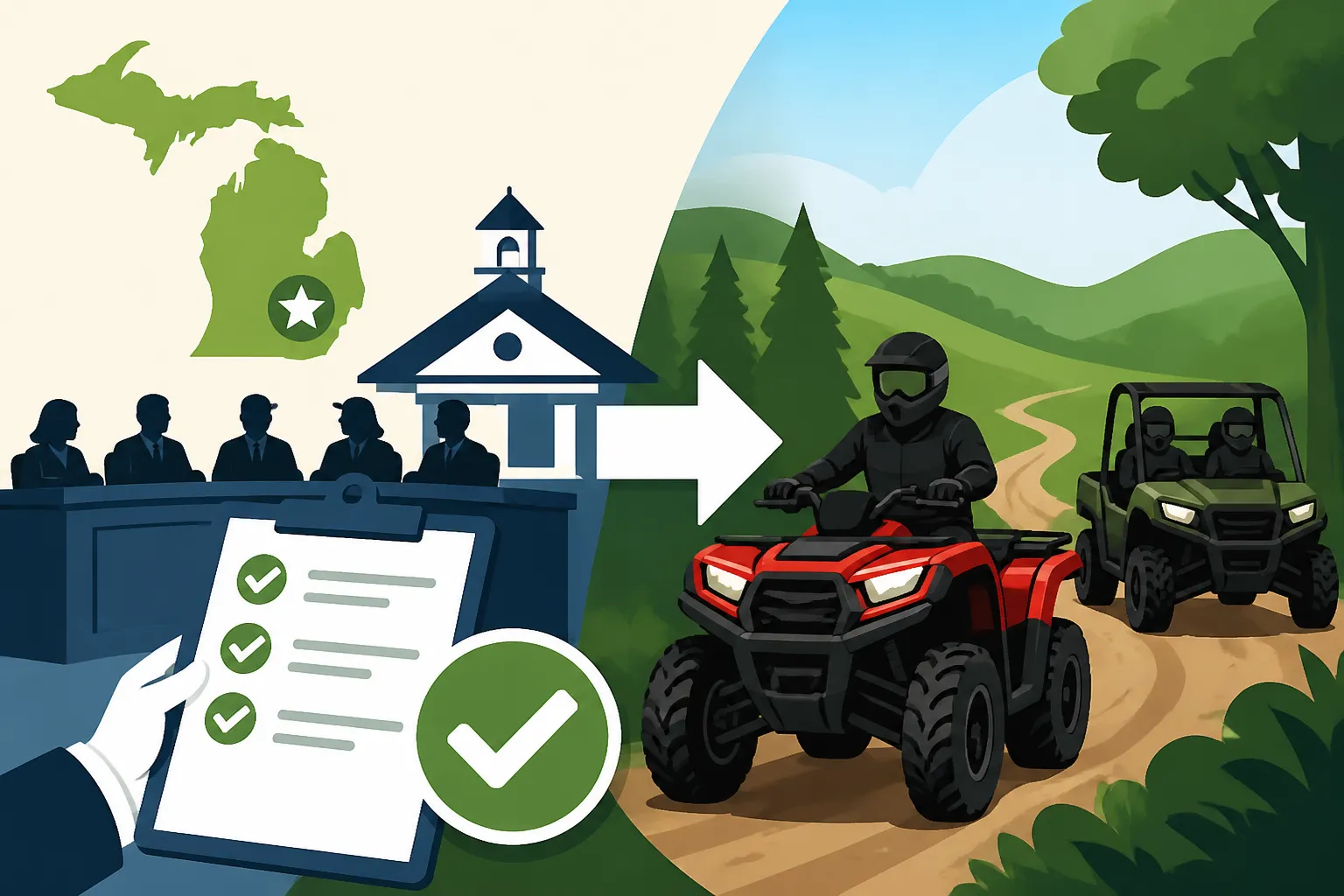
How a Michigan Township Passes an ORV Ordinance
It’s a tale as old as time in many parts of Michigan: the roar of an ORV engine echoing down a quiet country road, bringing both cheers from enthusiasts and groans from residents seeking peace. For many townships, figuring out how to balance the growing popularity of off-road vehicles with the needs and concerns of their communities has become a real head-scratcher. This guide is here to walk you through the often complex, sometimes contentious, but ultimately necessary process a Michigan township undertakes to pass an ORV ordinance, bringing clarity and control to local road use.
Understanding the Landscape: Why Townships Consider ORV Ordinances
Michigan is an incredible place for ORV enthusiasts, offering thousands of miles of trails and vast natural beauty to explore. However, as the popularity of ATVs and UTVs has exploded, so too has the desire for riders to access county and local roads to connect trails, reach gas stations, or simply enjoy a scenic ride closer to home. This increased road usage, while exciting for many, often creates friction within communities, leading townships to consider formal ordinances.
The motivation for creating an ORV ordinance usually stems from a confluence of factors, ranging from genuine safety concerns to quality-of-life issues. Residents might worry about children playing near roads where ORVs operate, the potential for accidents with traditional vehicles, or the sheer volume of noise and dust generated by increased off-road traffic. On the other hand, many residents, business owners, and local tourism advocates champion the economic benefits and recreational opportunities that come with opening up roads to ORVs, making the decision-making process quite a delicate balancing act for township officials.
Balancing Rider Access and Resident Concerns
When a township first starts discussing an ORV ordinance, it quickly becomes clear that there are passionate voices on both sides. On one hand, you have ORV riders and local businesses who see opening roads as a fantastic opportunity. They argue that responsible riders boost local economies by visiting gas stations, restaurants, and shops, and that limiting access unfairly restricts a popular pastime for many families. They might point out that many modern UTVs, especially those equipped with accessories like turn signals, horns, and proper lighting from brands like SuperATV, are designed with road use in mind and can be operated safely.
Conversely, there are often strong concerns from residents who prioritize quiet enjoyment of their property, road safety, and environmental protection. They might worry about increased traffic volume, the noise levels, or the potential for damage to road shoulders and local infrastructure. This push and pull means that any proposed ordinance needs to be carefully crafted to address these diverse perspectives, finding common ground that allows for responsible ORV use while mitigating potential negative impacts on the community as a whole. It’s never about saying "yes" or "no" outright, but rather "how" and "where."
The Limitations of State-Level ORV Laws
Many people assume that state laws are all-encompassing when it comes to ORV operation. While Michigan does have comprehensive state laws governing ORV use, like the Michigan ORV Act (Public Act 451 of 1994, as amended), these laws primarily establish the statewide framework for registration, trail riding, and general operational guidelines. They often set minimum standards or general permissions, but they don't always address the specific, granular needs of individual communities.
For example, state law might permit ORVs on the far right of the improved portion of a county road, or on the shoulder, but it doesn't specify if a particular two-lane road in a residential area of a township should be open, or what hours are appropriate for a quiet lakefront community. That's where local ordinances come into play. Townships have the authority, granted by the state, to further regulate ORV use on roads within their jurisdiction, allowing them to tailor rules to their unique landscapes, traffic patterns, and resident preferences. Without this local control, a one-size-fits-all state law could either be too restrictive for some areas or too permissive for others, leading to frustration for both riders and non-riders alike.
The Legal Foundation: Michigan's ORV Act and Local Control
Understanding the legal groundwork is crucial, as a township can't just arbitrarily decide to open or close roads to ORVs. Their authority to create an ordinance comes directly from Michigan state law. Specifically, the Natural Resources and Environmental Protection Act, often referred to as the Michigan ORV Act, contains provisions that explicitly grant local units of government – including townships – the ability to regulate ORV use on roads under their jurisdiction. This legal framework ensures that local ordinances are consistent with broader state goals while allowing for necessary local adaptations.
This statutory permission is not a blank check; it comes with guidelines and parameters. For instance, any local ordinance cannot be less restrictive than state law. It can, however, be more restrictive, provided it is reasonable and designed to protect the public health, safety, and welfare. This balance of state authorization and local discretion is what allows townships to navigate the complexities of ORV integration effectively, creating rules that make sense for their unique community character.
Michigan's ORV Act and Local Ordinances
The Michigan ORV Act is the primary piece of legislation that governs all-terrain vehicles (ATVs), utility task vehicles (UTVs), and other off-road vehicles in the state. Within this act, there are specific sections that empower local units of government, such as townships, to enact ordinances. Essentially, the state acknowledges that while general guidelines are necessary, local communities are best positioned to determine the specific conditions under which ORVs can safely and appropriately use local roads. This means a township board, after careful consideration and public input, can decide to allow ORVs on certain roads, restrict them to specific hours, or implement additional safety requirements beyond state minimums.
For example, the state law establishes broad rules regarding where ORVs can operate, but a township might decide that a particular road is too narrow, too busy, or passes through an area with too many vulnerable populations (like a school zone) to allow ORV access. In such cases, the township ordinance can prohibit ORV use on that specific road, even if state law might otherwise permit it on a similar type of road elsewhere. This flexibility is vital for local officials who are tasked with ensuring public safety and maintaining the character of their communities. It’s a mechanism for communities to have a voice in how these popular machines interact with their local infrastructure.
Distinguishing Ordinances from Resolutions
When local governments make decisions, they often do so through either a "resolution" or an "ordinance." While both are official actions, they serve different purposes and carry different legal weights, and it's important to understand the distinction in the context of ORV rules. A resolution is typically used for administrative decisions, expressing the formal opinion or intent of the governing body, or approving an internal policy or action. For instance, a township board might pass a resolution to support a grant application or to commend a community volunteer. Resolutions are often temporary in nature or deal with specific, one-time actions.
An ordinance, on the other hand, is a local law. It is a permanent rule or regulation that applies to all citizens and properties within the township's jurisdiction. Ordinances have the force of law, meaning they can be enforced through fines, penalties, or other legal actions, much like state statutes. When a township wants to regulate ORV use on its roads – setting speed limits, defining permitted routes, or establishing safety requirements – it must do so through an ordinance. This ensures the rules are legally binding, publicly recorded, and enforceable, providing clear guidance for both riders and law enforcement. A resolution simply wouldn't have the legal teeth necessary to properly govern ORV operation.
The Ordinance Development Journey: From Idea to Law
The path from a community discussion about ORVs to a fully enacted township ordinance is often a long and deliberate one, designed to ensure fairness, transparency, and public input. It's not a quick decision made over a single meeting. Instead, it involves several stages, each with its own purpose, from initial fact-finding to formal voting. This structured approach helps townships develop comprehensive and enforceable rules that truly serve their residents.
This journey is critical because an ORV ordinance can significantly impact the daily lives of residents, the recreation opportunities available, and even local commerce. Therefore, township officials must gather information, listen to diverse viewpoints, and carefully consider the implications of every decision. It's about building a robust piece of local legislation that can withstand scrutiny and effectively manage ORV traffic for years to come.
Initial Research and Discussion
The journey to an ORV ordinance often begins quietly, sometimes with a single concerned resident contacting a township board member, or perhaps a local law enforcement agency raising issues about increased ORV activity on roads. Other times, it might be an ORV club or a local business advocating for more access. Once the topic gains traction, the township board will typically initiate preliminary discussions. This phase is all about gathering information and understanding the scope of the issue.
Township officials might start by researching existing ORV ordinances in neighboring communities or across the state. They'll look at what has worked well elsewhere, what challenges have arisen, and what specific provisions other townships have included. They might consult with the Michigan Township Association, local sheriff's department, or the Department of Natural Resources (DNR) to understand legal parameters, enforcement capabilities, and best practices. This initial research helps the board determine if an ordinance is truly needed, what its potential scope might be, and whether it aligns with state law and community values. It’s the essential groundwork before any formal drafting begins.
Drafting the Proposed Ordinance
Once the township board decides to move forward, the next critical step is drafting the actual text of the proposed ordinance. This isn't a simple task; it requires careful legal language to ensure clarity, enforceability, and compliance with state statutes. The draft will typically define key terms, such as "ORV," "roadway," "shoulder," and "maintained portion of the road," to avoid any ambiguity. It will then outline the specific rules for ORV operation on township roads.
Common provisions in the draft might include:
- Designated Roads: Which specific township-controlled roads are open or closed to ORVs.
- Operating Hours: Restricting ORV use to certain times of day, often daylight hours.
- Speed Limits: Specifying a maximum speed, often lower than the posted car speed limit, like [Michigan's 25 mph Limit on County Roads].
- Safety Equipment: Mandating specific gear beyond state requirements, such as helmets for all riders regardless of age, functional brake lights, or mirrors on both sides. Many riders already equip their machines with these, often sourcing them from reputable brands like SuperATV, to enhance safety and compliance.
- Proof of Insurance and Driver's License: Reiterating state requirements for road operation.
- Enforcement: Stating who will enforce the ordinance (e.g., local sheriff, Michigan State Police, DNR conservation officers) and outlining penalties for violations.
- Signage: Requirements for clear signage to inform riders of the rules and designated routes.
This initial draft is often a working document that will undergo several revisions as it moves through the public feedback and review process.
Public Hearings and Community Feedback
This is arguably the most crucial stage for public engagement. Once a draft ordinance has been prepared, Michigan law requires that it be presented to the public through one or more public hearings. This isn't just a formality; it's a vital opportunity for residents, ORV riders, and other stakeholders to voice their opinions, ask questions, and suggest amendments. The township is usually required to publish notice of these hearings in a local newspaper and often on their website, well in advance, to ensure broad public awareness.
During these hearings, township board members will present the proposed ordinance, explain its rationale, and then open the floor for comments. Residents might speak about concerns over noise, safety, environmental impact, or property values. ORV enthusiasts might advocate for more extensive road access or argue against specific restrictions they feel are unfair or impractical. This public input is invaluable. It allows the board to gauge community sentiment, identify potential oversights in the draft, and consider modifications that could improve the ordinance's effectiveness and acceptance. Sometimes, a particularly insightful comment can lead to a significant revision, or even multiple follow-up meetings to address complex issues. This process ensures that the ordinance isn't just a top-down mandate, but a reflection of the community's collective needs and desires.
Board Review and Voting
After public hearings have concluded and all feedback has been carefully considered, the township board enters the final stages of review and voting. This typically involves further discussion among board members, potentially making amendments to the draft ordinance based on the public input received. It's not uncommon for an ordinance to go through several revisions during this phase as the board tries to find the best compromise and address all valid concerns. They might refer back to the [Michigan ORV Road Rules for Riders Under 16] or the general [The Three Road Rules Michigan ORV Riders Must Follow] to ensure consistency with state mandates.
Once the board is satisfied with the final language, the ordinance will be put to a formal vote. Michigan law often requires that ordinances be read at two separate board meetings (first reading and second reading) before a final vote, giving ample time for reflection and public notice. For an ORV ordinance to pass, it typically requires a majority vote of the township board members. If passed, the ordinance officially becomes law within the township's jurisdiction after a specified effective date, usually a certain number of days after publication. This systematic process ensures that all legal requirements are met and that the final decision is a carefully considered act of local governance.
What an ORV Ordinance Typically Covers
When a Michigan township successfully navigates the process of passing an ORV ordinance, that new local law will contain specific provisions that dictate how, when, and where off-road vehicles can be operated on the roads within its boundaries. These ordinances are designed to provide clear guidelines for riders and clear directives for law enforcement, making the local rules predictable and enforceable. They often go beyond basic state law to address unique local conditions.
From establishing exactly which roads are open to mandating specific safety gear, a well-crafted ordinance leaves little room for guesswork. It's about creating a safe and harmonious environment for all road users, whether they're in a car, on a bicycle, or piloting a side-by-side.
Designated Roads and Restrictions
One of the most critical components of any township ORV ordinance is the clear designation of which roads are open and which are closed to ORV traffic. This is where local control truly shines, as townships can make decisions based on road type, traffic volume, proximity to residential areas, or safety concerns. An ordinance might state that "all county roads within the township are open to ORVs, except for [Road A], [Road B], and [Road C] due to high traffic volume." Conversely, it might list only specific roads as open. [Michigan Counties That Allow ORVs on Road Shoulders] often follow this model.
Beyond simply opening or closing roads, ordinances frequently include specific restrictions:
- Speed Limits: Often, ORVs are required to operate at a lower speed than the posted automotive limit, perhaps [Michigan's 25 mph Limit on County Roads] or even less in residential zones.
- Hours of Operation: Many ordinances limit ORV use on roads to daylight hours or specific times, for instance, from 7 AM to 10 PM, to minimize noise disturbance to residents.
- Road Shoulder vs. Maintained Portion: The ordinance will clarify where on the road ORVs are allowed to operate, typically on the far right of the maintained portion of the road or on the shoulder, where available and safe.
- Prohibitions: Specific bans might be in place for ORVs on state highways (which townships cannot open), within certain city or village limits if they are surrounded by the township, or near sensitive areas like nature preserves. [Michigan ORV Rules Inside City Limits] are almost always stricter, if not outright prohibitory.
These detailed designations and restrictions are vital for clear communication and effective enforcement.
Operational Requirements and Safety Gear
Township ordinances can also impose specific operational requirements and mandate additional safety gear beyond what state law requires for all ORV riding. The goal here is to enhance safety for riders and other road users within the township's unique environment. While Michigan state law sets a baseline for ORV operation, a township can determine that, for instance, a particular narrow gravel road requires extra precautions.
Typical operational requirements found in ordinances include:
- Driver Licensing: Reinforcing that anyone operating an ORV on a public road must possess a valid driver's license, as specified in [Driver's License Rules for Michigan ORV Road Riding].
- Lights: Mandating that ORVs must have working headlights and taillights, even during daylight hours, for increased visibility. This aligns with [Michigan ORV Lighting Rules During Daylight].
- Mirrors and Horns: Many ordinances require ORVs to be equipped with at least one mirror (often two) and a functional horn, similar to the requirements for street-legal conversions. Accessories from companies like SuperATV provide robust options for such upgrades.
- Helmet Use: While state law has specific age-based helmet requirements, a township ordinance might extend the mandate to all ORV operators and passengers, regardless of age, when riding on public roads for an added layer of safety.
- Spark Arrestors and Mufflers: Ordinances might include provisions regarding proper spark arrestors and muffler systems to address noise concerns and fire prevention, touching on [Michigan ORV Noise Limits on Roads].
- Insurance: Reiterating the state requirement for ORV insurance for machines operated on public roads.
These requirements ensure that ORVs operating on township roads are as visible and safe as possible, minimizing risks for everyone.
Enforcement and Penalties
An ordinance is only as effective as its enforcement. A comprehensive township ORV ordinance will clearly outline how the rules will be enforced and what penalties will be levied for violations. Typically, enforcement falls to local law enforcement agencies, such as the county sheriff's department, Michigan State Police, or even DNR conservation officers, particularly if they are patrolling in the area.
When an ORV operator is found to be in violation of a township ordinance, they can be issued a civil infraction ticket. The ordinance itself will specify the fines associated with various offenses. These fines can vary depending on the severity of the violation and whether it's a first offense or a repeat infraction. For example, riding an ORV on a prohibited road might carry a different fine than operating without proper lighting. The ordinance will also often outline where the revenue from these fines goes, which might be to the township's general fund or specifically earmarked for ORV-related initiatives like signage or enforcement costs. Understanding the potential for [Tickets Deputies Write for Road Riding] is a powerful motivator for compliance.
In some cases of egregious or repeated violations, especially those that endanger public safety or cause property damage, an ordinance might allow for more severe consequences, potentially leading to criminal charges under state law, in addition to local ordinance violations. The goal is always to encourage responsible riding habits and deter behavior that could be detrimental to the community or the safety of others.
Challenges and Ongoing Management
Passing an ORV ordinance is a significant achievement for a township, but it's not the end of the road – pun intended! Once the ordinance is on the books, the real work of implementation and ongoing management begins. This phase presents its own set of challenges, from ensuring riders know the rules to dealing with unexpected issues that arise after the ordinance takes effect. A good ordinance isn't static; it requires continuous attention and adaptability to remain effective.
Maintaining a successful ORV program on township roads involves more than just a piece of paper. It demands clear communication, adequate resources for enforcement and infrastructure, and a willingness to revisit and refine the rules as conditions and community needs evolve.
Signage and Communication
One of the immediate challenges after an ORV ordinance passes is ensuring that everyone, especially riders, is aware of the new rules. It doesn't matter how well-crafted an ordinance is if nobody knows what roads are open or closed, or what specific speed limits apply. This is where clear signage and effective communication become absolutely vital.
Townships often need to invest in installing appropriate road signs that clearly indicate where ORV use is permitted or prohibited. These signs should be uniform, highly visible, and strategically placed at entry points to the township or at intersections where rules change. Beyond physical signs, townships might also utilize other communication channels:
- Website Updates: Posting the full text of the ordinance, along with easy-to-understand maps, on the township's official website.
- Public Announcements: Utilizing local newspapers, community newsletters, and social media to inform residents and visitors.
- Partnerships: Working with local ORV clubs, trail organizations (like MI-TRALE), and tourism bureaus to disseminate information to their members and visitors.
The cost of effective signage and communication can be substantial, and townships must factor this into their budget and planning. Failing to communicate the rules clearly can lead to inadvertent violations, enforcement headaches, and frustration for both riders and residents.
Funding and Maintenance
Implementing and managing an ORV ordinance also brings financial considerations. Who pays for the signs, the enforcement, and any potential wear and tear on local infrastructure? While the state's ORV trail permit system funds much of Michigan's state trail network, township road systems are a different matter.
Townships often have to allocate funds from their general budget to cover the costs associated with the ordinance. This can include:
- Signage: The initial purchase and installation of signs, as well as ongoing maintenance or replacement of damaged signs.
- Enforcement: While law enforcement agencies like the sheriff's department handle enforcement, there might be increased demand for patrols or specialized equipment, which could indirectly impact local budgets.
- Road Maintenance: Although ORVs typically cause less wear on gravel roads than heavy vehicles, increased traffic from any source can contribute to dust, potholes, or shoulder erosion, requiring additional maintenance.
- Administrative Costs: Time spent by township officials, clerks, and legal counsel in drafting, reviewing, and managing the ordinance.
Some townships explore creative funding solutions, such as dedicating a portion of ORV violation fines back into an ORV-specific fund, or seeking grants if available. It’s a continuous conversation about how to ensure the program is sustainable without unduly burdening taxpayers.
Adapting to Change
The world of ORVs is constantly evolving, with new machine types, changing rider demographics, and shifts in technology (like advanced GPS mapping systems from companies like SuperATV that help riders stay on designated routes). Similarly, communities themselves evolve, with new residential developments, changing traffic patterns, or shifts in local economic priorities. A good township ORV ordinance must be adaptable to these changes.
It's wise for townships to schedule periodic reviews of their ORV ordinances, perhaps every few years, to assess their effectiveness. Questions to consider during a review might include:
- Is the ordinance achieving its goals of balancing access and safety?
- Are there specific roads that should be added or removed from the permitted list?
- Are the current speed limits or hours of operation still appropriate?
- Are there new safety concerns that need to be addressed?
- Has enforcement been effective, and are there any recurring issues or loopholes?
This willingness to revisit and amend the ordinance demonstrates a commitment to good governance. Just as communities learn from experience, so too should their local laws. This iterative process ensures that the ordinance remains relevant, effective, and responsive to the needs of both the ORV community and all other residents. Townships can look at [How to Find Your Michigan County's ORV Ordinance] as an example of how other communities adapt.
Disclaimer
This article is for general informational purposes only and does not constitute professional advice. Laws, prices and regulations vary by location and change over time. Consult a qualified professional for guidance on your specific situation.