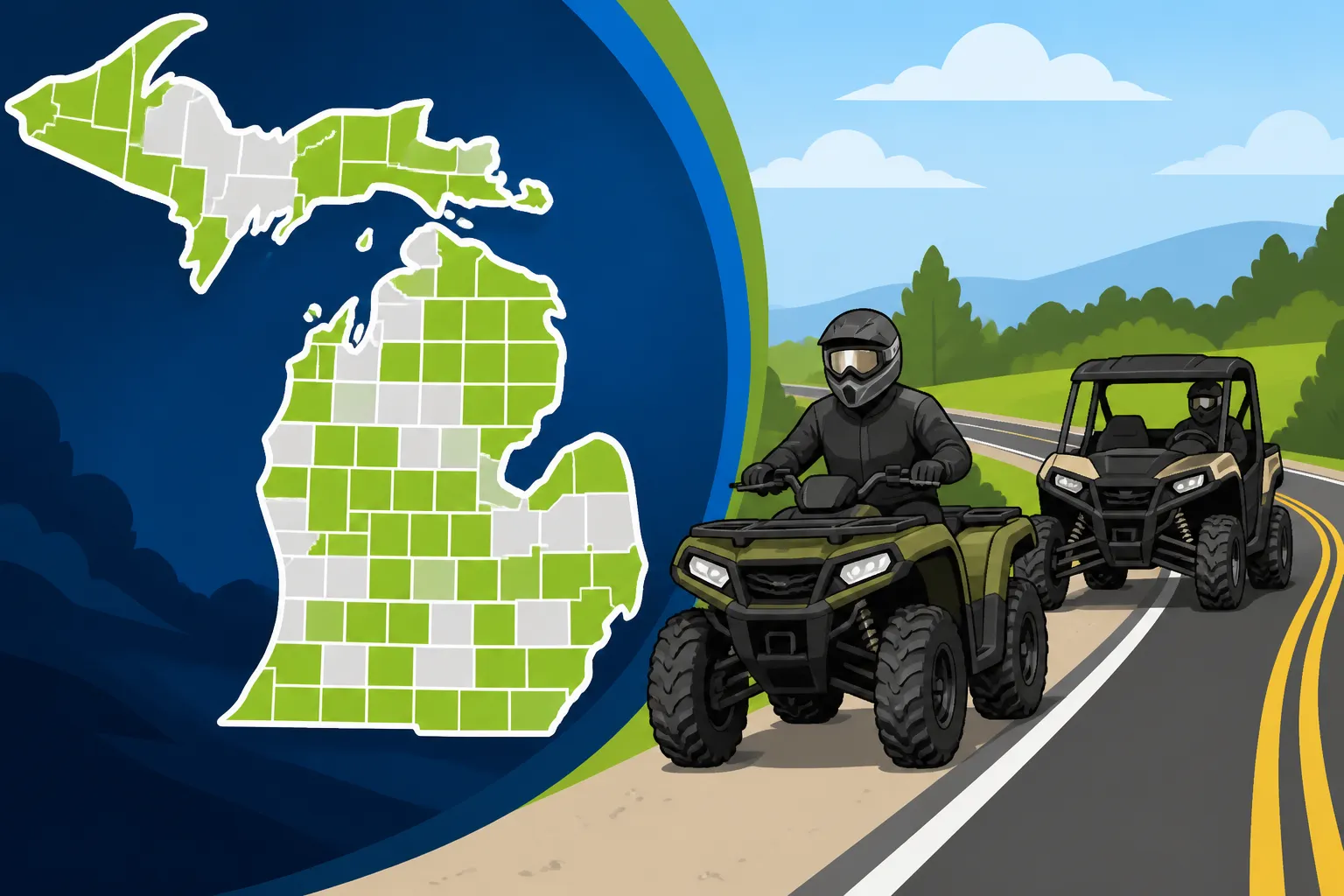
Michigan Counties That Allow ORVs on Road Shoulders
It can be incredibly frustrating to hit the open road in Michigan on your ATV or UTV, only to constantly second-guess whether you're even allowed to be there. One minute you're legally cruising a designated trail, the next you're on a county road, wondering if the shoulder beside you is fair game for your machine. This guide aims to clear up the confusion surrounding Michigan counties that allow ORVs on road shoulders, helping you understand the rules so you can ride with confidence and stay on the right side of the law.
Understanding Michigan's ORV Road Rules Landscape
Michigan's landscape for ORV use on roads is definitely not a one-size-fits-all scenario, and that's precisely where a lot of the confusion and frustration for riders comes from. Unlike some states where the rules are uniformly set from the top down, Michigan has a layered system. The state provides a foundational framework, but then it hands over significant control to individual counties. This means what's perfectly legal for your side-by-side in one county might earn you a stern talking-to, or even a ticket, just a few miles down the road in the next. It’s like trying to navigate a patchwork quilt of regulations, and if you don't know the specifics of each patch, you're bound to feel a little lost.
The State's Baseline and Local Control
At the state level, Michigan generally says, "Hey, ORVs aren't street legal vehicles in the traditional sense." It establishes rules for things like [Michigan ORV License and Trail Permit Explained], basic safety equipment, and age restrictions for operators. However, the critical piece of legislation, Public Act 240 of 2008 (as amended), empowers county road commissions, and in some cases, townships, to opt-in to allowing ORV use on county roads, including the shoulders. This opt-in means that a county actively has to decide to open up its roads. If they don't, then the general state prohibition on road riding stands. So, the default position is "no riding" unless the county specifically says "yes." This puts the onus on us as riders to do our homework for every place we plan to ride.
Think of it this way: the state sets the general speed limit for a highway, but a city council can decide to lower it on a specific stretch within city limits. The overarching state law is there, but local jurisdictions have the power to create more specific, and often more permissive, rules. This local control is a blessing for riders in counties that embrace ORV tourism and recreation, but it's a constant headache if you're traveling through multiple jurisdictions. It requires a proactive approach to research rather than just assuming you're good to go.
Why Road Shoulders? The Nuance of Michigan Law
When counties do decide to open up their roads to ORVs, the term "road shoulder" often comes up. But why the shoulder specifically? Why not the paved lane? Michigan law, and the ordinances that stem from it, often differentiate between the main travel portion of a road and its shoulder for ORV use. The primary reason is safety and minimizing conflict with traditional vehicular traffic. ORVs are generally slower and less predictable in traffic than cars and trucks. By confining them to the shoulder, if available, it creates a buffer zone.
The definition of [Michigan's Maintained Portion of the Road, Defined] is crucial here. The "maintained portion" typically refers to the part of the road that is designed and used for vehicle travel. The shoulder, while still part of the road right-of-way, is often seen as a separate area. In many county ordinances, ORVs are required to ride on the far right of the improved portion of the road, or on the shoulder if one exists and is passable. This isn't just a suggestion; it's usually a legal mandate designed to enhance safety for everyone. So, when a county ordinance refers to "road shoulders," it's generally about providing a safe, designated space for ORVs to travel without directly impeding faster-moving automobile traffic, while still offering connectivity between trails or destinations.
How Counties Make the Call: The Ordinance Process
It’s easy to get frustrated when you see inconsistent ORV rules from one county line to the next. You might think, "Why can't they just make it simple?" The truth is, the process for a county to allow ORVs on its roads, including road shoulders, is a pretty involved one. It's not just a matter of someone in an office deciding one day to flip a switch. It goes through a public process, which is designed to get input from residents, local law enforcement, and other stakeholders who have a vested interest in how their roads are used. Understanding this process can help you appreciate why these rules aren't always uniform, and why they can sometimes change over time.
Public Hearings and Local Input
When a county road commission or county board of commissioners considers opening county roads to ORVs, the first crucial step is usually public hearings. These hearings are where local residents, business owners, trail organizations, and even concerned citizens get to voice their opinions, concerns, and support. Imagine a room packed with people on both sides of the issue: avid riders advocating for more access, landowners worried about noise or property damage, farmers concerned about their equipment sharing the road, and community leaders weighing economic benefits against potential drawbacks. This is where the dialogue happens.
These meetings are often publicized in local newspapers and on county websites, giving everyone a chance to participate. The input gathered at these hearings is vital; it helps the decision-makers understand the pulse of the community. Sometimes, a strong showing of support from riders, coupled with a well-thought-out plan for responsible use, can sway a commission. Other times, significant opposition over safety or environmental concerns might lead to a decision not to open roads, or to impose very strict limitations. It's a truly democratic, albeit sometimes slow, process that shapes the rules we all have to live by.
What an ORV Ordinance Actually Says
Once a county decides to move forward, they don't just put up a sign that says "ORVs Allowed Here." Instead, they draft a formal document called an ORV ordinance. This isn't just a casual guideline; it's a legally binding document that specifies exactly where, when, and how ORVs can be operated on county roads and shoulders. If you're planning to ride, this ordinance is your bible for that specific county. I always recommend riders look up the exact [Michigan County ORV Ordinances Explained] for their chosen riding area.
A typical ORV ordinance will spell out several key things:
- Which Roads Are Open: It might be all county roads, or only specific routes, often excluding state highways or roads within incorporated cities and villages.
- Time of Day/Year: Some ordinances might restrict riding to daylight hours, or prohibit it during certain seasons (e.g., winter months when roads are used by snowmobiles).
- Speed Limits: Most ordinances reiterate Michigan's general [Michigan's 25 mph Limit on County Roads] for ORVs, or sometimes even lower limits in specific areas.
- Safety Equipment: This is where requirements like helmets (for certain riders), eye protection, and [Michigan ORV Lighting Rules During Daylight] become legally enforced for road use. Many ordinances will also reference state requirements for making an ORV "street-legal" for road shoulders, such as mirrors, a horn, and turn signals – essential items that you might find at places like SuperATV.
- Driver Requirements: Specifics on age, driver's license status, and mandatory safety certificates are often included. [Driver's License Rules for Michigan ORV Road Riding] are critical here.
- Passenger Rules: How many passengers are allowed, and their age, will often be stipulated.
- Penalties: What happens if you violate the ordinance – fines, impoundment, etc.
Reading through these details, even if it feels a bit like legal jargon, is absolutely essential. It’s your responsibility to know what you can and cannot do.
Navigating Specific County Ordinances
Now that we understand how counties set these rules, let's talk about the practical application. When you're planning a ride, you're not just looking for a "yes" or "no" answer. You need to know the specifics. Michigan has a fantastic network of trails, but sometimes you need to use a short stretch of a county road or shoulder to connect trail segments, get to a gas station, or reach a staging area. That's where knowing which counties have embraced ORV access on their shoulders becomes invaluable.
Counties That Have Embraced Shoulder Riding
Many counties across Michigan, particularly in recreational areas, have recognized the economic and recreational benefits of allowing ORVs on their road shoulders. These counties often have extensive ORV trail systems that riders use for recreation, hunting, or simply exploring the beautiful Michigan outdoors. When a county board passes an ordinance to open roads, it's usually with the intention of enhancing the riding experience and supporting local businesses.
Typically, you'll find these more permissive ordinances in counties that are rural, have a lower population density, and are popular tourist destinations for outdoor enthusiasts. Think of counties in northern Michigan, or parts of the Upper Peninsula, where ORV riding is a significant part of the local culture and economy. They understand that allowing ORV access on road shoulders helps riders connect the dots, making their trail systems more cohesive and user-friendly. However, even in these "ORV-friendly" counties, the open roads are almost always county roads, not state highways, and they exclude roads within incorporated cities or villages where traffic is heavier and local ordinances might still prohibit ORVs.
Here’s a simplified look at how some counties might approach ORV access:
| Feature | "Open" County Example (e.g., Roscommon) | "Limited" County Example (e.g., Calhoun) |
|---|---|---|
| Roads Allowed | All county roads and shoulders | Designated routes only; often unpaved |
| Speed Limit | 25 mph max, or posted road speed if lower | 25 mph max, or posted road speed if lower |
| Time Restrictions | Sunrise to Sunset | Sunrise to Sunset |
| Vehicle Requirements | State-mandated plus specific county rules (e.g., mirrors, horn, turn signals) | State-mandated only, generally no street-legal requirements for shoulders |
| Operator Age | Follows state law | Follows state law |
| Exceptions | State highways, city/village limits | State highways, city/village limits, some paved county roads |
Note: This table provides hypothetical examples for illustrative purposes. Always check specific county ordinances for current, accurate rules.
Restrictions and Specific Rules Within Ordinances
It's a common misconception that "allowing ORVs on road shoulders" means a free-for-all. Far from it! Even in the most ORV-friendly counties, ordinances come with a host of restrictions designed to ensure safety and minimize disruption. These aren't arbitrary rules; they're usually the result of those public hearings and careful consideration of how ORVs can integrate safely into the existing road network.
For instance, most ordinances will specify that ORVs must be ridden single file on the far right of the improved shoulder or roadway. You can't just cruise two or three wide down the shoulder. Speed limits, as mentioned earlier, are almost universally 25 mph or the posted speed limit if lower, even if the road is perfectly clear. Headlights and taillights are usually required to be on at all times, regardless of daylight, emphasizing the importance of visibility. [Safety Glass, Mirrors and Horns: Michigan's Street-Legal List] are often called out as requirements, especially for UTVs, to enhance safety and compliance. These are accessories you might consider upgrading from a reputable dealer like SuperATV to ensure you meet all legal requirements. Additionally, many ordinances will explicitly prohibit ORVs on state highways (M-roads, US-routes, I-interstates) and within the boundaries of incorporated cities and villages, even if those areas are within an otherwise permissive county. So, while a county might be "open," you still need to be aware of the exact boundaries and specific caveats.
Before You Ride: Due Diligence and Preparation
Okay, so you're ready to hit the trails and use those handy road shoulders to connect segments or grab a quick bite. That's great! But before you even load up your machine, there are some crucial steps you need to take. Showing up unprepared or unaware of the local rules isn't just a recipe for a bad day; it can lead to fines, impoundment, or even serious accidents. A little bit of homework and preparation upfront can save you a lot of headache and ensure a much more enjoyable and legal ride.
Researching Your Destination
This is the most critical step. Never assume that because one county allows ORVs on its road shoulders, the next one over does too. Or that the rules haven't changed since your last ride. County ordinances can and do evolve. The first thing you should always do is pinpoint the specific county (or counties) you plan to ride in. Then, head to their official county website. Look for sections related to the County Clerk, the Road Commission, or the Sheriff's Department. Many counties will have their current ORV ordinances posted there.
If you can't find it online, don't hesitate to call the County Clerk's office or the local Sheriff's non-emergency line. Politely explain what you're trying to find out. DNR (Department of Natural Resources) offices in the area can also sometimes point you in the right direction. Remember, asking beforehand is always better than getting pulled over by a deputy who knows the local rules better than you do. It's also wise to check for any local news or social media groups related to ORV riding in that specific area, as riders often share updates on rule changes or common enforcement points.
Essential Gear and Vehicle Compliance
Once you know the rules, you need to make sure your ORV and your gear comply. State law mandates certain things for ORV operation, and county ordinances can add to those requirements, especially when it comes to road use. For instance, while Michigan might not universally require turn signals for off-road use, a county ordinance allowing road shoulder use almost certainly will.
Here's a checklist of items you should always consider, and confirm against local ordinances:
- ORV License and Trail Permit: Make sure your machine has its current [Michigan ORV License and Trail Permit Explained].
- Safety Certificate: If you're a younger rider or supervising one, ensure you meet the [Michigan ORV Safety Certificate Requirements].
- Driver's License: If the county requires a valid driver's license for road use, make sure you have it on you.
- Helmets and Eye Protection: Always a good idea, and often legally required for certain riders or scenarios. [Michigan Helmet Law for ATV Riders] outlines these.
- Mirrors: Side mirrors are typically required for road use, allowing you to see traffic approaching from behind. Brands like SuperATV offer a wide range of DOT-compliant mirrors perfect for this.
- Horn: A working horn is almost universally required for road-legal operation to alert others.
- Turn Signals and Brake Lights: Essential for signaling your intentions to other drivers on the road. Many aftermarket kits, including those from SuperATV, can add these to your UTV or ATV.
- Headlights and Taillights: Must be on, even during the day, for maximum visibility.
- Firearm & Alcohol Rules: If you're hunting or camping, be aware of [Carrying a Firearm on an ORV in Michigan] and [Michigan ORV Alcohol Limit and Penalties].
- Proof of Ownership & Insurance: Always carry your [Michigan ORV Paperwork During a DNR Stop], including proof of ownership and insurance. You might need to know [How to Check If an ATV Is Stolen Before You Buy] if you just purchased your machine.
Even if a specific ordinance doesn't explicitly list every single item, it's always best to err on the side of caution and equip your machine for maximum safety and visibility when you're sharing the road shoulders.
The Finer Points of Shoulder Riding Etiquette and Safety
Getting your ORV ready and knowing the rules is half the battle. The other half is about how you actually behave when you're riding on those road shoulders. It's not just about legal compliance; it's about being a responsible, respectful, and safe rider. Our actions collectively shape public perception of ORV use, and whether more counties will decide to open up their roads – or close them off entirely. Good etiquette and safety aren't just for your benefit; they're for the entire riding community.
Sharing the Road (Shoulder) Responsibly
When you're on a road shoulder, you're interacting with a different set of users than you would on a dedicated trail. Cars, trucks, bicycles, and even pedestrians might be sharing that same space or the adjacent roadway. This means your behavior needs to adapt.
- Maintain Distance: Always give other vehicles, cyclists, and pedestrians ample space. Don't crowd them, and be prepared to slow down or even stop if necessary.
- Yield Right-of-Way: Remember that ORVs often have a lower priority on road shoulders compared to traditional vehicles, and even sometimes compared to bicycles or pedestrians. Be prepared to yield.
- Reduce Dust and Noise: If you're on a gravel shoulder, try to minimize kicking up excessive dust when passing homes or other road users. Keep your speed in check, especially near residential areas, to reduce noise impact, and ensure your exhaust system complies with [Michigan ORV Noise Limits on Roads].
- Stay on the Shoulder (or designated area): Do not drift into the main travel lanes unless absolutely necessary and safe, and only for specific maneuvers allowed by law (like crossing at an intersection). [Michigan Road Shoulder vs Maintained Portion] is a key distinction here.
- Be Predictable: Use your turn signals (if equipped, and they absolutely should be for road use) well in advance. Make eye contact with drivers if possible. The more predictable you are, the safer everyone will be.
- Respect Private Property: Even if the road is open, straying onto adjacent private land is [Michigan Trespass Rules for ORV Riders]. Always stay within the road right-of-way.
Safety Considerations and Best Practices
Riding on road shoulders introduces unique safety challenges compared to pure trail riding. The speeds of other vehicles are higher, the surfaces can be unpredictable, and distractions are plentiful.
- Visibility is Key: Wear brightly colored clothing, use reflective tape on your machine, and keep your headlights and taillights on at all times. Consider adding a whip flag, especially if you're riding in an area with rolling terrain or blind spots.
- Eyes Up, Mind On: Road riding requires heightened awareness. Scan for driveways, intersections, approaching vehicles, potholes, loose gravel, and anything else that could pose a hazard. Don't assume drivers see you.
- Control Your Speed: The 25 mph limit on most county roads for ORVs isn't just a suggestion; it's a safety measure. It allows you more time to react to unexpected situations and reduces the severity of potential impacts. Pushing the limit on a shoulder can quickly lead to loss of control, especially with loose gravel or uneven surfaces.
- Watch for Intersections: These are high-risk areas. Always slow down, look both ways, and proceed with extreme caution. Remember, you might not be easily seen by cross-traffic.
- Be Aware of Weather Conditions: Rain, snow, or even heavy dust can significantly reduce visibility and traction on road shoulders. Adjust your riding style accordingly.
- Emergency Preparedness: Carry a small first-aid kit, a cell phone (though service isn't guaranteed in all rural areas), and let someone know your planned route and estimated return time. In the event of an incident, knowing [Michigan ORV Accident Reporting Requirements] is crucial.
By combining thorough research with responsible riding practices, we can all contribute to a safer and more welcoming environment for ORV enthusiasts on Michigan's county road shoulders. Let's make sure we're good stewards of the access we're given!
Disclaimer
This article is for general informational purposes only and does not constitute professional advice. Laws, prices and regulations vary by location and change over time. Consult a qualified professional for guidance on your specific situation.