Michigan ORV Permit Rules for Motorcycles
A dirt bike can feel like a motorcycle, but Michigan may treat it as an ORV when you ride it off-road. That distinction affects which permits you need and where they apply. Here’s how to tell an ORV license from a trail permit, when both may be required, and what to check before riding a motorcycle on Michigan trails or public land.
When a motorcycle counts as an ORV
Michigan’s ORV rules can apply to off-road motorcycles, including dirt bikes. The key issue is how and where the machine is being used—not simply whether it has two wheels or is called a motorcycle.
A motorcycle built for off-road travel may be considered an ORV when it is operated off the public road system. That means ORV permit requirements can apply on designated trails, routes, scramble areas, and other public lands where ORV use is allowed.
A street-legal motorcycle is a different case when it is being used on public roads as a registered motor vehicle. Its road use involves the usual vehicle requirements, such as proper registration and a valid driver’s license. But a plate does not automatically answer every question about off-road riding. If you take the motorcycle onto an ORV trail or other public riding area, check the rules for that specific use rather than assuming the road registration replaces an ORV permit.
The practical distinction is:
- On public roads as a road-registered motorcycle: Follow the rules for motorcycles and road use.
- Off-road on public land or designated ORV routes and trails: Check whether an ORV license, a trail permit, or both are required.
- On private property: Permit requirements may differ, but you still need the property owner’s permission and must follow applicable safety rules.
An ORV permit is not the same thing as a motorcycle endorsement, road registration, or permission to ride anywhere. Before you plan a route, sort out both the machine’s status and the type of land or trail you intend to use. Michigan ORV License and Trail Permit Explained covers the basic permit distinction in more detail.
Which permits a motorcycle rider may need
Michigan uses two separate ORV permissions: an ORV license and an ORV trail permit. They serve different purposes, so it is important not to treat them as interchangeable.
The ORV license is generally the basic requirement for operating an ORV on public land, subject to specific exemptions. The trail permit is an additional requirement for riding on designated ORV trails and areas where it applies. A rider going to a designated trail may therefore need both.
| Where you plan to ride | What to check |
|---|---|
| Designated ORV trail or scramble area | Whether an ORV license and trail permit are required |
| State forest road or other public land | Whether an ORV license is required and whether the route has additional permit rules |
| Private property | Owner permission and whether a permit exemption applies |
| Public road as a road-registered motorcycle | Road registration, licensing, and local road-use rules |
| Route that crosses different land or trail types | The rules for each segment, not just the starting point |
Rules can depend on the exact route designation. A marked route, a trail, a scramble area, and a public road are not necessarily treated the same way. Use current Michigan DNR information to confirm the permit requirements for the specific place you plan to ride.
A permit is generally associated with the machine, not a rider’s general permission to take any ORV out. If your group brings several motorcycles, check the requirements for each machine. Do not assume that one permit covers the whole group or that a permit on one motorcycle can be moved to another.
Also check the permit year before buying or planning a trip. Michigan’s ORV permit cycle and the date a permit is valid can affect a ride planned near the start or end of a season. Michigan ORV Permit Year: April 1 to March 31 explains the timing, while Where to Buy a Michigan ORV License can help you check the available purchase options.
A road plate is not a universal substitute
A road-registered motorcycle may meet the requirements for legal road travel, but off-road access is a separate question. Before riding a plated motorcycle on a designated ORV trail, confirm whether the trail requires ORV permits for that machine. Likewise, an ORV license does not make a dirt bike street legal or authorize riding on roads that are closed to ORVs.
This distinction matters when a planned ride includes both pavement and trail. Confirm what is allowed on each section, and do not use a road plate or ORV sticker as a shortcut for checking access rules.
Permits are not the only riding requirements
A valid permit does not establish that a motorcycle is the right size for a trail, that the rider is old enough for the planned activity, or that the machine is allowed on every route. Trail designations and restrictions still matter. Riders should also check age and safety rules, machine-width limits where applicable, posted signs, and any temporary closures.
If a young rider will be joining the trip, review Michigan ORV Safety Certificate Requirements and the rules that apply to that rider’s age. Permit compliance is only one part of a legal and safe ride.
Exemptions, private land, and out-of-state motorcycles
Some uses may be exempt from Michigan’s ORV permit requirements, but an exemption should not be assumed based on the motorcycle’s owner, home state, or registration alone. The location and type of riding matter.
Private land is a common source of confusion. Riding on land with the owner’s permission may qualify for a permit exemption in certain circumstances, but that does not mean every ride that starts on private property is exempt. If you leave the property and enter a public trail, state forest road, or other public riding area, the rules for that public segment apply. Check Michigan ORV Permit Exemptions on Private Land before relying on a private-land exemption.
Permission to ride is also separate from permit status. A permit does not give you access to private property, and a landowner’s permission does not automatically authorize you to use a public ORV route without the required permits.
Out-of-state riders should be particularly careful about assuming their home-state registration or trail sticker is accepted in Michigan. Reciprocity can depend on the state and the particular permit or registration involved. A dirt bike’s plate, registration card, or trail pass may not cover every Michigan riding location.
Before traveling, check Michigan’s current rules for nonresident riders and confirm any claimed reciprocity with an official source. If the machine or permit is not clearly covered by an agreement, ask whether you must buy Michigan’s ORV license, trail permit, or both. Michigan ORV Permit Reciprocity With Other States and Out-of-State Riders and the Michigan ORV License address those questions.
A simple pre-trip check can prevent an expensive mistake:
- Identify whether the motorcycle will be used as an ORV, a road-registered motorcycle, or both.
- List each trail, route, and public land area on the planned ride.
- Check the permit rules for every type of area on that list.
- Confirm whether an out-of-state permit or registration is accepted for that use.
- Verify permit validity dates, machine-specific requirements, and any posted restrictions.
- Keep proof of purchase or permit information accessible, and make sure required decals are displayed as directed.
Because permit rules and reciprocity arrangements can change, confirm them before the trip rather than relying on what worked for a previous season or a ride in another state.
Before riding: display, checks, and common mistakes
Once you know which permissions apply, follow the current instructions for displaying them on the motorcycle. A sticker that is damaged, obscured, or placed where it cannot be seen may create a problem during a permit check. The correct location can depend on the machine and the type of permit, so use Michigan DNR placement instructions rather than copying the setup from another rider’s ATV. Where the Michigan ORV Sticker Goes on Your Machine provides related placement guidance.
A few frequent mistakes are easy to avoid:
- Buying only one of the two permits: A trail ride may require the ORV license and the separate trail permit.
- Assuming a motorcycle plate covers ORV trail use: Road registration and off-road permits address different kinds of access.
- Treating every public route alike: A road, trail, and scramble area may have different rules.
- Relying on an old permit or an old reciprocity assumption: Check current validity and acceptance before riding.
- Confusing permission with access: A valid permit does not override a closure, posted restriction, or private-property boundary.
- Forgetting the other riders’ requirements: Each rider and machine may have separate age, safety, or permit obligations.
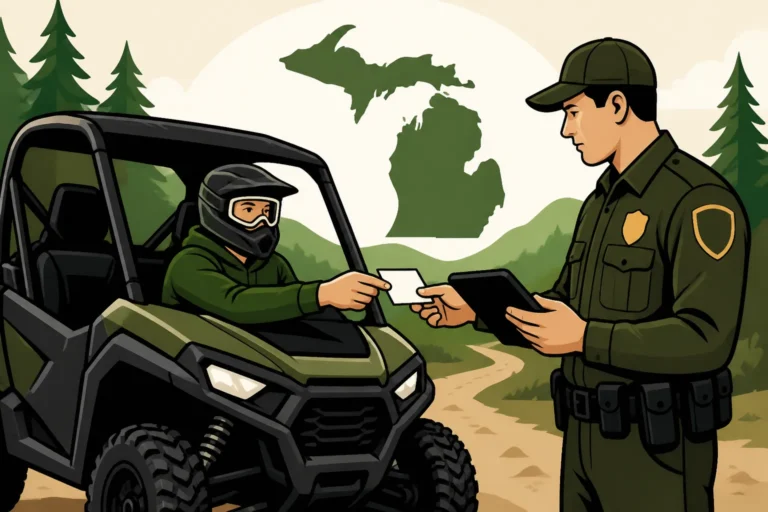
Conservation officers may check permits and other riding requirements on public land. Keep your paperwork or purchase confirmation available, and make sure the permit is attached or displayed as required. If you are unsure whether a particular trail requires a permit for a motorcycle, check with the agency responsible for that area before entering. Michigan ORV Permit Checks by Conservation Officers explains what riders may want to have ready.
A careful permit check is especially worthwhile when a trip crosses several trail systems or includes both road and off-road sections. Confirming the rules for each segment helps prevent a valid permit for one type of riding from being mistaken for permission to ride somewhere else.
Disclaimer
This article is for general informational purposes only and does not constitute professional advice. Laws, prices and regulations vary by location and change over time. Consult a qualified professional for guidance on your specific situation.