How to Make a Side-by-Side Street Legal in Michigan
There's nothing quite like the freedom of exploring Michigan's incredible outdoors on a side-by-side, but many riders find themselves hitting a wall when they want to legally transition from the trail to the paved road for a quick trip to the gas station, a ride through town to lunch, or even just to connect two trail systems. The frustration of owning a versatile machine that feels limited to off-road only is real, and it often leads to confusion about Michigan's specific, sometimes complex, rules. This comprehensive guide is here to unravel those complexities, walking you through the detailed process of how to make your side-by-side street legal in Michigan, covering everything from the required parts to the crucial paperwork and inspections.
The Dream of Street Legal Riding: Why Michigan is Different
Picture this: You’ve just finished a fantastic ride on the [Tin Cup Spring OHV Loop Length] and you're craving a burger from that little diner in town. Or maybe you want to connect to another trail system a few miles down the paved road. The idea of just hopping on your side-by-side and driving there, legally and without worry, is incredibly appealing. Many of us dream of having that kind of freedom with our UTVs, making them true multi-purpose adventure machines. But in Michigan, making that dream a reality for your side-by-side involves navigating a very specific set of regulations.
The Allure of Road Access for Your Side-by-Side
Having a street-legal side-by-side opens up a whole new world of possibilities for Michigan riders. No longer are you strictly confined to designated ORV trails or private property. Imagine being able to run errands without loading your machine onto a trailer, or taking the scenic route through a charming small town on your way to the next off-road adventure. For those who use their UTVs for work – whether it's farming, property maintenance, or just hauling gear to a remote cabin – road access can be a game-changer, eliminating the constant need for a truck and trailer. It simply adds a layer of convenience and utility that dramatically enhances the ownership experience. This expanded freedom isn't just about fun; it's about practicality, making your valuable investment even more versatile.
Michigan's Unique Stance on Off-Road Vehicles on Roads
Unlike some other states that might have a simpler "ORV street-legal kit" approach, Michigan doesn't generally consider traditional off-road vehicles like ATVs and UTVs as road-legal from the factory. The state has a clear distinction between vehicles designed primarily for off-road use and those built for public highways. This is where a lot of the confusion comes in. You can't just put a license plate on your side-by-side and call it a day, even if you’ve added some basic lights. Michigan views these machines as a separate category, and to bridge that gap to street legality, you have to go through a conversion process that reclassifies your UTV. It’s not just about adding parts; it’s about meeting specific safety and equipment standards to qualify for a different type of title and registration.
Understanding the "Assembled Vehicle" Pathway
So, how does Michigan allow an off-road vehicle like a side-by-side onto its roads? The key is the "Assembled Vehicle" pathway. This isn't about modifying an existing vehicle title; it's about essentially building a new legal classification for your machine. When you convert your UTV to meet the specific requirements, Michigan's Secretary of State can then issue an "assembled vehicle" title, which is different from a standard ORV title or a typical passenger car title. This designation signals that your machine, while perhaps starting as an off-road vehicle, has been equipped and inspected to meet the safety standards required for operation on public roads. It's a rigorous process, but it's the official route to truly legal road use for your side-by-side in Michigan, allowing you to get a [Michigan Plate for an Assembled Vehicle UTV] and avoid potential headaches with law enforcement.
Essential Components for Street Legality: What Your UTV Needs
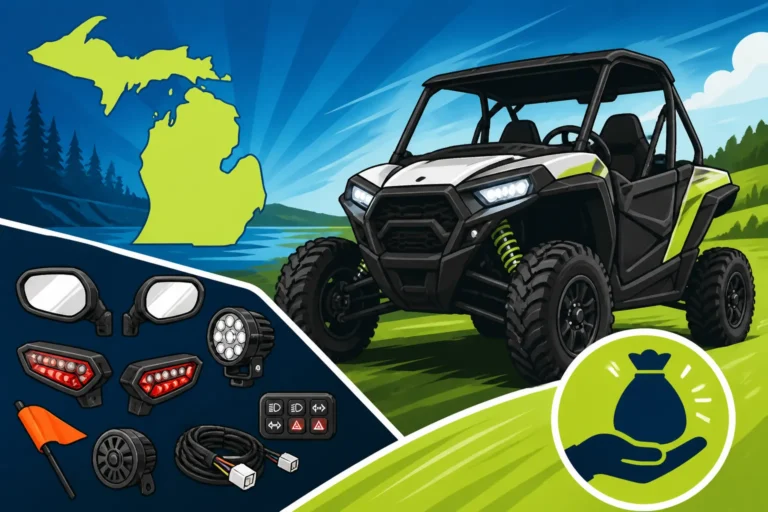
Converting your side-by-side into a street-legal machine in Michigan isn't just a matter of slapping on a few accessories. The state has a very particular list of equipment that must be installed and functioning correctly to pass inspection. Think of it as bringing your UTV up to a minimum standard of safety and visibility comparable to other vehicles on the road. Many aftermarket companies, like SuperATV, specialize in street-legal kits and components that can help you meet these rigorous requirements. These kits often bundle many of the necessary parts, making the purchasing process a bit easier.
Lighting the Way: Headlights, Taillights, and Turn Signals
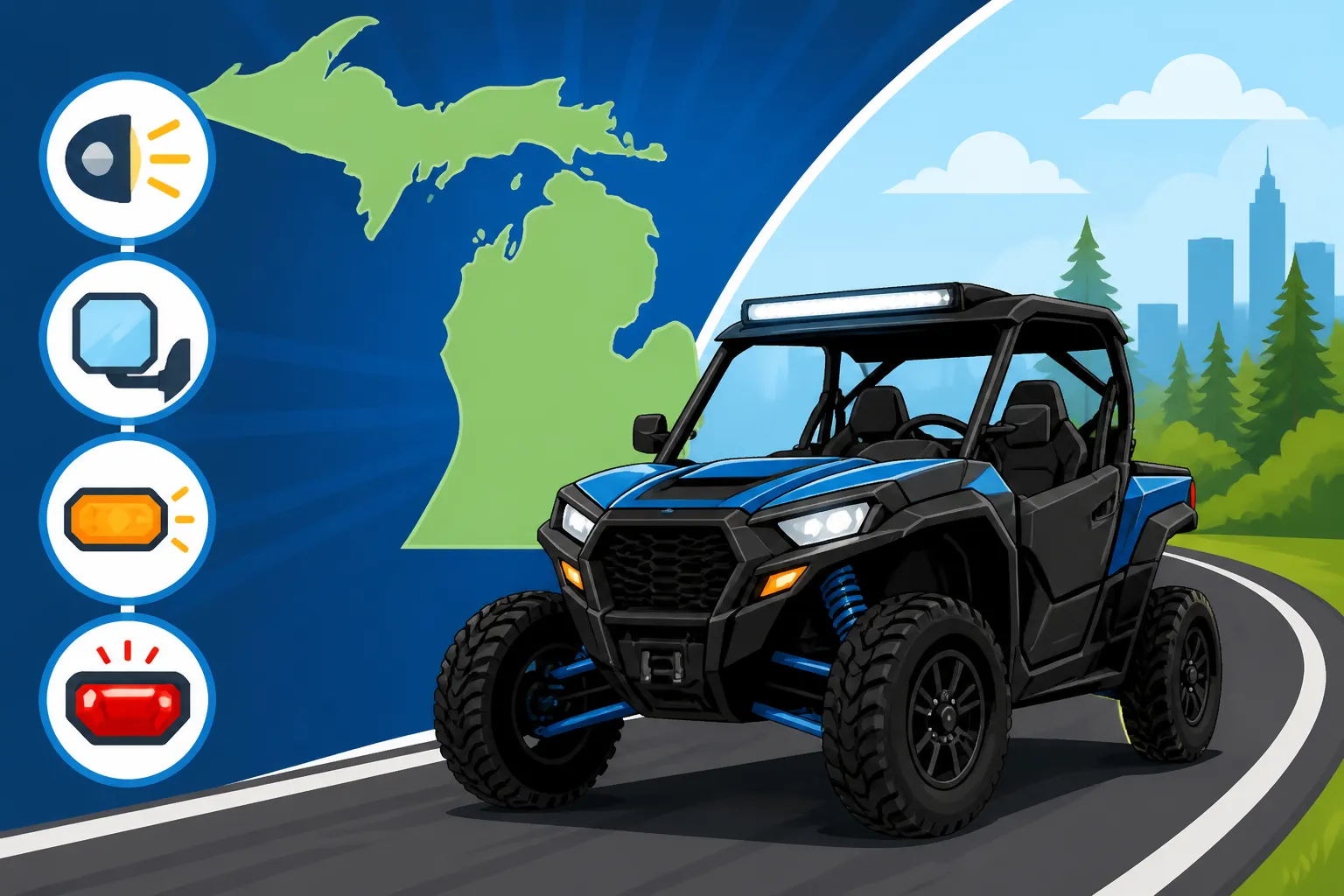
When you’re sharing the road with cars, trucks, and motorcycles, being seen is paramount, especially during dawn, dusk, or inclement weather. Your side-by-side will need a full complement of road-legal lighting.
- Headlights: You'll need at least two white headlamps, one on each side, that illuminate the road ahead. They must meet specific candlepower and aiming requirements to ensure they adequately light the path without blinding oncoming drivers. Your factory headlights might be sufficient, but double-check their intensity and ensure they're properly aligned.
- Taillights: Similar to headlights, you’ll need two red taillamps, one on each side, visible from a specific distance to signal your presence to vehicles behind you. These usually need to be lit whenever your headlights are on.
- Brake Lights: Integrated with your taillights, these must illuminate brighter when you apply the brakes. This is a critical safety feature to alert following drivers of your deceleration.
- Turn Signals and Hazard Lights: This is often where aftermarket conversion kits become essential. Your UTV needs amber turn signal lamps, front and rear, on both sides, to indicate turns or lane changes. These signals must be wired to a switch on your dash or steering column, and they must be able to flash simultaneously as hazard warning lights. Many off-road machines don't come standard with these, so you'll be looking at installing a complete turn signal kit. A quality kit will typically include the lights, wiring harness, flasher relay, and a switch. For more on this, check out [Turn Signals and Hazard Lights on a Street-Legal Build].
Visibility and Warning: Mirrors, Horn, and Safety Glass
Beyond just lights, your ability to see around you and warn others is crucial for safe road operation.
- Mirrors: You will need at least two rearview mirrors. One must be a rearview mirror providing a clear view to the rear, and the other must be a driver's side mirror. Many UTVs come with a center rearview mirror, but often lack a proper side mirror. These mirrors must be securely mounted and provide an unobstructed view of the road behind your vehicle. Consider durable, vibration-resistant options designed for UTVs.
- Horn: A working horn or audible warning device is mandatory. It needs to be loud enough to be heard by other drivers and pedestrians in traffic. A simple, push-button electric horn, easily wired into your UTV's electrical system, usually does the trick. It doesn't need to be a fancy air horn, just a clear, consistent sound.
- Safety Glass Windshield: This is a big one. While many UTVs have windshields, they are often made of polycarbonate or acrylic – not safety glass. For street legality, you must have a windshield made of safety glass that meets automotive standards. This glass is designed to minimize shattering into sharp pieces in the event of an impact. If your current windshield isn't safety glass, you'll need to replace it. Some riders opt for a full cab enclosure with a glass windshield, while others replace just the front windshield. This is a significant cost, but a non-negotiable one. If you're wondering about specifics, [Safety Glass Windshield Cost for a Side-by-Side] might offer insights, and it’s important to understand [Plexiglass Windshields and Why Michigan Rejects Them].
Staying Connected: DOT Tires, Speedometer, and Windshield Requirements
These elements ensure your UTV can handle road conditions and that you can monitor your speed accurately.
- DOT-Approved Tires: Your tires must be specifically rated for street use, indicated by a "DOT" (Department of Transportation) stamp on the sidewall. Many aggressive off-road tires are not DOT-approved because their tread patterns are not designed for safe traction and wear on pavement at road speeds. Running non-DOT tires on public roads can be unsafe and will lead to an inspection failure. You’ll likely need to invest in a new set of tires designed for mixed-use or street-specific applications. The difference in handling and ride quality on pavement will also be noticeable and safer.
- Speedometer: A functional and accurate speedometer is required to ensure you can monitor and adhere to posted speed limits. Most modern UTVs come with a speedometer, but if yours is missing or inaccurate, it will need to be repaired or replaced. It's not just about compliance; knowing your speed is essential for safe driving on roads, especially when facing Michigan's [Michigan's 25 mph Limit on County Roads] in many areas.
- Windshield Wiper and Washer System (Conditional): While a safety glass windshield is always required, whether you also need a functional windshield wiper and washer system depends on the specific setup and how your vehicle is ultimately classified. If your vehicle is enclosed like a typical car, a wiper/washer system will likely be expected. For more open-cab UTVs, the requirement might be less stringent, but it's always best to err on the side of caution and consider it, especially if you plan to ride in various weather conditions.
Other Must-Haves: Seatbelts, Fenders, and Exhaust
Rounding out the safety and compliance list are a few more critical items.
- Seatbelts: Every seating position in your side-by-side must have a working seatbelt. These should be securely mounted and in good condition. Most UTVs come standard with seatbelts, but ensure they haven't been modified or damaged to the point of being unsafe.
- Fenders/Mudguards: Your UTV must be equipped with fenders or mudguards over all wheels to prevent debris, water, and mud from being thrown up onto other vehicles or pedestrians. This is a common requirement to keep roads cleaner and improve visibility for those behind you.
- Exhaust System: Your exhaust system must be fully functional, preventing excessive noise and ensuring that exhaust fumes are directed away from the passenger compartment. It also needs to have a spark arrestor, which is typically standard on ORVs but worth confirming. The vehicle must not produce excessive noise, which means modified or "loud" aftermarket exhausts might not pass inspection.
- [Safety Glass, Mirrors and Horns: Michigan's Street-Legal List] provides a concise summary of many of these requirements, which is an excellent resource to cross-reference as you plan your conversion. This detailed list of components might seem daunting, but it's all in the name of safety and ensuring your machine is truly ready for public roads.
| Component | Requirement | Notes |
|---|---|---|
| Headlights | Two white, functional, properly aimed. | Often factory, but confirm brightness and aim. |
| Taillights | Two red, functional, visible. | Often factory. |
| Brake Lights | Red, brighter when brakes applied. | Usually integrated with taillights. |
| Turn Signals | Amber, front and rear, both sides, with operating switch. | Most UTVs need aftermarket kit. Consider SuperATV for kits. |
| Hazard Lights | Ability for all turn signals to flash simultaneously. | Usually part of turn signal kit. |
| Rearview Mirrors | At least one center mirror and one driver's side mirror. | May need aftermarket side mirrors. |
| Horn | Audible warning device. | Simple electric horn is sufficient. |
| Safety Glass Windshield | Made of automotive-grade safety glass. | Often requires replacement of factory plexiglass/polycarbonate. |
| DOT-Approved Tires | All tires must have a "DOT" stamp on the sidewall. | May require new tires if current ones are off-road only. |
| Speedometer | Functional and accurate. | Most UTVs have one, confirm accuracy. |
| Seatbelts | For every seating position, securely mounted and functional. | Usually factory. |
| Fenders/Mudguards | Over all wheels to prevent debris throw. | Often factory, but ensure they provide adequate coverage. |
| Exhaust System | Functional, not excessively loud, with spark arrestor. | Factory exhaust usually meets this; avoid overly loud aftermarket systems. |
| Optional (Recommended) | ||
| Windshield Wiper/Washer | For enclosed cabs or frequent wet weather riding. | Not always legally required for open UTVs, but highly practical. |
| Emergency Brake | Functional parking brake. | Most UTVs have one, ensure it holds securely. |
| Reflectors | Amber to the front/sides, red to the rear/sides. | Enhance visibility, especially at night. |
The Paperwork Puzzle: Navigating the Secretary of State
Once your side-by-side has all the necessary components installed, you're ready to tackle the bureaucratic side of things. This part can feel a bit like a scavenger hunt, but with careful organization and attention to detail, it’s entirely manageable. The goal here is to get your vehicle officially recognized by the state as an "assembled vehicle," which then allows for proper titling and plating. Getting this right from the start will save you a lot of headaches down the road.
The Michigan Assembled Vehicle Title Application
This is the core document that kickstarts the entire process. You won't find a specific "street legal UTV" application; instead, you'll be using the form designed for custom-built or significantly modified vehicles. The Michigan Secretary of State website or any branch office can provide you with the correct form, typically labeled something like "Application for Michigan Vehicle Title – Assembled/Reconstructed/Specially Constructed Vehicle." This form asks for detailed information about your UTV, including its origin, the parts used in its conversion, and your personal information. You'll need to be thorough and accurate in filling it out, as any discrepancies can cause delays. Don't be shy about providing extra details; the more clear you are about the transformation, the better. This is the crucial first step to getting your [Michigan's Assembled Vehicle Route for a UTV] officially recognized.
Gathering Your Proof of Ownership and Bills of Sale
Before you even think about applying for that assembled vehicle title, you need to prove that you legally own the side-by-side you're converting. This means having all the original documentation in order.
- Original ORV Title: If your UTV already has a Michigan ORV title, this is your primary proof of ownership. Make sure it's in your name and free of any liens. If you don't have an ORV title, perhaps because it's an older machine or you're the original owner and never got one (which used to be an option for some older machines), you'll need to provide other evidence. In some cases, this could mean using a manufacturer's certificate of origin (MCO) or a notarized bill of sale from the original purchase. The more documentation you have tracing ownership back, the better. This goes back to principles covered in [Proof of Ownership When a Michigan ORV Has No Title].
- Bills of Sale for Major Components: Since you're essentially "assembling" a road-legal vehicle, the Secretary of State may want to see proof of purchase for significant parts you've added or replaced. This includes your safety glass windshield, DOT tires, turn signal kit, and any other major components that contribute to its street-legal status. Keep clear, itemized receipts and bills of sale for these parts. While they might not require every single receipt, having them organized in case they ask is a smart move. It demonstrates that you've genuinely invested in making the machine compliant with road safety standards.
- Lien Information: If there's a lien on your existing ORV title (meaning you still owe money on a loan), you'll need to work with your lender to ensure they are aware of and approve the re-titling process. This can sometimes add an extra layer of complexity, as the lienholder will want their interest protected on the new "assembled vehicle" title.
The Importance of a VIN Inspection
One of the most critical steps in the paperwork process is the VIN (Vehicle Identification Number) inspection. This isn't just a casual glance at your VIN plate. It's a thorough verification by a qualified official to ensure that the VIN on your vehicle matches your documentation, that it hasn't been tampered with, and to confirm the general description of the vehicle.
- Who Conducts the Inspection: In Michigan, these inspections are typically performed by law enforcement officers, often from the Michigan State Police or sometimes a Sheriff's department, who are trained for this specific task. You usually need to schedule an appointment for this, and they might require you to bring the vehicle to a specific location or, in some cases, they might come to you if pre-arranged.
- What They're Looking For: The inspector will verify the VIN's authenticity and ensure it's properly affixed to the frame. They'll also check for any signs of the VIN being altered, removed, or cloned. This is a crucial step in preventing theft and ensuring the legal lineage of the vehicle. During this inspection, they might also do a preliminary check of the major safety equipment you've installed, though a full safety inspection comes later. The purpose here is primarily to verify the vehicle's identity.
- Documentation for the Inspector: Make sure you have all your ownership documents, including the original ORV title and any bills of sale, ready for the VIN inspector to review. They will need to compare these to the actual vehicle. The inspector will then complete and sign an official form (often a TR-54, Vehicle Identification Number Verification) which you will submit with your application to the Secretary of State. Without this signed verification, your application will not proceed. Understanding [Fixing a Wrong VIN on a Michigan ORV Title] might be useful if you encounter any discrepancies here.
The Inspection Process: Proving Your UTV is Road-Ready
Once you’ve got your paperwork in order and your UTV is equipped, the next hurdle is the actual physical inspection by the Michigan Secretary of State. This isn't just a formality; it's where a trained inspector will meticulously check every single component to ensure it meets Michigan's specific safety and equipment standards for an assembled vehicle. This step is often the most nerve-wracking for owners, as a failed inspection means more work and another trip back to the drawing board.
Scheduling and Preparing for Your Michigan Assembled Vehicle Inspection
The first step is to schedule your inspection. This is typically done through a designated Secretary of State branch or sometimes a specialized facility. It's not usually a walk-in service, so call ahead or check the SOS website for the proper procedure. Be prepared for a potential wait time, especially during busy seasons.
- Location: You might be directed to a specific branch office with an inspection bay or a dedicated inspection facility. Clarify the exact location and any specific instructions they might have for bringing your UTV.
- What to Bring: Always bring all your completed paperwork, including your application, VIN verification form, proof of ownership (title, MCO, bills of sale), and any receipts for major components. Having these organized in a folder will demonstrate your preparedness.
- Pre-Inspection Checklist: Before you even leave for the inspection, do your own thorough walkthrough. Turn on all your lights – headlights (high and low beam), taillights, brake lights, and turn signals. Honk the horn. Check your mirrors. Ensure your windshield is clean and made of safety glass. Verify all seatbelts are functional. Check your tires for the DOT stamp and proper inflation. Make sure your exhaust isn't excessively loud. Essentially, go through the entire list of requirements and double-check everything. This is your last chance to catch something before the official inspector does. A small detail, like a burnt-out bulb, could lead to a failed inspection. Thinking through the [Michigan Street-Legal UTV Inspection Checklist] beforehand is highly recommended.
Common Reasons for Inspection Failure and How to Avoid Them
It’s disheartening to fail an inspection, but it happens. Knowing the common pitfalls can help you avoid them. The inspector is looking for strict adherence to the law, not just "good enough."
- Non-Compliant Windshield: This is probably the most frequent reason for failure. Many aftermarket UTV windshields are made from polycarbonate or acrylic for durability off-road. However, for street legality, Michigan requires automotive-grade safety glass. Ensure yours explicitly states it's safety glass and not a plastic composite.
- Missing or Incorrect Lighting: A single non-functioning turn signal, brake light, or even an improperly aimed headlight can lead to a failure. Double-check all bulbs, wiring, and switches. Ensure your turn signals are amber and visible from the required distances.
- Non-DOT Tires: Just because a tire looks aggressive doesn't mean it's street legal. The "DOT" stamp is non-negotiable. If your tires don't have it, they'll need to be replaced.
- Insufficient Mirrors: Having only a center rearview mirror isn't enough. You need at least one driver's side mirror. Both must provide clear, unobstructed views.
- Excessive Noise: Aftermarket exhausts that are too loud will fail. Michigan has noise ordinances for road vehicles. If your UTV roars, you might need to revert to a stock or quieter aftermarket exhaust.
- VIN Discrepancies: Any signs of VIN tampering or a VIN that doesn't match your paperwork will halt the process immediately. This is why the initial VIN inspection by law enforcement is so crucial.
- Incomplete Paperwork: Missing forms, unsigned documents, or a lack of proper proof of ownership can lead to a rejection. Keep everything organized and double-check that all required signatures are present.
- [What Fails a Michigan Assembled Vehicle Inspection] can give you an even more granular understanding of specific points to watch out for. Taking these precautions seriously before your appointment will significantly increase your chances of a first-time pass.
What Happens After a Successful Inspection
Congratulations! If your side-by-side passes the rigorous inspection, you're on the home stretch. The inspector will typically provide you with a signed inspection certificate or stamp your application, indicating that your vehicle meets all the physical requirements.
- Finalizing Paperwork: You'll then take this approved paperwork, along with your application and all supporting documents, to a Secretary of State counter. Here, they will process your application for the "assembled vehicle" title.
- Fees: Be prepared to pay the necessary titling and registration fees. These will include the cost of the title itself and potentially sales tax if it wasn't paid at the time of original purchase or if the vehicle's classification changes. The specific [Michigan ORV Title Fee at the Secretary of State] will differ from a regular car title, so inquire about the specific fees for assembled vehicles.
- Plate Issuance: Once the title is processed, you will be issued a standard Michigan license plate for your street-legal UTV. This plate must be properly displayed on the rear of your machine. You've officially done it! You now have a legally road-ready side-by-side. Remember, this new title and plate replace any previous ORV stickers or registrations you might have had, as your machine is now considered an on-road vehicle.
Understanding Michigan's Road Rules for Street-Legal UTVs
Just because your side-by-side is now street legal doesn't mean you can drive it like any other car or truck. Michigan has specific rules for these "assembled vehicles" that you absolutely must understand and follow. These rules cover everything from who can drive to where you can drive, and even how fast. Ignoring them can lead to tickets, fines, and even losing your street-legal status. It's a privilege, not a free-for-all.
Driver's License and Age Requirements
This is a critical point that sometimes catches people off guard.
- Standard Driver's License: Unlike off-road ORV operation where a specific ORV safety certificate might suffice for younger riders, to operate a street-legal side-by-side on Michigan roads, you must possess a valid Michigan driver's license. This means a Level 1, Level 2, or Level 3 graduated license for younger drivers, or a full operator's license for adults. A learner's permit alone is not sufficient unless accompanied by a licensed driver as per standard Michigan driving laws. The vehicle, despite its origins, is now considered a motor vehicle operating on public roads, and the same licensing rules apply. This is clearly laid out in [Driver's License Rules for Michigan ORV Road Riding].
- Age Minimum: Consequently, the age minimum for operating a street-legal UTV on Michigan roads is tied directly to the driver's license requirements. Generally, this means you must be at least 16 years old to hold a graduated driver's license. There are no special "ORV exceptions" for younger drivers when it comes to street-legal operation; if you can't drive a car legally, you can't drive your street-legal UTV on public roads legally.
- Passengers: Passenger rules generally follow the capacity of your vehicle and seatbelt availability. If your UTV is designed for two passengers and has two seatbelts, you can carry two passengers, provided they also wear their seatbelts. Children must be secured according to Michigan's child restraint laws, just as in any other car.
Speed Limits and Road Types Where You Can Ride
While you might be excited to hit the pavement, don't expect to cruise at highway speeds. Michigan places specific limitations on street-legal UTVs.
- Speed Limits: Most significantly, street-legal ORVs are generally subject to a maximum speed limit of 25 mph on most county roads. This is a crucial distinction from typical vehicle speeds. Even if the posted speed limit for cars is higher, your street-legal UTV is still typically capped at 25 mph. This is a common point of confusion and a frequent reason for tickets. It's imperative to always obey this limit. You can read more about this in [Michigan's 25 mph Limit on County Roads].
- Road Types:
- County Roads: Many Michigan counties have adopted ordinances allowing ORVs, including street-legal UTVs, on their county roads. However, this is not universal, and ordinances vary by county. Always check the specific ordinances for the county you plan to ride in. Some counties might allow riding on all county roads, while others might restrict it to gravel roads or specific routes.
- State Highways: Generally, street-legal UTVs are not permitted on state highways (those designated with M, US, or I prefixes) except for direct crossing at a right angle or to access an adjacent trail or private property. You cannot ride for extended distances on state highways.
- City/Village Streets: Rules vary widely by municipality. Some cities and villages have adopted ordinances allowing street-legal UTVs on their streets, often with specific hours or route restrictions. Others may strictly prohibit them. Always verify local rules before entering city limits.
- Road Shoulders: Even on roads where allowed, you must typically ride on the far right of the paved portion or on the maintained shoulder where safe and permitted, riding single file if with a group. This helps minimize interference with faster-moving traffic.
- Signs: Pay close attention to signage. Counties and local jurisdictions that permit ORV road use will often have signs indicating which roads are open. Conversely, signs might prohibit ORVs where they are not allowed.
Insurance and No-Fault Considerations
Insurance for your street-legal UTV is not just a good idea; it's a legal requirement.
- Michigan No-Fault Insurance: Because your UTV is now titled and licensed for road use, it falls under Michigan's No-Fault insurance laws. This means you must carry the required minimum no-fault insurance coverage, just like you would for a car or truck. This typically includes Personal Injury Protection (PIP), Property Protection Insurance (PPI), and residual liability coverage. This coverage is essential to protect you and others in the event of an accident.
- Provider Options: Not all insurance companies are equally familiar with insuring street-legal UTVs. You might need to shop around a bit to find a provider who offers comprehensive coverage at a reasonable rate. Some larger recreational vehicle insurers are often a good starting point. Be very clear with your insurance agent that your UTV is titled as an "assembled vehicle" for road use in Michigan, not just an ORV.
- Comprehensive and Collision: While basic no-fault is mandatory, consider adding comprehensive and collision coverage to protect your investment from theft, damage, or other incidents. Given the significant investment in converting your UTV, this extra protection is usually worthwhile. Details on this can be found at [Insurance a Michigan Street-Legal UTV Needs].
- Carrying Proof: Always carry your proof of insurance, driver's license, and vehicle registration with you when operating your street-legal UTV on public roads. Law enforcement can, and will, ask for it during any traffic stop.
Cost and Time Investment: What to Expect
Converting your side-by-side to street legal status in Michigan is an investment, both in terms of money and time. It's important to go into the process with realistic expectations so you aren't caught off guard. The costs can vary significantly depending on your UTV's starting condition and how much DIY work you're capable of.
Estimating Conversion Part Costs and Labor
The bulk of your financial outlay will likely be in the parts required to meet Michigan's street-legal standards.
- Major Component Costs:
- Safety Glass Windshield: This is often the most expensive single component, potentially ranging into hundreds or even over a thousand dollars, depending on your UTV model and whether you opt for a full-frame windshield or just the glass insert.
- DOT Tires: A new set of four DOT-approved tires can also be a significant expense, again varying by tire size and brand. Expect to spend several hundred dollars.
- Turn Signal Kit: A complete turn signal and hazard light kit, including wiring, switches, and lights, will typically cost a few hundred dollars. Many manufacturers, including SuperATV, offer complete plug-and-play kits designed to simplify installation.
- Mirrors & Horn: These are generally less expensive, often totaling less than $100-$200 for quality components.
- Other Potential Costs: Depending on your machine, you might need to add fenders, replace worn seatbelts, or make minor exhaust modifications.
- DIY vs. Professional Installation:
- DIY: If you're mechanically inclined and comfortable with electrical wiring, you can save a substantial amount on labor costs by installing the components yourself. This requires tools, patience, and a good understanding of your UTV's electrical system. Be sure to follow all instructions carefully to ensure proper function and safety.
- Professional Installation: If you're not comfortable with the work, or simply don't have the time, consider having a reputable UTV dealer or off-road shop handle the installation. This will add significant labor costs, which can easily run into several hundred or even a thousand dollars, depending on the complexity and hours involved.
- Total Part & Labor Estimate: When factoring in all parts and potential labor, a full street-legal conversion can realistically cost anywhere from a low-end of around $1,000-$1,500 for a bare-bones DIY approach to upwards of $3,000-$5,000 or more if you're replacing many components and hiring a shop. For a detailed breakdown of what specific parts entail, consider [Parts List for a Street-Legal Conversion].
Secretary of State Fees and Inspection Charges
Beyond the conversion parts, there are official state fees to consider.
- Title Fee: There will be a fee for the new "assembled vehicle" title itself. This is a set cost, typically a modest amount.
- Registration/License Plate Fee: You'll also pay an annual registration fee for your new license plate. This is similar to what you'd pay for a car or truck, though potentially on the lower end depending on the vehicle's classification.
- Sales/Use Tax: If you haven't already paid Michigan sales tax on the initial purchase of your UTV (or if the reclassification triggers a new assessment), you might owe sales or use tax when you title it. This is usually a percentage of the vehicle's value. Always be prepared for this possibility.
- Inspection Fee: There may be a small fee associated with the Michigan State Police VIN inspection or the Secretary of State's assembled vehicle inspection. These are usually nominal compared to the parts costs.
- Other Fees: Be aware of any potential late fees if you're converting a vehicle that's been owned for a long time without proper title, or other administrative charges. Always ask for a full breakdown of fees at the Secretary of State branch.
How Long the Entire Process Can Take
The time commitment can be substantial and unpredictable, so patience is key.
- Parts Sourcing and Installation: This can take anywhere from a few days to several weeks, depending on the availability of parts, shipping times, and whether you're doing the work yourself or waiting for a shop to schedule you. If you order a complete kit from a supplier like SuperATV, it might arrive all at once, speeding things up.
- VIN Inspection Scheduling: Scheduling an appointment with law enforcement for the VIN inspection can sometimes involve a wait, depending on local resources and demand. Plan for this to add days or even a week or two to your timeline.
- Secretary of State Appointment: Booking an appointment at the Secretary of State branch for your assembled vehicle inspection and titling can also take time, often requiring appointments weeks in advance.
- Title Processing: Once all the paperwork and inspections are complete, the actual processing of your title and issuance of your license plate at the Secretary of State office is usually quite quick, often done on the same day as your final appointment. However, sometimes physical titles are mailed out, which can add a week or two for delivery.
- Total Timeline: From start to finish, the entire process, including parts acquisition, installation, multiple inspections, and paperwork, can easily take several weeks to a few months. Don't expect to decide on Monday and be street legal by Friday. Be realistic with your expectations, especially if you're waiting on special parts or inspection slots. For a good overview, see [How Long a Street-Legal UTV Conversion Takes].
Maintaining Street Legal Status and Riding Responsibly
Getting your side-by-side street legal is a significant accomplishment, but the journey doesn't end there. Maintaining its compliant status and operating it responsibly on Michigan roads is equally important. This involves ongoing checks, staying informed about local rules, and adopting a mindset of shared road safety. Your new street-legal status is a privilege, and treating it with respect ensures you can continue to enjoy the freedom it brings.
Ongoing Maintenance and Compliance Checks
Just like any other vehicle, your street-legal UTV requires regular maintenance, but with an added focus on maintaining its road-legal components.
- Regular Equipment Checks: Before every road ride, do a quick walk-around. Check that all your lights (headlights, taillights, brake lights, turn signals) are working. Give the horn a quick toot. Check your mirrors for damage and ensure they're properly adjusted. Confirm your windshield is clean and free of cracks that could obstruct vision. Verify your tires are properly inflated and show no signs of excessive wear that could compromise their DOT rating. These simple checks can prevent a roadside ticket or, more importantly, a safety issue.
- Electrical System Integrity: With all the added lighting and accessories, your UTV's electrical system is working harder. Periodically check wiring connections, especially for aftermarket components, to ensure they haven't come loose due to vibrations. Look for any exposed wires or signs of corrosion. A short circuit could disable critical safety features.
- Noise Compliance: Continue to ensure your exhaust system isn't excessively loud. If you've modified your exhaust since the inspection, you risk falling out of compliance. Remember, the goal is to be a good neighbor on the road.
- Documentation on Hand: Always keep your current registration, proof of Michigan no-fault insurance, and your driver's license readily accessible in your UTV. It's helpful to have a copy of your title as well, though the original should be kept in a safe place, not on the machine itself. Many riders carry these documents in a waterproof bag or small compartment on their UTV. You might even consider having a copy of the Michigan ORV laws specific to street-legal vehicles printed out, though this is not a requirement.
Local Ordinances and Their Impact on Your Ride
While the state provides the general framework for street legality, individual counties, cities, and townships in Michigan have the authority to create their own ordinances regarding ORV use on local roads. This means what's legal in one town might not be in the next.
- Varying Rules: Some counties are very welcoming to street-legal ORVs, allowing them on most paved or gravel county roads. Others may have stricter rules, limiting them to gravel roads or specific routes, or even prohibiting them entirely within certain zones. Similarly, cities and villages often have their own specific rules, which can include restrictions on specific streets, hours of operation, or even outright bans on ORV use on any municipal roads.
- Staying Informed: Before planning a ride through a new area, always research the local ordinances. Many counties post their ORV ordinances on their website. Calling the local Sheriff's department or city clerk's office can also provide clarity. Ignorance of the law is not an excuse, and enforcement can vary. If you’re unsure, it’s always better to err on the side of caution.
- Respecting Restrictions: Even if you're legally street-legal, if a local ordinance prohibits ORV use on a particular road, you must comply. These local rules are in place for various reasons, including traffic safety, noise concerns, and community character. Respecting them helps maintain a positive perception of ORV riders.
The Ethical Rider: Sharing the Road Safely
Being a street-legal UTV owner carries a responsibility to be a safe and courteous road user. You are an ambassador for the entire ORV community, and your actions reflect on all riders.
- Be Visible: Even with all the required lighting, your UTV is smaller than most cars. Consider adding additional reflective tape or bright clothing to enhance your visibility, especially at dawn, dusk, or during inclement weather. Ride with your headlights on at all times.
- Maintain Distance: Always maintain a safe following distance from other vehicles, particularly given the 25 mph speed restriction in many areas. Expect cars behind you to be frustrated by your slower speed, and give them ample opportunity to pass safely. Pull over to allow traffic to pass if safe and appropriate.
- Signal Clearly: Use your turn signals well in advance of any turns or lane changes. Hand signals can also be used in conjunction with your turn signals for added clarity.
- Obey All Traffic Laws: This goes without saying, but it's worth reiterating. All traffic laws, including stop signs, yield signs, speed limits (remembering your UTV's specific limit), and right-of-way rules, apply to you just as they would to any other vehicle.
- No Reckless Driving: Avoid any aggressive or reckless driving behavior. Wheelies, excessive speed, or weaving through traffic are not only dangerous but can lead to severe penalties and contribute to a negative public perception of street-legal ORVs.
- Environmental Responsibility: Even on roads, be mindful of environmental impacts. Avoid unnecessary mudslinging or noise pollution, especially in residential areas.
- Positive Representation: Every time you drive your street-legal UTV, you're representing the ORV community. By being a safe, courteous, and compliant rider, you help foster a positive image and ensure that the privilege of road access for these machines continues to be enjoyed by others. This includes understanding [Michigan ORV Road Riding Etiquette in Small Towns] and other helpful guidelines.
Disclaimer
This article is for general informational purposes only and does not constitute professional advice. Laws, prices and regulations vary by location and change over time. Consult a qualified professional for guidance on your specific situation.