Helmet Rules for Michigan UTV Passengers
There’s nothing quite like the thrill of exploring Michigan’s diverse landscapes in your UTV, whether it’s hitting the winding trails up north or taking a scenic cruise down a designated county road. But if you’re like many UTV owners, the moment you decide to bring family or friends along, a big question often pops into your head: "Do my passengers need to wear helmets?" It can feel like a tangled web of rules, especially with different requirements for age, type of road, and even the vehicle’s setup. This comprehensive guide is here to untangle that confusion, walking you through Michigan’s helmet laws specifically for UTV passengers, so you can ride confidently knowing everyone onboard is safe and compliant.
Michigan's Foundational ORV Helmet Law: What Every Rider Should Know
Before we dive into the specifics of UTV passengers, it’s crucial to understand Michigan’s core Off-Road Vehicle (ORV) helmet law. This forms the basis for many of the rules that apply to UTVs, regardless of whether they’re strictly trail machines or something you’re trying to make street-legal. The state takes ORV safety seriously, especially when it comes to younger riders, and helmets are a primary component of that safety push.
Who Needs a Helmet Off-Road, Generally?
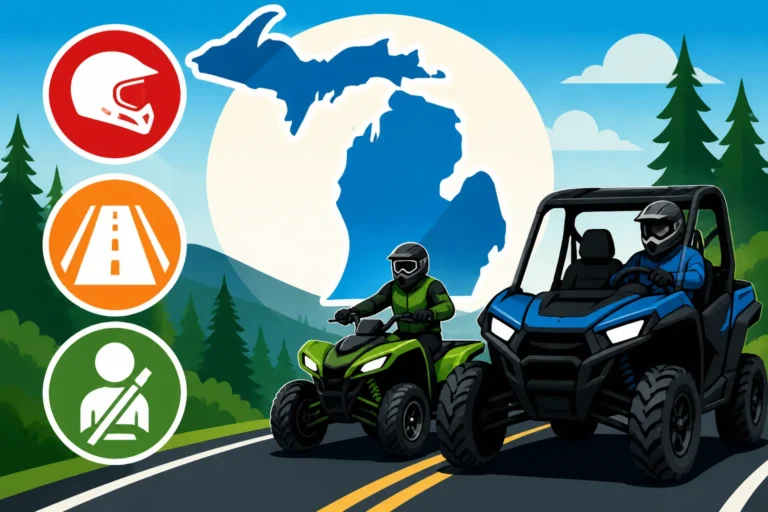
Michigan's ORV Act has a straightforward and unwavering rule: any person operating or riding as a passenger on an ORV must wear a crash helmet if they are under 16 years of age. This applies across the board – whether it's an ATV, a dirt bike, or a UTV. This law is designed to protect the most vulnerable riders from head injuries, which, as we all know, can be life-altering. You might be cruising through a serene state forest route, or navigating a challenging scramble area, but if you have a young passenger, their head needs to be protected.
The rationale behind this isn't just bureaucratic; it’s about plain common sense and physics. Kids, with their developing bodies and often less refined motor skills, are more susceptible to serious injury in an accident. A helmet provides that vital layer of protection against impacts, whether from a branch on the trail or a rollover incident. It’s the state’s way of saying: "Let’s keep our youngest adventurers as safe as possible."
The Critical "Under 16" Rule for All ORVs
Let's reiterate this because it’s a point where many people mistakenly think their UTV might be an exception: If your UTV is classified and used as an ORV, and you have a passenger under the age of 16, they must wear a DOT-approved helmet. There are no two ways about it when you're on public land, designated ORV trails, routes, or even shared-use roads where ORV use is permitted. This isn’t a suggestion; it’s a legal requirement, and conservation officers and local law enforcement will enforce it.
For example, if you're taking your 12-year-old nephew out to explore the [Pere Marquette State Forest ORV Trails], that helmet is non-negotiable. For many parents and guardians, this rule is a no-brainer, and they wouldn't consider letting a child ride without a helmet anyway. However, it's easy to get complacent or confused with different vehicle types. This hard-and-fast rule is Michigan's attempt to provide a clear boundary for youth safety. Failing to comply can result in fines and, more importantly, put a child at undue risk. Understanding [Michigan ORV Rules for Riders Under 16] is essential for anyone riding with minors.
What About Adults Off-Road?
Here’s where it gets a little more relaxed, legally speaking. For UTV operators and passengers who are 16 years of age or older, Michigan’s general ORV law does not legally mandate helmet use when operating or riding on an ORV off-road. This means if you're out on the trails, in a designated scramble area like Holly Oaks, or on private property, adults are typically not required to wear a helmet by state law. You'll often see groups of adult riders enjoying their UTVs without helmets in these settings.
However, "not legally mandated" is a far cry from "not recommended." As an experienced rider and lifestyle blogger, I will always advocate for wearing a helmet, even if you’re an adult and the law says you don’t have to. The reality of off-road riding is that conditions can change in an instant. A sudden dip, an unexpected obstacle, or even a low-speed tip-over can lead to serious head trauma. Many riders choose to wear helmets for the peace of mind and the added layer of protection, especially when tackling challenging terrain. It’s always better to be overprepared than underprotected.
Specifics for UTV Passengers: Age, Design, and Location
UTVs (Utility Terrain Vehicles or side-by-sides) present a unique set of considerations compared to traditional ATVs, largely due to their multi-passenger design, roll cages, and seatbelts. While these features inherently offer a different level of protection, they don't always change the fundamental helmet laws, especially for minors.
Carrying Kids in a UTV
When it comes to children, the Michigan ORV Act is very clear: anyone under 16 riding in an ORV, including a UTV, must wear a DOT-approved helmet. Period. The fact that a UTV has a roll cage, doors, and seatbelts doesn't negate this requirement for minors when used in an off-road capacity. The law prioritizes head protection for kids, understanding that even with a robust vehicle design, impacts can still occur. This applies to public trails, designated ORV routes, and other public lands where ORVs are allowed.
Ensuring a proper helmet fit for children is also paramount. A helmet that's too loose won't offer adequate protection. Many UTV accessory manufacturers, including brands like SuperATV, offer options for youth helmets and seating solutions that help secure younger passengers. You’ll also want to review [Youth ATV Size Rules Michigan Parents Should Know] to ensure your machine is appropriate for any young rider operating it, even if they are only a passenger. Always make sure the child’s helmet fits snugly, is secured correctly, and is comfortable enough for them to wear for the duration of the ride. Remember, even if your UTV feels like a miniature car, for the purposes of the law, a child passenger under 16 still needs that helmet on designated ORV routes.
Adult Passengers: What the Law Says for Standard UTVs
For passengers who are 16 years of age or older in a standard UTV (meaning, one not made street-legal), the helmet rules are generally the same as for adult operators on off-road terrain: helmets are not legally mandated by state law. This means you can have an adult passenger riding shotgun without a helmet while traversing the [Drummond Island ATV Trail Mileage] or exploring the vast [Upper Peninsula ATV Trail Mileage Total]. However, Michigan's law does require that all occupants of a UTV wear their seatbelts if the vehicle is equipped with them, which virtually all modern UTVs are. For more on this, check out [Seat Belt Rules in a Michigan UTV].
While the law might give adults a pass on helmets off-road, the decision to wear one is a personal one that should be weighed carefully. Considerations include the terrain's difficulty, your riding style, and even the weather conditions (a helmet can offer protection from sun, cold, and flying debris). Many adult riders still opt for helmets for added safety, especially if they're tackling more aggressive trails or participating in events. Think about it: a rogue branch or a sudden stop can still cause injury, and a helmet is your best defense.
Enclosed Cabs vs. Open-Air UTVs and Helmets
A common point of confusion arises when UTVs have features like windshields, roofs, and even full enclosures with doors. Many people assume that if their UTV feels "enclosed" like a car, then helmet laws for minors, or general safety recommendations, might be different. Unfortunately, when operating in an ORV capacity (on trails, designated routes), the presence of an enclosed cab does not automatically exempt a minor from wearing a helmet.
The Michigan ORV Act focuses on the vehicle's classification as an ORV and the passenger's age, not necessarily its creature comforts. So, even if your UTV has a full windshield, a hard top, and aftermarket doors from a brand like SuperATV, if it's being used as an ORV on public lands, a passenger under 16 still needs a helmet. This can be frustrating for some, but the law aims for consistency in ORV safety for youth. It’s only when a UTV is successfully converted to be street-legal and meets specific motor vehicle requirements that these rules might change, which we'll discuss next.
When Your UTV Becomes "Street-Legal" and Helmet Exemptions
This is where the nuances really come into play, and it’s often the most misunderstood aspect of Michigan’s ORV laws. Turning your UTV into a street-legal machine in Michigan is a process that can significantly alter how certain traffic laws, including helmet requirements, apply to it. It’s not just a matter of adding a few accessories; it involves a reclassification of your vehicle.
The "Assembled Vehicle" Exception and ORV Reclassification
To make a UTV street-legal in Michigan, you typically go through what’s known as the "assembled vehicle" route. This means your UTV, originally designed for off-road use, is modified to meet specific safety standards required for on-road vehicles. This process is detailed in resources like [Michigan's Assembled Vehicle Route for a UTV] and involves inspections at the Secretary of State office. Once your UTV successfully navigates this path and receives a standard license plate, it ceases to be just an ORV in the eyes of the law when operating on public roads.
This reclassification is critical because it moves your UTV from the ORV helmet laws to the more general motor vehicle helmet laws. In Michigan, the helmet law for standard motor vehicles (cars, trucks) states that helmets are not required for occupants who are in an enclosed cab and are wearing seatbelts. The challenge, however, is making your UTV truly meet the definition of an "enclosed cab" as understood by motor vehicle law, which usually means a proper windshield, doors, and a roof, similar to a car.
When a Street-Legal UTV is Like a Car (or Not)
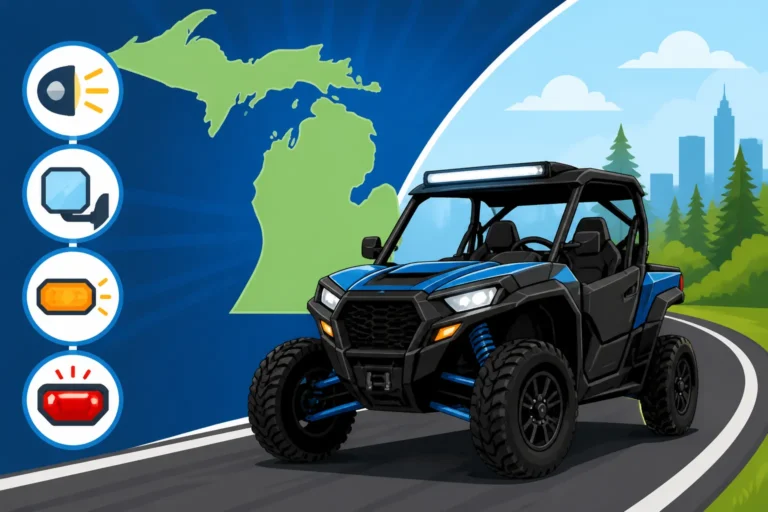
For a street-legal UTV to fully take advantage of the motor vehicle helmet exemptions, it needs to be equipped in a way that provides similar occupant protection to a car. This generally means having a properly installed, safety-glass windshield (not plexiglass), functioning doors, a roof, and seatbelts for all occupants. Many UTV owners turn to aftermarket parts from companies like SuperATV to get their machines ready for this transition, adding components like DOT-approved windshields, side mirrors, and full enclosure kits. You can learn more about the inspection process by reading [Michigan Street-Legal UTV Inspection at the Secretary of State].
Here's the key distinction:
- Adult Passengers (16+): If your street-legal UTV has a proper windshield and an enclosed occupant compartment (meaning sides and roof), then adult passengers (and the driver) are generally exempt from helmet requirements when riding on public roads.
- Minor Passengers (Under 16): This is where it gets a bit murky, and caution is advised. While a fully enclosed, street-legal UTV that truly mimics a car's safety features might theoretically exempt a minor from the ORV helmet law on public roads, the safest and most prudent approach is still to require a helmet for anyone under 16, regardless. There isn't a universally clear exemption for minors in all street-legal UTV configurations, especially if the "enclosure" is minimal. When in doubt, protect your child with a helmet. Always remember that ORV helmet rules for minors are very strong in Michigan.
The Eye Protection Rule That Always Applies (Without a Windshield)
Even if you’ve gone through the trouble of making your UTV street-legal and helmet use is no longer legally required for adults on roads, there’s another crucial safety law to remember: Michigan’s eye protection rule. If your UTV, whether street-legal or not, does not have a permanently affixed, safety-glass windshield (like a car), then all operators and passengers must wear eye protection. This could be goggles, a face shield on a helmet, or safety glasses.
This rule is designed to protect against flying debris, insects, dust, and wind, which can impair vision and cause injury. It applies equally to someone riding a dirt bike or an adult passenger in a street-legal UTV without a windshield. So, if you've got an open-air street-legal UTV, even if you’re 16 or older and not wearing a helmet, you must have eye protection. Don't overlook this seemingly small detail, as it's a common reason for tickets. Find out what counts as acceptable eye protection by checking out [Eye Protection That Meets Road Rules].
Practical Advice and Prioritizing Safety for UTV Passengers
Beyond the letter of the law, the most important aspect of riding with passengers in your UTV is ensuring their safety and comfort. Legal minimums are just that – minimums. As an advocate for responsible riding, I always encourage going above and beyond to protect everyone onboard, especially when adventures can be unpredictable.
Choosing the Right Helmet for Your Passengers
If a helmet is required, or if you simply choose to wear one for added safety, selecting the right helmet is crucial. It’s not a one-size-fits-all situation, particularly for children. Here are some tips:
- DOT Approval: Always ensure the helmet has a "DOT" (Department of Transportation) certification sticker. This means it meets minimum safety standards for head protection. Some riders opt for higher safety ratings like Snell or ECE, which offer even more stringent protection.
- Proper Fit: This is perhaps the most critical factor. A helmet should fit snugly, without being uncomfortably tight, and it shouldn't move around on the head. For kids, this means resisting the urge to buy a helmet they’ll "grow into." Their head size needs a helmet that fits now.
- Full-Face Protection: While open-face helmets exist, a full-face helmet offers superior protection for the chin and jaw, which are vulnerable areas in a crash.
- Ventilation: Look for helmets with good ventilation to keep passengers comfortable, especially on warm Michigan summer days. Brands offer a wide range of designs and features, so take the time to research.
Beyond the Letter of the Law: Always Prioritizing Safety
The laws are there for a reason, but they represent the bare minimum of what's considered acceptable. True safety-minded riders understand that an ounce of prevention is worth a pound of cure. Even if an adult passenger isn't legally required to wear a helmet off-road, consider the type of riding you'll be doing. Are you tackling steep hills, mud bogs, or high-speed sections? In these scenarios, the risk of a rollover or impact increases significantly, and a helmet could be the difference between a minor bump and a major injury.
Encourage all passengers to wear appropriate riding gear, too. This includes long sleeves and pants (to protect from abrasions, sun, and branches), sturdy, closed-toe footwear, and gloves. These items, combined with the UTV’s built-in safety features like seatbelts and roll cages, create a comprehensive safety system. Companies like SuperATV also offer enhanced safety accessories, such as multi-point harnesses, which can secure passengers more effectively than standard lap belts during aggressive riding. Remember, a broken bone or a nasty scrape can still happen even if your head is protected, so cover up where you can!
Ensuring Your Passengers are Protected and Prepared
Before every ride, take a few minutes to talk to your passengers, especially new ones. Explain the basic rules: always keep hands and feet inside the vehicle, remain seated, and never try to stand up while the UTV is in motion. Show them how their seatbelt works and ensure it's securely fastened. If helmets are being worn, double-check that they are on correctly and comfortably.
Consider the passenger capacity of your UTV. Most UTVs are designed for a specific number of occupants, and exceeding that number can compromise safety and is often illegal. For more general passenger rules, you can refer to [Michigan Passenger Rules on an ATV] (though some rules may differ for UTVs, the spirit of safe loading applies). By taking these proactive steps, you not only comply with the law but also foster a culture of safety that ensures everyone has an enjoyable and memorable ride on Michigan's trails and roads.
| Scenario for UTV Passenger | Age of Passenger | UTV Type | Location | Helmet Required? | Additional Safety Notes |
|---|---|---|---|---|---|
| Standard ORV Use | Under 16 | Any | ORV Trails/Routes, Public Land | YES | DOT-approved, properly fitted helmet is mandatory. |
| Standard ORV Use | 16 and Over | Any | ORV Trails/Routes, Public Land | NO (but highly recommended) | Eye protection is always required if no windshield. |
| Street-Legal UTV Use | Under 16 | With full windshield & enclosed cab | Public Roads | NO (legally in a fully enclosed UTV that meets motor vehicle standards) | Strongly recommended due to limited enclosure compared to cars. Err on side of caution. |
| Street-Legal UTV Use | Under 16 | Without full enclosure (e.g., no windshield, no doors) | Public Roads | YES (state law for minors on ORVs likely prevails) | Michigan's ORV law for minors is very strong; this setup doesn't mimic a car. |
| Street-Legal UTV Use | 16 and Over | With full windshield & enclosed cab | Public Roads | NO | Meets standard Michigan motor vehicle helmet exemption. |
| Street-Legal UTV Use | 16 and Over | Without full enclosure (e.g., no windshield) | Public Roads | NO (but eye protection is required) | Eye protection is mandatory if no windshield is present. |
Disclaimer
This article is for general informational purposes only and does not constitute professional advice. Laws, prices and regulations vary by location and change over time. Consult a qualified professional for guidance on your specific situation.