The Three Road Rules Michigan ORV Riders Must Follow
If you've ever dreamed of hopping on your ATV or UTV and cruising down a scenic Michigan county road to get to a trail, a gas station, or just to enjoy the fresh air, you're not alone. It's an amazing feeling, but also one that comes with a fair bit of confusion and frustration. Michigan has specific laws about where and how you can ride your Off-Road Vehicle (ORV) on public roads, and this guide is here to break down the three most crucial rules every Michigan ORV rider absolutely must follow to stay safe, legal, and out of trouble with local law enforcement.
Rule 1: Understanding Where Your ORV Can Legally Roam
One of the biggest headaches for Michigan ORV riders is figuring out which roads are open to ORV traffic. It's not a blanket free-for-all, and the rules can feel like a patchwork quilt thrown together by various local authorities. But once you understand the core principles, it becomes much clearer.
County Roads vs. State Highways: The Critical Distinction
Let's start with the absolute basics: generally speaking, state and federal highways are off-limits for ORV operation. We're talking about those major arteries, the M-roads, US-routes, and Interstates. You just can't ride your ORV down them. This is often where riders get into trouble, thinking that if a road looks like a county road, it must be. Always double-check signage.
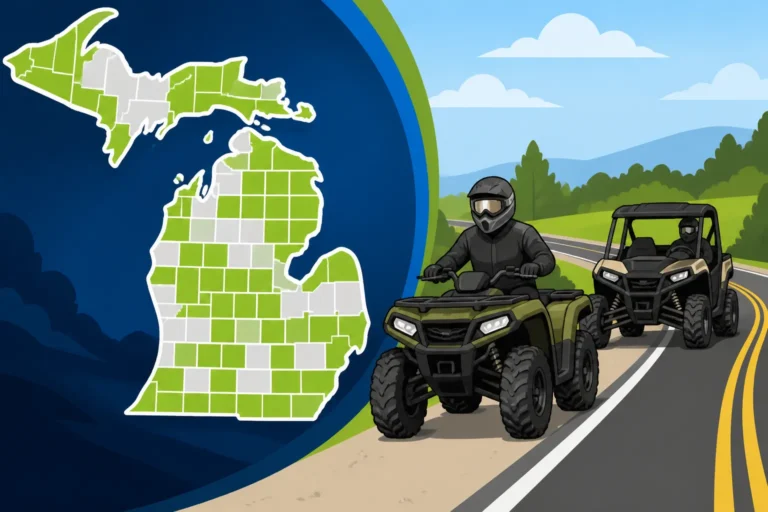
The main focus for ORV road riding in Michigan is on county roads. But even here, there's a huge caveat: not all county roads are open. Each county, or even individual township within a county, has the power to pass ordinances that either open or close their local roads to ORV traffic. This creates a challenging situation where you could be riding legally on a county road in Roscommon, cross into Missaukee County, and suddenly be in violation of the law. It’s incredibly frustrating when you’re just trying to enjoy a ride, only to realize the rules have changed without any clear indication as you transition between jurisdictions. The key is understanding that just because it's a "county" road doesn't mean it's an "ORV-friendly" road by default. When you are on an open county road, you must always ride on the far right of the maintained portion of the road, and you cannot ride on the paved surface if an unpaved shoulder is available. This often misunderstood rule is critical. The "maintained portion" means the part of the road normally used for vehicle travel. This means staying as far right as possible, often with two wheels on the gravel shoulder, but still technically on the road surface. However, if there's an actual unpaved shoulder, you're expected to be on that. It's a fine line that can be interpreted differently by officers. For more on navigating these local differences, take a look at [Michigan County ORV Ordinances Explained]. When it comes to crossing state highways, you must do so at a right angle, only after stopping and yielding to all traffic, and only when safe. You cannot ride on them.
Local Ordinances and How They Impact Your Ride
As mentioned, Michigan’s ORV road laws are highly localized. This means that a specific county or township board has to vote to open their roads to ORV use. Without a local ordinance explicitly allowing it, those roads are considered closed. Imagine planning a multi-county ride, only to find yourself constantly pulling out your phone to check maps and local government websites to see if the next segment of your route is legal. It can really take the fun out of an otherwise great day.
These ordinances don't just dictate if you can ride, but how you can ride. They often include specific restrictions such as operating hours (e.g., no riding between dusk and dawn unless you're properly lit), speed limits (usually a default of 25 mph on county roads unless otherwise posted), and even specific routes or areas that are off-limits within the open county. For example, some townships might open most of their roads but prohibit ORV use within their village limits to maintain peace and quiet. It's a balancing act for local governments, trying to cater to recreational riders while addressing concerns from residents. The best advice here is always to check the local ordinances for the specific county or township you plan to ride in. Many counties publish these online, and checking before you load up is always a good idea. This prevents those frustrating moments where a well-meaning officer pulls you over because you unknowingly crossed into a prohibited zone.
Exceptions and Designated ORV Routes
While the local ordinance rule is paramount, there are also designated ORV routes and trails that connect to county roads, forming a vast network. These are often explicitly marked and managed by the Michigan Department of Natural Resources (DNR). These designated routes, whether they're old logging roads, utility corridors, or specifically maintained trails, are generally safe bets for ORV use.
Michigan boasts an incredible network of [Michigan's 4,000 Miles of ORV Trails Explained], many of which utilize segments of county roads to connect trail sections, provide access to towns for fuel and food, or lead to staging areas. When you see official DNR ORV route signage, you can be more confident that you're on a legal path. However, even on these designated routes, the general rules of road riding still apply, such as speed limits and operating responsibly. It's important not to confuse a designated ORV trail that happens to intersect a road with a regular county road that has been opened by local ordinance. The former is part of a state-managed network, while the latter is a local decision. Always pay attention to the signage, as it’s your best indicator of where you can and cannot go. When in doubt, err on the side of caution.
Rule 2: Equipment Requirements for Road Use
So, you've found an open county road or a designated ORV route. Fantastic! But before you hit the blacktop (or gravel), your ORV needs to be properly equipped. This isn't just about safety; it's about making sure your machine is visible and controllable in a mixed-traffic environment, just like any other vehicle sharing the road. Many stock ATVs and UTVs aren't quite ready for road duty right off the showroom floor, which can be a real point of frustration for riders who want to seamlessly transition from trail to town.
Mandatory Lighting and Signaling
For any ORV operating on a public road in Michigan, especially if you're riding after dark or when visibility is low, proper lighting is non-negotiable. This means your machine needs at least one headlight that emits a white light visible from 200 feet, and at least one taillight that emits a red light visible from 200 feet. Additionally, a red brake light that activates when the brakes are applied is required.
But here’s where many standard ORVs fall short: turn signals. While not always strictly necessary for all road riding scenarios (especially if you're only crossing a road or briefly using a shoulder), if you intend to regularly operate on roads with other vehicles, turn signals are highly recommended and can be legally required depending on the specific ordinance or whether you are pursuing a full "street legal" conversion. Many riders opt for aftermarket kits to add these crucial safety features. Brands like SuperATV offer a variety of universal turn signal kits and light bars that can help bring your ORV up to snuff for road use, improving your visibility and ability to communicate your intentions to other drivers. Having proper signals isn't just about avoiding a ticket; it's about preventing accidents, as other motorists might not anticipate an ORV making a turn without a clear indicator. For more detailed information, consider [Turn Signals and Hazard Lights on a Street-Legal Build].
Safety Equipment: Mirrors, Horns, and Windshields
Beyond lights, other safety equipment ensures you can safely operate your ORV on a public roadway. Mirrors are a must. You need at least one mirror, but ideally two (one on each side), to give you a clear view of the traffic behind you. Trying to constantly turn your head while navigating a gravel road or busy shoulder is incredibly unsafe.
A horn or other audible warning device is also required. This isn't just for sounding off at your buddies; it's a critical safety feature to alert other drivers, pedestrians, or even wildlife to your presence. A simple squeeze bulb horn often won't cut it; you need something that emits a clear, loud sound. And then there's the windshield or eye protection. If your ORV has a windshield, it needs to be made of safety glass or a similar shatter-resistant material. If there's no windshield, you, as the operator, are required to wear eye protection like goggles or safety glasses. This protects against debris, insects, and wind, ensuring your vision isn't compromised, which is absolutely vital on a road where you're sharing space with other vehicles. Many UTVs come with partial windshields, but ensuring they meet safety glass standards for regular road use is important. Aftermarket options, including full safety glass windshields, are popular upgrades for those serious about road riding, and SuperATV is a well-known provider of such accessories. You can find a more comprehensive list of requirements in [Safety Glass, Mirrors and Horns: Michigan's Street-Legal List].
Tires, Brakes, and Exhaust: Beyond the Basics
These often overlooked components are just as critical for road-legal operation. Your ORV needs to have a braking system that is in good working order and capable of stopping the machine safely and efficiently. This seems obvious, but worn pads or spongy brakes are an accident waiting to happen, especially if you encounter unexpected traffic or hazards on the road.
Tires are also a big one. While knobby off-road tires are perfect for trails, they aren't always ideal for pavement or even hard-packed gravel roads. For consistent road use, Michigan law often implies or outright requires tires that are suitable for highway use, often referred to as DOT-approved tires, especially if you're trying to achieve a full "assembled vehicle" street-legal status. These tires are designed for better grip and wear on hard surfaces, reducing the risk of a blowout or loss of control that can occur with aggressive mud tires on asphalt. Lastly, your exhaust system needs to be in good working order and cannot exceed state noise limits. Aftermarket exhaust systems designed for performance might sound great on the trail, but they can draw unwanted attention from law enforcement and upset residents if they're too loud on public roads. A spark arrestor, though primarily for fire prevention on trails, is also a good idea to maintain on your machine.
Table: Essential ORV Road Equipment Requirements
| Equipment Type | Requirement for Michigan ORV Road Use | Common ORV Condition | Upgrade/Consideration |
|---|---|---|---|
| Headlights | At least 1, white, visible 200 ft | Standard on most | Add high/low beam, brighter LEDs |
| Taillights | At least 1, red, visible 200 ft | Standard on most | Brighter LEDs, additional lights |
| Brake Light | At least 1, red, activates with brake | Standard on most | Brighter, more visible |
| Turn Signals | Recommended; often required for street-legal | Rare on stock | Aftermarket kits (e.g., SuperATV) |
| Mirrors | At least 1 (2 recommended) | Often 0 or 1 | Add driver & passenger side mirrors |
| Horn/Warning Device | Audible, clear sound | Basic or none | Electric horn |
| Windshield | Safety glass if present; or eye protection | Partial or none | Full safety glass windshield, goggles |
| Brakes | Functional, good working order | Standard | Regular maintenance, upgrade if needed |
| Tires | Suitable for road use (DOT-approved for street-legal) | Off-road specific | DOT-approved hybrid tires |
| Exhaust | Functional, meets noise limits | Varies | Check for modifications, add spark arrestor |
Rule 3: Operator and Passenger Requirements
Beyond the machine itself, Michigan also has rules about who can operate an ORV on a public road and how they must conduct themselves. This covers everything from licensing to age, and even rules about consuming alcohol. These aren't just technicalities; they're in place to ensure everyone's safety on shared roadways.
Driver's License and Age Restrictions
Here's a common misconception: operating an ORV on an open county road often requires a standard driver's license. Unlike purely off-road trail riding, where a separate ORV safety certificate might suffice for younger riders, once you move onto a public road, the rules shift. This means you must possess a valid driver's license, the same kind you'd use to drive a car or truck. It’s a point of frustration for many young riders who are experienced on trails but aren’t old enough to drive a car, as it limits their ability to connect trails via public roads. For detailed insights on this, you can check out [Driver's License Rules for Michigan ORV Road Riding].
Age restrictions also play a significant role. Even with a driver's license, there are specific rules for younger operators on ORVs. Generally, if you're under 16, there are stricter rules about when and how you can operate an ORV, especially on public roads, and direct adult supervision is often required. The underlying principle is that driving on public roads, even with an ORV, requires a level of maturity, judgment, and understanding of traffic laws that younger operators may not possess. Always carry your driver's license with you when riding on public roads, just as you would in any other vehicle.
Helmets, Seatbelts, and Passengers
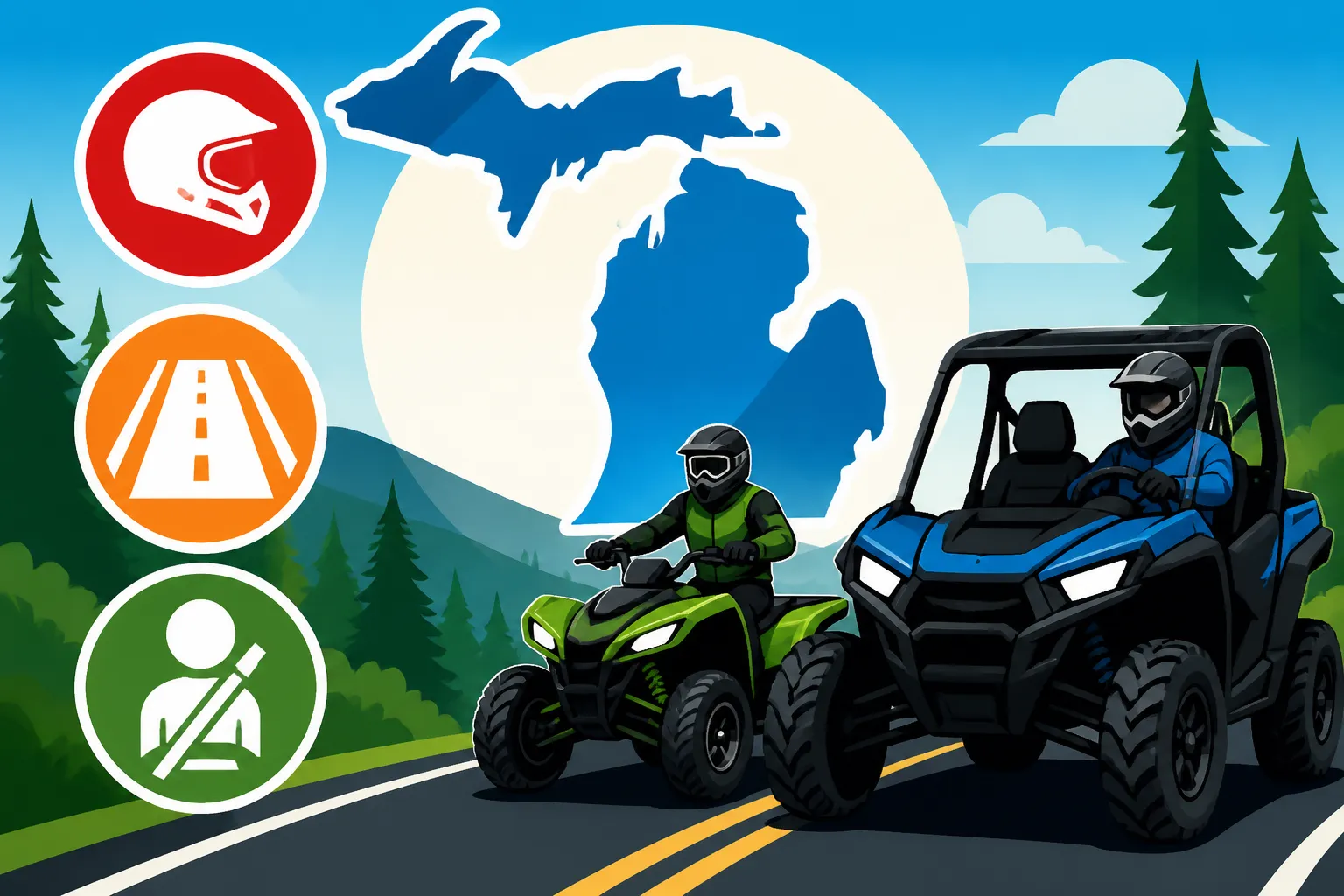
Michigan's helmet law for ORVs can be a bit tricky, especially when discussing road use. For ATVs, generally, helmets are required for all riders, regardless of age, when operating on public lands or roads, unless specific exemptions apply (such as in a fully street-legal UTV that meets certain criteria). For UTVs, if the vehicle is equipped with seatbelts and the occupants are wearing them, a helmet may not be required. However, if you're riding an ORV that has been converted to be fully street-legal and registered as an "assembled vehicle," the helmet requirements can sometimes mirror those of a car, where seatbelts are the primary restraint. But for standard ORV road use, it's generally safest and often legally required to wear a DOT-approved helmet.
Speaking of seatbelts, if your UTV is equipped with them from the factory, all occupants must wear them while the vehicle is in operation. This is a fundamental safety measure and is strictly enforced. When it comes to passengers, your ORV must be designed to carry more than one person if you're going to have a passenger. Many ATVs are designed for a single rider only, and carrying a passenger on a single-rider ATV on public roads is illegal and extremely dangerous. UTVs, by contrast, are typically designed for multiple occupants and come with appropriate seating and seatbelts, making them much more suitable for carrying passengers. Always check your machine's manufacturer specifications for passenger capacity.
Alcohol, Drugs, and Responsible Operation
This rule is straightforward and critical: do not operate an ORV on public roads (or any ORV trail or public land, for that matter) while under the influence of alcohol or drugs. Michigan has a zero-tolerance policy for Operating While Intoxicated (OWI) with an ORV, similar to driving a car. The penalties are severe and can include hefty fines, loss of your driving privileges (for your car too!), and even jail time. There's no separate "ORV OWI" that lets you off easy; it's treated with the seriousness it deserves.
Furthermore, open container laws apply to ORVs on public roads. You cannot have open containers of alcohol in your ORV while operating it on public roads. Beyond the legalities, responsible operation also means adhering to posted speed limits, yielding to other traffic, using appropriate hand signals if your ORV lacks turn signals, and generally exercising common sense and courtesy. Your actions on the road reflect on the entire ORV community, and irresponsible behavior can lead to stricter regulations and less access for everyone. Be a good ambassador for the sport.
Navigating the Permit and Titling Maze for Road Use
Beyond the specific riding rules and equipment, there's a layer of paperwork you need to understand to legally operate your ORV in Michigan, especially if you plan to use it on public roads. This involves permits, licenses, and potentially a special titling process. It can feel like a bureaucratic labyrinth, but getting it right ensures you're fully compliant.
ORV License, Trail Permit, and Recreation Passport
Michigan requires all ORVs operating on public land or routes to have an ORV License. This sticker goes on your machine and signifies you've paid the basic fee for its use. But there's a crucial distinction: for riding on designated ORV trails, you'll also need an ORV Trail Permit, which is a separate sticker. For general ORV road use on county roads opened by local ordinance, you primarily need the ORV License.
However, if you're using state forest roads or other state-managed access points to get to trails or recreational areas, you'll also need a Recreation Passport. This is an annual pass required for vehicle entry into Michigan state parks and recreation areas, which includes many ORV staging areas and trailheads. So, depending on your exact route and destination, you might need one, two, or even all three of these. It's a system that often confuses new riders, leading to unexpected fines. Think of it this way: the ORV License is for the machine itself when used off-road or on open roads. The Trail Permit is for designated trails. The Recreation Passport is for state parks and recreation areas that often serve as access points. Understanding [Michigan ORV License and Trail Permit Explained] is key to ensuring you're fully covered.
Titling Your ORV for Street-Legal Status
Most standard ORVs (ATVs and UTVs) are issued an ORV title, not a standard vehicle title. This ORV title is typically sufficient for riding on designated trails and county roads opened by local ordinance, provided you meet all the equipment and operator rules already discussed. However, if your goal is to make your UTV truly "street-legal" – meaning it can operate on a wider range of public roads, potentially at higher speeds, and with fewer restrictions – you might need to go through the "assembled vehicle" process.
This process is generally reserved for UTVs that have undergone significant modifications to meet specific highway safety standards, essentially transforming them into a Low-Speed Vehicle (LSV) or a vehicle that can be registered for general road use. It involves a detailed inspection by the Secretary of State to ensure all required components are present and functional (think DOT-approved tires, proper lighting, safety glass windshield, etc.). After passing inspection, your UTV would then receive a standard Michigan vehicle title and a license plate, much like a car. This is a far more involved process than simply adhering to the three road rules for an ORV. It allows for much greater road access but comes with more stringent requirements and a higher bar for modifications. You can learn more about the application process in [Michigan Assembled Vehicle Title Application] and what's required for inspection in [Michigan Street-Legal UTV Inspection at the Secretary of State]. For the average ORV rider just wanting to hop on a county road, the ORV title is usually sufficient, as long as you respect the ORV-specific road rules.
Common Pitfalls and How to Avoid a Ticket
Even with the best intentions, it's easy to fall into traps that can lead to a ticket or a confrontation with law enforcement. Many of these issues stem from misunderstandings of the nuances of Michigan ORV road laws. A ticket can put a real damper on your riding season and add unexpected costs.
Speed Limits and Road Shoulder Misunderstandings
One of the most frequently ticketed offenses for ORV riders on county roads is exceeding the 25 mph speed limit. Unless a county or township ordinance specifically allows for a higher speed on a particular road segment (which is rare), the default maximum speed for an ORV on an opened county road is 25 mph. This can feel incredibly slow, especially on a long, straight stretch of gravel, but it's the law. Many riders, especially those used to faster speeds on trails, unknowingly push past this limit, making them an easy target for law enforcement. Always assume 25 mph unless you see clear signage stating otherwise. For more on this, consult [Michigan's 25 mph Limit on County Roads].
Another common pitfall, as briefly mentioned earlier, is the distinction between riding on the far right of the maintained portion of the road versus riding on the unpaved shoulder. Michigan law states that if an unpaved shoulder exists, you are generally required to ride on it, unless the shoulder is impassable or unsafe. If there's no suitable shoulder, you must ride as far to the right of the maintained portion as practicable. This often means two wheels on the gravel next to the pavement, but not actually on the paved surface if avoidable. Riders sometimes hug the center line or ride too far into the traffic lane, either out of habit or lack of awareness, which is both illegal and dangerous. Always be vigilant about your positioning on the road.
Local Ordinances: The Unexpected Trap
The localized nature of Michigan's ORV road laws means that ignorance is definitely not bliss when it comes to getting a ticket. Many riders get caught because they cross an invisible county or township line and suddenly find themselves on a closed road, or in an area with different operating hours or speed limits than where they started. The frustration is immense: one minute you're riding legally, the next you're facing a fine because a small sign announcing the change was hidden by foliage or simply missed.
To avoid this, plan your route in advance. Use reliable ORV mapping apps that highlight legal routes, or consult county and township websites for their latest ordinances. Some ORV clubs and organizations also do an excellent job of compiling and sharing this information. It’s a bit of extra work upfront, but it pales in comparison to the hassle and cost of a ticket, which can easily run into hundreds of dollars. Imagine riding across a bridge and suddenly realizing you're in a new jurisdiction where ORVs are banned on that road – it happens. Being prepared is your best defense against this unexpected trap.
Maintaining Your Machine to Stay Legal
While it might not seem like a "rule" in the same vein as speed limits, keeping your ORV in proper working order is essential for road legality. A burnt-out headlight, a non-functioning brake light, or a broken mirror can all lead to a ticket. Law enforcement officers are keen to ensure that any vehicle operating on public roads meets basic safety standards. It's not just about the initial setup; it's about ongoing maintenance.
Before every road ride, do a quick walk-around of your machine. Check that all your lights are working, your horn gives a clear blast, your brakes feel solid, and your tires are properly inflated and free of damage. These simple checks take only a few minutes but can save you a significant amount of money and stress. Failing to replace a $5 bulb could lead to a far more expensive citation. Furthermore, ensure you have your [Michigan ORV Paperwork During a DNR Stop] readily available, including your ORV license and any permits required for your route. Getting pulled over and not being able to produce proper documentation is another common reason for fines.
The Spirit of ORV Road Riding in Michigan
Operating an ORV on Michigan's county roads isn't just about following the letter of the law; it's also about embodying the spirit of responsible recreation. The ability to ride on these roads is a privilege, one that has been hard-won by advocates and that can easily be lost if riders aren't considerate. It’s about being a good neighbor and a respectful user of shared public spaces.
Sharing the Road Safely
When you're riding your ORV on a county road, you're not in an isolated wilderness; you're sharing the space with cars, trucks, bicycles, pedestrians, and even horse-drawn buggies in some rural areas. This means exercising an elevated level of caution and courtesy. Other motorists might not expect to see an ORV on the road, so visibility is key. Consider wearing bright clothing and using reflective tape, especially if your ORV isn't fully street-legal with all the bells and whistles.
Always yield to other traffic, signal your intentions clearly, and be mindful of your speed and dust. Kicking up a massive dust cloud as you pass a car or a house is not only impolite but can also create a safety hazard. Reduce your speed and be considerate. Slow down when passing homes or approaching intersections. A positive interaction between an ORV rider and a local resident or another motorist can go a long way in fostering goodwill and ensuring continued access for everyone. For tips on being a good road neighbor, check out [ORV Road Riding Etiquette in Small Towns].
Supporting Local Communities
The growth of ORV road riding opportunities in Michigan has brought significant economic benefits to many rural communities. Riders stop for gas, grab a meal, or even stay overnight, pouring money back into local businesses. This economic impact is a major reason why many counties and townships have chosen to open their roads to ORVs.
As riders, we have a responsibility to support these communities and to demonstrate that ORV tourism is a positive force. This means buying local when possible, cleaning up after ourselves, and respecting private property. When you ride responsibly and support local businesses, you reinforce the positive aspects of ORV recreation, making it more likely that these communities will continue to welcome riders. Irresponsible behavior, on the other hand, can quickly turn public opinion against ORVs, leading to closures and restrictions.
What's Next for Michigan ORV Road Access
The landscape of ORV road access in Michigan is constantly evolving. There are ongoing discussions at the state and local levels about expanding or modifying access, updating equipment requirements, and streamlining the permit process. What's true today might change tomorrow, which is another reason why staying informed is so important.
Rider advocacy groups and ORV clubs play a vital role in these discussions, representing the interests of the riding community. By joining these organizations, participating in public forums, or simply writing to your local representatives, you can have a voice in shaping the future of ORV riding in Michigan. The goal is always to balance recreational opportunities with safety, environmental protection, and respect for all users of Michigan’s beautiful natural resources and roadways. Staying engaged means that you're not just following the rules, but actively contributing to the preservation and improvement of ORV access for generations to come.
Disclaimer
This article is for general informational purposes only and does not constitute professional advice. Laws, prices and regulations vary by location and change over time. Consult a qualified professional for guidance on your specific situation.