Golf Carts on Michigan Village Streets
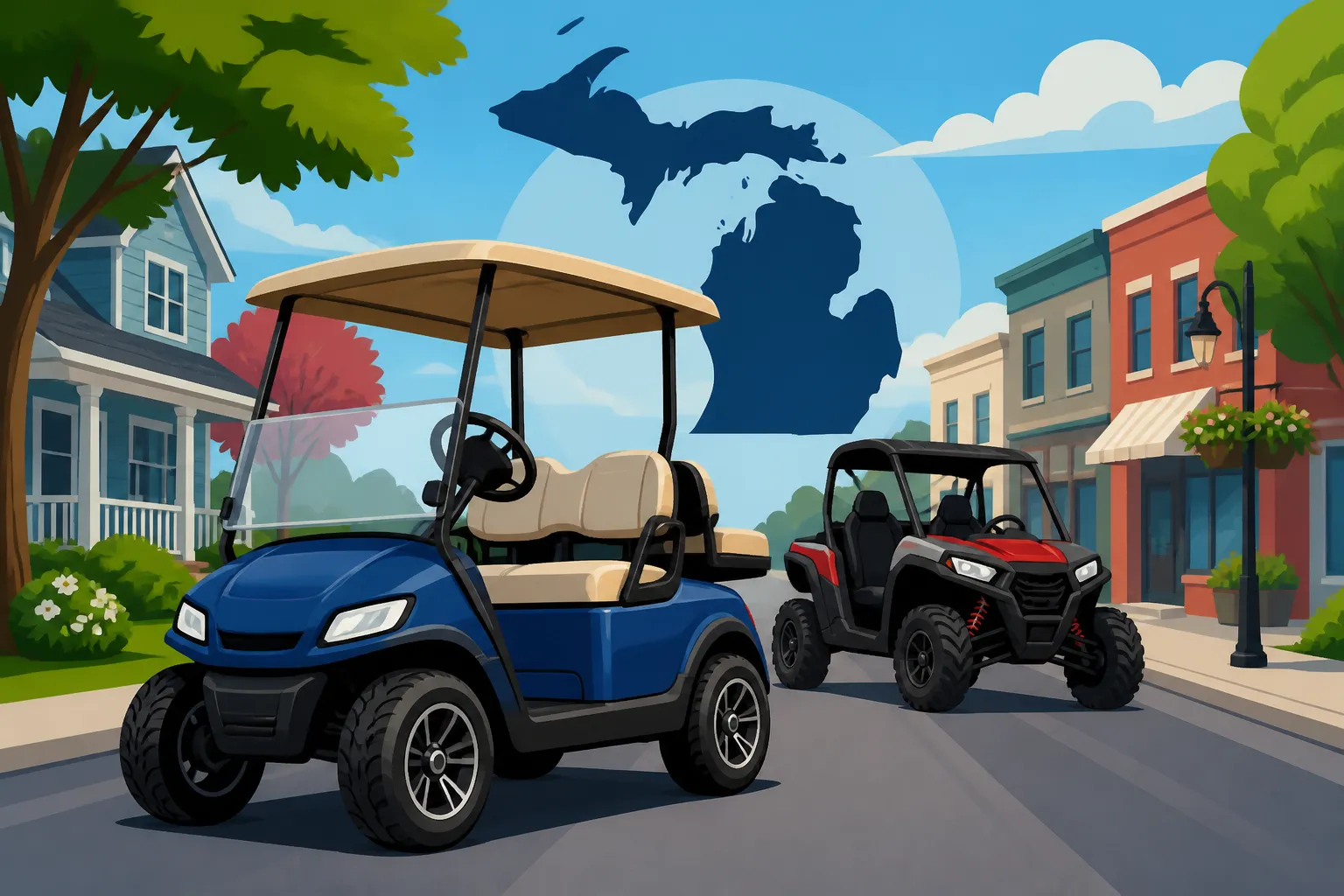
It can be incredibly frustrating to live in a charming Michigan village, own a convenient golf cart perfect for quick trips to the corner store or a neighbor's house, only to realize you might not be allowed to drive it on the actual streets. Many of us see golf carts puttering around in other states or even neighboring towns and wonder why the rules feel so murky right here in our own community. This guide is here to clear up that confusion, explaining Michigan's nuanced laws regarding golf carts on village streets and how your local government plays a pivotal role.
The Basics of Golf Carts and Michigan Law
Before we even think about hitting the pavement, it's crucial to understand what Michigan law actually says about these low-speed conveyances. The distinctions can be subtle but they carry significant legal weight. Just because something has four wheels and goes slow doesn't mean it's automatically legal to drive anywhere.
What Michigan Considers a Golf Cart Legally Speaking
In the eyes of Michigan law, a "golf cart" isn't quite the same as a car, or even an Off-Road Vehicle (ORV). Generally, a golf cart is defined as a vehicle designed and manufactured for operation on a golf course for sporting or recreational purposes. This distinction is absolutely critical because it means golf carts aren't typically designed or regulated to meet the safety standards required for general street use, like cars or even properly equipped Low-Speed Vehicles (LSVs). They usually lack standard automotive safety features such as seatbelts, robust braking systems, turn signals, and proper lighting needed for interacting with other traffic. This basic classification is the foundation for why they aren't freely allowed on all public roads across the state.
This narrow definition from the state legislature effectively puts golf carts in a unique category. They aren't motor vehicles in the traditional sense, which means they don't automatically fall under the same rules for registration, titling, and equipment as your car or truck. Nor are they usually considered ORVs, which have their own specific set of regulations for trail and road shoulder use, as discussed in [Michigan ORV Road Rules for Riders Under 16]. This legal limbo is precisely why local ordinances become so important; without specific local permission, state law generally keeps them off village streets.
Why Golf Carts Are Not "Street Legal" Everywhere by Default
The common misconception is that if a vehicle is slow, it's inherently safe for street use, especially in a quiet village. However, this isn't how Michigan law views golf carts. By default, golf carts are not street-legal on Michigan public roads. They simply do not possess the standard safety equipment required for vehicles sharing the road with cars, trucks, and motorcycles. Think about it: most standard golf carts lack proper headlights for night driving, tail lights, brake lights, turn signals, and often mirrors or even a horn – all things we expect from any vehicle on a public road.
This isn't about penalizing golf cart owners; it's about public safety. When a golf cart, designed for the controlled environment of a golf course, enters a public street, it introduces a number of risks. Its lower speed can create traffic hazards, especially if it's impeding the flow of vehicles. Its lack of visibility, particularly at dusk or night, makes it incredibly dangerous. Without proper signaling, other drivers have no idea if you're turning or stopping. This inherent lack of standard safety features is why the state requires specific local action to permit their use, rather than granting blanket permission.
How Villages Get to Say "Yes" to Golf Carts
While state law might seem restrictive, there's a vital pathway for local communities to allow golf carts on their streets. This is where the local village council, and the residents themselves, truly have a say in shaping their community's character and convenience. It's a testament to local control in Michigan.
The Power of Local Ordinances
Michigan state law, specifically the Michigan Vehicle Code, does include provisions that allow local units of government – like villages, townships, and cities – to pass ordinances permitting the operation of golf carts on their streets. This means that while there isn't a statewide "yes" for golf carts on roads, local communities are empowered to create their own "yes," tailored to their specific needs and road conditions. This flexibility acknowledges that a bustling city street has different dynamics than a quiet village lane. The process starts with the local governing body, typically the village council, formally adopting an ordinance. This isn't just a casual agreement; it's a legally binding local law that outlines exactly where, when, and under what conditions golf carts can be operated.
This local control is a big deal for residents. It means that if you and your neighbors believe golf cart use would enhance your village, you have the power to advocate for it. The village council will typically consider factors like road width, speed limits, traffic volume, and community feedback before drafting and voting on such an ordinance. This democratic process ensures that any decision to allow golf carts reflects the unique circumstances and desires of that particular community, rather than a one-size-fits-all state mandate. It also provides the opportunity for specific restrictions to be put in place, like designated streets or specific hours, to maintain safety and minimize disruption.
What a Local Ordinance Typically Covers
When a Michigan village decides to permit golf carts on its streets, the resulting ordinance will be far from a simple green light. Instead, it will be a carefully crafted document outlining a number of specific requirements and restrictions. These are designed to balance the convenience for residents with the paramount need for public safety. Typically, you'll find details on which specific streets or sections of streets are allowed for golf cart travel. Don't expect carte blanche to drive anywhere; often, major thoroughfares or state highways passing through the village will remain off-limits. The ordinance might also specify hours of operation, perhaps restricting night driving unless the cart has enhanced lighting.
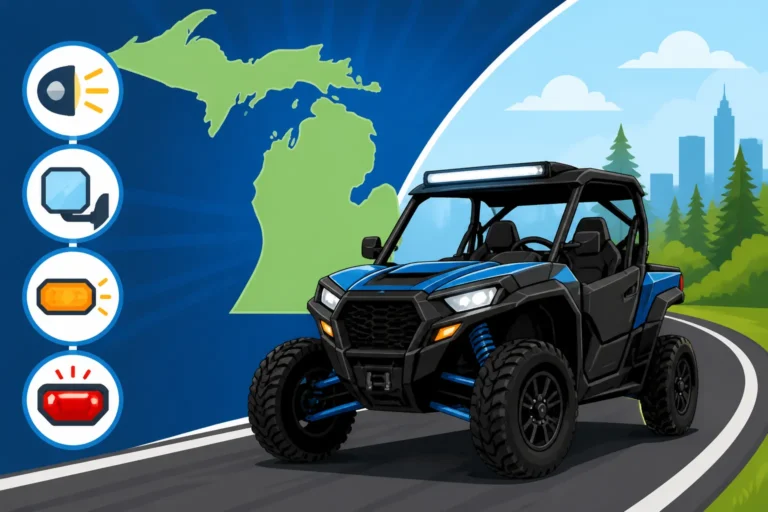
Beyond where and when, the ordinance will almost certainly stipulate equipment requirements. This is where many standard golf carts need upgrades to be compliant. Expect mandates for working headlights, tail lights, brake lights, and turn signals – essential for being seen and communicating with other drivers. Many ordinances also require a rearview mirror (or multiple mirrors for better visibility) and an audible warning device, like a horn. You might even find requirements for a basic windshield or a [Safety Glass, Mirrors and Horns: Michigan's Street-Legal List] of required features. Some villages may even require a local permit or registration sticker and proof of insurance, mirroring aspects of [Michigan ORV Insurance and When You Actually Need It]. It’s critical to remember that each village's ordinance is unique, so checking the specific rules of your village, not just a neighboring one, is absolutely essential before you even think about driving your golf cart on the street.
Common Restrictions and Requirements You'll Encounter
So, your village is considering allowing golf carts, or maybe they already have an ordinance in place. That's fantastic news! But hold your horses (or your golf cart, as it were) – there's usually a list of hoops to jump through. These aren't just arbitrary rules; they're put in place to ensure everyone's safety on shared public roads.
Equipment Upgrades for Street Use
Unless your golf cart came specifically designed and certified as a Low-Speed Vehicle (LSV) from the factory, it’s highly probable you'll need to make some equipment upgrades to meet local ordinance requirements for street use. The most common additions revolve around visibility and signaling. You’ll almost certainly need proper headlights that illuminate the road effectively, and tail lights that are visible from a distance, especially if evening operation is permitted. Integrated brake lights are typically a must, as is a functional horn to alert pedestrians and other drivers. Turn signals are another critical safety feature that most stock golf carts lack, but are often required for street legality. Finding a good aftermarket kit for [Turn Signals and Hazard Lights on a Street-Legal Build] is usually the way to go.
Many golf cart owners turn to reputable accessory providers to get their carts up to snuff. Companies like SuperATV offer a wide array of aftermarket parts, from full light kits with turn signals and horns to windshields and mirrors, that can help transform a standard golf cart into a compliant street-legal machine under a local ordinance. It’s not just about adding parts; it’s about ensuring they function reliably and meet any specific local standards for brightness or size. For instance, some ordinances might specify the type of [DOT-Approved Mirror Options for a UTV] needed, or the decibel level of a [Horn and Audible Warning Device Rules in Michigan]. Always check the exact wording of your village's ordinance to ensure your upgrades will pass muster. Remember, these upgrades are crucial steps to ensure you’re visible and can communicate your intentions clearly to other traffic, making everyone safer on the road.
Driver Requirements and Operational Rules
It’s not just the golf cart that needs to be compliant; the driver also has specific responsibilities and qualifications. Most Michigan villages that permit golf cart use on their streets will require the operator to hold a valid driver's license. This isn't usually an age specific "ORV certificate" like you'd get for trail riding an ATV; it's a standard Michigan driver's license, the same one you'd use to drive your car. This requirement ensures that golf cart operators have demonstrated a basic understanding of traffic laws and safe driving practices. The age minimum for operating a golf cart on public streets, therefore, generally defaults to the state's minimum age for a driver's license.
Beyond licensing, expect to adhere to strict operational rules. This could include things like maintaining a certain distance from the curb, yielding to all other vehicles, and strictly observing posted speed limits – which for golf carts will almost always be very low, typically around 15-20 mph, even if the road's posted speed limit is higher. Some ordinances prohibit golf cart use on sidewalks or in bike lanes. There might be specific restrictions regarding carrying passengers, especially children, and often open container laws for alcohol will apply, just as they would in a regular vehicle. Furthermore, most villages will require proof of adequate insurance, typically standard auto liability coverage, to protect against potential accidents. Disregarding these operational rules can lead to fines or even the revocation of your golf cart's street privileges within the village, similar to the consequences if you [What Happens If You Miss Michigan's 15-Day Title Deadline] for an ORV.
Permitting and Fees
Even after you've upgraded your golf cart and you understand the driver rules, you might not be quite ready to hit the streets. Many Michigan villages with golf cart ordinances implement a local permitting or registration system. This isn't a state-level title or registration like an ORV needs (see [Michigan ORV Title Application Form and Where to Get It]); it's a local sticker or permit issued by the village clerk or police department. This system allows the village to keep track of compliant golf carts, ensure operators are aware of the rules, and often serves as a small revenue source to help cover administrative costs or local road maintenance.
The process usually involves bringing your golf cart for a visual inspection to verify it has all the required safety equipment (lights, horn, mirrors, etc.). You'll also need to show proof of a valid driver's license and insurance. There will likely be a fee associated with this permit, which can vary significantly from one village to another. This fee is typically an annual charge, meaning you'll need to renew your permit each year. While it might seem like another hurdle, think of it as your local government's way of formally recognizing your golf cart as a legitimate (and safe) part of the village's street traffic. It's their way of ensuring that everyone operating a golf cart on public streets has met the baseline safety and legal requirements specific to their community.
The Differences: Golf Carts vs. Low-Speed Vehicles (LSVs) vs. ORVs
It's really easy to lump all small, slow vehicles into one mental bucket, but Michigan law makes some very clear distinctions. Understanding these differences isn't just academic; it's crucial for knowing what you can and cannot legally drive on public roads. Mistaking one for the other can lead to serious fines or even accidents.
Low-Speed Vehicles (LSVs) and Their Place on Michigan Roads
Low-Speed Vehicles, or LSVs, are often confused with golf carts, but they are a fundamentally different class of vehicle in Michigan. An LSV is a street-legal vehicle from the get-go, designed and manufactured to meet specific federal safety standards. These are typically electric vehicles, often resembling small cars or utility vehicles, that can reach speeds between 20 and 25 mph. Unlike a basic golf cart, LSVs are factory-equipped with a full complement of automotive safety features: headlights, tail lights, brake lights, turn signals, reflective devices, rearview mirrors, a windshield (often safety glass), seatbelts, a vehicle identification number (VIN), and often a horn. They are built to a higher standard of crash protection than a golf cart.
Because they meet these federal safety standards and state registration requirements, LSVs generally have much broader access to Michigan roads compared to golf carts. They can typically be operated on any public road where the posted speed limit is 35 mph or less, unless a local ordinance specifically prohibits them. This is a significant distinction. You can find more details on how they are recognized by the state in [Michigan Low-Speed Vehicle Registration in Michigan]. LSVs require a title, registration, and license plate, just like a regular car, and their operators must have a valid driver's license. So, while they might look a bit like a beefed-up golf cart, they are legally treated much more like a smaller, slower version of a traditional automobile.
ORVs and Why They Aren't Golf Carts
On the other end of the spectrum, we have Off-Road Vehicles (ORVs), which include popular machines like ATVs and UTVs (side-by-sides). These are designed primarily for off-pavement use – hitting the trails, working on private land, or navigating rugged terrain. While modern UTVs, especially, share some aesthetic similarities with golf carts (four wheels, seats side-by-side), their engineering, suspension, power, and regulatory framework are entirely different. ORVs are generally much more powerful, have more sophisticated suspension for rough terrain, and are built to withstand the rigors of off-road environments. They require specific ORV titles and trail permits for state-managed trails, as discussed in [Michigan ORV Title Application Form and Where to Get It].
Crucially, ORVs are not inherently street legal in Michigan. While some counties and townships have passed ordinances allowing ORVs on specific [Michigan Counties That Allow ORVs on Road Shoulders] or the "maintained portion of the road" in rural areas, this is still a highly regulated and often restricted use. For an ORV to be truly street-legal and operate like a car on a wider range of roads, it typically needs to undergo a rigorous "assembled vehicle" conversion process, requiring extensive safety modifications and inspections, a much more involved process than what's needed for a golf cart. You can learn more about this in [Michigan's Assembled Vehicle Route for a UTV]. So, while you might see an ORV on a county road, it's operating under a completely different set of laws and often with far more substantial modifications than a golf cart would ever need.
Why the Distinction Matters for Your Drive
Understanding the legal categories of golf carts, LSVs, and ORVs isn't just about technicalities; it directly impacts where and how you can legally operate your machine. Driving a standard golf cart on public roads without a specific local ordinance permitting it can result in a traffic ticket, fines, and even potentially having your golf cart impounded. It's essentially operating an unregistered and unapproved vehicle on a public roadway. Similarly, trying to pass off an ORV as a golf cart, or vice-versa, to skirt regulations will likely backfire with law enforcement.
Each vehicle class has its own set of rules for equipment, driver licensing, registration, and permitted areas of operation. LSVs are designed for specific speed-limited streets, ORVs for off-road environments (with limited road access in certain areas), and golf carts are restricted to private property unless explicitly allowed by a local village ordinance. Confusing these distinctions can not only lead to legal trouble but also poses significant safety risks. If your vehicle isn't equipped for the road conditions or if other drivers don't expect to see a slow-moving, un-signaled vehicle, the potential for an accident dramatically increases. Always verify the specific rules for your vehicle type and your intended operating area to avoid costly mistakes.
Here's a quick comparison of these vehicle types for street use:
| Feature | Golf Cart | Low-Speed Vehicle (LSV) | Off-Road Vehicle (ORV) |
|---|---|---|---|
| Primary Design | Golf courses, private property | Low-speed street travel (under 35 mph roads) | Off-road trails, rugged terrain |
| Street Legality (MI) | Generally NOT street legal; requires local ordinance permission | Street legal on roads <= 35 mph, unless prohibited by local ordinance | Generally NOT street legal; requires specific local ordinance for road shoulder/maintained portion OR "assembled vehicle" conversion for wider road use |
| Speed Range | Typically 15-25 mph | Max 20-25 mph | Varies widely (from slow crawl to highway speeds for some UTVs) |
| Standard Safety Features | Minimal (no standard lights, signals, seatbelts, windshield) | Full street safety features (lights, signals, seatbelts, VIN, etc.) | Varies (often includes lights, but usually lacks street-legal signals, safety glass, etc.) |
| Title/Registration | No state title/registration; may need local permit | State title & registration required | State ORV title required; ORV license & trail permit for trails |
| Driver's License | Often requires valid driver's license (per local ordinance) | Valid driver's license required | Varies (can be as young as 12 with supervision on trails, but requires driver's license for road use where allowed) |
| Insurance | Often requires liability insurance (per local ordinance) | Auto liability insurance required | ORV insurance recommended/required for specific uses |
| Examples | Standard Yamaha, E-Z-GO, Club Car golf carts | Polaris GEM, various Neighborhood Electric Vehicles (NEVs) | ATVs (e.g., Polaris Sportsman, Honda Foreman), UTVs (e.g., Can-Am Defender, SuperATV-modified Polaris Ranger) |
Finding Your Village's Specific Rules
You’re all charged up, you’ve got your lights on order from SuperATV, and you’re ready to roll. But before you do, you absolutely, positively need to know the specific rules for your village. Assuming rules based on a neighboring community or something you saw online for another state is a recipe for a ticket and a real headache. Local ordinances are the key here.
Where to Start Your Search
The best place to begin your quest for clarity is directly with your local village government. The Village Clerk's office is usually the central hub for all official records, including ordinances. You can typically find their contact information and physical address on the village's official website. A quick phone call or email to the clerk is often all it takes to inquire about golf cart ordinances. Many villages have their ordinances digitized and posted on their website, often under sections like "Ordinances," "Codes," or "Public Safety." Look for terms like "Golf Cart Ordinance," "Low-Speed Vehicle Ordinance," or "Operation of Recreational Vehicles on Public Roads."
If you can't find the information easily online, or if you prefer a more direct approach, don't hesitate to visit the Village Hall in person. The staff there can guide you to the correct documents and might even have printouts of the relevant sections. Another excellent resource can be your local police department or sheriff's substation (for non-emergency inquiries, of course). The officers on patrol are the ones who enforce these rules, so they will certainly know the specifics. They can clarify any ambiguities and inform you about the local enforcement practices. Remember to be specific; mention you're interested in using a golf cart on village streets, not an ORV on a county road, as the rules are very different.
What to Look For in an Ordinance
Once you get your hands on the ordinance, whether online or in print, read it thoroughly. Don't just skim for keywords; every detail matters. Pay close attention to the designated streets or areas where golf cart operation is permitted. Some ordinances might only allow use on certain residential streets and prohibit crossing or traveling on main arterial roads or state highways that pass through the village. Hours of operation are another critical detail; many ordinances restrict night use, or require specific lighting if night use is allowed.
Crucially, look for the exact equipment requirements. Does it specify a horn? Mirrors? What about specific types of lights, like brake lights and turn signals? Does it mandate a safety glass windshield? These details will directly inform any modifications you need to make to your golf cart. Beyond the cart itself, examine the driver requirements: does it specify a minimum age, or simply require a valid driver's license? What are the insurance requirements? Finally, understand the permitting process: is there a local registration, sticker, or annual fee? Knowing all of these specifics upfront will save you a lot of grief and ensure you're fully compliant before you ever leave your driveway.
Pros and Cons of Golf Cart Road Use in Villages
While the idea of golf carts cruising down village streets evokes a sense of charm and convenience for many, like most things, it comes with both benefits and drawbacks. Communities considering these ordinances, and residents living with them, often weigh these factors carefully.
The Perks: Convenience and Community Charm
For many Michigan villages, allowing golf carts on local streets dramatically increases convenience for residents. Imagine being able to quickly zip to the local post office, grab a coffee, or visit a neighbor just a few blocks away without having to hop in your car. This is particularly appealing in smaller, walkable communities where destinations are close but just a little too far to comfortably walk, especially for seniors or those with limited mobility. It offers a relaxed, unhurried mode of transportation that fits the pace of village life. This practical convenience is a huge draw for residents who love the idea of local errands feeling less like a chore.
Beyond utility, golf carts can genuinely enhance the unique charm and community feel of a village. There's something inherently friendly and approachable about seeing neighbors out and about in their golf carts, waving as they pass. It fosters a sense of community engagement, encouraging people to be out in the fresh air and interact more with their surroundings and fellow residents. For tourist-heavy villages, golf carts can also offer a novel and enjoyable way for visitors to explore the area, contributing to the local ambiance. Environmentally, electric golf carts also offer a quiet, zero-emission alternative for short trips, aligning with many communities' green initiatives.
The Downsides: Safety Concerns and Enforcement Challenges
However, the idyllic vision of golf carts on village streets isn't without its shadows. The primary concern, and rightfully so, is safety. Despite mandated upgrades like lights and signals, golf carts are fundamentally lighter, slower, and offer less protection in an accident compared to traditional automobiles. Even a low-speed collision with a car can result in serious injuries for golf cart occupants. Their lower profile can also make them harder for drivers of larger vehicles to see, especially at intersections or during turns. Concerns about underage drivers, or impaired drivers using golf carts (just as they might misuse any vehicle) are also valid points that local police departments often raise.
From an administrative perspective, enforcement can pose challenges for local law enforcement. Ensuring all golf carts are properly permitted, equipped, and operated according to the ordinance requires resources. Monitoring compliance for things like speed, passenger limits, or restricted areas can be difficult, especially if there are many golf carts in use. Without consistent enforcement, the safety benefits of the ordinance can erode, leading to a breakdown of the rules and an increase in risk. There's also the potential for noise complaints, particularly if gas-powered golf carts are prevalent, or if electric carts are equipped with loud aftermarket sound systems. Balancing the desire for convenience with these inherent safety risks and logistical enforcement challenges is often the trickiest part for village councils.
Disclaimer
This article is for general informational purposes only and does not constitute professional advice. Laws, prices and regulations vary by location and change over time. Consult a qualified professional for guidance on your specific situation.