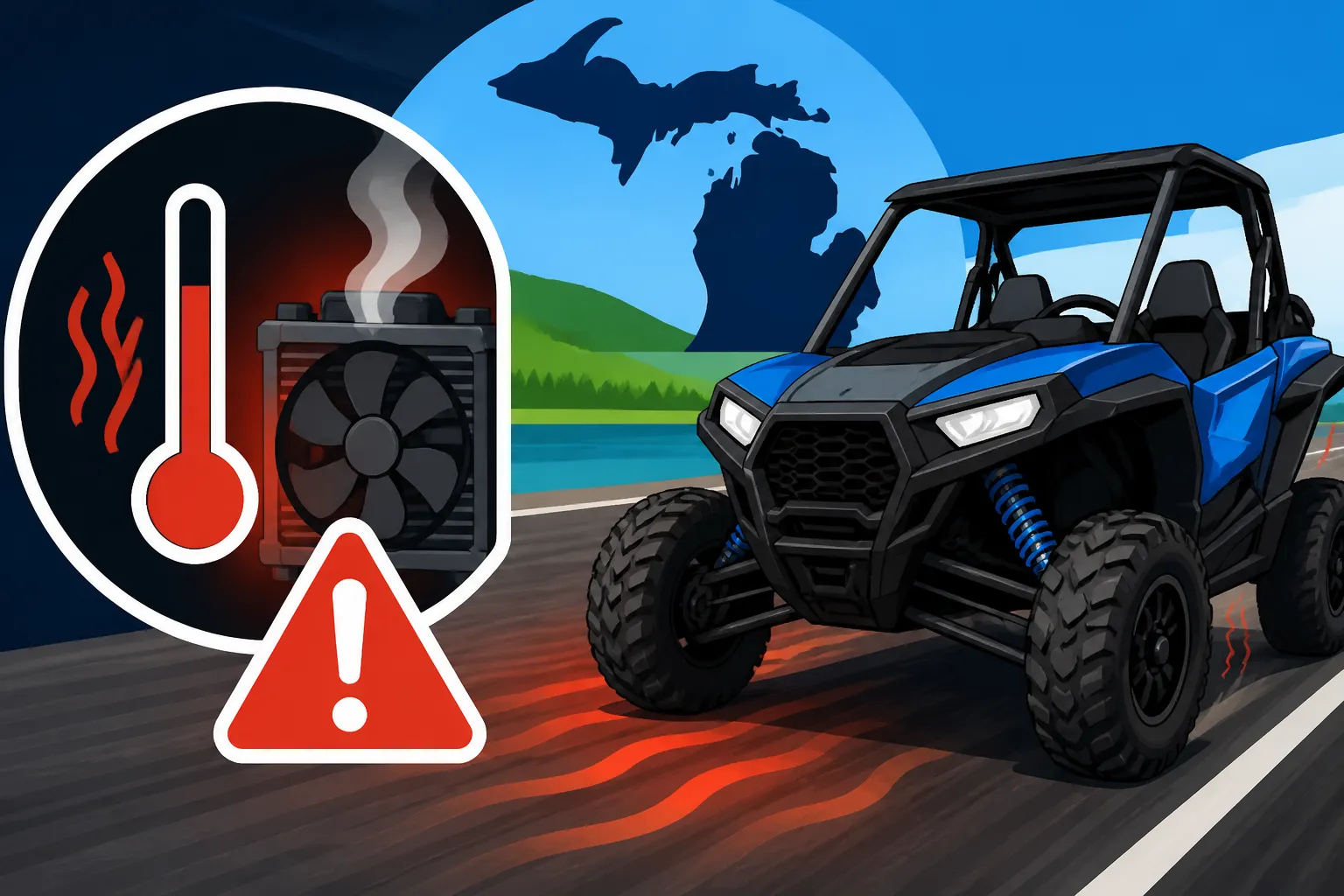
Cooling Problems When a UTV Runs on Pavement
It's incredibly frustrating when you've gone through all the effort to make your UTV street legal in Michigan, excited to hit those county roads, only to have your machine start acting up with overheating issues. You envision cruising smoothly, but instead, you're constantly glancing at the temperature gauge, worried about steam pouring from your engine. This guide is here to walk you through why your UTV might be getting too hot on pavement and, more importantly, what practical steps you can take to keep it cool and running strong.
Why Your UTV Overheats on Pavement: Understanding the Core Issues
You love your UTV for its rugged capabilities, the way it tackles mud, climbs hills, and navigates tight trails. But those very characteristics, while fantastic off-road, can become a liability when you transition to paved surfaces. It's a fundamental mismatch between design intent and real-world application, and it puts a unique strain on your cooling system.
Designed for Dirt, Not Tarmac
Think about how your UTV is engineered. It's built for low-to-moderate speeds, with massive torque designed to overcome obstacles, not maintain sustained high speeds for miles on end. Off-road, there's often plenty of natural airflow as you navigate varied terrain, or you're moving slowly enough that the cooling fan can do its job without being overwhelmed. On a flat, open Michigan county road, however, you're often holding higher RPMs and speeds for longer durations. This sustained exertion generates a lot more heat in the engine and drivetrain. The cooling system, designed for intermittent bursts of power and lower average speeds, struggles to keep up with the constant demand of road use, especially when you're adhering to speed limits that still feel like a workout for your machine.
The way air flows around your UTV is also different on pavement. On trails, air often has more opportunities to churn around and through the engine bay, even at lower speeds. On pavement, particularly if you have a windshield or other accessories, the airflow can become more streamlined but less effective at directly cooling the engine and radiator without proper design considerations. Your engine works harder to maintain speed on a smooth surface than it does churning through dirt at a lower pace, leading to more internal combustion heat that needs to be dissipated.
The Role of Cooling System Components
At the heart of your UTV's cooling is its radiator, fan, and coolant. These components are typically chosen by the manufacturer to be effective in the intended off-road environment. The radiator, often mounted in the front, is designed to allow air to pass through its fins, dissipating heat from the coolant. On pavement, if you're traveling at higher speeds, the air might rush past too quickly or be obstructed, reducing the efficiency of heat transfer. The cooling fan kicks in when airflow isn't enough, especially at low speeds or when idling. On the road, if the fan isn't powerful enough or isn't cycling correctly, it won't pull enough air through the radiator to counteract the constant heat generation. This is where you might start seeing the temperature gauge climb steadily upwards, despite moving at a decent clip.
Beyond the radiator and fan, the coolant itself plays a crucial role. If your coolant is old, diluted, or the wrong type, its ability to absorb and transfer heat will be compromised. An improperly mixed coolant can also lead to corrosion within the system, further reducing efficiency. Don't forget the thermostat, either. This small, often overlooked component regulates the flow of coolant to the radiator. If your thermostat is stuck closed, or even partially closed, it can starve the radiator of hot coolant, leading to rapid overheating. Conversely, one stuck open might prevent the engine from reaching optimal operating temperature, which also isn't ideal, but less likely to cause an overheating scenario. Ensuring all these parts are in top working order and suited for the demands of road use is critical for preventing those dreaded temperature spikes.
External Factors That Worsen Heat
It’s not just your UTV’s internal workings that conspire against you; external conditions can significantly exacerbate overheating problems. Imagine a typical Michigan summer day – bright sunshine, high humidity, and temperatures climbing into the 80s or 90s. Now, take your UTV, fully loaded with a couple of passengers and gear, and drive it down a paved county road for an hour. The ambient temperature alone places a much greater burden on your cooling system. The engine has to work harder against warmer air, and the radiator has less of a temperature differential to shed heat effectively.
Then there's the load you’re carrying. Your UTV might have a great payload capacity, but hauling heavy loads, towing a small trailer, or even just carrying a full complement of passengers puts additional strain on the engine and transmission. More strain equals more heat. Even your tire choice can play a part. Those aggressive, deep-lugged mud tires that are fantastic for gripping loose terrain create significantly more rolling resistance and friction on pavement than a street-specific tire would. This friction generates more heat in the drivetrain and requires more engine power to maintain speed, completing a vicious cycle that pushes your UTV closer to its thermal limits.
Common Symptoms and How to Spot Them
When your UTV is struggling with heat, it's often not a sudden catastrophic failure but a progression of warning signs. Being attuned to these symptoms can save you a lot of headache and potentially expensive repairs down the line. It's about being proactive, not reactive, especially when you're out exploring Michigan's many scenic routes.
The Dashboard Warning Lights
Your UTV's dashboard is its way of communicating with you. The most obvious sign of overheating is the temperature gauge climbing into the red zone or an illuminated "check engine" or temperature warning light. Modern UTVs are equipped with sensors that trigger these warnings when the coolant temperature exceeds safe operating limits. If you see that needle creeping higher or a light flash on, don't ignore it. It’s not just a suggestion; it’s an urgent call to action. Pull over safely, turn off the engine, and let it cool down. Continuing to drive while the warning light is on can lead to severe engine damage, like a blown head gasket or worse.
Sometimes, the warning might be more subtle. You might notice the cooling fan running constantly, even at highway speeds, or cycling on and off much more frequently than usual. This indicates that the system is working overtime to try and keep temperatures in check. It's a sign that while the UTV isn't yet officially overheating, it's definitely struggling. Pay attention to how your fan operates, especially after you've made modifications to make your UTV street legal.
Performance Degradation and Strange Noises
An overheating engine can manifest in ways beyond just the gauge. You might experience a noticeable loss of power, a feeling that your UTV is "bogging down" or hesitating when you press the throttle. The engine might sound rougher than usual, or you might hear new, unusual noises, like a rattling or knocking, which could indicate excessive heat causing internal components to expand beyond their tolerances. You might also start to smell something amiss – a sweet, syrupy smell indicates burning coolant, while a pungent, acrid smell could be hot oil breaking down. Either way, these are strong indicators that your engine is under duress.
Visible signs are also critical. Steam or vapor rising from under the hood or engine compartment is a clear red flag. This often means coolant is boiling and possibly escaping from the system, indicating a serious overheating situation. If you see this, stop immediately and allow the engine to cool completely before attempting to inspect anything. Popping the cap off a hot radiator can be extremely dangerous due to pressurized hot coolant. A slow leak or a small puddle of green or orange fluid under your UTV after it's been parked is also a sign, indicating a compromised cooling system, perhaps a loose hose or a pinhole leak in the radiator.
Post-Ride Checks and Preventative Sniff Tests
The best way to catch potential cooling issues early is through regular, mindful checks. After a street ride, especially a longer one, take a few minutes to walk around your UTV. Is the fan running even after you’ve shut off the engine (a common cool-down feature)? Does the engine bay feel excessively hot? Use your senses: visually inspect the radiator fins for accumulated debris like bugs, leaves, or road grime that can block airflow. Check your coolant reservoir – is the level where it should be? Low coolant is a primary culprit for overheating.
Give a quick sniff test around the engine. Do you detect any of those telltale sweet or acrid odors? Feel the radiator hoses (carefully, once the engine has cooled a bit) – are they overly hard or soft? Look for any signs of leaks around hose connections, the water pump, or the radiator itself. Keeping up with simple preventative measures can save you from a major breakdown. It’s like checking your oil before a long trip; it only takes a moment but can prevent hours of frustration.
Practical Solutions to Keep Your Street-Legal UTV Cool
So, you've identified that your UTV is running hot on pavement. Now what? The good news is there are several effective strategies, ranging from simple maintenance to targeted upgrades, that can significantly improve your machine's ability to handle the demands of road use. This is where you can truly transform your UTV from a trail-only beast to a confident street-legal cruiser.
Cooling System Upgrades
For street-legal UTVs, the stock cooling system sometimes just isn't enough. One of the most impactful upgrades is to install a larger or performance-oriented radiator. These units often have more cooling capacity, thanks to thicker cores or more efficient fin designs, allowing them to dissipate heat more effectively. A bigger radiator provides a larger surface area for heat exchange, which is critical when you're maintaining consistent speeds on paved roads. For instance, brands like SuperATV offer heavy-duty radiators designed specifically to enhance cooling for popular UTV models.
Another significant upgrade is to your cooling fan. Many stock fans are designed for intermittent, high-demand cooling at low speeds. Upgrading to an auxiliary fan or a higher-CFM (Cubic Feet per Minute) fan can dramatically increase airflow through the radiator, especially at speeds where natural airflow might not be sufficient. Paired with a more efficient radiator, a powerful fan creates a much more robust cooling package. You might also consider switching to a high-performance coolant designed for extreme temperatures. These coolants often have additives that improve heat transfer and offer better corrosion protection, giving your system an extra edge. Finally, a lower-temperature thermostat can be installed. This type of thermostat opens at a slightly cooler temperature, allowing coolant to flow to the radiator sooner, which can help prevent temperatures from climbing too high in the first place.
Maintenance is Key
Even with the best upgrades, neglecting basic maintenance will inevitably lead to cooling problems. Regular coolant flushes and refills are paramount. Over time, coolant loses its effectiveness and can become contaminated or acidic, leading to corrosion. Following your manufacturer's recommendations for coolant replacement (or doing it more frequently if you're regularly on pavement) will ensure your system is always running with fresh, efficient fluid. When you flush, make sure to use distilled water if you're mixing your own coolant, as tap water can introduce minerals that cause buildup.
Cleaning your radiator is another critical, yet often overlooked, task. Your UTV is designed to get dirty, and that dirt, along with bugs, leaves, and road grit, will inevitably clog the radiator fins. A clogged radiator can't dissipate heat effectively, no matter how good your coolant or fan is. Periodically spraying out the radiator from the inside (opposite to normal airflow) with a hose (not a high-pressure washer that can bend fins) will clear out accumulated debris. Also, regularly check your radiator hoses for cracks, swelling, or softness, and ensure all clamps are tight. A loose clamp can lead to a slow leak, which can quickly turn into a major problem. Don't forget your water pump belt; if it's slipping or worn, it won't be effectively circulating coolant. And while not directly part of the cooling system, regularly changing your engine oil with the appropriate viscosity is vital, as oil also plays a significant role in absorbing and dissipating engine heat.
Driving Habits and Accessories
Sometimes, the simplest solutions are the most effective. Adjusting your driving habits can significantly reduce the thermal load on your UTV. Avoid sustained high speeds and prolonged high RPMs on pavement. If [Michigan's 25 mph Limit on County Roads] is the ordinance, stick to it, and even at that speed, drive smoothly. Aggressive acceleration and braking generate more heat. Maintain a consistent, moderate pace that doesn't push your engine unnecessarily. Remember, your UTV isn't a sports car, and trying to make it perform like one on the asphalt is a recipe for overheating.
Consider the load you're carrying. If you're planning a long road trip, try to minimize unnecessary weight. Every extra pound your UTV has to haul means more work for the engine and, consequently, more heat. Your tire choice also matters immensely. While those aggressive mud tires look cool, they create more friction and heat on pavement. If you're doing a lot of street riding, consider a less aggressive, perhaps even DOT-approved, tire designed for mixed-surface use. These tires will not only reduce heat generation but also offer a smoother, quieter ride and better handling on pavement. Finally, accessories like heat shields or insulation can protect sensitive components from radiant engine heat, especially in confined engine bays. SuperATV provides a range of accessories, including windshields and roofs, that can affect airflow, so considering how they impact cooling is also important. Always ensure any accessories don't obstruct airflow to the radiator or engine.
Long-Term Impact of Overheating and Why Prevention Matters
Ignoring those temperature warnings or repeatedly allowing your UTV to overheat on Michigan roads isn't just an inconvenience; it can lead to severe and costly long-term damage. Just like a human body, an engine cannot operate effectively or safely outside its optimal temperature range for extended periods. Understanding the potential consequences reinforces why being proactive about cooling is so important.
Engine Damage and Costly Repairs
The most immediate and dire consequence of chronic overheating is significant engine damage. When engine components get too hot, metals expand beyond their design tolerances, leading to warping and cracking. A common casualty is the head gasket, which seals the cylinder head to the engine block. A blown head gasket can lead to coolant leaking into the combustion chambers or oil mixing with coolant, causing catastrophic engine failure. Repairing a head gasket is a labor-intensive and expensive job. Even worse, extreme heat can warp the cylinder heads themselves or cause the engine block to crack, often necessitating a complete engine rebuild or replacement – a bill that can easily rival the cost of a new UTV.
Beyond the major components, overheating can also damage smaller, but vital, parts like bearings. Engine oil, which also plays a crucial role in cooling, breaks down more quickly under excessive heat, losing its lubricating properties. This accelerated wear and tear on pistons, rings, and camshafts will shorten the lifespan of your engine significantly. Prevention through proper cooling isn't just about keeping your UTV running today; it's about preserving its longevity and avoiding a massive financial hit down the road.
Drivetrain Strain and Premature Wear
It's not just the engine that suffers when your UTV overheats. The entire drivetrain, including the transmission, differentials, and axles, is put under immense strain. These components rely on specialized fluids to lubricate gears and dissipate heat. When the engine is running excessively hot, that heat can transfer to the transmission and differential fluids, causing them to break down prematurely. Overheated transmission fluid loses its ability to lubricate effectively, leading to increased friction, accelerated wear on gears and clutches, and eventually, transmission failure.
Similarly, the differential fluid can overheat, causing its viscosity to thin and its protective properties to diminish, which can damage the gears. Even the constant velocity (CV) joints and axles can be affected, as the grease within them can break down, leading to increased friction and premature failure. You might find yourself dealing with noisy differentials, grinding transmissions, or broken axles far sooner than you should, all because the overall thermal management of your UTV wasn't up to par for its street-legal life. This cascade effect highlights how interconnected all the systems are and why a holistic approach to preventing overheating is essential for your UTV's overall health.
Safety Implications and Roadside Breakdowns
Beyond the mechanical and financial costs, an overheating UTV presents significant safety concerns. Imagine you're cruising on a Michigan back road, enjoying the scenery, and suddenly your UTV sputters, loses power, and dies due to a severe overheating event. Being stranded on a rural road, potentially far from cell service or assistance, can be not only incredibly inconvenient but also dangerous. Especially if you're riding alone or in an unfamiliar area. Getting your UTV recovered from a remote location can be a logistical nightmare and an added expense.
Furthermore, a compromised engine due to overheating can lead to a loss of control, particularly if vital components seize or fail unexpectedly while you're driving. Steam obscuring your vision, or a sudden loss of power in traffic, can lead to accidents. When you're driving a street-legal UTV, you're sharing the road with other vehicles, and reliable performance is critical for safety. Ensuring your UTV is properly cooled prevents these stressful and potentially hazardous situations, allowing you to focus on enjoying the ride and the open road. Regularly checking your machine, especially if it's been approved through a process like the [Michigan Street-Legal UTV Inspection at the Secretary of State], helps guarantee not just compliance, but reliable operation. If you ever have questions about the rules, remember to consult guides like [Michigan's Three Road Rules Michigan ORV Riders Must Follow] to keep your adventures safe.
Here's a quick comparison of common cooling solutions for your street-legal UTV:
| Solution Type | Description | Pros | Cons | Best For |
|---|---|---|---|---|
| Regular Maintenance | Coolant flushes, radiator cleaning, hose checks | Cost-effective, essential foundation, easy DIY | Not enough for severe issues, requires consistency | All UTV owners, especially those new to street-legal riding |
| Performance Radiator | Larger core, more efficient design | Significant increase in cooling capacity, durable | Higher initial cost, may require professional installation | UTVs frequently driven on pavement or under heavy load |
| High-CFM Fan | More powerful electric fan, better airflow | Improves cooling at low speeds/idle, complements performance radiator | Can draw more power, potential for increased noise | UTVs that see a lot of low-speed road use or stop-and-go traffic |
| Lower Temp Thermostat | Opens earlier to circulate coolant sooner | Proactive cooling, helps prevent temp spikes | Can keep engine running slightly cooler than optimal, minor efficiency impact | UTVs that tend to warm up quickly on pavement |
| High-Performance Coolant | Enhanced heat transfer, corrosion protection | Improves system efficiency, extends component life | Higher cost per fluid change, specific types required | All UTVs, especially those in hot climates or driven hard |
| Driving Habits | Moderate speed, smooth acceleration, reduced load | Free, immediate impact on heat generation | Requires rider discipline, may limit utility | All UTV owners, complements all other solutions for max benefit |
Disclaimer
This article is for general informational purposes only and does not constitute professional advice. Laws, prices and regulations vary by location and change over time. Consult a qualified professional for guidance on your specific situation.