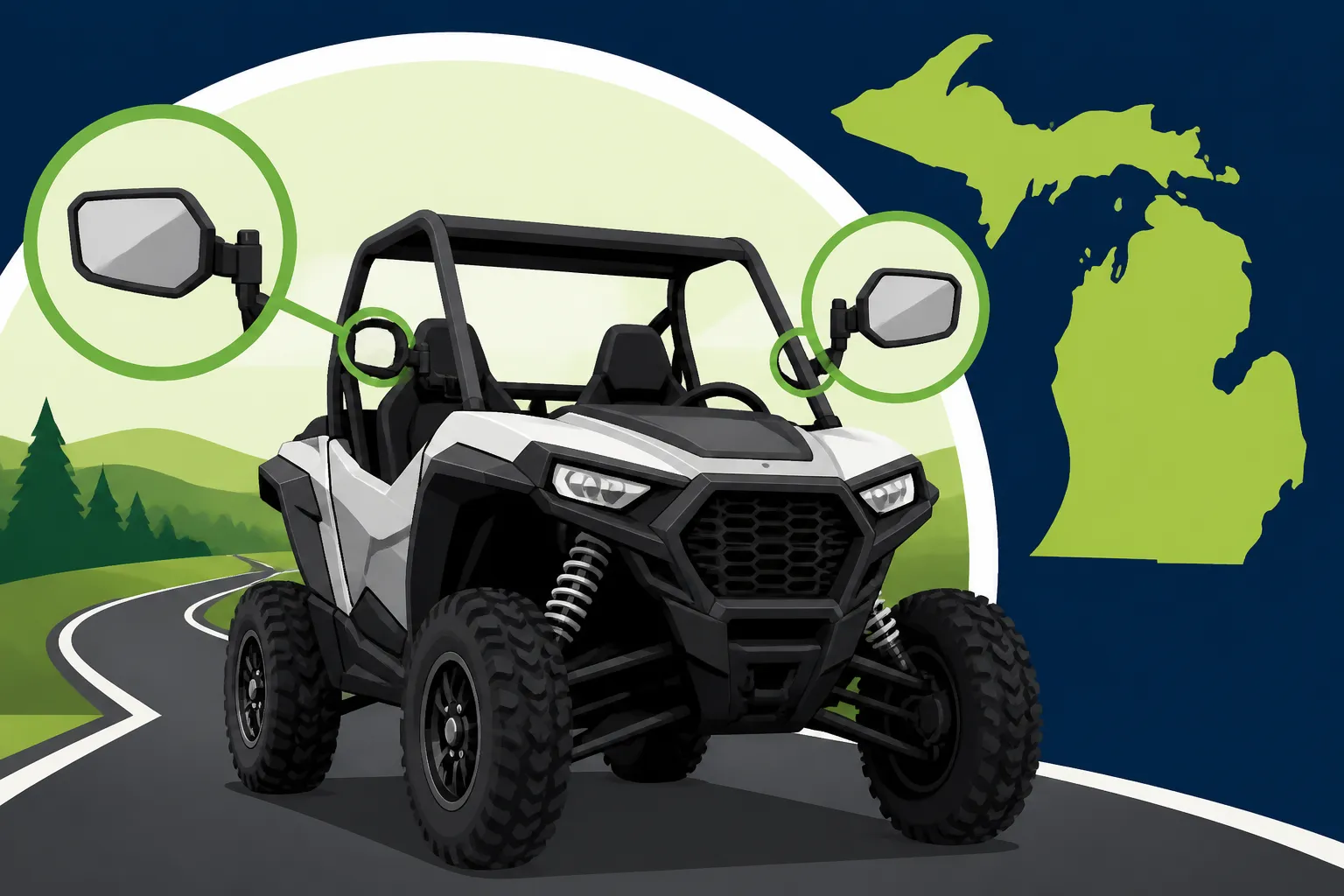
Mirrors Required on a Street-Legal Side-by-Side
Trying to make your side-by-side street legal in Michigan can feel like navigating a maze, especially when it comes to understanding all the specific requirements. One area that often trips up even seasoned riders is the seemingly simple question of mirrors. It’s not just about slapping on any old mirror; Michigan has clear expectations for what constitutes adequate rearward visibility when you take your UTV from the trail to the pavement. This comprehensive guide will walk you through exactly what you need to know about mirrors for your street-legal side-by-side in Michigan, ensuring you're safe, compliant, and ready to hit the road.
The Core Requirement: Why Mirrors Matter on Michigan Roads
When you decide to transition your beloved side-by-side from dedicated off-road machine to a road-legal vehicle in Michigan, you're signing up for a whole new set of rules and responsibilities. The state isn't just trying to make things difficult; these regulations are fundamentally about safety – for you, your passengers, and everyone else sharing the road. Mirrors are a critical component of that safety net, allowing you to have full situational awareness of traffic behind and beside you. Without proper mirrors, you're operating with dangerous blind spots, making lane changes, turns, and even simply slowing down a potential hazard. It's a fundamental aspect of driving any vehicle on public roads, and your UTV is no exception.
The Legal Basis for Rearward Visibility
Michigan's vehicle code, including the specific provisions for ORVs that are converted for street use, emphasizes the importance of visibility. While it might not always spell out "one center mirror and two side mirrors" in plain English for UTVs, the underlying principle is that the operator must have a clear and unobstructed view of the roadway to the rear and sides. This isn't a suggestion; it's a mandate. Failing to meet this requirement isn't just about an inspection failure; it can lead to tickets and penalties if you're stopped by law enforcement. The goal is to ensure your UTV meets the same basic safety standards as any other passenger vehicle when it's mingling with cars and trucks on public streets. It’s all about minimizing risk and ensuring you can react appropriately to changing traffic conditions.
Think about it from a common-sense perspective: if you're merging onto a county road or making a turn, you absolutely need to know if there's a car, another ORV, or even a bicycle approaching from behind. Relying solely on craning your neck is not only impractical but also unsafe, taking your eyes off the road ahead. Michigan's laws are designed to eliminate that guesswork and provide a consistent standard for all road users, including those who’ve taken the steps to make their ORV street legal. This legal emphasis on rearward visibility underscores why adequate mirrors are non-negotiable for a street-legal UTV.
How Michigan Defines "Street Legal" for ORVs
Making an ORV street legal in Michigan isn't a simple rubber stamp process; it involves a specific set of modifications and an inspection to ensure compliance with the Michigan Vehicle Code for "assembled vehicles." When you go through the process to obtain a [Michigan Plate for an Assembled Vehicle UTV], you're essentially telling the state that your UTV now meets certain standards that allow it to operate on designated public roads. This includes critical components like headlights, taillights, brake lights, turn signals, a horn, and, of course, a proper mirror setup. The state wants to see that your UTV functions safely and predictably in a shared traffic environment, just like any other car or truck.
The definition of "street legal" for an ORV specifically requires that it has the necessary equipment to be operated safely on public roads. This directly impacts mirrors. While a typical passenger car has a center rearview mirror and two side mirrors as standard, an ORV converting to street legal status needs to add these features if they weren't original equipment. This means you can't just rely on the mirrors that might have come with your UTV for trail riding, as they often don't provide the field of view or stability required for road speeds and traffic. It's about meeting the spirit and the letter of the law for safe road operation, and the inspection process for an assembled vehicle is designed to verify that. You can read more about this in [Michigan's Assembled Vehicle Route for a UTV].
Types of Mirrors for Street-Legal UTVs
When you start looking at mirrors for your side-by-side, you'll quickly realize there's a lot more to it than just picking up the first set you see. The type, placement, and even the construction of the mirrors all play a role in meeting Michigan's requirements for street legality and, more importantly, ensuring your safety. It's about achieving comprehensive rearward visibility, covering those crucial blind spots that can be so dangerous on busy roads. Riders often experiment with different combinations to find what works best for their specific machine and riding style, but the core need remains: you need to see what's happening behind and to your sides.
Center Rearview Mirrors
A center rearview mirror is a staple in almost every road-going vehicle, and your street-legal UTV is no different. This mirror provides a direct view of what’s immediately behind you, crucial for monitoring traffic, watching out for approaching vehicles, and performing actions like checking before braking. For UTVs, these mirrors typically mount to the roll cage, often clamping onto the overhead bars. You'll find a wide variety of designs, from simple flat mirrors to convex mirrors that offer a wider, albeit slightly distorted, field of view. Some even come with built-in LED lights, though the primary function for street legality is that clear, unobstructed view behind your machine.
When selecting a center mirror, consider its adjustability and stability. You'll want one that stays put even over bumps and vibrations, and that can be easily positioned to give you the best possible view through your rear window or past the back of your cab. A high-quality center mirror, perhaps from a reputable brand like SuperATV, can make a significant difference in your ability to confidently navigate traffic. Remember, this mirror is your first line of defense against what’s coming up behind you, so don’t skimp on quality or placement.
Side Mirrors and Their Importance
While a center mirror gives you a good straight-back view, it's the side mirrors that eliminate those notorious blind spots. Michigan's requirements for street-legal vehicles generally necessitate mirrors that provide a clear view to the side and rear of the vehicle, which almost universally translates to needing at least one, if not two, functional side mirrors. These mirrors are critical for safe lane changes, checking before turning, and monitoring passing traffic. Without them, you're essentially driving blind in your peripheral vision, which is incredibly dangerous on public roads where traffic can approach from multiple angles.
For UTVs, side mirrors typically clamp onto the roll cage or mount directly to the doors. You'll find options ranging from basic flat mirrors to larger, convex designs that give a wider field of view. Many riders opt for break-away mirrors, which are designed to fold in or pivot if they strike a tree or another object, reducing the chance of damage during spirited driving (or an accidental bump in a tight parking spot). Just like with your center mirror, stability and adjustability are key. You need them to hold their position at road speeds and be easily adjusted for different drivers or conditions. Don't underestimate the role these mirrors play in providing comprehensive situational awareness; they complete the picture of your surroundings that your center mirror starts.
Understanding DOT Compliance for Mirrors
When we talk about "street legal" components, the term "DOT compliant" often comes up, and for good reason. The Department of Transportation (DOT) sets certain standards for vehicle components to ensure they meet minimum safety requirements for highway use. While not all mirror manufacturers explicitly label every single UTV mirror as "DOT compliant" in the same way they might a motorcycle helmet, the underlying expectation for mirrors is that they provide a clear, stable, and accurate reflection necessary for safe operation on public roads. This means avoiding flimsy mirrors that vibrate excessively, distort the view, or are prone to breaking easily.
For mirrors, DOT compliance often relates to the quality of the glass, the clarity of the reflection, and the durability of the housing and mounting system. An inspector at the Secretary of State or a law enforcement officer isn't going to pull out a specific DOT mirror spec sheet, but they will assess whether your mirrors are adequate for safe road use. This typically means they are securely mounted, provide a stable image at speed, and offer a sufficient field of view to see traffic approaching from the rear and sides. While you might not find a "DOT approved" sticker on every UTV mirror, choosing robust, high-quality mirrors from reputable manufacturers, like those found in [DOT-Approved Mirror Options for a UTV], is your best bet to ensure they meet the spirit of these safety standards and will pass inspection.
Choosing the Right Mirrors for Your Side-by-Side
Selecting the right mirrors for your street-legal UTV isn't just about meeting a checklist; it's about integrating essential safety equipment seamlessly into your machine. There are countless options out there, from universal kits to machine-specific designs, and finding the perfect fit involves considering several practical factors. You want mirrors that not only look good but, more importantly, perform flawlessly under road conditions, giving you clear visibility and peace of mind. Taking the time to research and choose wisely here will save you headaches down the road, both literally and figuratively.
Factors to Consider: Durability, Field of View, Mounting
When you’re staring at a wall of mirrors at your local powersports shop or browsing online, it can be overwhelming. Let’s break down the key considerations to help you make an informed choice. First, durability is paramount. Your UTV is built tough, and its accessories should be too. Mirrors need to withstand vibrations, weather, and the occasional branch if you still plan to hit some light trails on the way to a staging area. Look for robust housings, shatter-resistant glass (if available), and strong mounting hardware. Cheap plastic mirrors might save a few bucks upfront, but they often don't last long in the real world of UTV life.
Second, consider the field of view. A wider field of view is generally better for road use, as it minimizes blind spots. Convex mirrors can offer this, though they do make objects appear farther away. Some riders combine a flat center mirror with convex side mirrors to get the best of both worlds. Whatever your choice, ensure the mirrors provide a clear, unobstructed view of the road behind and to the sides. You should be able to see cars approaching in adjacent lanes without having to strain or make excessive head movements.
Finally, mounting is critical for stability and ease of installation. Most UTV mirrors utilize roll cage clamps, and you’ll want to ensure these are secure and fit your cage diameter precisely. Some doors also have integrated mirror mounts. Adjustable mounting arms are a huge plus, allowing you to fine-tune the mirror’s position for optimal visibility and to fold them in if needed. The mounting system needs to be sturdy enough to prevent the mirrors from shaking excessively at speed, which can render them useless. For example, a quality setup like those offered by SuperATV will typically feature strong, billet aluminum clamps or robust steel brackets designed to minimize vibration.
Installation Tips and Best Practices
Once you've chosen your mirrors, proper installation is key to their effectiveness and longevity. Don't rush this step! Start by cleaning the mounting area thoroughly. For roll cage mounts, ensure the clamps are tight and evenly secured. If your mirrors come with rubber shims, use them—they help absorb vibration and protect your cage's finish. Position your center mirror first, aiming for a direct, wide view out the back. Then, move to your side mirrors. Sit in the driver's seat, adjust the mirrors so you can see down the side of your machine and into the lane next to you, ideally with a slight overlap with the view from your center mirror.
It’s a good practice to have someone stand behind and to the sides of your UTV while you're adjusting, mimicking approaching vehicles. This helps you identify and minimize any lingering blind spots. Remember, these mirrors need to be adjusted for your driving position. If multiple people will be driving the UTV, make sure they know how to quickly and safely adjust the mirrors for themselves. Double-check all bolts and clamps after your first few rides to ensure they haven't loosened up from vibrations. A little bit of upfront effort in installation can prevent a lot of frustration and potential safety issues later on. You can find many of these items, along with other essential pieces, in a good [Parts List for a Street-Legal Conversion].
Brand Spotlight: SuperATV Mirror Solutions
When it comes to outfitting your side-by-side for street-legal adventures, SuperATV is a brand that frequently comes up, and for good reason. They specialize in aftermarket parts for UTVs and ATVs, and their range of mirror solutions is specifically designed to meet the rigorous demands of both trail and road use. Many of their mirror kits are engineered with durability in mind, often featuring robust housings, break-away designs, and high-quality glass that provides a clear and stable image. Whether you're looking for a wide-angle center mirror to mount on your roll cage or sturdy side mirrors that can handle a bit of abuse, SuperATV offers options that cater to various machine models and preferences.
Their products are known for their secure mounting systems, which helps to mitigate the common issue of mirror vibration at higher speeds—a critical factor for street legality and safety. They understand that UTVs operate in a more demanding environment than typical cars, so their mirrors are often built with stronger materials and more resilient designs. When you're making the investment to convert your UTV for road use, opting for a well-regarded brand like SuperATV can provide confidence that you're installing components that are both compliant and built to last. It takes some of the guesswork out of finding reliable accessories that can stand up to Michigan's varied riding conditions.
Common Mirror Mistakes and How to Avoid Them
Even with the best intentions, it's easy to make mistakes when setting up your UTV for street legality, and mirrors are a prime example. These aren't just minor oversights; they can be the difference between passing your [Michigan Street-Legal UTV Inspection at the Secretary of State] or failing, and more importantly, they can compromise your safety on public roads. Understanding the common pitfalls beforehand can help you avoid unnecessary delays and ensure your UTV is genuinely road-ready.
Inadequate Mirror Placement and Blind Spots
One of the most frequent mistakes is simply placing mirrors without truly optimizing their coverage. You might have three mirrors installed, but if they don't provide a continuous, overlapping field of view around your vehicle, you'll still have dangerous blind spots. For instance, if your side mirrors are too far forward or too far back, or angled improperly, there could be a segment of the road where an approaching vehicle disappears from your view. This is especially critical on multi-lane roads or when making turns where you need to be acutely aware of traffic immediately beside you.
To avoid this, take the time to meticulously adjust each mirror. As mentioned before, have a friend walk around your UTV while you sit in the driver's seat. Ask them to tell you when they disappear from your view in one mirror and reappear in another. You want minimal "gap time" where a vehicle is completely invisible. Adjusting your seat and steering wheel might also be necessary to get the best angle. Remember, your mirrors are an extension of your eyes, and their placement should provide the clearest, most comprehensive view possible, eliminating those frustrating and dangerous blind spots that can lead to collisions.
Forgetting Maintenance and Adjustments
Mirrors aren't a "set it and forget it" item, especially on a UTV that sees diverse terrain. Regular maintenance and periodic adjustments are crucial. Over time, vibrations from engine operation and off-road excursions can cause mirror mounts to loosen, leading to excessive shaking or even mirrors pivoting out of position. Dust, mud, and water splashes will naturally accumulate on the mirror surfaces, obscuring your view. Neglecting these simple maintenance tasks can quickly render your carefully chosen mirrors ineffective.
Before every road ride, make it a habit to quickly check your mirrors. Are they clean? Are they securely mounted? Are they still adjusted correctly for your driving position? A quick wipe down with a soft cloth and a dab of glass cleaner can make a world of difference. If you notice any looseness, tighten the clamps or bolts immediately. If you frequently switch drivers, remind everyone to adjust the mirrors for their own comfort and safety. These small, consistent efforts ensure your mirrors are always providing the clear, stable view you need for safe street-legal operation.
What Fails a Michigan Assembled Vehicle Inspection
When you take your converted side-by-side in for its [Michigan Street-Legal UTV Inspection at the Secretary of State], the inspector isn't just looking for mirrors; they're looking for functional and adequate mirrors. Common reasons for failing the mirror portion of the inspection include:
- Insufficient Coverage: Having only one mirror, or mirrors that don't provide the required rear and side visibility. Michigan typically expects a setup similar to standard vehicles for road safety.
- Excessive Vibration: If your mirrors shake so much at idle or low speeds that the image is a blur, they won't pass. This indicates poor mounting or flimsy construction.
- Damaged or Obscured Mirrors: Cracked glass, missing mirror surfaces, or mirrors that are so dirty they can't provide a clear view are instant failures.
- Improper Mounting: Mirrors that are loose, unstable, or look like they could easily fall off are a no-go. They need to be securely affixed to the vehicle.
- Limited Adjustability: If the mirrors cannot be adjusted by the driver to provide a proper field of view, they are considered inadequate.
An inspector will likely sit in the driver's seat and check the field of view, perhaps even having an assistant move around the vehicle to check for blind spots. They are evaluating safety and compliance with the spirit of the law, not just a simple parts list. Ensuring your mirrors are clean, stable, securely mounted, and provide excellent rearward and side visibility will go a long way in passing this crucial part of your assembled vehicle inspection. Remember to consult the full [Michigan Street-Legal UTV Inspection Checklist] before your appointment, and review [What Fails a Michigan Assembled Vehicle Inspection] so you know what to look out for.
Comparison of Common Mirror Types for Street-Legal UTVs
When gearing up your side-by-side for Michigan roads, understanding the pros and cons of different mirror configurations can help you make an informed decision. Here's a quick look at common options:
| Mirror Type | Placement | Pros | Cons | Ideal Use Case |
|---|---|---|---|---|
| Center Rearview | Top of windshield/roll cage, interior | Direct rear view, standard on most vehicles, easy to check quickly | Limited side view, can be blocked by passengers/cargo | Essential for all street-legal UTVs, basic rear awareness |
| Flat Side Mirrors | Roll cage sides or doors, exterior | Accurate depth perception, clear side/rear view | Narrower field of view than convex, can create small blind spots | Good for precise lane changes, standard car-like experience |
| Convex Side Mirrors | Roll cage sides or doors, exterior | Wide field of view, excellent for blind spot reduction | Objects appear farther away than they are, can take getting used to | Recommended for maximum situational awareness, busy roads |
| Breakaway Mirrors | Roll cage sides or doors, exterior | Foldable/pivotable upon impact, minimizes damage, trail-friendly | Potentially less rigid than fixed mirrors (if not well designed) | Dual-purpose riders (road & trail), accident prone areas |
Beyond Mirrors: Other Essential Gear for Road Legality
While mirrors are a critical piece of the puzzle, making your UTV street legal in Michigan requires a whole suite of modifications and checks. It's an interconnected system, and each component plays a vital role in ensuring your safety and compliance on public roads. Thinking holistically about all the requirements will save you time and potential headaches during the inspection process and when you're out riding. Neglecting any one of these elements can put a damper on your road-legal dreams. You'll find a lot of great info on making your UTV road-ready in [How to Make a Side-by-Side Street Legal in Michigan].
Lighting, Horns, and Windshields
Beyond mirrors, your UTV needs a full complement of functional lighting to be road-legal. This includes proper headlights that emit white light and are aimed correctly, taillights that are clearly visible from a specified distance, and functional brake lights that illuminate when you apply the brakes. Crucially, you'll also need [Turn Signals and Hazard Lights on a Street-Legal Build]. These are non-negotiable for communicating your intentions to other drivers and must be visible from both the front and rear. A loud, audible horn is also required to warn pedestrians or other vehicles of your presence. It's not just a polite gesture; it's a safety device, as detailed in [Horn and Audible Warning Device Rules in Michigan].
Another significant component is the windshield. While not strictly required for all street-legal ORVs in all conditions (you might be able to get by with [Windshield or Goggles: Michigan's Eye Protection Rule] in certain situations), most riders opt for a full windshield for comfort and protection. If you install one, it must be safety glass or an approved clear, shatter-resistant material, not just any flimsy plastic. The state will be looking for a solution that aligns with the requirements found in discussions around [Safety Glass Windshield Cost for a Side-by-Side], as plexiglass or acrylic might not pass muster due to potential for shattering or poor visibility.
Displaying Your License Plate and Proof of Registration
Once your UTV passes inspection and you've completed the [Michigan Assembled Vehicle Title Application], you'll receive a proper license plate and registration. This plate must be securely mounted and clearly visible on the rear of your UTV. It can't be tucked away under a fender or obscured by mud. Many riders opt for lighted license plate brackets to ensure visibility at night, a smart addition that often enhances safety. Make sure the plate is clean and legible at all times.
Equally important is carrying proof of your registration, title, and insurance whenever you operate your street-legal UTV on public roads. Just like with a car, law enforcement officers will expect you to provide these documents if you're pulled over. While you don't need to carry your original title on the trail, having your registration and insurance card readily accessible is a must. Consider keeping a laminated copy or a digital version on your phone if allowed, but always know where your physical documents are. This paperwork verifies that your UTV is legitimately approved for road use and that you meet all the necessary legal requirements to drive it. Being prepared with all your documentation is just as important as having the right equipment on your machine.
Disclaimer
This article is for general informational purposes only and does not constitute professional advice. Laws, prices and regulations vary by location and change over time. Consult a qualified professional for guidance on your specific situation.