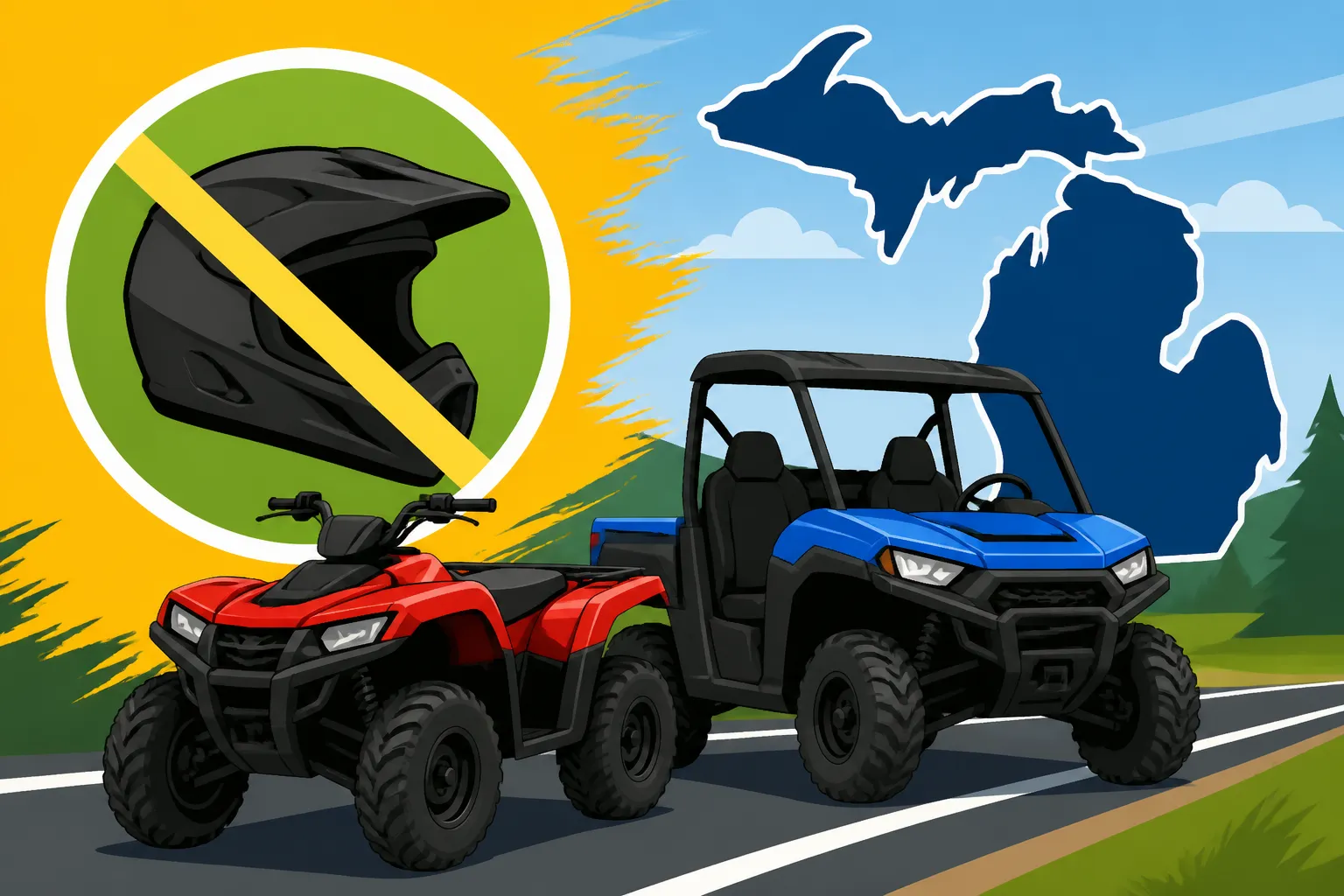
Michigan Helmet Exemptions for Street-Legal Vehicles
Riding your Off-Road Vehicle (ORV) or Utility Terrain Vehicle (UTV) on Michigan's vast network of trails and roads is an incredible experience, but the rules around safety gear, especially helmets, can feel like a tangled mess. Many enthusiasts work hard to make their machines street-legal, only to discover that simply having a license plate doesn't automatically mean you can ditch the helmet. This guide will cut through the confusion, clearly explaining Michigan's specific helmet exemptions for street-legal ORVs and outlining exactly what you need to know to stay safe and compliant.
Setting the Foundation: Michigan's General Helmet Law for ORVs
Before we dive into the exciting world of street-legal exemptions, it’s crucial to understand the baseline rules for helmet use when riding an ORV in Michigan. Think of this as the default setting: unless specific conditions are met, a helmet is almost always required. This standard exists for a very good reason—your safety.
The Standard Rule: When You Must Wear a Helmet
In Michigan, the default law is quite clear: if you're riding an ORV, you generally need to wear a helmet. This isn't just a suggestion; it's a legal requirement designed to protect riders from serious head injuries, which are unfortunately all too common in off-road accidents. This rule applies whether you're tearing up the designated [Michigan's 4,000 Miles of ORV Trails Explained], exploring state forest roads, or even just riding on private land that isn't your own. The state's focus is on ensuring a minimum level of protection for everyone enjoying these powerful machines.
This mandatory helmet rule covers a broad range of riding scenarios. If you're out on any of Michigan's extensive trail systems, navigating a scramble area, or even traversing an unpaved county road that is specifically designated as an ORV route, you and your passengers are expected to have proper head protection. The rule also applies to younger riders, with specific guidelines dictating helmet use for those under certain ages, reinforcing the importance of safety from the very start of their riding journey. This blanket requirement helps to simplify enforcement and ensures that safety remains paramount across most off-road environments. For a full picture of these general rules, you might want to review [Michigan Helmet Law for ATV Riders].
Who's Covered by the Baseline Helmet Mandate?
The general helmet requirement extends to virtually everyone operating or riding as a passenger on an ORV in Michigan. This means that if you're behind the handlebars of an ATV, perched on a dirt bike, or securely belted into a side-by-side that hasn't undergone a street-legal conversion, you are expected to wear a helmet. The law doesn't differentiate much based on age for adult riders; if you're operating an ORV in a situation where the general helmet rule applies, you need one.
Furthermore, this rule isn't just for the driver. Any passenger, regardless of their age or experience level, must also wear a helmet when riding in an ORV where the standard helmet law is in effect. This is particularly important for parents taking their kids out for a ride; while it's a fantastic family activity, safety remains the top priority. The types of machines covered include all-terrain vehicles (ATVs), utility terrain vehicles (UTVs), and even snowmobiles when they operate as ORVs in non-snow conditions on designated routes. The overarching principle is that if you're engaging in off-road recreation on a vehicle classified as an ORV, prepare to gear up with a helmet.
Making the Leap: From Off-Road Machine to Street-Legal Vehicle
The idea of making your ORV street-legal is incredibly appealing to many Michigan riders. It opens up new possibilities, allowing you to connect trails, run errands, or simply enjoy a scenic cruise down a county road without having to trailer your machine everywhere. However, this transformation isn't just about slapping a license plate on your UTV; it involves a specific process and equipping your machine to meet entirely different legal standards.
The Transformation: Equipping Your ORV for Michigan Roads
Converting your ORV, typically a UTV or side-by-side, into a street-legal vehicle in Michigan is a structured process that moves it out of the strict "ORV" classification for road use. This isn't a casual modification; it requires adding several pieces of equipment that bring it closer to passenger car or motorcycle standards. The aim is to ensure the vehicle is safe and visible when sharing public roads with other traffic.
Key components you'll need to install include DOT-approved headlamps and taillamps, turn signals, brake lights, a horn, and most importantly, a proper windshield and mirrors. Many riders turn to aftermarket experts like SuperATV for high-quality, compliant parts, including their robust windshields and street-legal kits, which streamline this conversion. Each of these additions serves a specific safety or legal function, from signaling your intentions to other drivers to providing the driver with an unobstructed view of the road. Understanding these requirements is the first step in unlocking the freedom of street-legal riding. For a detailed list, check out [Parts List for a Street-Legal Conversion] and [Safety Glass, Mirrors and Horns: Michigan's Street-Legal List].
Redefining Your Ride: Titling as an Assembled Vehicle
Once your ORV has been equipped with all the necessary street-legal components, the next critical step is to reclassify it and obtain the appropriate title and registration through the Michigan Secretary of State. In many cases, a converted UTV will be titled as an "assembled vehicle." This designation is crucial because it legally transforms your machine from a recreational off-road vehicle into a vehicle that can operate on public roads, subject to different rules and regulations.
The process of obtaining an [Michigan Assembled Vehicle Title Application] involves inspections to ensure all added equipment meets state standards. This reclassification is what fundamentally changes how helmet laws apply to your machine on paved roads. No longer is it solely an ORV subject to the general helmet mandate; it's now a legitimate road-going vehicle, which can qualify for exemptions under specific circumstances. Without this formal reclassification and titling, even if you've added all the right parts, you're still operating under the strict ORV rules, including mandatory helmet use. The initial [Michigan Assembled Vehicle Title Cost] is part of this crucial step.
Unpacking the Exemption: When Helmets Can Come Off
This is where the excitement really builds for street-legal UTV owners! Michigan does indeed offer exemptions to the helmet law for certain types of vehicles, and properly converted street-legal ORVs can often qualify. However, it's not a blanket exemption, and specific criteria must be met to legally ride without head protection on public roads. It's all about providing comparable safety through other means.
The Dual Requirement: Windshield and Seatbelts Are Key
The heart of Michigan's helmet exemption for street-legal vehicles lies in two critical components working together: a certified windshield and functional seatbelts for all occupants. For your street-legal UTV to be exempt from the helmet requirement when operating on public roads, it must be equipped with an AS-1 or AS-2 rated safety glass windshield, and all occupants must be properly restrained by seatbelts or safety harnesses. This isn't an either/or situation; both conditions must be met simultaneously.
An AS-1 or AS-2 windshield isn't just any piece of glass or plastic; it's a safety-rated windshield, typically laminated, that can withstand impacts and provides crucial protection from road debris, bugs, and weather elements, similar to a car's windshield. Many reputable manufacturers, including SuperATV, offer DOT-approved windshields that meet these rigorous standards, making them a popular choice for conversions. The combination of a strong, safety-rated windshield and secure seatbelts is what the state views as providing an acceptable level of occupant protection, thereby negating the need for a helmet on public roads. Without this dual protection, the helmet requirement remains firmly in place. Remember, even with a windshield, [Windshield or Goggles: Michigan's Eye Protection Rule] still applies if you don't have proper safety glass.
Scenarios Where the Exemption Applies (and When It Doesn't)
Once your UTV is officially street-legal with a certified windshield and seatbelts for everyone, you're generally exempt from wearing a helmet when riding on approved public roads. This means cruising down county roads, navigating through small towns, or connecting between trailheads on routes designated for ORV access where road riding is permitted. The freedom of feeling the open air, safely secured in your machine, is a huge draw for many riders.
However, it's absolutely crucial to understand the limitations of this exemption. The moment you leave those public roads and venture onto a designated ORV trail, into a scramble area, or any other area specifically classified for off-road vehicle use, the general ORV helmet law immediately kicks back in. Even with your street-legal conversion, if you're on a pure ORV trail, you and your passengers must put your helmets back on. This distinction often trips up new street-legal owners. Think of it this way: the exemption applies to the road-going nature of your vehicle, not its off-road capabilities. So, while you might be street-legal to drive to the trailhead, you need to be prepared to wear a helmet once you hit the dirt.
Age and Occupant Considerations Within the Exemption
While the windshield and seatbelt combination is the primary driver for the helmet exemption, there are still some considerations regarding age and how occupants are seated. Generally, if your street-legal UTV meets the windshield and seatbelt criteria, the helmet exemption applies to all occupants who are properly restrained. This means adults and children alike can typically ride without helmets on public roads, provided they are buckled in.
However, it's vital to remember that age limits for driving a street-legal ORV on public roads are separate from helmet exemptions. A young person might not be old enough to legally operate the vehicle on a county road, even if all the helmet exemption criteria are met for them as a passenger. Additionally, ensure your vehicle is designed to carry the number of passengers you have, with appropriate seating and restraints for everyone. Overloading a UTV or having passengers sit in non-designated spots could negate the exemption and lead to safety risks and potential citations. Always ensure every person in your street-legal UTV is safely and legally secured.
Beyond the State Law: Local Rules and Practical Considerations
While Michigan state law provides the framework for helmet exemptions, the reality of riding on roads can sometimes be a bit more complex. Local jurisdictions, law enforcement discretion, and common sense all play a significant role in how you experience your street-legal UTV. It’s important to understand these layers to ensure a smooth and enjoyable ride.
The Local Landscape: Navigating County and Township Ordinances
Michigan's approach to ORV road access gives significant power to local municipalities. While the state outlines the general rules, counties and townships have the authority to create their own ordinances regarding ORV use on local roads. This means that even if your UTV is street-legal and meets the state's helmet exemption criteria, a particular county or township might have additional rules or restrictions that could affect your ride. For instance, some areas may only allow ORVs on certain types of roads, or during specific hours, or they might even maintain stricter enforcement interpretations.
It’s not uncommon to find that one county has completely opened its roads to ORVs, while a neighboring township might have very limited access or even prohibit it entirely. This patchwork of rules can be frustrating, making it essential to do your homework before riding in an unfamiliar area. Always check the specific ordinances for the county and townships you plan to ride through. Even if you're legally exempt from a helmet statewide, understanding and adhering to local regulations is crucial for avoiding unexpected fines or confrontations with local law enforcement. For more on this, check out [How to Find Your Michigan County's ORV Ordinance] and [Michigan Counties That Allow ORVs on Road Shoulders].
Proof of Compliance: What to Carry and Expect During a Stop
Just because your UTV looks street-legal doesn't mean law enforcement will automatically know it. When you're pulled over, whether for a routine check or a minor infraction, a conservation officer or sheriff's deputy will want to verify that your vehicle meets all the requirements for street-legal operation and, consequently, for the helmet exemption. This means you need to be prepared to provide proof.
Always carry your assembled vehicle title, proof of insurance, and your driver's license. Law enforcement officers will often inspect your vehicle to confirm the presence and proper function of required equipment, such as the certified windshield, seatbelts, turn signals, and [DOT Tires on a Street-Legal Side-by-Side]. If your windshield is cracked or missing, or if seatbelts are not being used, the exemption is void, and you could face a citation for not wearing a helmet. Being able to quickly and clearly demonstrate your compliance helps ensure a quick and hassle-free stop. Keep all your important documents organized and accessible in your UTV. A good read for this is [Michigan ORV Paperwork During a DNR Stop].
Riding Smart: Addressing Gray Areas and Prioritizing Safety
Despite all the rules and regulations, there can still be "gray areas" when it comes to riding a street-legal UTV without a helmet. What about that two-track road that isn't officially an ORV trail but also isn't a paved county road? Or that gravel access road to a remote hunting spot? In these ambiguous situations, it's always wise to err on the side of caution. If there's any doubt about whether the helmet exemption applies, wear your helmet.
Ultimately, safety should always be your top priority, even when legally exempt. A helmet offers protection that no windshield or seatbelt can fully replicate in certain types of accidents. Many experienced riders, even those with fully compliant street-legal UTVs, choose to wear helmets simply for the added peace of mind, especially if they anticipate aggressive driving, unpredictable terrain, or adverse weather conditions. Riding smart means knowing the rules, carrying your paperwork, and making sensible choices that put your well-being first.
Building for Compliance: Gear That Meets Michigan's Exemption Rules
Making your UTV street-legal and eligible for helmet exemptions isn't just about adding parts; it's about adding the right parts that meet Michigan's specific legal standards. Investing in quality, compliant equipment is paramount for both safety and legal peace of mind.
Critical Components for Helmet-Free Road Riding
To qualify for Michigan's helmet exemption on public roads, your street-legal UTV absolutely must have a certified safety glass windshield and functional seatbelts for every occupant. These aren't optional upgrades; they are foundational requirements. The windshield must be rated AS-1 or AS-2, indicating it's made of laminated safety glass that won't shatter into dangerous shards upon impact. This provides crucial protection from flying debris, insects, and the elements, effectively replacing one of the primary protective functions of a helmet.
Beyond the windshield, reliable seatbelts are equally non-negotiable. Every rider in your UTV must be properly buckled in, securing them within the vehicle's protective cage. These two items, in conjunction with other street-legal requirements like working headlights, taillights, turn signals, and a horn, transform your UTV into a vehicle that the state deems safe enough for road use without a helmet. Cutting corners on these critical components not only risks your safety but also voids your legal right to ride helmet-free.
Selecting Certified Windshields and Safety Upgrades
When it comes to choosing a windshield for your street-legal conversion, quality and certification matter immensely. You can't just slap any piece of acrylic on your UTV and expect to be exempt from the helmet law. Look for windshields explicitly labeled as AS-1 or AS-2, indicating they are made from laminated safety glass, similar to what you'd find in a car. Many aftermarket manufacturers, such as SuperATV, specialize in producing these types of compliant windshields and complete street-legal kits specifically designed for popular UTV models.
Beyond the windshield, ensure your UTV's seatbelts are in excellent condition. If you're upgrading or adding seating, choose systems that are designed for occupant safety and properly anchored to the vehicle's frame. It's also a good idea to consider other safety upgrades that, while not directly related to the helmet exemption, contribute to overall road safety. These might include brighter DOT-approved lighting, high-visibility mirrors, and robust [Turn Signals and Hazard Lights on a Street-Legal Build]. Proper installation is just as important as the quality of the parts themselves, so if you're not confident in your mechanical skills, consider professional installation.
Going Above and Beyond: Personal Safety Gear Choices
Even when you've met all the requirements for a helmet exemption, many riders choose to wear additional safety gear, and for good reason. The exemption means you can take your helmet off on the road, not that it's always the safest choice in every situation. For example, if you plan to transition directly from public roads to challenging ORV trails, you'll still need your helmet on for the trail portion of your ride. Keeping it handy, perhaps secured in a cargo box, is a smart move.
Furthermore, even with a certified windshield, dust, insects, or small debris can still find their way into the cabin, especially at higher speeds or on gravel roads. Wearing safety glasses or goggles, even if not legally required, can prevent eye irritation or injury. Gloves, sturdy riding boots, and long-sleeved clothing also provide valuable protection against abrasions, scrapes, and sun exposure. Ultimately, the decision to wear additional personal protective equipment, even when legally exempt, boils down to personal risk assessment and a commitment to maximizing your safety on every ride.
Helmet Exemption Requirements for Street-Legal UTVs in Michigan
Here's a quick overview of the key differences in helmet requirements for traditional ORVs versus properly converted street-legal UTVs on public roads in Michigan.
| Scenario | Vehicle Type | Location | Windshield Present & Certified (AS-1/AS-2) | Seatbelts Used by All Occupants | Helmet Required? | Notes |
|---|---|---|---|---|---|---|
| Standard ORV Use | ATV, UTV, Dirt Bike | ORV Trail, Scramble Area, Unimproved Road | N/A | N/A | Yes | General Michigan ORV law applies. |
| Street-Legal UTV | Assembled Vehicle | Public Road (Paved/Gravel) | Yes | Yes | No | Exemption applies, must carry proof of compliance. |
| Street-Legal UTV | Assembled Vehicle | Public Road (Paved/Gravel) | No (or uncertified) | Yes | Yes | Windshield is a mandatory part of exemption. |
| Street-Legal UTV | Assembled Vehicle | Public Road (Paved/Gravel) | Yes | No (or not used) | Yes | All occupants must be properly restrained. |
| Street-Legal UTV (Off-Road) | Assembled Vehicle | Designated ORV Trail | N/A | N/A | Yes | ORV trail rules override street-legal exemptions. |
| Street-Legal UTV (Private Land) | Assembled Vehicle | Your Own Private Land | N/A | N/A | Varies | Owner's discretion; local rules may apply. |
Disclaimer:
This article is for general informational purposes only and does not constitute professional advice. Laws, prices and regulations vary by location and change over time. Consult a qualified professional for guidance on your specific situation.