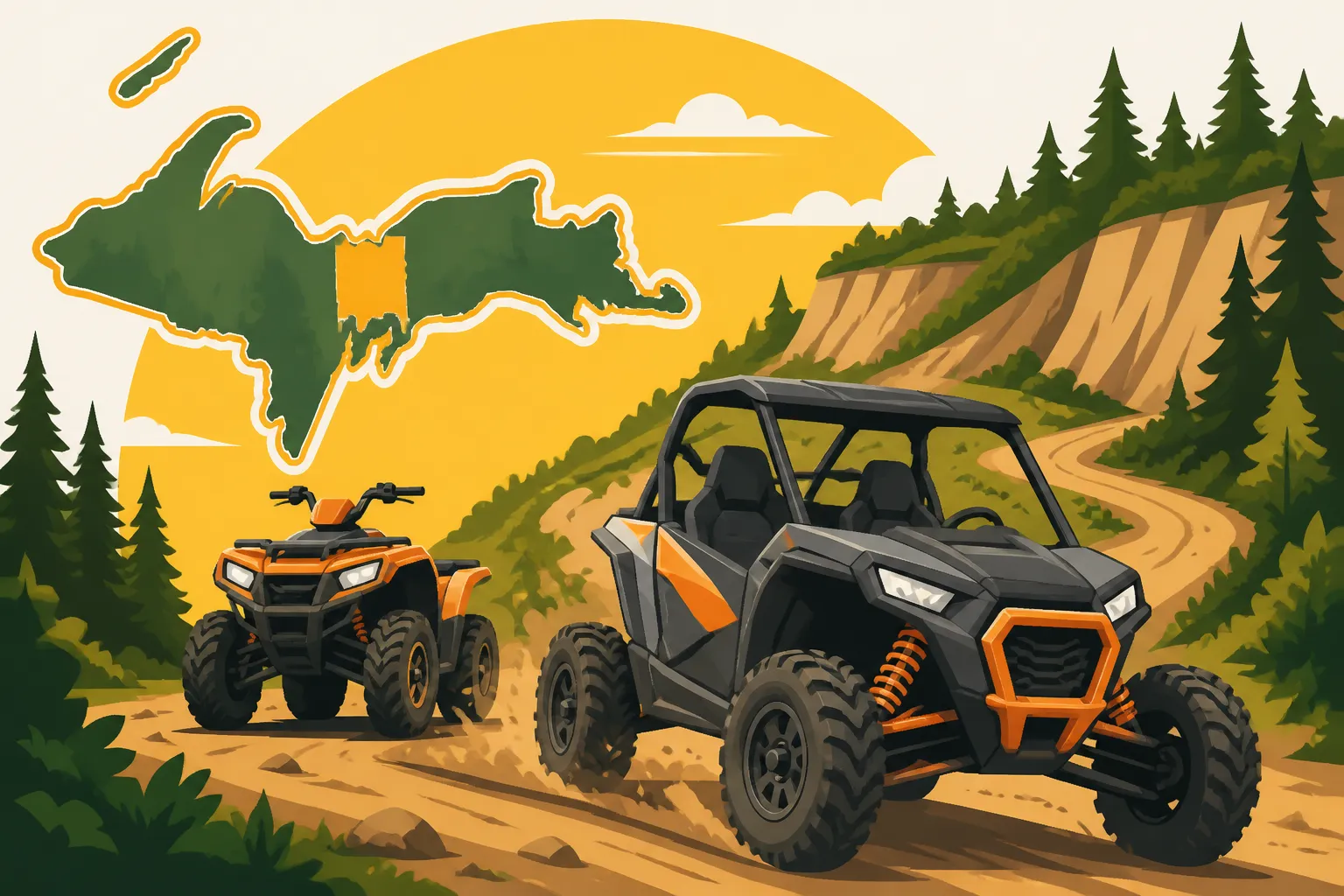
Marquette County ORV Road Access
Riding your Off-Road Vehicle (ORV) in Michigan is one of life's great pleasures, but trying to figure out where you can legally drive that machine on public roads can feel like navigating a maze blindfolded. Many riders in Marquette County want to use county roads to connect trails or access services, only to be met with confusing signs or conflicting information. This guide aims to cut through that confusion, explaining Marquette County's specific rules for ORV road access so you can ride confidently and lawfully.
Marquette County's Approach to ORV Road Access
The beautiful expanse of Marquette County, nestled in Michigan's Upper Peninsula, offers incredible opportunities for ORV enthusiasts. However, the ability to transition from a rugged trail to a paved or gravel county road isn't a given everywhere. Michigan's laws allow counties to determine their own ORV road access, leading to a patchwork of regulations across the state. It's truly a headache trying to keep track of it all, isn't it? One county might welcome ORVs on its road shoulders, while another keeps them strictly off-limits.
Understanding Michigan's ORV Road Laws as a Baseline
Before we dive into Marquette County specifics, it’s crucial to understand the foundational state laws governing ORVs on public roads. Michigan's Public Act 240 of 2008 laid out the framework, allowing local units of government (counties, townships, cities, and villages) to open their roads to ORV use. If a county doesn't pass its own ordinance, then ORVs are generally restricted to designated trails, private property, or frozen public waters.
When county roads are opened, there are some universal rules that always apply. For instance, ORVs must generally operate at a safe speed, usually 25 mph or less, and always on the far right of the paved portion of the roadway or on the shoulder. Riders are typically required to ride single file, and if the road is paved, it might only be accessible to get to a trail or specific destination, not for joyriding. Understanding these baseline rules is your first step, and honestly, it’s a lot to remember when all you want to do is enjoy a ride. You can learn more about these limitations in our article on [Michigan's 25 mph Limit on County Roads].
How Marquette County Differs or Aligns with State Law
Marquette County, thankfully, has taken steps to accommodate ORV riders, recognizing the significant role off-roading plays in the local lifestyle and tourism. Many county roads in Marquette County are open to ORV use, allowing riders to connect between various trail systems, access businesses, or simply enjoy a scenic ride. This is fantastic news for riders who don't want to trailer their machines for every short hop.
However, this doesn't mean every road is fair game. State highways, such as M-28, US-41, or M-35, are generally not open to ORVs, except for direct crossings at a 90-degree angle when it's safe to do so. Similarly, cities and villages within Marquette County, like the City of Marquette, Ishpeming, or Negaunee, often have their own specific ordinances that can be more restrictive than the county's general rules. It's frustrating, I know, to think you're good to go on a county road only to hit a city limit and suddenly be out of compliance. Always be on the lookout for local signage, as these will be your most immediate indicator of where you can and cannot ride. For a deeper dive into how municipalities handle this, check out [Michigan ORV Rules Inside City Limits]. The county's embrace of ORV access is a huge plus, but those city limits are always something to watch out for.
Essential Rules for Riding ORVs on Marquette County Roads
So, Marquette County has opened up many of its roads – that's excellent! But it's not a free-for-all. There are specific requirements you must meet to legally operate your ORV on these public roadways. Think of it like this: your ORV needs to be dressed for success if it's going to mingle with regular road traffic. Failing to meet these requirements isn't just a minor oversight; it can lead to tickets and even impoundment, ruining your day out on the trails.
Required Equipment for Road Riding
Michigan law specifies several pieces of equipment your ORV must have to be considered road-legal on designated county roads. These aren't just suggestions; they're mandatory for your safety and the safety of others.
Here's a breakdown of what you'll typically need:
- Headlights and Taillights: These must be on and functional, especially from a half-hour after sunset to a half-hour before sunrise, or at any time when visibility is low.
- Brake Lights: Crucial for signaling your intentions to other drivers.
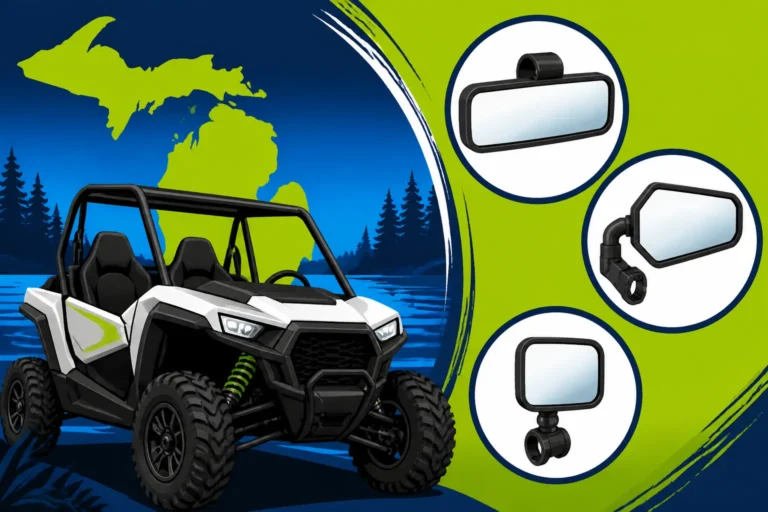
- Mirrors: You need at least one mirror that provides a clear view of the roadway to the rear. Many riders opt for two for better visibility. If you're looking to upgrade, companies like SuperATV offer a fantastic selection of durable mirrors designed for ORVs.
- Horn: A working horn or other audible warning device is essential. This isn't just for sounding off; it's a critical safety feature. Consider a compact, loud horn from a reliable brand to ensure you can be heard. We have a great piece on [Where to Mount a Horn on a Side-by-Side] that might give you some ideas.
- Muffler and Spark Arrestor: Your ORV must have a US Forest Service approved spark arrestor and a functioning muffler system to minimize noise and prevent wildfires.
- DOT-Approved Tires: While not always explicitly stated for all county roads, if you're seriously trying to make your UTV street-legal beyond just connecting trails, you'll want tires rated for highway use.
- Safety Glass Windshield (for UTVs): If your UTV has a windshield, it generally needs to be made of safety glass if you're intending it for road use, rather than just a basic plastic shield. This is a critical point that often trips people up when considering a full [Michigan Assembled Vehicle Title Application] for a street-legal conversion.
Getting all this equipment sorted can feel like a puzzle, but it's all about ensuring your machine is visible and controllable in a mixed-traffic environment. For a full rundown on what the state requires, our guide on [Safety Glass, Mirrors and Horns: Michigan's Street-Legal List] is an excellent resource.
Licensing, Permits, and Age Restrictions
Beyond the machine itself, the operator and the vehicle need to be properly licensed and permitted. This is where a lot of the "paperwork pain" comes in, but it's non-negotiable for legal road use.
- Michigan ORV License and Trail Permit: Every ORV operating on public land, including designated ORV routes and trails, must display a current Michigan ORV license sticker and a Michigan ORV trail permit sticker. These expire annually on March 31st, so it's easy to forget to renew! You can find a comprehensive explanation in [Michigan ORV License and Trail Permit Explained].
- Recreation Passport: If you plan on staging your ride or accessing any state parks, state forest campgrounds, or other state recreation facilities, you'll need a Michigan Recreation Passport on your towing vehicle. While not directly for the ORV, it's often overlooked by riders heading to trailheads.
- Driver's License: This is a big one. To operate an ORV on a county road that has been designated as open to ORVs, the operator must possess a valid driver's license. This isn't like trail riding where younger, safety-certified riders might be allowed. On the road, you're interacting with regular traffic.
- Age Restrictions: Even with a driver's license, age still plays a role, especially for younger riders. While Michigan has different age rules for operating ORVs on trails or private property, the requirement of a valid driver's license for road use generally means only those 16 and older (who can get a license) can operate on open county roads. Make sure you're clear on these rules, especially if you have younger family members who ride, by reading [Michigan ORV Road Rules for Riders Under 16].
- ORV Safety Certificate: While a safety certificate might not be strictly required for an adult with a driver's license on a designated county road, it's absolutely essential for younger riders and highly recommended for everyone. It provides crucial knowledge about safe operation. Learn more about the specific requirements for different age groups in [Michigan ORV Safety Certificate Requirements].
It’s easy to feel overwhelmed by all these rules, but trust me, getting your ducks in a row beforehand saves a lot of headaches later. Always keep your [Keeping Your ORV Paperwork With the Machine] so it's readily available if you're stopped.
Navigating Specific Road Types in Marquette County
Marquette County is a diverse area, with bustling city centers, quiet rural roads, and major state highways crisscrossing its landscape. Each type of road comes with its own set of rules and limitations for ORV use, even within a county that is generally ORV-friendly. It’s not just about knowing if a road is open, but which roads.
County Roads vs. State Highways and City Streets
The distinction between these road types is paramount for ORV riders.
- County Roads: These are your best bet for ORV travel in Marquette County. As mentioned, many are open, allowing you to link up trails or reach local amenities. However, remember the general state rules: stay to the far right, ride single file, and adhere to the 25 mph speed limit (or lower posted limits). These roads are usually gravel or paved and are maintained by the county road commission. Always be respectful of other vehicles and local residents.
- State Highways (M-, US-, and I-Routes): This is where many riders get into trouble. Michigan state highways are, with very few exceptions, not open for ORV travel. You cannot cruise down M-28 or US-41 on your side-by-side. The only permissible action is a direct, 90-degree crossing of a state highway from one ORV-legal road or trail to another, provided it's safe to do so. This means you approach the highway, stop, look both ways, and cross immediately when clear. No riding on the shoulder, no going a few hundred yards to the next turn. This strict rule is for your safety, as state highways have higher speed limits and greater traffic volumes.
- City and Village Streets: Even within Marquette County, cities like Marquette, Ishpeming, or Negaunee maintain their own authority over their municipal streets. While the county might open its roads, these incorporated areas often have stricter ordinances, potentially banning ORVs entirely from their streets or limiting them to very specific routes for direct access to services. It's crucial to check with the specific city or village clerk's office for their current ORV ordinance before entering their limits. Assuming county rules apply everywhere is a common and costly mistake.
Crossing Bridges and Railroad Tracks
These specific obstacles on your route demand extra caution and adherence to rules.
- Bridges and Culverts: When crossing a bridge or culvert on an ORV-legal road, you must stay on the extreme right of the maintained portion of the roadway. You can't just wander all over the bridge. This is for structural integrity and to ensure you're not impeding regular vehicle traffic. Some older or smaller bridges might have specific signage, so always pay attention.
- Railroad Tracks: Crossing railroad tracks on an ORV requires extreme care. You must yield to all trains, use a crossing at a 90-degree angle to the tracks, and come to a complete stop before crossing. Never ride down the tracks or along the railroad right-of-way. It's incredibly dangerous and illegal. Our guide on [Crossing Railroad Tracks on an ORV] provides more essential details on how to do this safely and legally. Always look, listen, and be prepared to stop.
Staying Safe and Legal While Riding in Marquette County
Being informed is the first step, but putting that knowledge into practice safely and responsibly is what truly makes for an enjoyable ORV experience in Marquette County. It’s about being a good ambassador for the ORV community. We don't want to give anyone a reason to complain or, worse, shut down access.
Local Ordinances and Enforcement
While I've given you a general overview, the devil is always in the details with local ordinances.
- Finding the Specific Ordinance: Your absolute best bet for the most current and specific information on ORV road access in Marquette County is to contact the Marquette County Clerk's office or the Marquette County Sheriff's Department. Many county websites also post their ordinances online. I highly recommend doing this before your first ride, as rules can change. For a comprehensive guide on how to navigate this process, check out [How to Find Your Michigan County's ORV Ordinance].
- Enforcement and Penalties: Conservation Officers (COs) from the Michigan Department of Natural Resources (DNR), as well as local sheriff's deputies and state police, enforce ORV laws. If you're caught operating an ORV illegally on public roads or without the proper permits/equipment, you could face significant fines. Beyond that, serious violations can lead to your ORV being impounded. This is not only a major financial hit but also a huge hassle. Trust me, getting a ticket from a deputy is not how you want to end your day, and it can include points on your license depending on the violation. Our article [Tickets Deputies Write for Road Riding] outlines potential consequences. Ensure you also have [Michigan ORV Insurance and When You Actually Need It] for peace of mind.
Best Practices for Respectful and Safe Riding
Beyond just following the letter of the law, being a good neighbor and a safe rider is crucial for preserving ORV access in Marquette County.
- Noise Awareness: ORVs can be noisy, and that can be a real point of contention with residents. Keep your speed down in residential areas, avoid excessive revving, and ensure your exhaust system is stock or compliant with noise regulations. Aftermarket parts from companies like SuperATV can enhance performance, but always ensure they meet legal sound requirements.
- Stay on Designated Routes: Don't venture off the designated ORV-legal roads onto private property or restricted areas. Trespassing damages the reputation of all riders and can lead to property owners pushing for more restrictions.
- Yield to Other Traffic: You're sharing the road with cars, trucks, and even bicycles. Always yield the right-of-way to other vehicles, pedestrians, and cyclists. Be predictable and use hand signals if your ORV's turn signals aren't clearly visible (or if you don't have them).
- Increase Visibility: Even with required lights, ORVs can be harder to see than a full-size vehicle. Consider adding a bright whip flag, especially in open areas or on dusty roads. Wear brightly colored clothing. During hunting season, this is doubly important. Keep an eye on [Michigan ORV Rules During Deer Season] for specific guidance.
- Safe Passing: If you need to pass another ORV or slow-moving vehicle, do so safely and within legal limits, always on the left.
- No Impaired Riding: Just like with any vehicle, operating an ORV under the influence of alcohol or drugs is illegal and extremely dangerous. Don't risk it.
Here’s a quick summary of general Michigan ORV road rules:
| Rule Category | Requirement |
|---|---|
| Speed Limit | 25 mph or less on county roads, or lower if posted. |
| Road Position | Extreme right of the maintained portion of the roadway, or on the shoulder. |
| Formation | Single file. |
| Crossings | Stop before crossing roads/highways; cross at 90-degree angle; yield to traffic. |
| Lights | Headlights, taillights, brake lights required (especially half-hour before sunset to half-hour after sunrise, or low visibility). |
| Mirrors | At least one mirror showing a clear view of the roadway to the rear. |
| Horn | A functional horn or audible warning device. |
| Muffler/Arrestor | USFS approved spark arrestor and functioning muffler. |
| Operator License | Valid driver's license required for road use (generally 16+). |
| Vehicle Permits | Current Michigan ORV License and Trail Permit stickers required. |
| Age Restrictions | Varies; generally 16+ with driver's license for road riding, specific rules for younger riders on designated trails/private land. |
| Local Ordinances | Always check specific county, city, or village ordinances, as they can be more restrictive than state law. |
| State Highways | Generally prohibited for travel, except for direct 90-degree crossings. |
By understanding and adhering to these rules and best practices, you can enjoy the vast and beautiful landscapes of Marquette County responsibly, ensuring that ORV road access remains a privilege for all riders.
Disclaimer
This article is for general informational purposes only and does not constitute professional advice. Laws, prices and regulations vary by location and change over time. Consult a qualified professional for guidance on your specific situation.