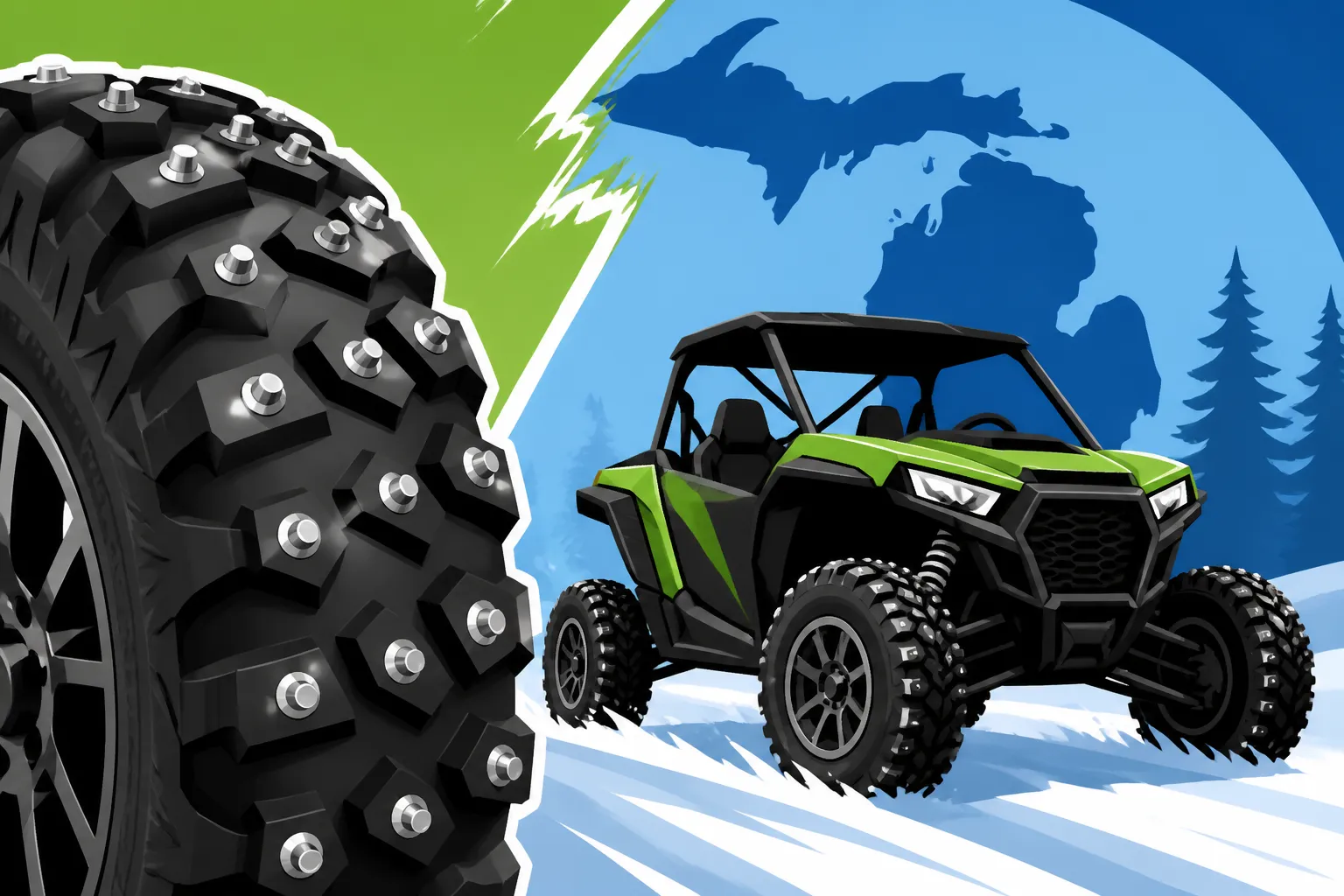
Studded Tires on an ORV
When Michigan's winter wraps its icy grip around our beloved trails and backroads, many off-road vehicle (ORV) enthusiasts find themselves dreaming of better traction. That slick, unpredictable surface can turn a fun ride into a harrowing experience, making you wonder how to get a better grip on frozen dirt, packed snow, and especially ice. This guide dives deep into the world of studded tires for your ATV or UTV in Michigan, helping you understand the rules, the benefits, and the trade-offs so you can make an informed decision about your winter adventures.
The Appeal of Studded Tires for Michigan ORV Riding
There's a reason why the thought of studded tires pops into an ORV rider's head as soon as the mercury drops and the first snowflakes fly. Michigan winters are gorgeous, but they bring a specific set of challenges for anyone who loves to hit the trails or even just use their machine for chores around the property. The desire for studs isn't just about going faster; it's fundamentally about safety, control, and the ability to keep riding when conditions would otherwise force you to park your machine.
Why Riders Consider Studs in the First Place
Let's be honest, nothing makes your heart pound quite like hitting a patch of black ice on a trail you thought was just snow-covered. That sudden loss of control, the feeling of the machine sliding out from under you, it's enough to make even the most seasoned rider a little nervous. This is precisely where the appeal of studded tires comes in. They offer a level of grip on ice and hard-packed snow that no unstudded tire, no matter how aggressive its tread, can truly match. Imagine navigating a steep, frozen incline in the Upper Peninsula, or carefully maneuvering around a corner on a trail that's become a sheet of ice. Studs dig in, providing biting edges that significantly reduce slippage, offering dramatically enhanced control and braking capabilities. For many, it’s the difference between being able to confidently ride through winter or having to put their machine away until spring. It’s about mitigating those nerve-wracking moments and restoring a sense of security and enjoyment to winter riding.
This isn't just about extreme conditions; it's also about everyday use. If you use your UTV for plowing snow in your driveway or clearing paths around your property, those icy patches are a constant frustration. Standard tires will often just spin, leaving you stuck or forcing you to rely on momentum, which isn't always safe. Studs provide that consistent grip you need to push through challenging spots, making winter work far less of a chore. The feeling of stability they offer can drastically improve your confidence, allowing you to focus on the task or the scenery rather than constantly worrying about losing traction.
Beyond Ice: Studs on Mixed Winter Terrain
While studs are famous for their ice-gripping prowess, their utility often extends to other mixed winter terrains that Michigan riders encounter. Think about those days when the trail isn't pure ice, but a frozen mosaic of hard-packed dirt, icy ruts, and patches of slushy snow. In these transitional conditions, studded tires can still provide a noticeable advantage. The studs can bite into frozen ground, offering better propulsion and steering control than a regular tire that might just skate over the surface. This means more predictable handling when you’re transitioning from a packed snow section to a frozen dirt road.
However, it’s important to understand their limitations. Studs are not a magic bullet for all winter conditions. In deep, fresh powder snow, for example, the studs themselves often don't provide much additional benefit over a good, aggressive mud/snow tire, as the primary traction comes from the tire's lugs displacing the snow. On dry pavement, their performance actually diminishes, as the studs lift portions of the tire's tread off the ground, reducing the contact patch and potentially making the ride feel squirmy or less stable. Furthermore, prolonged use on dry, clear surfaces will rapidly wear down the studs, diminishing their effectiveness when you do hit ice. So, while they offer a distinct edge in icy and hard-packed mixed conditions, they require a rider to be mindful of the terrain and where they're spending most of their time.
Michigan's Rules and Regulations Around Studded Tires
Understanding Michigan's laws regarding studded tires is crucial, especially when you're considering putting them on an ORV that might occasionally operate on public roads or shared access routes. The rules aren't always as clear-cut for off-road machines as they are for cars and trucks, and it's easy to get confused. You don't want to invest in a set of studded tires only to find out you're running afoul of local or state regulations, potentially leading to a ticket or issues with authorities.
The General State Law for Studded Tires on Vehicles
Michigan law has a specific seasonal window for when studded tires are permitted on public roads. Generally, studs are allowed from November 15 through April 1 of the following year. This window is designed to ensure that studded tires are primarily used during the months when icy conditions are most prevalent, minimizing potential damage to pavement during warmer, stud-unfriendly periods. This regulation applies primarily to vehicles that are street legal and operate on state-maintained roads, such as cars, trucks, and even street-legal UTVs. If you’ve gone through the process of [How to Make a Side-by-Side Street Legal in Michigan] and plan to use it on county roads or state routes, this window absolutely applies to you.
The key here is "on public roads." For your typical ATV or UTV used exclusively on private land or designated ORV trails, the state's studded tire date restrictions generally don't apply. However, this is where the nuance comes in. Many ORV riders traverse short stretches of public road to get from one trail section to another, or to access gas stations and local businesses. Even if you're only on the road for a moment, you are technically operating on a regulated surface. It's a fine line that can sometimes lead to confusion, especially with local enforcement. Always remember that the moment your wheels touch public pavement, even briefly, you should be mindful of the state's regulations, as the spirit of the law intends to protect roads from unnecessary wear.
ORV-Specific Interpretations and Enforcement
This is where things can get a little murky for ORV riders. While the Michigan Vehicle Code clearly outlines studded tire use for registered, highway-legal vehicles, ORVs exist in a somewhat different category. On designated ORV trails within state forests or on private property, the state's seasonal ban on studded tires typically doesn't apply. You're generally free to use them there year-round if you wish, though you'd quickly wear them out on dry terrain. The intent of the ORV regulations is usually focused on safety, environmental impact, and appropriate trail use, rather than road wear.
The true grey area arises when an ORV ventures onto public roads or road shoulders, even if it's not a fully street-legal machine. Imagine you're riding a snowmobile trail that shares a brief stretch of county road, or you're following [Michigan ORV Road Rules for Riders Under 16] and need to cross a paved intersection. In these instances, you are technically operating your ORV in an environment where studded tire restrictions for regular vehicles might be invoked by a local law enforcement officer. Some counties have their own [Michigan County ORV Ordinances Explained] that might further clarify or complicate matters. It's always best to check with your local sheriff's department or DNR office if you plan to frequently use your studded-tire ORV on any public thoroughfare, even for short distances. Erring on the side of caution and adhering to the November 15 to April 1 window when any road use is involved is often the safest bet to avoid potential tickets for "operating a vehicle with illegal studded tires," even if it feels unfair for an ORV.
Practical Considerations and Performance Trade-offs
Deciding to put studded tires on your ORV isn't just about legality; it's also about understanding how they perform, the impact they have on your machine, and whether the benefits truly outweigh the drawbacks for your specific riding style and conditions. There’s a balancing act to consider, and what works perfectly for one rider might be a frustration for another.
The Pros and Cons of Running Studs on Your ORV
Let's lay out the good and the bad of studded tires for ORVs. On the pro side, the most significant advantage is undeniable: superior traction on ice and hard-packed snow. If you frequently encounter frozen lakes, icy inclines, or heavily compacted snow trails, studs will give you a level of grip, braking performance, and steering control that's simply unmatched by unstudded tires. This dramatically enhances safety and builds confidence, allowing you to tackle conditions that would be treacherous otherwise. The ability to stop shorter and steer more precisely on slick surfaces can prevent accidents and make your winter rides far more enjoyable. For those using their UTVs for utility tasks in icy conditions, this superior grip means less spinning and more effective work.
However, there are notable cons. Firstly, studded tires can cause damage to unpaved surfaces, particularly groomed trails or sensitive natural terrain, especially when not ridden on ice or snow. The studs can tear up dirt, gravel, and even vegetation. Secondly, on dry pavement, traction is actually reduced, and the ride becomes less stable and noisier. This is a big consideration if you regularly ride short stretches of road, even under [Michigan's 25 mph Limit on County Roads], as the studs lift the tire's main tread off the surface. Thirdly, studs will wear down much faster if ridden on anything other than ice or snow, significantly shortening their lifespan. The constant grinding on dry or abrasive surfaces will dull or even break off the studs. Finally, there's the cost – buying studded tires or adding studs to existing tires (like screw-in options from brands like SuperATV) is an additional expense that you need to factor into your winter riding budget. It's a trade-off: unparalleled grip in specific conditions versus reduced versatility and increased wear in others.
| Feature | Pros of Studded ORV Tires | Cons of Studded ORV Tires |
|---|---|---|
| Traction | Excellent on ice and hard-packed snow | Reduced on dry pavement, less effective in deep snow |
| Safety | Improved braking and steering control on slick surfaces | Can feel unstable on dry pavement |
| Terrain Impact | Minimal on ice/snow | Can damage groomed trails, dirt, and pavement |
| Wear & Tear | Good lifespan if used only on ice/snow | Rapid wear on dry surfaces; studs can break |
| Noise/Vibration | Relatively quiet on ice/snow | Increased noise and vibration on dry pavement |
| Cost | Initial investment for tires or studs | Replacement costs, potential stud loss |
| Legality | Generally fine on trails/private land | Seasonal restrictions on public roads (Nov 15-Apr 1) |
Different Types of Studs and Application Methods
When it comes to putting studs on your ORV, you generally have a couple of routes to choose from: buying tires that are already studded or stud-ready, or adding screw-in studs to your existing tires. Factory-studded tires are designed from the ground up to incorporate studs, often with reinforced tread blocks and specific rubber compounds that hold the studs securely. These are generally the most durable and effective option, but they come as a complete tire purchase, meaning you'd need a dedicated set of winter wheels and tires.
The more common and often more flexible option for ORV riders is screw-in studs. Companies like SuperATV offer various kits and individual studs that can be installed into the lugs of your existing ATV or UTV tires. These studs typically have a carbide tip for superior grip and a threaded base that screws directly into the tire tread. The advantage here is cost-effectiveness and adaptability; you can choose how many studs to install and precisely where, tailoring the grip to your specific needs. However, the effectiveness and durability of screw-in studs depend heavily on the quality of the stud, the depth of your tire lugs, and the correct installation. Improperly installed studs can fall out, and very shallow lugs might not hold them securely, which is why some riders look to specific tires with deep, open treads for better stud retention.
Impact on Machine Wear and Maintenance
It's natural to wonder what kind of stress studded tires put on your ORV. While the benefits to traction are clear, the aggressive grip of studded tires can indeed lead to increased wear on certain components of your machine. The constant biting action and enhanced traction mean that your drivetrain, axles, and suspension components are subjected to higher stresses, especially when accelerating or braking hard on surfaces where the studs are fully engaged. This can translate to accelerated wear on components like CV joints, U-joints, wheel bearings, and suspension bushings. The increased vibration that can occur when riding studded tires on mixed or harder surfaces can also contribute to overall component fatigue.
Moreover, if a stud were to snag on an obstacle, it could potentially put undue stress on the tire itself or even transfer that force into the wheel and hub. While rare, it's a consideration. Beyond the mechanical stress, there's the simple fact of tire wear. As mentioned, riding studded tires on dry pavement or abrasive gravel will rapidly wear down the carbide tips and can even tear out the studs themselves. This means that if you're frequently riding on surfaces where studs aren't beneficial, you're essentially accelerating the wear and reducing the lifespan of your expensive studded tires or studs. It emphasizes the importance of using studded tires primarily for their intended purpose: icy and hard-packed snow conditions, to maximize their life and minimize unnecessary wear on your machine.
Alternatives and Best Practices for Winter ORV Riding
So, what if studded tires aren't the right fit for you, or you're looking for other ways to maximize your winter riding experience in Michigan? There are plenty of strategies, from choosing the right unstudded tires to making sure your machine is properly prepped for the cold. After all, safe and enjoyable winter riding is about more than just what’s on your wheels.
Aggressive Tread Patterns and Soft Rubber Compounds
If you decide against studs, or need an alternative for conditions where studs aren't ideal, tire choice remains paramount for winter riding. Look for tires with aggressive, open tread patterns and softer rubber compounds. Aggressive treads, often found on mud or extreme terrain tires, are excellent at biting into snow and slush, providing mechanical grip as the lugs dig in and clear out snow. The deeper the lugs, the more "paddle" effect you'll get in deeper snow.
Equally important, especially in Michigan's colder temperatures, is the rubber compound of the tire. Many standard ATV/UTV tires are designed for warmer weather and can stiffen up significantly in the cold, losing flexibility and grip. A softer compound remains pliable even in freezing temperatures, allowing the tread to conform better to the terrain, which translates to improved traction and handling. Some manufacturers specifically design "winter" ATV/UTV tires with these characteristics. While they won't offer the sheer ice-biting power of studs, a high-quality, aggressive, and soft-compound tire can provide excellent all-around winter performance for a broader range of conditions than studs alone.
Responsible Riding and Trail Preservation
Regardless of your tire choice, responsible riding is key, especially in winter. The unique challenges of cold weather and sensitive snow-covered trails mean riders need to be extra mindful. First and foremost, adjust your riding style to the conditions. Slow down, anticipate turns and obstacles, and be smoother with your throttle and brakes. Ice and compacted snow reduce grip, so abrupt movements can easily lead to a loss of control. Furthermore, consider the impact you’re having on the environment. [Michigan ORV Trail Maintenance and Who Pays for It] is a critical concern, and excessive tearing up of trails, especially with aggressive studded tires, can accelerate erosion and damage the very paths we all love to ride.
Think about the longevity of the trails and shared public lands. If you're on a multi-use trail, consider how your studded tires might affect other users or the trail surface once the snow melts. Avoiding unnecessary wheel spin and respecting posted speed limits on [Michigan's 25 mph Limit on County Roads] not only keeps you safe but also helps preserve the trails for everyone. Being a good steward of the land ensures that Michigan's incredible ORV opportunities remain open and enjoyable for years to come.
Preparing Your ORV for Winter Conditions
Beyond tires, a comprehensive approach to winter riding involves preparing your entire ORV for the harsh conditions. Cold weather can be tough on machines, and a little preventative maintenance goes a long way. Start with fluid checks: ensure your engine oil is suitable for cold temperatures (many prefer a lighter weight in winter), check your coolant levels and antifreeze concentration, and inspect your brake fluid. Your battery is especially vulnerable to cold; make sure it's fully charged and consider a battery tender if your machine sits for periods.
It's also wise to carry appropriate winter recovery gear. A winch is invaluable if you get stuck in deep snow or mud hidden under the snow. A small shovel, tow strap, and even a set of tire chains (as an alternative to studs for temporary extreme traction) can be lifesavers. [Winter UTV Rentals With Tracks in Michigan] shows another extreme option for deep snow, but even for typical winter use, ensuring your machine is mechanically sound and equipped for potential issues will make your cold-weather rides much safer and more enjoyable. Don't forget to pack extra layers of clothing, a thermos of hot beverage, and emergency supplies – winter riding demands extra preparedness.
Disclaimer
This article is for general informational purposes only and does not constitute professional advice. Laws, prices and regulations vary by location and change over time. Consult a qualified professional for guidance on your specific situation.