Michigan ORV Road Riding Age Minimum
It's incredibly frustrating when you're itching to hit Michigan's beautiful scenery on your ORV, perhaps even utilizing those recently opened county roads, but you're unclear on who exactly can be behind the handlebars. The rules around age limits, especially when it comes to riding an ORV on public roads versus private land or designated trails, can feel like a tangled web. This guide is here to untangle that confusion, specifically focusing on the minimum age requirements for operating an ORV on Michigan's county roads, why these rules exist, and how to keep your family's off-road adventures safe and legal.
The Strict Age Requirement for Michigan ORV Road Riding
Let's cut right to the chase, because this is where a lot of the confusion and potential for costly mistakes comes in. When it comes to operating an ORV on a county road in Michigan, the rules are very clear and, frankly, quite strict. This isn't the same as riding on private land or even a designated trail where some younger riders might be permitted under supervision. We're talking about sharing the pavement, or at least the shoulder, with cars, trucks, and other licensed vehicles.
Minimum Age and Driver's License
For anyone to legally operate an ORV on a Michigan county road that has been opened to ORV use, they must be at least 16 years old. But here's the kicker, and it's a critical detail often overlooked: simply being 16 isn't enough. The operator also needs to possess a valid driver's license. That means a standard automobile driver's license, not just an ORV safety certificate or a learner's permit. This isn't an arbitrary rule; it's rooted in the idea that when you're on a public road, you're expected to understand and follow all the rules of the road, just like any other vehicle operator.
Think about it: driving an ORV on a public road means navigating intersections, understanding right-of-way, signaling turns, and being aware of traffic. These are skills typically learned and tested as part of the driver's licensing process. Expecting a 12-year-old, no matter how skilled they are on a trail, to safely handle those situations alongside cars traveling at higher speeds is simply not what the law intends. This requirement ensures a baseline level of maturity and understanding of traffic laws, protecting not only the ORV operator but everyone else on the road. For a deeper dive into these requirements, check out [Driver's License Rules for Michigan ORV Road Riding].
The "Street-Legal" Distinction
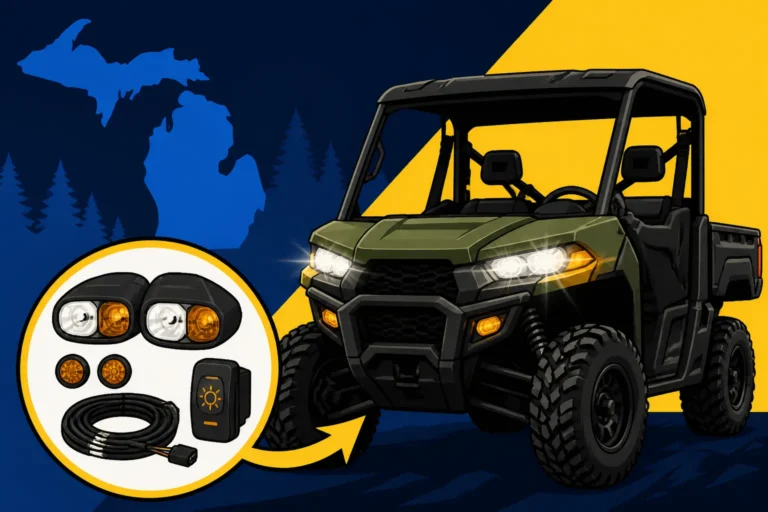
Many enthusiasts consider modifying their UTVs to be "street legal" by adding things like turn signals, horns, mirrors, and safety glass windshields. This is a fantastic way to expand your riding opportunities and connect trails, but it's important to understand that a street-legal conversion does not change the fundamental age and driver's license requirements for road operation. You can outfit your machine with the best street-legal kit available, perhaps even adding robust accessories from a company like SuperATV to make it more road-worthy, but it still requires a 16-year-old operator with a valid driver's license to legally drive it on public roads.
Even after you've gone through the process of getting your machine inspected and titled as an "assembled vehicle" or meeting other street-legal criteria, the operator must still meet the age and licensing minimums. The modifications make the vehicle compliant, not the rider magically exempt from age rules. It's a common misconception that once your UTV is street-legal, anyone can drive it like a golf cart in a special community. Michigan's laws are clear: if it's on a public road, the driver needs to be licensed and old enough. For more on the inspection process, you might find [Michigan Street-Legal UTV Inspection at the Secretary of State] helpful.
Why Road Rules Differ from Trail Rules for Younger Riders
One of the biggest sources of confusion for ORV owners, especially families, is the stark difference between what's allowed on dedicated ORV trails or private property versus public county roads. It feels like a contradiction: "My kid can ride their quad on the trail, but not to cross the road?" This isn't an oversight in the law; it's a deliberate distinction based on safety, liability, and the very different environments involved.
The Legal Line Between Off-Road and On-Road
When you're riding on a designated ORV trail, you're typically in an environment designed for off-road machines, often with specific speed limits, trail markers, and less interaction with conventional highway traffic. In these environments, Michigan law allows for younger riders, under specific conditions. For example, a 12- to 15-year-old can operate an ORV if they have an ORV safety certificate and are under the direct supervision of an adult. On private land, the owner's rules generally apply, and age limits are often at their discretion. This allows families to introduce younger members to the sport in a controlled setting, building skills and confidence.
However, the moment an ORV enters a public road right-of-way, even for a brief crossing, it steps into a completely different legal and safety landscape. Roads are designed for cars and trucks, and the presence of ORVs, even street-legal ones, adds a layer of complexity. The risks are magnified due to higher speeds, varying traffic patterns, and the potential for collisions with much larger, heavier vehicles. The law recognizes this heightened risk and therefore imposes the same foundational requirements as for any other motor vehicle operator: age and a valid driver's license.
Common Misconceptions and What Not to Confuse
It's easy to get mixed up. You might have heard about specific rules for 12- to 15-year-olds on trails, like those detailed in [Michigan Rules for 12- to 15-Year-Old Riders], and assume that this translates to some form of road access. Unfortunately, it does not. That certificate and supervised riding is strictly for off-road areas. Another common misconception revolves around private property exemptions. While it's true that on your own land, or land you have permission to ride on, you can generally set your own age rules, this exemption never extends to public roads that border or cross that private property.
Some people also believe that if a county has an ORV ordinance, it means kids can ride on the roads. While county ordinances open up roads to ORVs, they don't override the state's age and licensing requirements for operators. Those local ordinances dictate where ORVs can be ridden, not who can ride them. Even if you're riding a beefy utility vehicle for farm work, there are specific exemptions for agricultural purposes, but they don't grant minors free rein on public roads outside of very specific, limited circumstances. For more specifics, consider [Michigan ORV Road Rules for Riders Under 16]. It's crucial to distinguish between legal off-road access and the strict rules governing public road use to avoid dangerous situations and legal trouble.
The Risks and Penalties of Underage ORV Road Operation
Ignoring Michigan's ORV road riding age minimums and driver's license requirements isn't just a minor infraction; it carries significant legal, financial, and safety risks. When a minor is caught operating an ORV on a public road without meeting the legal criteria, the consequences can be swift and severe, impacting both the rider and the adult who permitted or enabled the violation.
Legal Consequences for Both Rider and Parent/Owner
If a law enforcement officer, such as a county deputy or a DNR conservation officer, pulls over a minor operating an ORV on a county road without a valid driver's license (or being under 16), the repercussions can be steep. The minor could face citations for operating an ORV without a license, underage operation, and potentially other moving violations. These tickets can result in hefty fines, and in some cases, points on their future driving record once they are eligible for a license. For adults who own the ORV or supervised the minor, the situation can be even more serious. They could face charges for allowing an unlicensed or underage person to operate a motor vehicle, contributing to the delinquency of a minor, or even reckless endangerment, depending on the circumstances.
Furthermore, the ORV itself is often subject to impoundment. This means the machine could be seized, requiring the owner to pay significant towing and storage fees, in addition to any fines, to get it back. It’s a costly lesson to learn, far more expensive than simply waiting until the rider is legally able to operate on roads. A quick search for typical ORV-related tickets gives a good idea of the potential financial hit, as outlined in articles like [Tickets Deputies Write for Road Riding]. The intent of these penalties is to deter unsafe and illegal behavior, reinforcing the importance of adhering to the established safety regulations for public road use.
Insurance Voiding and Liability Headaches
Beyond the immediate legal penalties, operating an ORV on a public road without meeting the age and licensing requirements can create a nightmare scenario regarding insurance and liability. Most ORV insurance policies, and certainly any auto insurance that might provide limited coverage for a street-legal UTV, will have clauses that explicitly void coverage if the vehicle is being operated illegally. This includes operation by an unlicensed or underage driver.
Imagine a scenario: a 14-year-old, perhaps on a fantastic SuperATV-equipped UTV that you've meticulously upgraded for trail adventures, decides to quickly cross a county road to get to another section of trail or a friend's house. They're involved in an accident with a passenger car. If your insurance policy is voided due to illegal operation, you, as the owner, would be personally responsible for all damages. This could include extensive medical bills for injuries sustained by anyone involved, repair costs for both vehicles, and potentially a lawsuit for negligence. Without insurance to back you up, your personal assets could be at risk. This financial exposure alone is a compelling reason to strictly adhere to the age and license requirements.
Safety Concerns
While the legal and financial ramifications are serious, the paramount concern is always safety. ORVs, even the larger side-by-sides, offer far less protection than a passenger car in a collision. A younger, less experienced rider, without the formal training provided through driver's education and licensing, is inherently at a greater disadvantage on public roads. They may lack the judgment, peripheral awareness, and quick decision-making skills needed to react to unexpected traffic situations.
The difference in speed, weight, and braking capabilities between an ORV and a typical car or truck means that any collision is likely to result in significant injuries to the ORV operator. Michigan's roads are shared spaces, and while ORV access is growing, it comes with the responsibility of ensuring all operators are adequately trained and legally qualified to share that space safely. It's not about stifling fun, but about protecting lives, especially those of our younger riders.
Responsible Family ORV Adventures: Keeping Everyone Safe and Legal
It’s completely understandable to want to share the joy of ORV riding with your entire family, including younger members. The key is to do it responsibly and legally, ensuring everyone has a fantastic time without facing unnecessary risks or legal trouble. While public county roads are off-limits for underage or unlicensed riders, Michigan offers plenty of other avenues for family-friendly ORV fun.
Focusing on Designated ORV Trails
Michigan boasts thousands of miles of incredible designated ORV trails, many of which are perfect for family outings. These trails are specifically designed for off-road vehicles, often with varying difficulty levels, making them ideal places for younger riders to gain experience under proper supervision. On these trails, the rules for riders under 16 are different. With a valid ORV safety certificate and direct adult supervision, a 12- to 15-year-old can operate an ORV. Younger riders, typically 10 and 11, can also ride specific size machines on trails with direct adult supervision.
Focus your family's adventures on these legal, safe environments. Plan trips to locations like the Manistee National Forest or various state forest trail systems. There are many fantastic spots for all skill levels, from beginner-friendly routes to more challenging terrain for experienced riders. Make sure everyone has the necessary ORV license and trail permit, which are separate from a driver's license. You can find extensive information on [Where to Ride an ATV in Michigan] and specific suggestions for [Family-Friendly ORV Trails in Michigan] to plan your next outing.
Gradual Skill Development and Safety Training
Beyond meeting the legal requirements, fostering a culture of safety and continuous skill development is paramount. Encourage all family members, regardless of age, to take an ORV safety course. Even adults can benefit from a refresher on safe operating practices and trail etiquette. For younger riders, these courses are crucial for earning their safety certificate, which is a requirement for trail riding for those under 16.
When on trails, emphasize wearing appropriate safety gear: helmets, goggles, gloves, long pants, and sturdy boots are a must. Make sure machines are properly sized for the rider. While accessories don't make a minor legal for road riding, investing in quality protective gear and machine enhancements for trail riding is always a good idea. Companies like SuperATV offer a wide array of safety-focused accessories, from enhanced skid plates to durable bumpers, that can give you added peace of mind when navigating rugged terrain on legal trails. Remember, the goal is not just to comply with the law, but to ensure every ride is as safe as possible for everyone.
Understanding Local Ordinances and Supervised Crossing Rules
While the general rule of 16+ with a valid driver's license for ORV road riding is statewide, it's always wise to be aware of specific local county or township ordinances. Some areas might have nuances regarding ORV operation, especially concerning very brief, supervised road crossings. However, these are almost always limited and require adult supervision, proper signaling, and adhering to strict rules about the shortest, most direct route across. These exceptions are never an invitation for underage or unlicensed riders to joyride on public roads.
If you find yourself needing to cross a road to access another section of a trail, ensure the crossing is permitted by the local ordinance, and that the person operating the ORV meets the minimum age and licensing requirements for that specific act if it involves public road use. For instance, in areas where roads are opened, sometimes there are specific crossing zones. Always err on the side of caution. If there's any doubt about an ORV's legality on a public road, especially with a minor operating it, it's best to find an alternate route or transport the ORV via trailer. Resources like [Michigan ORV Rules Inside City Limits] can offer more detail on specific local rules.
Here's a quick reference table to help clarify the main differences:
| Feature | On-Road ORV Operation (County Roads) | Off-Road Trail Riding (Designated Trails) |
|---|---|---|
| Minimum Age | 16 years old | Varies: 10+ with supervision (specific machine size), 12-15 with safety certificate & supervision |
| Driver's License Req. | Required (valid standard automobile license) | Not required (ORV safety certificate needed for 12-15, direct supervision for all under 16) |
| Safety Certificate | Not a substitute for a driver's license for road use | Required for 12-15 year olds, highly recommended for all |
| Supervision | Not applicable; operator must be licensed & 16+ | Required for all riders under 16 |
| Vehicle Type | ORVs, often with "street-legal" modifications (still require licensed operator) | All legal ORV types (ATVs, UTVs, dirt bikes, etc.) |
| Primary Purpose | Transportation, connecting trails (where allowed) | Recreation, navigating natural terrain |
| Legal Authority | Michigan State Law (and county ordinances for access) | Michigan State Law (DNR regulations) |
Ultimately, adhering to these rules not only protects you from fines and legal issues but, more importantly, ensures that you and your loved ones can continue to enjoy the incredible ORV opportunities Michigan has to offer, safely and responsibly.
Disclaimer
This article is for general informational purposes only and does not constitute professional advice. Laws, prices and regulations vary by location and change over time. Consult a qualified professional for guidance on your specific situation.