Do You Need a Driver’s License to Ride an ORV in Michigan?
One of the biggest head-scratchers for Michigan ATV and UTV enthusiasts is figuring out whether you actually need a driver's license to hop on your machine and hit the dirt, or even some pavement. It's a common point of confusion that can lead to unexpected trouble if you're not careful. This guide is here to untangle the web of rules and clearly explain when a driver's license is absolutely essential for your Michigan ORV adventures, and when it might not be.
The Core Question: Trails vs. Roads
Michigan's ORV laws can feel like a maze, especially when it comes to who can ride what, and where. The most fundamental distinction you need to understand right off the bat is where you're riding your ORV. Are you sticking to private land and dedicated trails, or are you venturing onto public roads? This single factor dictates almost everything else about license requirements.
Riding on Designated ORV Trails and Private Property
Let's start with the good news for many riders, especially those with younger family members. If you're planning to stick to the thousands of miles of fantastic designated ORV trails that Michigan offers, or if you're riding exclusively on private property, a traditional driver's license isn't generally a requirement for operating an ORV. This is where many people get their first taste of off-road fun, often long before they're old enough to get a car license.
However, "not needing a driver's license" doesn't mean "no rules." Far from it. For instance, Michigan has strict age limits and safety certification requirements for riders, particularly those under 16. A 12-year-old, for example, might be perfectly legal to ride a properly sized ATV on a state-designated trail with a valid ORV Safety Certificate and under direct adult supervision, even though they don't have a driver's license. The focus here is on rider safety and responsible operation within a controlled, off-road environment. You'll always need your [Michigan ORV License and Trail Permit Explained] for public trails, of course.
When it comes to private property, the rules are even more relaxed, though common sense and property owner permissions still apply. If it's your own land, or you have explicit permission from the landowner, you generally won't need a state-issued ORV permit or a driver's license to ride. Still, safety is paramount, and following age and safety recommendations is always a good idea, even on your own acreage.
When Public Roads Come Into Play
Now, this is where things shift dramatically. The moment your tires touch any form of public road, whether it's a gravel county road, a paved shoulder, or even just crossing a street to get to another trail segment, the game changes. Michigan views ORVs operating on public roads much differently than ORVs on trails or private land.
Many Michigan counties have passed ordinances opening specific county roads or their shoulders to ORV use. This is fantastic for expanding riding opportunities and connecting trail systems, but it introduces a whole new set of responsibilities and legal requirements for the operator. It's crucial not to confuse "road is open to ORVs" with "anyone can ride an ORV on this road." The "motor vehicle" aspect comes heavily into play here, and with that, the expectation of a licensed operator. Understanding [Michigan's Three Road Rules Michigan ORV Riders Must Follow] is critical before you venture onto any public way.
Even if you're just quickly crossing a two-lane highway to get to a trail on the other side, or riding for a short distance on a road shoulder, you're operating a motor vehicle in a public thoroughfare. This transition from off-road recreation to road-legal operation carries significant implications for who can be at the controls.
Michigan's Rules for Operating ORVs on Public Roads
When an ORV leaves the dedicated trail or private land and enters a public road, Michigan law steps in with a clear directive regarding driver licensure. This is often the biggest surprise for riders who are used to the more lenient trail-riding rules.
Driver's License Requirements for County Roads and Shoulders
For any ORV operating on a county road or road shoulder that has been opened for ORV use, the operator must possess a valid driver's license. This isn't a suggestion; it's a hard and fast rule in Michigan. It applies to ATVs, UTVs, and any other off-road vehicle designated for road use under a local ordinance. The logic is straightforward: you are now sharing the road with cars, trucks, and other licensed motorists. The state expects you to have demonstrated a basic level of driving competency and knowledge of traffic laws, which is what a driver's license signifies.
This means that if you're 16 or older and have your full driver's license, you're good to go, provided you also adhere to all other ORV road rules, such as speed limits, carrying proper permits, and ensuring your ORV has the necessary safety equipment like lights and mirrors. However, if you're younger than 16, or if you're an adult who has never obtained a driver's license, you simply cannot operate an ORV on a public road in Michigan, even if that road is explicitly open to ORVs. This includes riding on the paved or unpaved shoulder. It's a key distinction that can get riders into serious trouble if ignored. Always check your [Michigan County ORV Ordinances Explained] to know the specifics for your riding area.
The Street-Legal UTV Exception
There's another distinct category that affects driver's license requirements: the street-legal UTV. While some ORVs can ride on open county roads with minimal modifications, a truly "street-legal" UTV is an off-road vehicle that has been modified, inspected, and registered with the Secretary of State as an "assembled vehicle" or a similar classification. This process makes it legal to drive on most public roads, not just those specifically opened to ORVs by local ordinance.
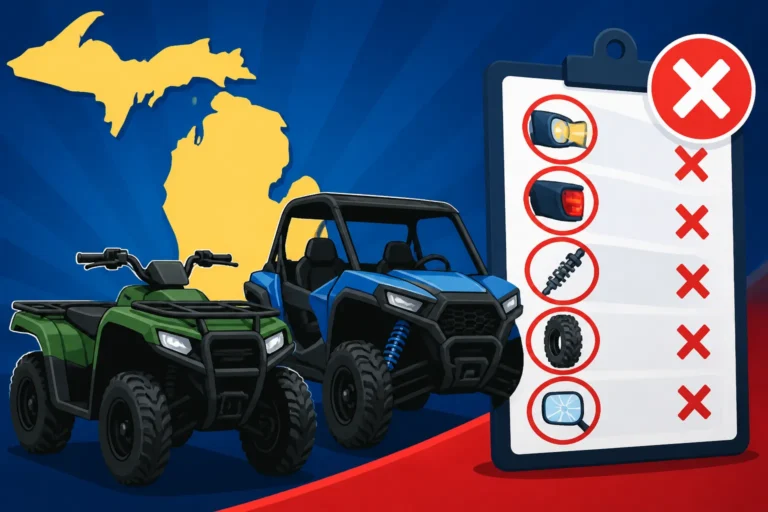
To achieve street-legal status, a UTV needs a host of modifications: DOT-approved tires, a horn, turn signals, brake lights, headlights, taillights, a windshield (often safety glass), and mirrors, among other things. Brands like SuperATV offer kits and components specifically designed to help riders make these conversions, providing everything from lighting packages to full glass windshields. The vehicle then undergoes an inspection at the Secretary of State to ensure it meets all safety and equipment standards for road use. You'll need to know the [Michigan Street-Legal UTV Inspection Checklist] before heading to your appointment.
Once your UTV is street-legal and properly titled and plated, it essentially operates as a motor vehicle on public roads. And just like any other motor vehicle, the operator must possess a valid driver's license. There are no exceptions for age or supervision in this scenario; if you're driving a street-legal UTV on a public road, you need a license, plain and simple. This applies whether you're cruising through town, heading to the gas station, or just running errands. The requirements for [Insurance a Michigan Street-Legal UTV Needs] are also more robust.
Age and Supervision: What About Younger Riders?
The question of driver's licenses often comes hand-in-hand with inquiries about younger riders. Michigan has a strong culture of introducing kids to ORV riding, but there are crucial differences in regulations depending on the rider's age and where they're operating the machine.
Riders Under 16 on Trails and Private Land
For riders under the age of 16, Michigan law is quite specific regarding ORV operation, even if a driver's license isn't required. Generally, anyone between the ages of 12 and 15 operating an ORV on designated trails or public land must possess a valid ORV Safety Certificate. This certificate proves they've completed an approved safety course, learning critical skills and rules for safe off-road operation. Furthermore, these young riders typically need to be under the direct visual supervision of a parent, guardian, or an authorized adult over 18. This means the supervising adult must be able to see the youth at all times and be close enough to communicate instructions or intervene if necessary.
There are also engine size limitations based on age, ensuring that younger riders are on machines appropriate for their skill level and physical capabilities. For example, a 10-year-old might be restricted to an ATV with a smaller engine displacement, and they generally cannot cross a public road without parental supervision. These rules are in place to minimize risk and promote safe riding habits from a young age. Understanding [Michigan ORV Safety Certificate Requirements] is essential for all young riders.
On private property, while formal permits and certificates may not be legally required, adhering to these safety guidelines is always the best practice. Parents and guardians have a responsibility to ensure their children are riding safely and on appropriate equipment, regardless of specific state mandates for private land.
Young Riders and Public Roads
This is perhaps the most critical distinction for parents and young riders to grasp. If a driver's license is required to operate an ORV on a public road (whether an open county road or a fully street-legal UTV), then by definition, a rider under the age of 16 cannot legally operate that ORV on that road. Since a driver's license cannot be obtained until at least age 16 (with a graduated licensing program), this automatically excludes younger, unlicensed operators from public road use.
Even with a safety certificate and direct visual supervision, the requirement for a valid driver's license on public roads takes precedence. You cannot put an unlicensed 12-year-old on an ATV or UTV and send them down an ORV-friendly county road, even if you're riding right behind them. This applies to all forms of public road use where an ORV is considered a motor vehicle. The only exception would be crossing a road directly to access another trail section, where specific rules still apply (like coming to a complete stop, looking both ways, and yielding to traffic), but even then, there might be age restrictions or supervision requirements depending on the exact circumstances and the local ordinance. It’s important to clarify [Michigan ORV Road Riding Age Minimum] before planning any routes.
The state's stance is clear: if you're operating a vehicle on a public road, you need to be a licensed driver, regardless of the vehicle type, as long as it's not explicitly exempted (like a bicycle). For ORVs, that exemption for unlicensed drivers only truly applies to off-road environments.
Important Considerations and Penalties
Ignoring Michigan's driver's license requirements for ORVs on public roads can lead to more than just a stern talking-to. The consequences can be significant, impacting your wallet, your driving record, and even your ability to continue enjoying ORV riding.
Consequences of Riding Without a License on Public Roads
Operating any motor vehicle on a public road in Michigan without a valid driver's license is a serious offense, and an ORV is no exception when it's on a public road. If a conservation officer, sheriff's deputy, or state police officer pulls you over, the penalties can include hefty fines, court costs, and potentially even misdemeanor charges. You could receive a ticket for operating without a license, which may result in points on your future driving record, making it harder or more expensive to get insurance or even obtain a license later on.
Beyond the legal penalties, there's the risk of impoundment. An officer has the authority to impound your ORV if it's being operated illegally, especially if the operator is unlicensed. This means additional costs for towing and storage, not to mention the hassle of retrieving your machine. The financial hit alone from fines, court fees, and impoundment can quickly add up, turning a fun day of riding into a very expensive mistake. Furthermore, if you're involved in an accident while riding an ORV on a public road without a license, your insurance coverage (if you even have it) might be voided, leaving you personally liable for damages and injuries. This can lead to devastating financial consequences.
Always Carry Your Paperwork
To avoid unnecessary trouble, it's always smart to carry all your essential ORV paperwork with you whenever you ride, whether on trails or roads. This includes your valid driver's license (if you're riding on public roads), your Michigan ORV License and Trail Permit stickers, and your ORV Safety Certificate if you're required to have one. While you might not need to physically carry the paper title on the trail, it's wise to have it in a secure, waterproof location with your other important documents.
When a DNR officer or law enforcement official stops you, they'll want to see proof that you're legally allowed to operate your machine and that you're authorized to be on the trail or road you're using. Being able to quickly and easily produce your valid driver's license, along with your other permits, can make a brief stop much smoother. Not having the required documents on hand can lead to delays, additional questions, and potentially tickets for non-compliance. Always keep your [Michigan ORV Paperwork During a DNR Stop] readily accessible.
Having your paperwork in order isn't just about avoiding tickets; it's about demonstrating responsibility and contributing to a positive public image for the ORV community. We all want to keep Michigan's trails and roads open to ORV use, and complying with the rules is a big part of that.
Michigan ORV Driver's License Requirements at a Glance
To help clarify the requirements, here’s a quick overview of when a driver’s license is generally needed for ORV operation in Michigan:
| Riding Scenario | Driver's License Required? | Additional Requirements (Age 12-15) | General Age for Operation |
|---|---|---|---|
| Private Property | No | Safety Certificate Recommended | No specific minimum |
| Designated ORV Trail | No | Safety Certificate & Supervision | 12+ (some exceptions) |
| Open County Road/Shoulder (ORV) | Yes | N/A (Youth cannot operate) | 16+ |
| Street-Legal UTV on Public Road | Yes | N/A (Youth cannot operate) | 16+ |
| Crossing a Public Road | Generally Yes | Safety Certificate & Supervision, but must yield to traffic and may be restricted by age | Varies (often 12+ w/sup.) |
This table provides a general guide. Always double-check specific local ordinances and the latest Michigan Department of Natural Resources (DNR) regulations, as rules can sometimes have nuances.
Disclaimer
This article is for general informational purposes only and does not constitute professional advice. Laws, prices and regulations vary by location and change over time. Consult a qualified professional for guidance on your specific situation.