Riding Double on a Single-Rider Quad
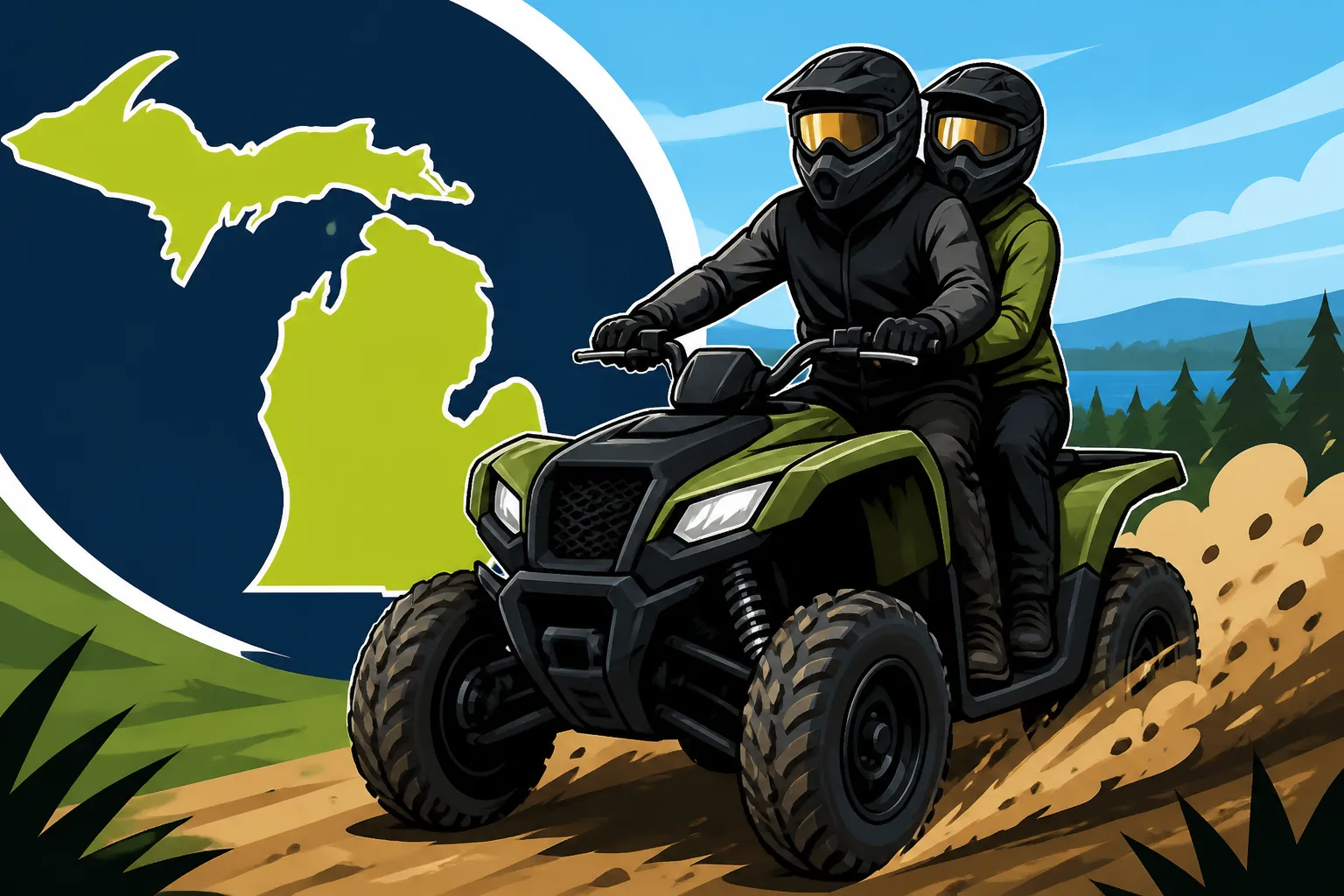
There's a scenario many of us in Michigan have probably faced: you're out on the trails, maybe at the Silver Lake Sand Dunes or cruising a state forest route, and a friend or family member wants to hop on the back of your ATV. It seems innocent enough, especially if it's just for a short distance. But what feels like a harmless favor can quickly turn into a dangerous situation with serious legal and physical consequences. This guide is here to lay out the cold, hard facts about why riding double on a single-rider quad isn't just frowned upon, it's unsafe, often illegal, and can have devastating repercussions for everyone involved.
The Truth About Single-Rider Quads and Passenger Safety: Engineering vs. Expectation
When you look at a single-rider ATV, whether it's a nimble sport quad or a utility machine, its design is incredibly specific. Engineers spend countless hours calculating weight distribution, suspension travel, steering geometry, and braking capabilities for one rider. Every component, from the handlebars to the footpegs, is placed with that single operator in mind. Adding a second person immediately throws all those carefully calibrated dynamics out the window.
Imagine trying to balance a seesaw with two people on one side and no one on the other. That's a bit like what happens when a second rider climbs aboard. The center of gravity shifts dramatically, usually higher and further back. This makes the ATV much more prone to tipping, especially during turns, over uneven terrain, or when going up or down hills. The suspension, designed for a single person's weight, becomes overloaded, reducing its effectiveness and making the ride bouncy and unpredictable. You'll feel every bump more acutely, and the machine will respond sluggishly to steering input.
Even if your quad has an extended seat, if it's not explicitly designed by the manufacturer as a "two-up" model, that extra seat length doesn't mean it's safe for two. Manufacturers put specific weight limits and passenger capacities right on the machine for a reason. Ignoring these is a recipe for disaster. The braking system, for example, is calibrated to stop the weight of one rider and the machine. With double the weight, stopping distances increase, and you might find yourself unable to slow down quickly enough in an emergency. It's a fundamental mismatch between the machine's intended capabilities and how it's being used.
Michigan's Law on ATV Passengers: What the Rules Say
When it comes to off-road vehicles (ORVs) in Michigan, the state's natural resources and traffic laws are pretty clear about who can ride where, and with how many people. Simply put, Michigan law prohibits carrying passengers on an ATV that is not specifically designed by the manufacturer to carry more than one person. This isn't just a suggestion; it's a rule that can lead to tickets and other headaches.
The Michigan Department of Natural Resources (DNR), along with local law enforcement, actively patrols ORV trails and routes. Conservation officers are well-versed in these rules, and they're not shy about enforcing them. If you're caught Riding Double on a Single-Rider Quad, you could be issued a citation. These tickets aren't just a slap on the wrist; they come with fines and can put a damper on your riding day. More importantly, operating an ORV unsafely or in violation of these rules could lead to other charges if an incident occurs.
Beyond the immediate ticket, there are deeper legal implications. If an accident happens while you're carrying an unauthorized passenger, you could face significant personal liability. Your ORV insurance policy might deny coverage if you were operating the vehicle outside its intended use and legal parameters. This means you could be personally responsible for medical bills, property damage, and other costs, which can quickly add up to tens of thousands of dollars. It's a risk that far outweighs the convenience of giving someone a lift. Understanding [Michigan ORV Ticket Costs by Violation] can give you a clearer picture of the financial penalties involved.
Why Riding Double is a Dangerous Gamble: Real-World Risks and Consequences
The legal penalties for riding double are one thing, but the physical risks and emotional toll are far more severe. We're talking about real people, real injuries, and real trauma that can last a lifetime. Single-rider ATVs are inherently more unstable with a second person aboard. The rider can't shift their weight as effectively, and the passenger, often unfamiliar with how to react, can inadvertently exacerbate instability by shifting at the wrong moment.
This increased instability leads directly to a higher risk of rollovers and ejections. A simple turn on a trail, hitting a tree root, or navigating a slight incline can become perilous. When a quad rolls, both riders are at extreme risk of being crushed, pinned, or thrown clear of the machine onto hard ground, rocks, or other obstacles. Common injuries include broken bones, head trauma, spinal injuries, and severe lacerations. These aren't minor scrapes; they are life-altering events that can result in permanent disability or even fatalities. Many people might think, "It'll just be a short ride," but accidents can happen in an instant, even at low speeds or on seemingly easy terrain.
Beyond the immediate physical danger, consider the aftermath. If you, as the operator, are found responsible for an accident involving an unauthorized passenger, the financial and emotional burden can be immense. Your insurance company might deny your claim, leaving you to pay for the passenger's medical bills out of pocket. There could be lawsuits, loss of your ORV, and even criminal charges depending on the severity of the incident. It's not just your future at stake; it's the future of your passenger and their family. Knowing what to do after a crash and understanding [Michigan ORV Accident Reporting Requirements] becomes critical in such unfortunate circumstances. For anyone involved, the psychological impact of being responsible for, or a victim of, such an incident can be devastating.
Safe Ways to Share the Trail: Exploring Multi-Passenger Alternatives
While the temptation to share your single-rider quad is understandable, especially when you want to introduce friends or family to the joy of Michigan's trails, it's simply not worth the risk. Fortunately, there are plenty of safe and legal alternatives that allow you to enjoy the off-road experience with a companion or even a whole group.
The most obvious and best solution is to use an ORV that is explicitly designed for multiple passengers. Side-by-sides, also known as UTVs, are the gold standard for shared trail adventures. These machines often come with two, four, or even six seats, equipped with roll cages, seatbelts, and suspension systems built to handle the weight and dynamics of multiple occupants. Many UTVs, like those from Polaris or Can-Am, are engineered from the ground up for stability and comfort with passengers. If you're looking to upgrade or outfit a multi-passenger UTV, companies like SuperATV offer a wide range of accessories, from enhanced suspension components to winches and windshields, that can further improve the safety and utility of these machines for their intended multi-passenger use.
Another excellent option is a "two-up" ATV. These are specific models of ATVs that have an extended frame, a longer, more comfortable seat for a passenger, and a suspension system reinforced to support the additional weight. Manufacturers like Can-Am and Polaris offer these models, which typically feature passenger handholds and separate footrests, ensuring both riders have a secure and stable position. They are clearly marked and designed for two riders, meeting all legal and safety requirements. When considering options, it's wise to explore [Two-Seat vs Four-Seat Rental Choice] if you're looking to try before you buy, or to accommodate a larger group.
If purchasing a new machine isn't in the cards right now, consider renting. Many rental outfits across Michigan, especially near popular riding areas like the Silver Lake Sand Dunes or in the Upper Peninsula, offer two-up ATVs and multi-passenger UTVs. This allows everyone to experience the thrill of off-roading safely and legally. For new riders, ensuring they have the proper training is also important. While a safety certificate might not be required for all passengers, it’s certainly essential for operators. You can learn more about general requirements here: [Michigan ORV Safety Certificate Requirements].
Table: Single-Rider ATV vs. Multi-Passenger ORV Comparison
To help illustrate the differences and why choosing the right machine is critical, here's a quick comparison:
| Feature | Single-Rider ATV (Not 2-Up) | Multi-Passenger ORV (2-Up ATV or UTV) |
|---|---|---|
| Intended Capacity | One Operator Only | Operator + 1 or More Passengers |
| Manufacturer Design | Optimized for single rider weight & balance | Engineered for multiple occupants |
| Seating | Single, often saddle-style | Extended for 2+ (2-Up ATV) or bucket seats (UTV) |
| Passenger Handholds/Footrests | Typically none beyond operator's | Dedicated handholds and footrests for passengers |
| Roll-Over Risk (w/ 2 riders) | Significantly increased | Minimized due to wider stance, roll cage (UTV) |
| Braking Performance (w/ 2 riders) | Compromised, longer stopping distances | Designed for heavier loads, better stopping |
| Legal Status (w/ 2 riders in MI) | Generally Illegal, subject to fines | Legal, as per manufacturer's design |
| Insurance Coverage (w/ 2 riders) | Often voided or denied if unsafe/illegal | Typically covers as per policy terms |
| Safety Features | None for additional passengers | Seatbelts, roll cages (UTV), sturdy design |
Making the informed choice to ride a machine designed for multiple occupants not only keeps you and your companions safe but also ensures you're riding within Michigan law. Remember, the goal is to create great memories on the trails, and the best way to do that is to prioritize safety and legality every single time. And always remember to check [Michigan ORV Passenger Rules on an ATV] for the most current regulations to ensure a safe and enjoyable outing.
Disclaimer
This article is for general informational purposes only and does not constitute professional advice. Laws, prices and regulations vary by location and change over time. Consult a qualified professional for guidance on your specific situation.