Driver’s License Rules for Michigan ORV Road Riding
One of the biggest head-scratchers for Michigan ATV and UTV enthusiasts is figuring out when you actually need a driver's license to ride your machine. It's not always clear whether your ORV is treated like a motorcycle, a car, or something entirely different, especially when you venture beyond the trails onto public roads. This guide aims to clear up that confusion, diving deep into the specifics of Michigan's driver's license rules for ORV road riding so you can ride confidently and legally.
Understanding Michigan's ORV Landscape and Road Access
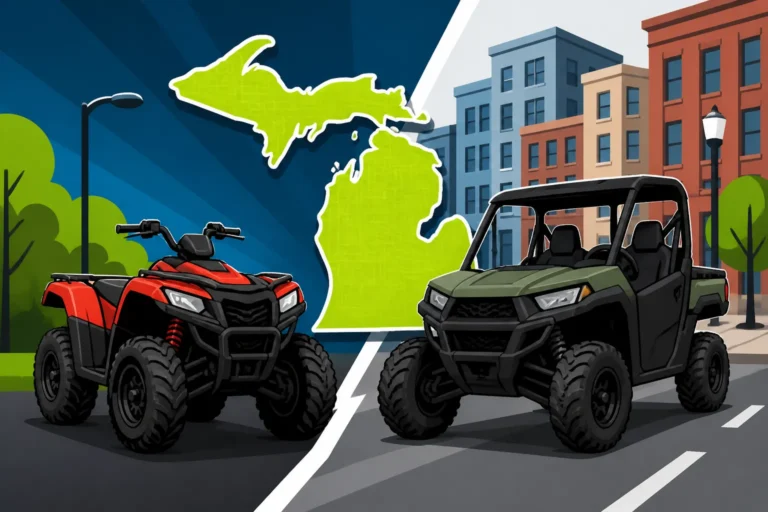
Michigan is a fantastic state for off-road vehicle enthusiasts, boasting thousands of miles of trails and routes designed specifically for ATVs and UTVs. However, the rules around riding these machines aren't always straightforward, especially when county roads and even city streets come into play. It’s easy to get mixed signals, particularly because the laws distinguish between designated ORV trails, state forest roads, and county roads that have opted into ORV access. This layered approach often creates ambiguity for riders just trying to get from point A to point B, or to simply access a trailhead from their cabin.
Navigating Michigan's diverse terrain means understanding that your ORV might be treated differently depending on where its tires are. On an actual designated ORV trail, for example, the requirements primarily revolve around having an ORV license and trail permit, along with a safety certificate for younger riders. However, the moment you decide to roll onto a public road – even just for a quick hop between trails or to get gas – the game changes. This is where the concept of a "motor vehicle" and the associated driver's license requirements often kick in, and many riders are caught off guard by these distinctions. It's not just about what your machine is, but where you're riding it.
It’s crucial to separate the two main types of "licenses" you might encounter: the Michigan ORV license (which is really a sticker for your machine, indicating you've paid your annual fee to ride on public lands and trails) and a traditional Michigan driver's license (the kind you use to drive your car or truck). While the former is about funding and permitting your machine for off-road fun, the latter is about proving your competency to operate a motor vehicle on public roadways. The state's approach aims to balance recreational access with public safety, and this means that once you enter the shared space of public roads, the rules tend to align more closely with conventional vehicle operation. This distinction is often the source of much confusion, but it's vital to grasp before you hit the blacktop.
The Core Requirement: Do You Need a Driver's License?
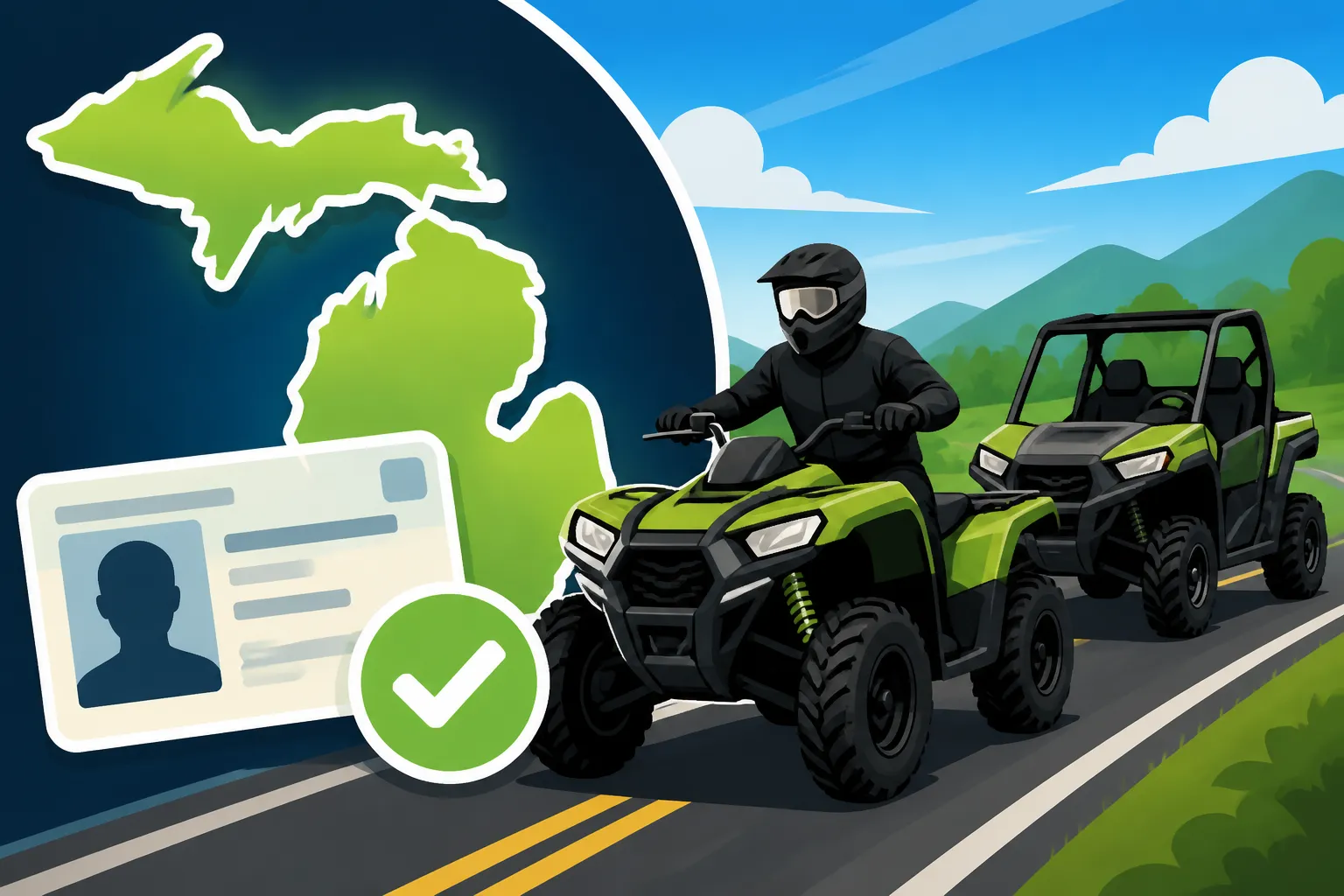
Alright, let's get right to the heart of the matter. If you're going to ride your ORV on a public road in Michigan, you generally need a valid driver's license. This isn't just about common sense; it's a specific requirement under Michigan law, which treats ORVs as motor vehicles when they are operated on county roads that have been opened to them. This means that if you're planning to ride your ATV or UTV on a gravel road, a paved county road, or any other public thoroughfare where ORV use is permitted, you must possess a valid Michigan driver's license. This rule applies whether you're just crossing the road, traveling a short distance to a trailhead, or using the road as part of an approved ORV route.
The logic behind this requirement is fairly straightforward: public roads are shared spaces. When you operate a vehicle, any vehicle, on these roads, you need to demonstrate that you have met the state's minimum standards for driving ability and knowledge of traffic laws. Your standard passenger vehicle driver's license (a Group A, B, C, or D license, depending on what type of vehicle it's for, though for most ORV users it'll be a Group D) serves this purpose. Without it, you're not legally authorized to operate a motor vehicle on public roadways, and that includes your ORV, even if it's perfectly capable of navigating those roads. This is a common enforcement point for local law enforcement and DNR officers, as it speaks directly to public safety.
It's a subtle but critical difference from riding strictly on trails. On dedicated ORV trails, while an ORV safety certificate is highly recommended (and mandatory for younger riders), a full-fledged driver's license isn't typically required just for the act of operating the ORV off-road. The moment you transition to a public road, however, the rules shift dramatically. Imagine pulling out of a gas station onto a county road, even if it's part of an ORV route. At that point, you're expected to signal, yield, and follow all traffic laws, just like any other driver. Your driver's license is the state's way of verifying that you've been trained and tested on these fundamental road rules. So, before you even think about putting a tire on a county road, double-check that driver's license in your wallet.
What Kind of Driver's License Do You Need?
For the vast majority of Michigan ORV riders, a standard Class D driver's license is what you'll need to legally operate your ATV or UTV on public roads where ORV use is permitted. This is the same type of license most people have for driving their personal cars and light trucks. You don't typically need a special endorsement or a commercial driver's license (CDL) for recreational ORV use on roads, unless you're operating an ORV that, by its size or function, falls into a different vehicle classification (which is highly unlikely for typical ATVs and UTVs).
The key is that your driver's license must be valid, not suspended, revoked, or expired. An expired license, even if you just forgot to renew it, means you're driving without a valid license, and the consequences can be just as serious. Always make sure your license is current before you head out. This isn't just a technicality; it’s about ensuring that everyone sharing the road has met the basic legal requirements to do so safely. If you've just moved to Michigan, remember that you'll eventually need to get a Michigan driver's license, even if your out-of-state license is currently valid for a grace period. [Michigan ORV Title Deadline for New Residents] might touch on similar residency changes for your machine, but for your personal driving privilege, you'll need the Michigan version.
It's also worth noting that if you have any restrictions on your driver's license (such as requiring corrective lenses), those restrictions apply when you're operating your ORV on the road, just as they would if you were driving your car. Ignoring these restrictions can lead to tickets and further penalties. Think of your ORV, when on a public road, as another vehicle you are driving. All the same rules of the road and driver's license requirements apply. Don't assume that because it's a "fun machine" the legal obligations are relaxed; they are often quite serious.
The Distinction from an ORV License/Permit
Let's be absolutely clear: a Michigan ORV license (that little sticker on your machine) and a Michigan driver's license are two entirely different things with distinct purposes. The ORV license and trail permit are administrative fees that allow your machine to be ridden on designated public ORV trails, routes, and state forest roads. These funds directly support the maintenance and development of Michigan's extensive ORV trail system. You need both an ORV license and an ORV trail permit to ride on those specific public access points.
However, having an ORV license and trail permit affixed to your machine does not give you permission to operate it on public roads without a valid driver's license. Conversely, having a driver's license doesn't mean you can skip the ORV license and trail permit requirements when you're on a state-designated trail. They are complementary for a complete legal riding experience, but each addresses a different aspect of legal operation. The driver's license pertains to you as the operator, ensuring you're legally qualified to drive a vehicle on public ways. The ORV license and trail permit pertain to your machine, ensuring it's authorized for use on specific types of public ORV land.
Think of it like this: you need a driver's license to drive your car, and you need a license plate and registration for the car itself. You can't drive your car without your personal driver's license, even if the car has valid plates. And you can't drive a car with your driver's license if it doesn't have current plates and registration. The same principle largely applies here. When you're riding your ORV on roads, both the operator (you) and the machine (your ORV) need to meet their respective legal requirements. It's a two-pronged approach that ensures accountability for both the rider and the machine on shared public spaces.
Age, Supervision, and Special Circumstances
Michigan law has specific age requirements for operating ORVs, and these requirements often intersect with driver's license rules when road riding is involved. For younger riders, the rules become even more nuanced, balancing the desire for recreation with safety and legal considerations. Generally, if you're under 16, you usually can't operate an ORV on a public road, even if that road is designated as an ORV route. The driver's license requirement effectively sets a de facto age minimum of 16 for road riding, as that's the earliest age at which one can obtain a Michigan driver's license.
However, there are still rules that apply to young riders on trails and private land that are important to remember. For instance, children under 10 are generally not allowed to operate an ORV except on private land owned by an immediate family member. Riders between 10 and 15 need to have an ORV safety certificate and be under direct visual supervision of an adult on designated trails and routes. This direct supervision rule means the adult has to be close enough to immediately intervene if necessary. But again, these provisions usually do not extend to public road riding, where the full driver's license requirement overrides these more lenient age-based trail rules.
There are very limited exceptions for agricultural purposes, where certain machines used for farming might be exempt from some ORV requirements. However, these are highly specific and typically don't apply to recreational use. For the average enthusiast, the simple rule of thumb is: if you're riding on a county road or any public thoroughfare, you need to be 16 or older and possess a valid driver's license. Any deviation from this needs to be checked against specific, narrowly defined exemptions in Michigan law. When in doubt, it's always safer to err on the side of caution and ensure you meet the standard driver's license requirements.
Youth Riders and Road Access
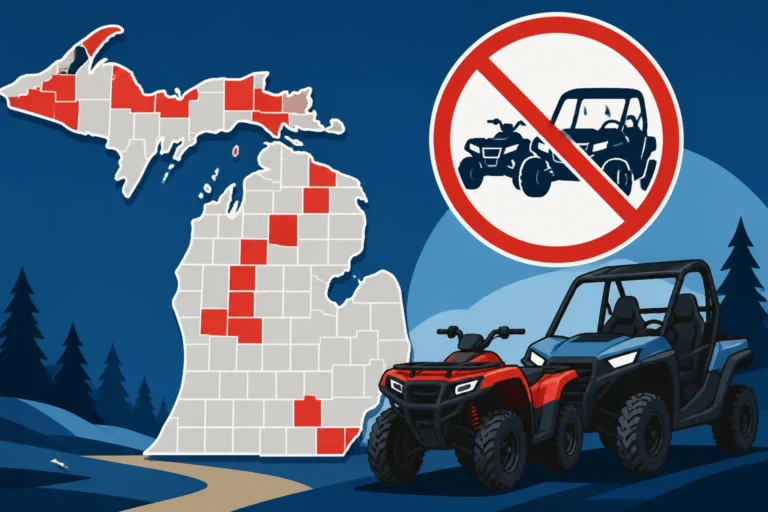
The question of youth riders on public roads is one that often causes concern and confusion for parents and young enthusiasts alike. Michigan is clear on this: to operate any motor vehicle on a public road, a person must hold a valid driver's license. Since the minimum age to obtain a Michigan driver's license (even a restricted graduated license) is 16, this effectively means that riders under 16 are generally prohibited from operating an ORV on county roads or any other public roads where ORV access is otherwise allowed.
This can be a tough pill to swallow for eager young riders who might be perfectly capable and safety-certified for trail riding. They might have their [Michigan ORV Safety Certificate for Riders Under 16] and be confident on the trails, but the moment the machine touches a public road, the rules change. Even with adult supervision, a 14-year-old on a county road, even one designated for ORVs, is operating a motor vehicle without a license, which is a serious violation. This isn't just about preventing accidents; it's about adhering to the legal framework for public road usage. Law enforcement officers, including DNR conservation officers and county sheriffs, take these rules seriously, understanding the potential liability and safety risks involved when an unlicensed driver operates any vehicle on a public road.
Therefore, for families planning an ORV trip that involves road riding to connect trails or access amenities, it's crucial to ensure that only licensed adults are operating the machines on those public road segments. Younger riders should stick to designated ORV trails, scramble areas, or private property, where the safety certificate and supervision rules apply. It's an important distinction that prevents significant legal headaches and ensures compliance with Michigan's driving laws.
ORV Road Rules for Riders Under 16
Let's expand on this a bit, because it's a common area of misunderstanding. A 15-year-old, even with an ORV safety certificate and riding a perfectly sized machine for their age, cannot legally ride an ORV on a Michigan county road. This is true even if an adult is riding right alongside them. The law is focused on who is operating the vehicle on the public roadway, and that operator must be licensed. The "direct visual supervision" rule that applies to younger riders on trails does not override the driver's license requirement for road use.
This means that if your ORV outing includes any portion of road riding, even just a few hundred feet to get to the next trail segment, only licensed drivers aged 16 and older can be at the controls. [Can a 15-Year-Old Ride on a Michigan County Road?] further emphasizes this critical point. It's a legal line in the sand that every ORV family needs to understand clearly. Trying to bend this rule, even with good intentions, can lead to tickets, fines, and even the impoundment of the ORV. It's simply not worth the risk.
So, while Michigan provides fantastic opportunities for youth to get involved in ORV riding, those opportunities are primarily confined to designated trails, scramble areas, and private property until they are old enough to obtain a driver's license. For any portion of a ride that touches a public road, a licensed adult must be at the helm. This rule is designed for the safety of all road users and to ensure that anyone operating a vehicle in shared public spaces has demonstrated the necessary skills and legal qualifications.
Street-Legal Conversions and Driver's License Implications
Many ORV owners, especially those with UTVs, dream of making their machine "street legal" to open up new riding possibilities, connecting trails, and cruising through small towns. Michigan does have a process for this, often referred to as the "assembled vehicle" route, which allows an ORV to be reclassified as a low-speed vehicle or an assembled motor vehicle for limited road use. However, successfully making your ORV street legal does not, in itself, exempt you from driver's license requirements. In fact, it reinforces them.
If you go through the effort of adding turn signals, mirrors, a horn, and all the other required safety equipment to meet Michigan's street-legal standards, the end goal is to operate your machine more like a conventional vehicle on public roads. This means that having a valid driver's license becomes even more explicitly necessary. You're essentially transforming your ORV into a recognized motor vehicle for road use, and with that reclassification comes all the responsibilities of operating a typical car or truck on the highway. This includes the need for a driver's license, proper insurance, and adherence to all traffic laws.
Companies like SuperATV offer a wide range of aftermarket parts that can help riders convert their UTVs to be street-legal. From DOT-approved windshields and safety glass to full turn signal kits, these components are essential for meeting the stringent requirements. But even after all that investment and installation, the person driving the newly street-legal machine still needs a valid driver's license. The conversion ensures the machine is legal for the road; the driver's license ensures the operator is legal for the road. It's a crucial distinction.
The "Assembled Vehicle" Route and Licensing
When you take your UTV through the Michigan "assembled vehicle" route to make it street legal, you're essentially changing its legal classification. You're telling the state that this machine, originally intended for off-road use, now meets certain safety and equipment standards that allow it to be operated on public roads. This process can be involved, requiring inspections and specific forms, as detailed in [Michigan's Assembled Vehicle Route for a UTV].
Once successfully titled and plated as an assembled vehicle, your UTV is then treated much like any other vehicle on the road – albeit with specific limitations, such as speed restrictions on certain roads or prohibitions on state highways. And just like any other motor vehicle, operating it requires a licensed driver. There's no special "ORV driver's license" for street-legal machines; it's your standard Michigan Class D driver's license that's needed.
The intention of making your ORV street legal is to integrate it, to a limited degree, into the existing road system. This integration inherently brings it under the umbrella of Michigan's motor vehicle laws, including the driver's license requirement. Failing to possess a valid driver's license while operating a street-legal UTV on public roads would be the same offense as driving an unregistered car without a license – a serious matter with significant penalties. So, while a street-legal conversion adds immense utility, it also solidifies the need for a valid driver's license for the operator.
Michigan's Low-Speed Vehicle Rules
Some ORVs, particularly smaller UTVs, might meet the criteria for a "low-speed vehicle" (LSV) in Michigan. An LSV is defined as a four-wheeled vehicle whose top speed is greater than 20 mph but not greater than 25 mph. These vehicles have specific equipment requirements and are generally allowed on roads with a speed limit of 35 mph or less. Similar to the assembled vehicle route, if your ORV qualifies and is registered as an LSV, the driver must possess a valid driver's license.
The key takeaway here is consistency: whether it's a fully converted "assembled vehicle" or a UTV classified as a low-speed vehicle, if it's operating on public roads, the operator needs a driver's license. There's no getting around this fundamental principle. These classifications are about the machine's capabilities and safety features for road use, not about relaxing the requirements for the driver.
The idea of making your ORV street legal is tempting, and products from manufacturers like SuperATV can certainly help you get there with quality components. But always remember that the driver's license is your personal authorization to drive on public roads, independent of the vehicle's specific classification. It's a personal responsibility that accompanies the privilege of using public infrastructure with your ORV.
What Happens If You Ride Without a License
Operating an ORV on a public road in Michigan without a valid driver's license is a serious offense, and the consequences can be significant. It's not just a slap on the wrist; you could face fines, court costs, and even have your ORV impounded. Law enforcement officers, whether it's a DNR conservation officer or a local sheriff's deputy, treat driving without a license on an ORV similar to driving any other motor vehicle without one. They are generally not lenient on this particular violation, as it speaks directly to public safety and accountability.
The penalties can vary depending on whether it's your first offense, if your license was merely expired, or if it was suspended or revoked. If your license is simply expired, the penalty might be less severe than if you've never held a license or are driving on a suspended license. Driving while suspended or revoked is a criminal offense in Michigan and carries much harsher penalties, including potential jail time, large fines, and an extended period of license suspension. These consequences can severely impact your ability to drive any vehicle in the future, not just your ORV.
Beyond the immediate legal troubles, there are practical implications. If you're involved in an accident while operating an ORV on a public road without a valid driver's license, your insurance coverage could be jeopardized. Most insurance policies have clauses that invalidate coverage if the driver was operating the vehicle illegally. This means you could be personally liable for damages, medical bills, and property loss, which can quickly amount to tens or hundreds of thousands of dollars. It’s a risk simply not worth taking.
Fines and Impoundment
Getting caught riding your ORV on a public road without a valid driver's license will almost certainly result in a ticket. The fines associated with driving without a license in Michigan can be substantial, often running into several hundreds of dollars, not including court fees and other assessments. This can quickly turn a fun day of riding into a very expensive lesson. And if your license was suspended or revoked, the fines can be even higher, alongside more serious legal ramifications.
In many cases, if you're caught operating an ORV on a public road without a valid driver's license, law enforcement has the authority to impound your machine. This means your ORV will be towed away and stored at an impound lot, incurring towing fees and daily storage fees. Releasing your ORV from impound typically requires proving ownership, paying all outstanding fees, and often, having a licensed driver pick it up. The cost of impoundment can easily exceed the cost of the ticket itself, adding a significant financial burden.
Imagine being miles from home, deep in the woods or on a county road, and having your ORV towed away. Not only are you facing fines and impoundment, but you're also stranded and now have to figure out how to get yourself and your gear home. It's a scenario that's entirely avoidable by simply ensuring you have your valid driver's license before you ever put a wheel on a public road. The hassle and expense are simply not worth the momentary convenience of ignoring the rules.
Impact on Insurance Coverage
This is a critical point that many riders overlook: your ORV insurance policy is likely contingent on you operating your machine legally. If you're involved in an accident on a public road while riding your ORV without a valid driver's license, your insurance company may deny your claim. Most policies contain clauses that exclude coverage for damages incurred while the vehicle is being operated illegally or by an unlicensed driver.
This denial could leave you personally responsible for all damages, including repairs to your ORV, property damage to other vehicles or structures, and most significantly, medical expenses for anyone injured in the accident – yourself, your passengers, or other parties. A serious injury accident can result in medical bills that quickly reach six or even seven figures. Without insurance coverage, you could be facing financial ruin. [Michigan ORV Liability Insurance Minimums] outlines the basic coverage often required, but it presupposes legal operation.
Even if you have what you believe is comprehensive coverage, operating without a driver's license can be considered a breach of contract with your insurer. It's not just a state law violation; it can have profound financial repercussions. Before you ever head out on a public road with your ORV, always verify that your driver's license is valid and that your insurance policy is in force and covers legal operation. This due diligence protects not only your wallet but also your peace of mind.
Essential Preparations for ORV Road Riding
Riding your ORV on Michigan's county roads can be a fantastic way to extend your adventures, access remote trails, or simply enjoy a scenic ride. However, it requires more than just knowing the driver's license rules; it demands proper machine preparation, adherence to road-specific regulations, and a heightened sense of awareness. Beyond ensuring you have your valid driver's license, there are several other critical steps you need to take to make your ORV road riding experience safe and legal.
First and foremost, your ORV itself needs to be properly equipped. While designated ORV trails might have fewer requirements, riding on roads means your machine must meet specific safety standards. This often includes having functioning headlights and taillights, brake lights, a horn, and mirrors. For UTVs, depending on whether it's classified as an assembled vehicle or low-speed vehicle, you might also need a DOT-approved windshield, turn signals, and seat belts. Many riders turn to aftermarket solutions from reputable companies like SuperATV to ensure their machines are up to code, offering everything from full street-legal kits to individual components like safety glass and side mirrors.
Beyond the machine, your personal riding gear and mindset need to adapt. While helmets are not universally required for adults in all situations on Michigan roads (especially if in an enclosed, street-legal UTV), they are always recommended for ATVs and open-top UTVs. Eye protection is typically a must. More importantly, when riding on roads, you are sharing the space with cars, trucks, and other full-sized vehicles, which have much greater mass and speed capabilities. This means you need to ride defensively, obey all traffic laws, and be highly visible. This includes riding on the right side of the road, using appropriate hand signals or turn signals, and maintaining a safe speed, often limited to 25 mph on county roads.
Machine Requirements for Road Use
Before you venture onto any Michigan county road with your ORV, you need to ensure your machine is properly equipped. While the exact requirements can vary slightly depending on whether your county has specific ordinances or if you've gone through a full street-legal conversion, there are common denominators. You'll definitely need functioning headlights and taillights, and these need to be on during operation, even during the day, for visibility. Brake lights are non-negotiable, ensuring drivers behind you know when you're slowing down.
A working horn is essential for warning other drivers or pedestrians, and mirrors are crucial for situational awareness, allowing you to see traffic approaching from behind. For side-by-sides, especially if you're pursuing the "street legal" route, you'll need things like a DOT-approved windshield, turn signals for safe lane changes and turns, and a license plate (if you've titled it as an assembled vehicle). Products from companies like SuperATV can provide many of these essential components, ensuring your UTV meets the necessary specifications. Skipping these crucial items isn't just a potential ticket; it's a major safety hazard.
It’s not just about what you add to your machine; it's about its general roadworthiness. Your tires should be in good condition and inflated correctly. Brakes should be fully functional. Your suspension and steering should be tight and responsive. Remember, you're interacting with much heavier and faster vehicles, so your ORV needs to perform reliably. A quick pre-ride inspection before hitting the pavement is always a good idea, checking lights, brakes, tire pressure, and fluid levels.
Road Rules and Safety Protocols
Riding your ORV on Michigan county roads demands strict adherence to all traffic laws, just as if you were driving a car. This means obeying posted speed limits (often 25 mph for ORVs on county roads), stopping at stop signs and traffic lights, yielding to oncoming traffic, and signaling turns. The [Michigan's 25 mph Limit on County Roads] guideline is particularly important, as speeding on an ORV can be very dangerous and lead to severe tickets.
Always ride on the far right side of the maintained portion of the road, staying as close to the shoulder as safely possible. If you're riding with a group, ride single file to minimize your footprint and allow other vehicles to pass safely. Be acutely aware of your surroundings: blind curves, driveways, and cross-traffic are all potential hazards. Since ORVs are smaller and often less visible than cars, actively watching for other vehicles and assuming they might not see you is a critical defensive riding strategy.
Visibility is key. Wearing brightly colored clothing can help, and ensuring all your lights are functional (and on) is paramount. Avoid riding at dusk or dawn if possible, as visibility is reduced. If you must ride at night, ensure your headlights are properly aimed and sufficiently bright, and consider reflective tape on your machine. Remember, sharing the road is a responsibility, and exercising caution and courtesy will go a long way in ensuring a safe and enjoyable experience for everyone.
Table: Key Requirements for ORV Road Riding in Michigan
To help clarify the various requirements, here's a quick overview:
| Requirement | Applies to ORV Trails/Public Land | Applies to Michigan County Roads (where permitted) | Notes |
|---|---|---|---|
| ORV License Sticker | Yes | Yes | Annual fee for machine use on public ORV areas. |
| ORV Trail Permit | Yes | Yes (if route includes ORV trails) | Annual fee for machine use on designated ORV trails/routes. |
| Valid Driver's License | No (for operator) | YES | Required for any operator on public roads. |
| ORV Safety Certificate | Yes (for under 16) | No (overridden by Driver's License rule) | Mandatory for youth on trails, but not sufficient for roads. |
| Age of Operator | Varies (10-15 supervised) | 16+ | Minimum 16 for driver's license on public roads. |
| Headlights/Taillights | Often required | YES | Required for visibility on roads. |
| Brake Lights | Often required | YES | Required for safety on roads. |
| Horn | Not always | YES | Required for warning on roads. |
| Mirrors | Not always | YES | Required for rear visibility on roads. |
| DOT Windshield | No | Potentially (for street-legal UTVs) | Required for some street-legal conversions. |
| Turn Signals | No | Potentially (for street-legal UTVs) | Required for some street-legal conversions. |
| ORV Insurance | Recommended | YES (liability required) | Minimum liability required for road operation. |
Disclaimer
This article is for general informational purposes only and does not constitute professional advice. Laws, prices and regulations vary by location and change over time. Consult a qualified professional for guidance on your specific situation.