Credit Score Dealers Want for a UTV Loan
Buying a UTV in Michigan is an exciting prospect, especially with all the amazing trails and routes our state offers. But for many folks, the dream hits a snag when they start thinking about financing. A common and completely valid frustration is wondering, "What credit score do dealers actually want for a UTV loan?" It feels like a secret number, doesn't it? This guide will pull back the curtain, explaining what credit scores mean for your UTV purchase, how they influence your loan, and what you can do to put yourself in the best possible position to hit the trails.
The Credit Score Conundrum: What UTV Dealers Really Look For
Let's face it, your credit score can feel like a mysterious, all-powerful judge when you're trying to make a big purchase. You're not alone in feeling this way! When you walk into a Michigan dealership, whether it's for a brand-new side-by-side or a well-loved ATV, the financing department is going to look at your credit report and, specifically, your credit score. This little three-digit number gives lenders a quick snapshot of your financial reliability – how likely you are to pay back money you borrow. They want to minimize their risk, and your credit score is their primary tool for assessing that.
It's not just about getting approved; it's about getting good terms. A higher credit score signals to lenders that you're a responsible borrower, which often translates into lower interest rates, more flexible payment terms, and even better down payment options. Conversely, a lower score might mean you're approved but with a much higher interest rate, making your dream UTV significantly more expensive over the life of the loan. This can be a real bummer when you're just trying to enjoy the Michigan outdoors.
The Magic Number: What is a "Good" Credit Score for a UTV Loan?
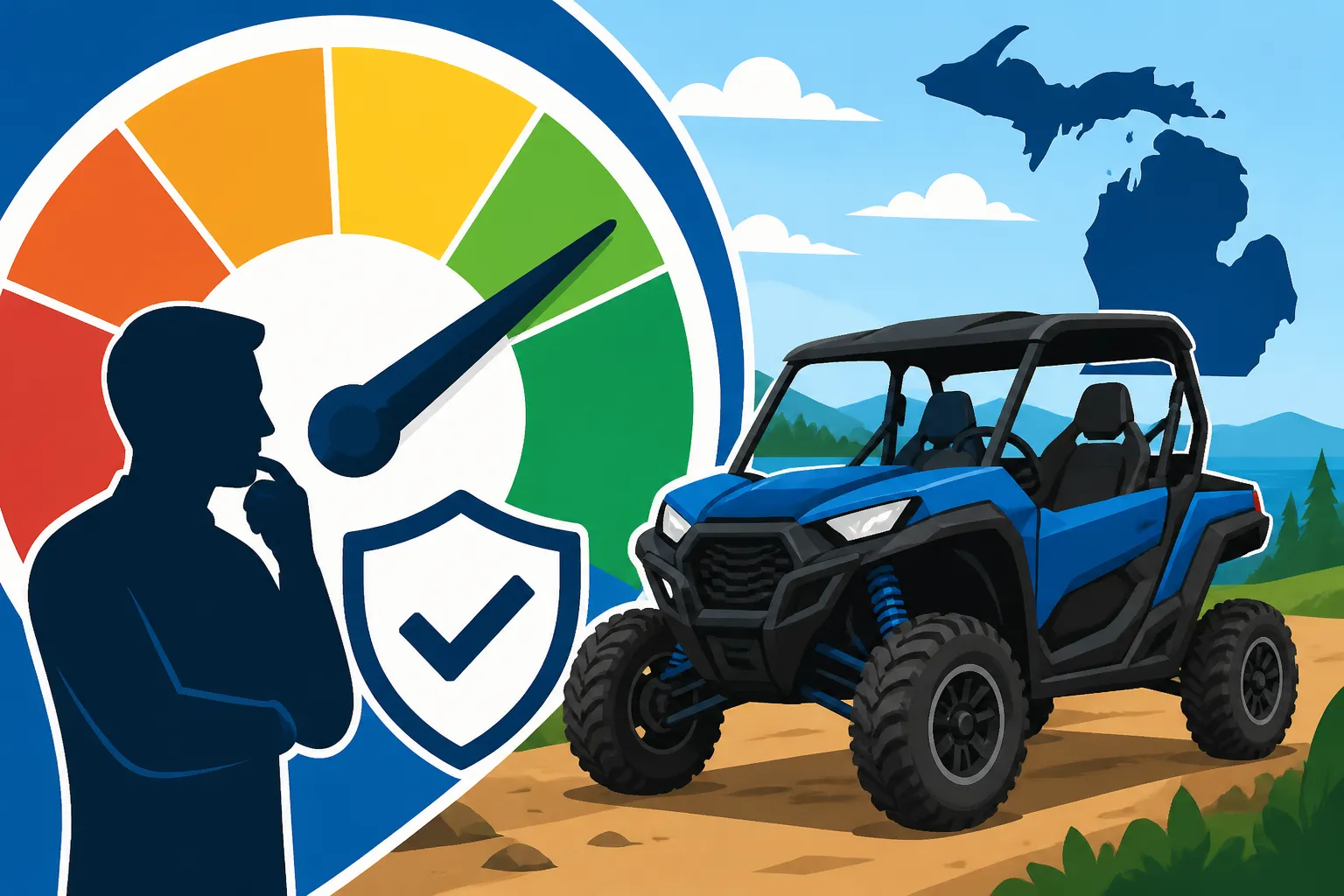
There's no single "magic number" that guarantees a UTV loan, but generally, lenders categorize credit scores into ranges. Most personal loans, including those for powersports vehicles like UTVs, are assessed using a FICO Score or a similar model. These scores typically range from 300 to 850. For a UTV loan with favorable terms, you're generally looking to be in the "Good" or "Excellent" range.
What does that look like? An "Excellent" score is typically 800 and above, which means you're considered a prime borrower and will likely get the very best rates available. A "Very Good" score is usually 740-799, also putting you in a strong position for competitive rates. Then comes the "Good" range, generally 670-739. This is often where many Michigan buyers land, and you can still expect reasonable rates and approvals, though perhaps not the absolute lowest. Below this, you get into "Fair" (580-669) and "Poor" (under 580) territory. While getting a loan with a fair or poor score isn't impossible, it will almost certainly come with a higher interest rate, a larger down payment requirement, or other less favorable terms. It’s worth remembering that these are general guidelines; specific dealerships and lenders might have their own internal criteria, which is why it's always good to check your score before you apply.
Beyond the Score: Other Factors Dealers Consider
While your credit score is a major player, it's not the only thing UTV dealers look at when you apply for a loan. They're trying to get a full picture of your financial health and ability to repay. One of the most important additional factors is your debt-to-income (DTI) ratio. This is a calculation of how much of your gross monthly income goes toward paying existing debts (like your mortgage, car payments, student loans, credit card minimums, etc.). If a significant portion of your income is already committed to other payments, a lender might hesitate to add another substantial monthly payment, even if your credit score is decent. They want to see that you have enough disposable income to comfortably afford the UTV loan.
Another key factor is your employment history. Lenders prefer stability. If you've been at the same job for a good period, it signals a consistent income stream, which makes you a more reliable borrower. Frequent job changes or gaps in employment might raise a red flag, as it suggests an inconsistent income. Lastly, the size of your down payment makes a big difference. Putting down a substantial amount of cash upfront reduces the loan amount, thereby reducing the lender's risk. It also shows your commitment and financial capability. Sometimes, even with a less-than-perfect score, a larger down payment can help you secure approval or a better interest rate. [Deposit Rules When Buying a Used UTV] can vary, but a good chunk of cash always helps.
Navigating Loan Offers: Interest Rates, Terms, and Down Payments
Once you've applied for a UTV loan, the dealership will come back with an offer, or perhaps a few. This is where your credit score truly shows its muscle. The interest rate, the length of the loan (the term), and the required down payment are all directly influenced by that three-digit number. It's not just about whether you get approved; it's about the total cost of ownership over time. A seemingly small difference in the interest rate can add up to hundreds, or even thousands, of dollars over a few years, which could buy you a lot of extra gear or fuel for those Michigan adventures!
Understanding these components is crucial to making an informed decision. Don't just look at the monthly payment; dig into the total cost. Ask questions, compare offers, and don't feel pressured to sign on the dotted line immediately. This is a significant financial commitment, and you deserve to understand every aspect of it. Taking the time to compare financing options, whether from the dealership or an external lender, can save you a lot of money in the long run.
The High Cost of a Low Score: Understanding APR
The Annual Percentage Rate (APR) is perhaps the most critical number to understand when you're getting a UTV loan. It's not just the interest rate; it's the total cost of borrowing money over a year, expressed as a percentage. This includes the interest rate itself, plus any additional fees or charges rolled into the loan. When you have a lower credit score, lenders perceive you as a higher risk, and to compensate for that risk, they charge a higher APR. This means you'll pay significantly more money over the life of the loan.
For example, imagine two Michigan riders buying the same UTV for the same price. One has an excellent credit score and gets an APR of X%. The other has a fair score and gets an APR of Y%, where Y is considerably higher than X. Over a typical loan term, the rider with the fair score will pay much more in total interest. That extra money could have gone towards better gear, more frequent rides to the [Silver Lake Sand Dunes: Michigan's Only Dune Ride], or even upgrading to a more powerful machine down the road. It’s a tangible cost that directly impacts your wallet. This is why improving your credit score before you apply can be such a powerful financial move.
| Credit Score Range | Typical APR Impact | Down Payment Expectation | Loan Term Flexibility |
|---|---|---|---|
| 800-850 (Excellent) | Lowest Rates | Minimal, often optional | Most flexible |
| 740-799 (Very Good) | Very Competitive | Small, possibly optional | Very flexible |
| 670-739 (Good) | Reasonable Rates | Standard, usually 10-20% | Good |
| 580-669 (Fair) | Higher Rates | Larger, 20% or more | Less flexible, shorter terms |
| 300-579 (Poor) | Highest Rates, harder to get approved | Significant, 25%+ or co-signer | Least flexible, very short terms |
Note: These are general expectations; actual offers vary by lender, economic conditions, and individual circumstances.
Boosting Your Odds: Down Payments and Co-Signers
If your credit score isn't in the "Excellent" category, don't despair! There are still concrete steps you can take to significantly improve your chances of getting a favorable UTV loan. One of the most effective strategies is offering a larger down payment. We touched on this earlier, but it truly cannot be overstated. When you put down more cash upfront, you're borrowing less money, which directly reduces the lender's risk. It shows commitment and solidifies your financial standing in their eyes. Even if your credit score is in the "Fair" range, a substantial down payment might be enough to push you into an approval with a more manageable APR. It's worth saving up for if you can.
Another powerful option, especially if your credit is bruised, is to apply with a co-signer who has excellent credit. A co-signer essentially agrees to be equally responsible for the loan if you default. This provides a safety net for the lender, as they have another financially responsible party to pursue if you can't make payments. This can be a fantastic way to get approved and even secure a better interest rate than you'd get on your own. However, it's a serious commitment for the co-signer, as their credit will be affected if you miss payments. Make sure everyone understands the implications before going this route. [Putting an ORV Title in Two Names] is common when co-signing, ensuring both parties have a stake.
Strategies to Polish Your Credit for Your Dream UTV
It might sound obvious, but the best way to get a great UTV loan is to have great credit. But what if your credit isn't quite where you want it to be? Don't worry, improving your credit score is absolutely achievable, though it takes time and consistent effort. Think of it as preparing your machine for a tough trail ride – a little maintenance upfront prevents major headaches later. Taking proactive steps can mean the difference between paying thousands more in interest and keeping that money in your pocket for more important things, like exploring Michigan's vast [Michigan's 4,000 Miles of ORV Trails Explained].
The journey to better credit starts with understanding where you stand. You can't fix what you don't know is broken. After that, it's about disciplined financial habits, reducing existing debt, and managing your accounts responsibly. Every positive step you take builds a stronger financial foundation, not just for your UTV loan, but for all your future financial endeavors.
Getting Your Financial House in Order
The first and most critical step in improving your credit is to obtain copies of your credit reports from all three major credit bureaus (Experian, Equifax, and TransUnion). You are entitled to a free report from each once a year. Go through these reports with a fine-tooth comb. Look for any errors, inaccuracies, or outdated information. Identity theft is a real concern, and incorrect reporting can significantly ding your score through no fault of your own. If you find anything amiss, dispute it immediately with the credit bureau. This process can take some time, so start early. Cleaning up your report can sometimes give your score an immediate boost.
Beyond correcting errors, focus on your spending habits. Create a budget and stick to it. Prioritize paying down high-interest debt, like credit card balances. The lower your credit utilization (the amount of credit you're using compared to your available credit limit), the better. Aim to keep this below 30%, ideally even lower. Making all your payments on time, every time, is paramount. Payment history is the single largest factor in your credit score. Set up automatic payments if you need to, or put reminders on your calendar. Consistency is key here; a long history of on-time payments will gradually build your score over time.
What to Do If Your Credit Needs Serious Help
For those whose credit scores are in the "Fair" or "Poor" categories, the path to a UTV loan might seem daunting, but it's not impossible. If you have a few missed payments or collections on your report, it's going to take more than just correcting errors. Consider exploring secured loans or credit-builder loans. A secured loan is backed by an asset (like a savings account or a smaller, less expensive vehicle), making it less risky for the lender and often easier to obtain with lower credit. A credit-builder loan is specifically designed to help you establish a positive payment history, building your score as you repay it.
Another often-overlooked strategy is focusing on smaller, more manageable debts first. Paying off a few small credit card balances can free up cash flow, reduce your DTI, and show potential lenders that you're serious about financial responsibility. If you're buying a UTV from a private seller, you might also consider alternative financing like a personal loan from a credit union, which sometimes have more flexible criteria than large banks or dealership lenders. When it comes to drawing up any kind of private sale agreement or payment plan, using reliable templates can be really helpful. A platform like LawDepot, for instance, offers various legal documents and templates, including bills of sale and promissory notes, which can provide a professional framework for such agreements, even if you’re arranging payments directly with a seller. This ensures both parties are protected.
When the Bank Says No: Alternative Routes to UTV Ownership
It's disheartening when a dealership or bank turns down your loan application. It feels like a roadblock to your Michigan outdoor adventures. But remember, a "no" from one lender doesn't mean the dream is over. There are always alternative paths to explore, and sometimes, these paths can lead to even better outcomes, especially if you're willing to be a bit flexible or creative. Don't give up on that feeling of powering through the [Upper Peninsula ATV Trails Worth the Drive] just yet!
Exploring options beyond the traditional dealership financing desk is a smart move for many, particularly if your credit history isn't sparkling. This might involve looking at different types of lenders, adjusting your expectations for the machine you initially wanted, or even considering a phased approach to ownership. The goal is to get you on a UTV, and there are many ways to achieve that.
Exploring Credit Unions and Local Banks
Often, credit unions and smaller, local banks can be more flexible and understanding than large national banks or dealership finance departments. Credit unions, in particular, are member-owned, and their primary goal is to serve their members rather than generate huge profits. This often translates to more personalized service, a greater willingness to look beyond just your credit score, and potentially more competitive interest rates, especially for members with existing relationships. If you've been a long-time member of a local credit union, they might be more inclined to work with you, even if your credit score isn't top-tier.
It's definitely worth checking with your local financial institutions. They might offer specific powersports loans or general personal loans that can be used for a UTV. Be prepared to explain your financial situation, your ability to repay, and any steps you've taken to improve your credit. They might also be more willing to offer advice or guide you toward options like a secured loan or a loan with a co-signer. Sometimes, just having a conversation with a real person who understands your local context can make all the difference compared to an automated online application process.
The Private Sale Advantage: Cash, Loans, and Payment Plans
If traditional dealership financing isn't working out, shifting your focus to the private market can open up a whole new world of possibilities. Buying a UTV from a private seller in Michigan often means you're not beholden to dealership financing requirements. While you might still seek a personal loan from a bank or credit union to fund the purchase, the seller typically doesn't care about your credit score; they just want their agreed-upon payment. This removes one significant hurdle right away.
In a private sale, you have more room for negotiation on price, and if you can save up enough cash, you can avoid loans and interest altogether. If a full cash payment isn't feasible, you might find a seller willing to consider a structured payment plan, though this is less common and carries risks for both parties. If you do go this route, having a clear, legally binding agreement is crucial. This is another situation where resources like LawDepot can be invaluable. You can find robust templates for a [Michigan ATV Bill of Sale: What to Put in It] or a promissory note that outlines payment schedules, interest (if any), and what happens in case of default. Using such documents helps protect both you and the seller, ensuring a smooth, transparent transaction for your new-to-you UTV. Remember to also handle the title transfer properly; [Michigan Title Transfer When You Buy From a Private Seller] is a key step.
Disclaimer
This article is for general informational purposes only and does not constitute professional advice. Laws, prices and regulations vary by location and change over time. Consult a qualified professional for guidance on your specific situation.