How to Find Your Michigan County’s ORV Ordinance
Michigan county ORV ordinances dictate where off-road vehicles can legally ride on local roads to avoid tickets and fines.
Legal here, illegal one county over.
What each state allows, the mirrors, horn and signals a conversion requires, and the county and city overrides that quietly change the answer.
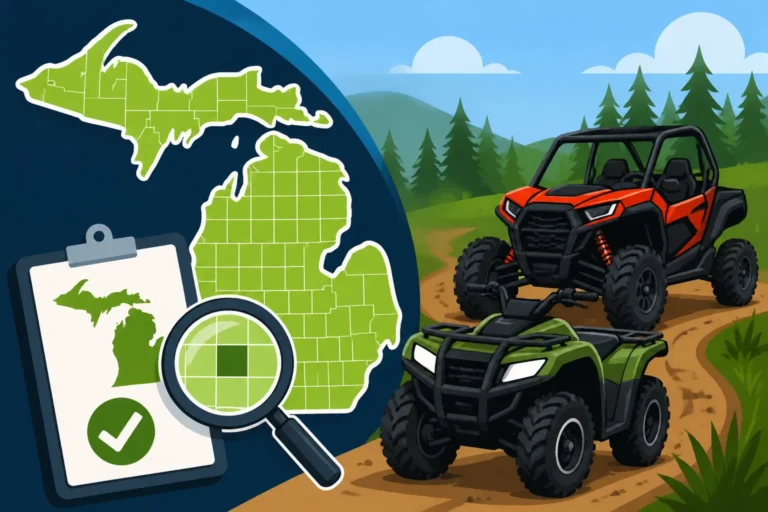
Michigan county ORV ordinances dictate where off-road vehicles can legally ride on local roads to avoid tickets and fines.
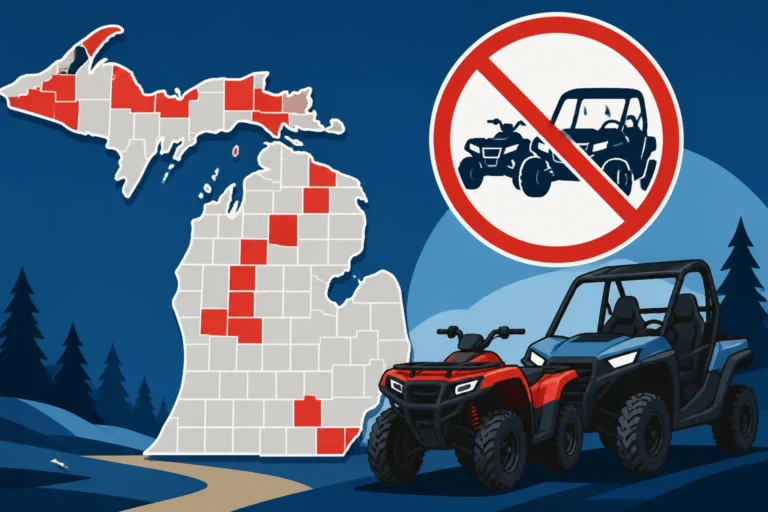
Michigan counties without ORV ordinances default to banning off-road vehicles on public roads unless specific farming exemptions apply.

Michigan law restricts off-road vehicles from riding on paved county roads unless local ordinances provide specific legal exceptions.
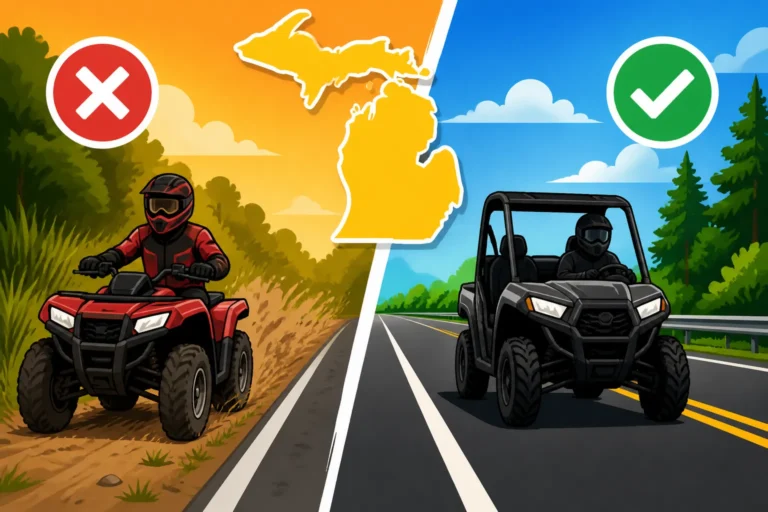
Michigan ORV rules explain the legal differences between road shoulders and maintained portions to keep riders safe.

Michigan ORV road rules require riders to stay on the far right of the maintained portion of county roads and ride single file.
Michigan off-road vehicle speed limits and county road rules cost riders hundreds of dollars in fines and court fees.

Michigan law sets a maximum speed limit of 25 miles per hour for off-road vehicles operating on county roads open to traffic.

Michigan ORV speed limits on gravel roads default to twenty-five miles per hour unless lower local signs are posted.

Michigan law details age limits, safety certificates, and supervision rules for 15-year-old off-road vehicle riders.
Michigan county road ORV operators must be at least sixteen years old and possess a valid driver license to ride legally.